
Unpacking Cognitive Profiles: Newfoundland vs. Bloodhound
At The Cosmic Pet Pet IQ Lab, we analyze canine intelligence across five key dimensions: Problem Solving, Training Speed, Social Intelligence, Instinctive Drive, and Memory. These metrics provide a nuanced understanding of how different breeds perceive, process, and interact with their world, moving beyond simplistic notions of 'smartness' to appreciate their specialized cognitive talents.
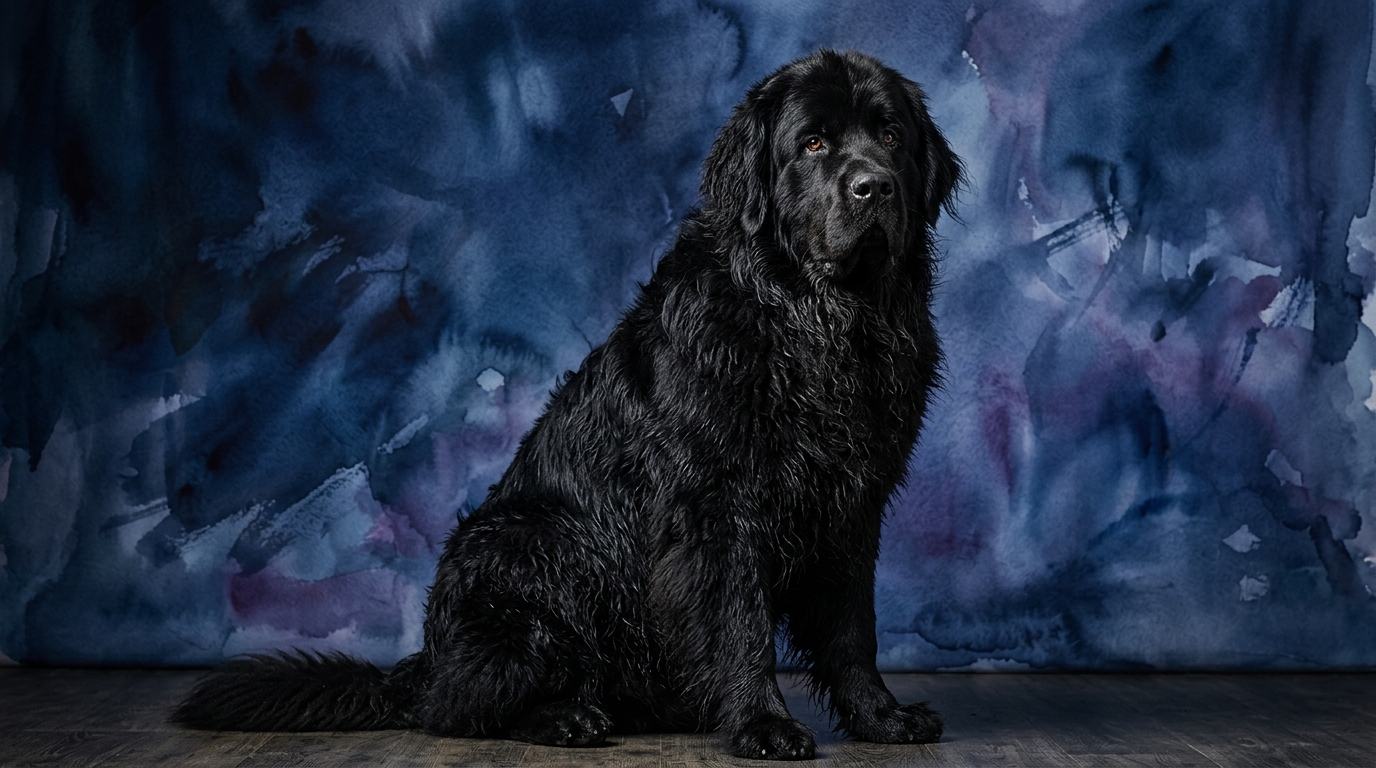
The Newfoundland, a majestic water dog, showcases a balanced yet distinctly cooperative mind. Its Problem Solving is rated 3/5, indicating competence in navigating everyday challenges. Training Speed stands at a respectable 4/5, suggesting a readiness to learn. Where they truly excel is Social Intelligence (5/5), demonstrating profound empathy and understanding of human cues, complemented by a powerful Instinctive Drive (5/5), often directed towards protection or rescue. Memory for this breed is a solid 4/5, supporting consistent learned behaviors and social interactions.
In contrast, the Bloodhound, renowned for its olfactory prowess, presents a highly specialized cognitive profile. Its Problem Solving capability is exceptional at 5/5, particularly when it comes to scent-related puzzles. However, its Training Speed is a low 1/5, reflecting an independent nature. Social Intelligence is rated 2/5, as their focus is often externalized towards their environment rather than human interaction. Their Instinctive Drive is a maximum 5/5, almost exclusively dedicated to tracking, and their Memory is an astounding 5/5, enabling them to recall complex scent trails over vast distances and time.
These initial profiles immediately highlight that while both breeds are capable, their cognitive priorities and operational modes are strikingly different, shaping their interactions with humans and their environment.
Where the Newfoundland's Mind Shines Brightest
The Newfoundland's cognitive strengths are deeply rooted in its social and cooperative nature. With a 5/5 rating in Social Intelligence, these dogs are highly attuned to human emotions and intentions, often demonstrating an almost intuitive understanding of family dynamics. This exceptional social processing allows them to form incredibly strong bonds, making them empathetic companions who seek to please and integrate seamlessly into their human families.
Their 4/5 Training Speed is a direct reflection of this social intelligence. Newfoundlands are generally eager to learn and respond well to positive reinforcement, interpreting human requests as opportunities for cooperative engagement. They process commands not just as tasks, but as part of a shared interaction, which accelerates their acquisition of new behaviors. This cognitive predisposition towards collaboration makes them relatively straightforward to guide through obedience training and complex routines.
Furthermore, their 5/5 Instinctive Drive often manifests as a strong protective or nurturing impulse, particularly towards children or those perceived as vulnerable. This isn't just brute instinct; it involves a cognitive assessment of situations and a decision to act, often with a gentle yet firm presence. Their 4/5 memory supports these consistent social behaviors and allows them to remember family members, routines, and past interactions, contributing to their reliable and steadfast temperament. Their intelligence, therefore, is largely expressed through their capacity for connection and their ability to act as thoughtful, integrated family members.
The Bloodhound's Unrivaled Cognitive Prowess
The Bloodhound's cognitive architecture is a testament to specialized evolution, honed for one purpose: tracking. Their 5/5 Problem Solving rating is not about solving abstract puzzles, but about navigating complex, real-world olfactory challenges. They can interpret faint scent molecules, differentiate between multiple trails, and reconstruct a sequence of events purely through smell, demonstrating an unparalleled ability to process environmental data independently.
This incredible problem-solving capability is inextricably linked to their 5/5 Instinctive Drive. A Bloodhound's mind is perpetually engaged in processing scent, treating every new odor as a piece of a larger puzzle. This intense focus means they are internally motivated, requiring little external prompting once a scent is engaged. Their cognitive resources are overwhelmingly dedicated to this singular pursuit, making them relentless and incredibly effective at their specialized task.
Crucially, their 5/5 Memory is central to their tracking success. A Bloodhound can store and recall an immense library of scent profiles and trail patterns. This allows them to pick up a cold trail, remember where they left off, and even track multiple individuals simultaneously without confusion. This form of memory is highly specialized and deeply impressive, demonstrating a different facet of cognitive excellence compared to the social memory of a Newfoundland. While their Social Intelligence is lower at 2/5, this isn't a deficit in intelligence, but rather a prioritization of their highly developed olfactory and problem-solving faculties over social engagement.
Training Dynamics: A Tale of Two Temperaments
When it comes to training, the cognitive differences between these breeds become starkly apparent. The Newfoundland, with its 4/5 Training Speed and 5/5 Social Intelligence, is generally a willing and eager student. They thrive on interaction and positive reinforcement, quickly grasping commands because they value the cooperative exchange with their human. Their cognitive processing is geared towards understanding and responding to human cues, making traditional obedience methods quite effective. They want to be part of the 'team' and will adjust their behavior to maintain that connection.
The Bloodhound, however, presents a distinct challenge with its 1/5 Training Speed. This isn't due to a lack of intelligence, but rather a profound difference in cognitive priorities. Their 5/5 Problem Solving and 5/5 Instinctive Drive mean their internal motivation often overrides human commands, especially when a compelling scent is present. A Bloodhound's mind is self-directed, following its nose first and foremost. Training a Bloodhound requires immense patience, creativity, and an understanding that you must make the training itself incredibly rewarding or integrate it directly into their tracking drive.
For a Bloodhound, a 'sit' command might be ignored if a fascinating scent drifts by, not out of defiance, but because their cognitive processing is singularly focused on that olfactory input. Effective Bloodhound training often involves harnessing their natural drives, perhaps by incorporating scent games into obedience, rather than trying to suppress their primary cognitive function. This behavioral difference isn't about one being 'smarter,' but about their inherent mental frameworks dictating how they learn and what motivates them.
Matching Minds to Lifestyles: Active vs. Relaxed Owners
Understanding these cognitive profiles is key to selecting a breed that aligns with an owner's lifestyle. The Newfoundland, with its high Social Intelligence and cooperative nature, is an excellent fit for owners who desire a deeply integrated family companion. While they benefit from regular exercise, especially swimming, their cognitive needs are often met through consistent companionship, interactive play, and opportunities to engage their nurturing instincts. Owners who value a dog that is present, responsive, and thrives on social connection will find the Newfoundland's intelligence a perfect match. They suit what might be considered a 'relaxed' owner in terms of requiring less independent work, but an 'active' owner in terms of social engagement and consistent, gentle guidance.
Conversely, the Bloodhound's intense Instinctive Drive and independent Problem Solving demand a more specialized owner. These are not dogs content with passive companionship; their minds are constantly seeking and processing scent information. They require significant outlets for their tracking abilities, whether through dedicated scent work, long, exploratory walks where they can follow trails, or participation in actual search and rescue activities. Owners must be prepared to be 'active' in providing structured mental and physical stimulation that directly taps into the Bloodhound's unique cognitive architecture. An owner who isn't ready to engage with this singular focus might find a Bloodhound challenging, as their intelligence is expressed through their drive to work a trail, often oblivious to human distractions.
The Verdict
Choose a Newfoundland if you seek a deeply cooperative, socially attuned companion who thrives on human interaction and gentle guidance. Their intelligence manifests in their devotion and ability to integrate seamlessly into a family structure.
Opt for a Bloodhound if you are an experienced owner eager to harness unparalleled olfactory problem-solving and an independent, driven spirit. Be prepared to dedicate significant time to channeling their intense tracking instincts.
🧠 Find Your Pet's IQ Score
Our Pet IQ Lab assessment covers 25+ tests across 5 cognitive dimensions — personalized to your breed.
Take the Full IQ Test →Frequently Asked Questions
Is a Bloodhound difficult to train for basic obedience?
Yes, Bloodhounds can be challenging for basic obedience due to their singular focus on scent and their independent problem-solving nature. Their training speed is rated 1/5, meaning they require consistent, patient, and highly motivating methods that often incorporate their natural drives.
Which breed is better with children, based on their social intelligence?
Based on their social intelligence rating of 5/5, Newfoundlands are generally more attuned to family dynamics and children, often displaying nurturing and protective behaviors. Bloodhounds, with a 2/5 social intelligence, are more independent and less outwardly focused on social interaction.
Do Newfoundlands require a lot of mental stimulation?
Newfoundlands benefit from mental stimulation that involves their human companions, such as interactive play, training sessions, and opportunities to engage their cooperative nature. While not as intensely driven by independent problem-solving as a Bloodhound, they appreciate consistent engagement.