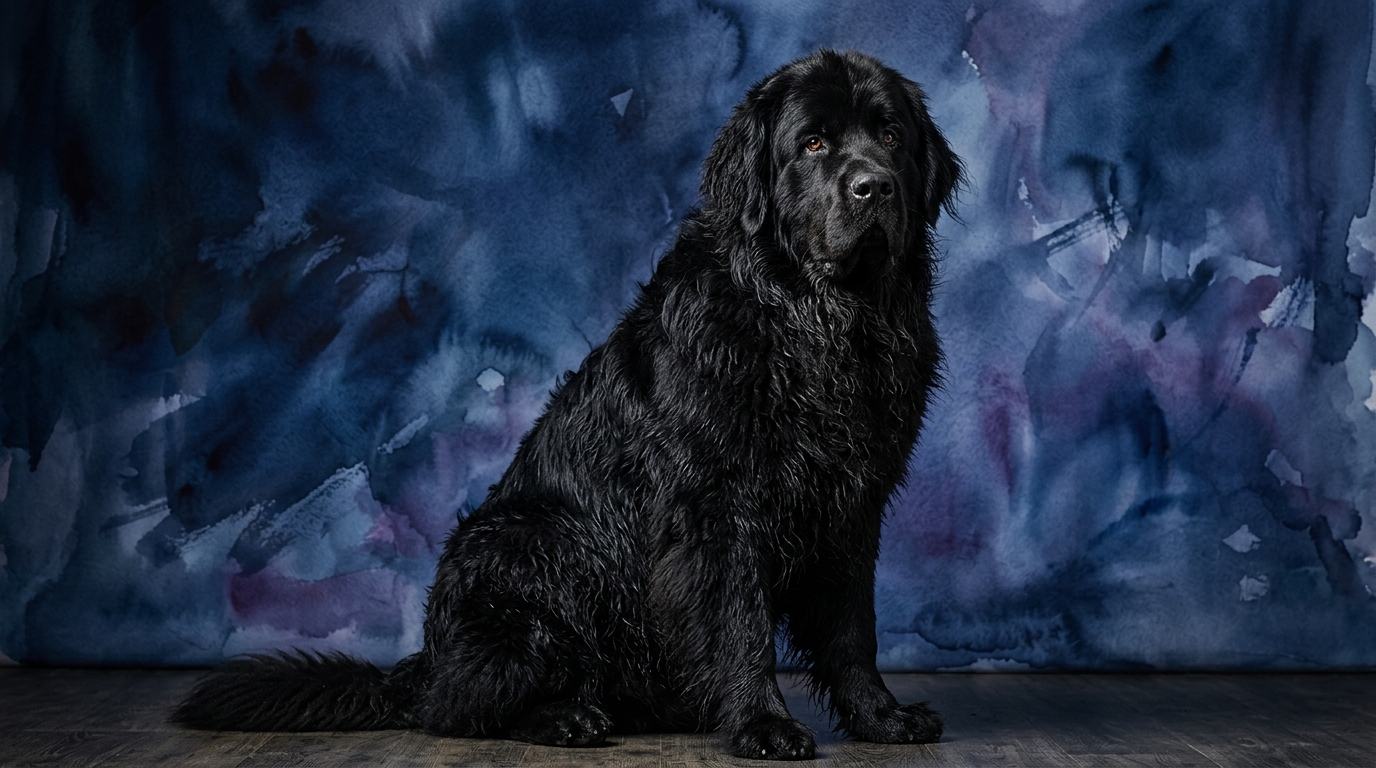
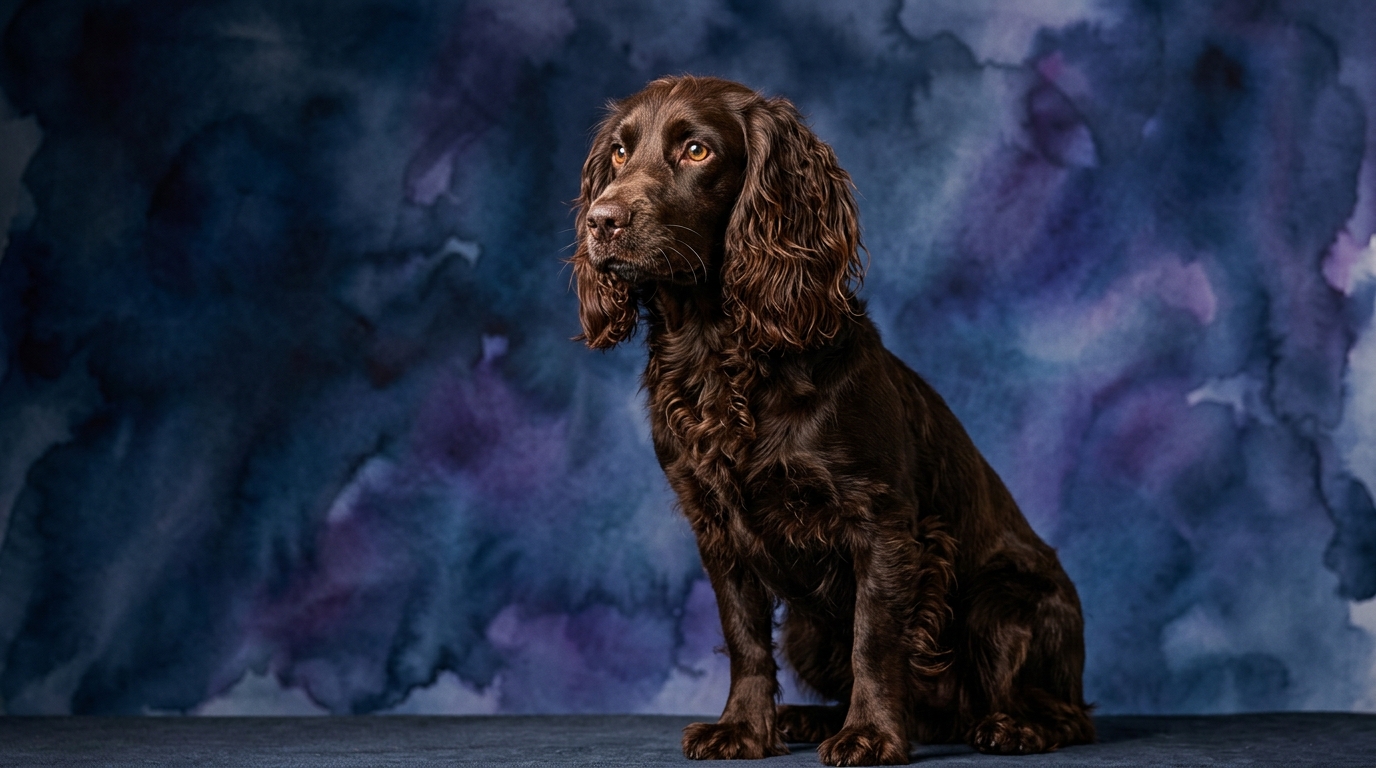
Side-by-Side IQ Profile: Newfoundland vs. Boykin Spaniel
To understand the cognitive landscape of these two breeds, The Cosmic Pet Pet IQ Lab employs a five-dimensional framework, allowing for a nuanced comparison of their mental aptitudes.
**Newfoundland (Dog, Working, Coren Rank #34)**
**Problem Solving (3/5)**: Newfoundlands exhibit a moderate capacity for independent thought and navigating novel situations, often relying on learned behaviors and their strong social intelligence to resolve challenges. They can figure out how to open gates or retrieve items, but might not be the most innovative strategists when faced with highly abstract puzzles.
**Training Speed (4/5)**: Their willingness to cooperate and eagerness to please, coupled with their strong memory, makes them relatively quick learners. They absorb commands and routines efficiently, often picking up new tasks with fewer repetitions than many other breeds.
**Social Intelligence (5/5)**: This is where Newfoundlands truly shine. They possess an exceptional ability to understand human cues, emotional states, and social dynamics within a family unit. This profound empathy and connection make them highly responsive to their owners' needs and intentions, fostering deep bonds.
**Instinctive Drive (5/5)**: Their powerful drive is rooted in their heritage as water rescue dogs. This manifests as a strong inclination to protect, assist, and 'save' individuals, often displaying an innate sense of responsibility and vigilance, particularly towards children or vulnerable family members.
**Memory (4/5)**: Newfoundlands typically have a robust memory for commands, routines, and experiences. They retain training well over time and can recall specific people, places, and situations, contributing significantly to their reliability and consistency.
**Boykin Spaniel (Dog, Sporting, Not Coren-Ranked)**
**Problem Solving (3/5)**: Boykin Spaniels show a practical level of problem-solving, sufficient for navigating hunting scenarios and figuring out how to retrieve game. Their approach tends to be direct and task-oriented, focused on achieving their specific objective rather than broad analytical thinking.
**Training Speed (3/5)**: They are capable learners, but generally require consistent, positive reinforcement to solidify commands. While they can learn quickly for tasks they are genetically predisposed to, like retrieving, more abstract or complex concepts might take additional repetition.
**Social Intelligence (3/5)**: Boykins demonstrate a good level of social awareness, capable of forming strong bonds with their families and understanding basic social cues. Their social engagement is typically focused on their immediate handlers, allowing for effective working relationships in the field.
**Instinctive Drive (3/5)**: Their primary instinctive drive is centered on hunting and retrieving, particularly in water. This manifests as a keen prey drive, a strong desire to work birds, and an enduring stamina for field tasks, though it's less broadly protective than the Newfoundland's.
**Memory (3/5)**: Boykin Spaniels possess a functional memory, retaining training and learned behaviors effectively enough for their working roles. They remember commands and hunting patterns, but may not exhibit the same depth of recall for complex social interactions as a Newfoundland.
Where the Newfoundland Wins Cognitively
The Newfoundland's cognitive profile showcases a distinct advantage in areas requiring profound social understanding and altruistic drive. Their 5/5 Social Intelligence score means they are exceptionally attuned to human emotions and family dynamics, making them remarkably intuitive companions who anticipate needs and offer comfort without explicit instruction. This deep empathy fosters an unparalleled bond, where the dog acts as a truly integrated, understanding member of the household. Coupled with a 5/5 Instinctive Drive rooted in water rescue, Newfoundlands exhibit a powerful, innate urge to protect and assist, translating into a strong sense of responsibility for their human charges. This isn't just a learned behavior; it's a profound, intrinsic motivation to care, making them vigilant guardians who instinctively understand when to intervene. Their 4/5 Training Speed and 4/5 Memory further solidify their cognitive strengths, enabling them to quickly internalize complex routines and retain a vast repertoire of commands, making them highly reliable and consistent in their responses. This blend of high social awareness, powerful protective instincts, and efficient learning capacity positions the Newfoundland as a truly exceptional partner for tasks requiring emotional depth and dependable action.
Where the Boykin Spaniel Wins Cognitively
While the Boykin Spaniel's cognitive scores are generally moderate compared to the Newfoundland, their strengths lie in a highly specialized and efficient application of their mental faculties, perfectly suited for their purpose. Their 3/5 Problem Solving and 3/5 Instinctive Drive scores, though not numerically higher, indicate a focused and practical intelligence essential for their role as retrieving gun dogs. They excel at deciphering practical challenges within a hunting environment, such as navigating dense cover or marking fallen game, relying on their sharp senses and innate drive to accomplish the task. This breed's specific cognitive advantage is in its single-minded dedication to its work; their moderate social intelligence and memory are precisely calibrated to support their primary function without distraction. They are not designed for broad social guardianship but for intense, focused collaboration in the field. This singular focus allows them to apply their problem-solving and instinctive drives with precision and endurance, making them highly effective and adaptable within their specialized sporting context, demonstrating a practical and resilient form of canine intelligence.
Which is Easier to Train and Why
The Newfoundland generally presents as the easier dog to train, a difference largely attributable to its superior Social Intelligence (5/5 vs Boykin's 3/5) and faster Training Speed (4/5 vs Boykin's 3/5). Newfoundlands possess an innate desire to connect and please their human companions, making them highly receptive to instruction and eager to understand expectations. Their exceptional social cognition means they quickly pick up on subtle cues, body language, and vocal inflections, allowing trainers to communicate more effectively. This deep understanding of human intent, combined with a strong memory, translates into commands being absorbed with fewer repetitions and retained for longer periods. For example, a Newfoundland is more likely to anticipate what you want based on your posture or gaze, making complex sequences smoother to teach. In contrast, the Boykin Spaniel, while trainable, requires more consistent and direct reinforcement. Their social intelligence is sufficient for forming a strong working bond, but they might not possess the same intuitive grasp of human emotional states or the broad eagerness to please across all contexts. Their training speed, while adequate for their specific tasks, suggests a need for more structured, repetitive sessions to ingrain behaviors, particularly for commands outside their strong retrieving instincts.
Which Suits Active Owners vs. Relaxed Owners
For owners seeking a more relaxed, gentle companion focused on family integration and emotional connection, the Newfoundland is often the better fit. Their high Social Intelligence and strong, protective Instinctive Drive mean they thrive in environments where they can be deeply involved with their human family, often acting as 'nanny dogs' for children or offering comfort to adults. While they require regular exercise to maintain their large physique, their activities are often less intense and more about companionship, such as leisurely walks, swimming, or yard play. Their presence is calming and reassuring, making them suitable for households that value a steady, empathetic presence over high-octane physical demands. Conversely, the Boykin Spaniel is ideally suited for active owners, particularly those engaged in outdoor sports, hunting, or seeking a highly energetic and focused working partner. Their moderate Instinctive Drive is geared towards sustained physical activity, especially retrieving in various terrains and water. They possess a boundless enthusiasm for work and play, needing significant daily exercise and mental stimulation to prevent boredom and channel their energy constructively. An owner who enjoys long hikes, retrieves, or field training will find the Boykin an indefatigable and devoted companion, ready for adventure and purpose-driven activity.
The Verdict
Opt for a Newfoundland if your household values a deeply empathetic, protective, and intuitive companion who will integrate profoundly into family life and learn with remarkable social grace.
Select a Boykin Spaniel if you lead an active, outdoor-oriented lifestyle, particularly enjoying hunting or dog sports, and seek a focused, energetic partner dedicated to purpose-driven activity.
🧠 Find Your Pet's IQ Score
Our Pet IQ Lab assessment covers 25+ tests across 5 cognitive dimensions — personalized to your breed.
Take the Full IQ Test →Frequently Asked Questions
Does the Newfoundland's high instinctive drive make it difficult to manage?
Not typically; their 5/5 instinctive drive is primarily for protection and rescue, making them vigilant but generally gentle. Proper socialization and training channel this drive into positive, protective behaviors rather than aggression. They are more inclined to 'save' than to confront.
Are Boykin Spaniels good family pets despite their strong hunting drive?
Yes, Boykin Spaniels can be excellent family pets, provided their significant energy and instinctive retrieving drive are met. They are affectionate with their families but thrive with active engagement and consistent mental and physical stimulation to keep them content.
How does the lack of a Coren ranking for the Boykin Spaniel impact its perceived intelligence?
The absence of a Coren ranking doesn't imply lower intelligence; it simply means the breed wasn't included in that specific study or didn't meet its criteria for that particular ranking. Our IQ dimensions offer a more granular view, showing the Boykin possesses practical intelligence well-suited for its specialized working roles.