
Side-by-Side IQ Profile: Newfoundland vs. Cavalier King Charles Spaniel
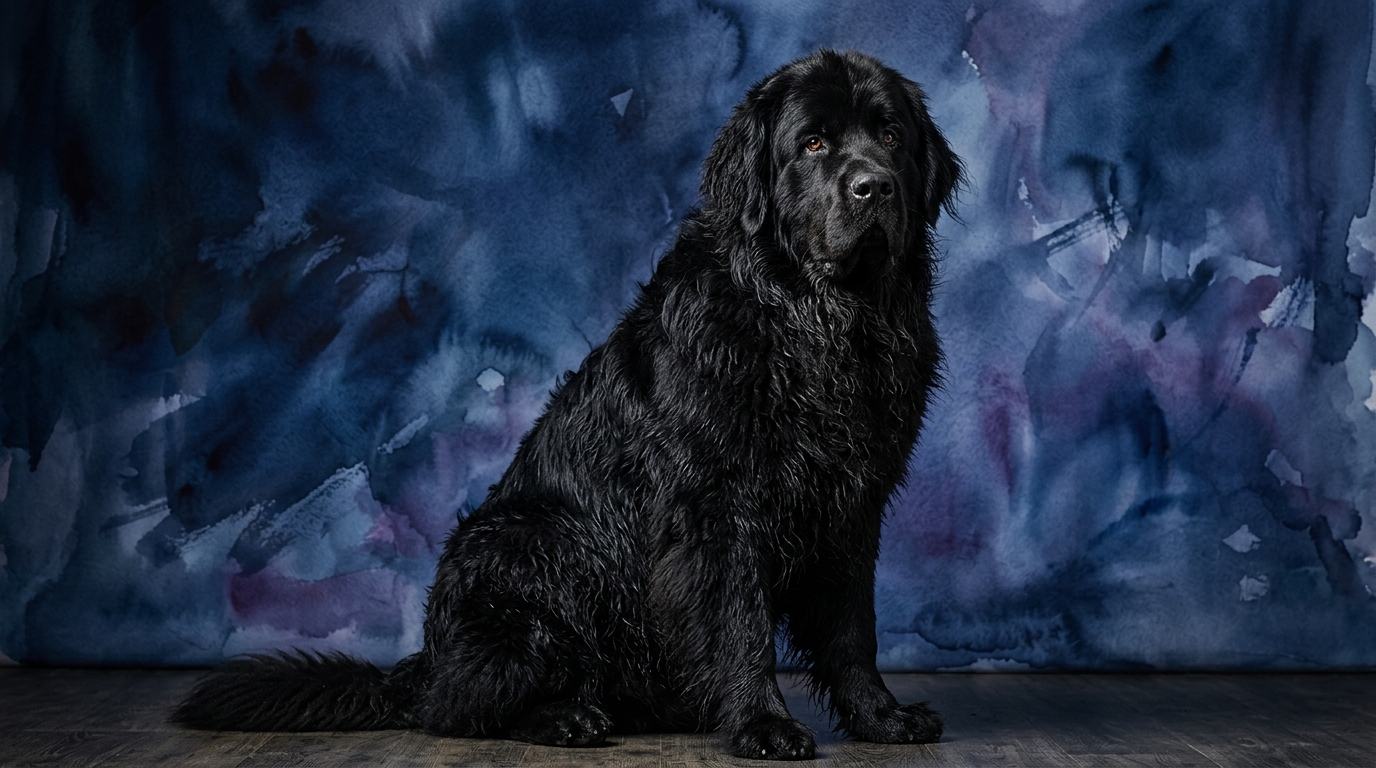
The Cosmic Pet's Pet IQ Lab assesses canine intelligence across five crucial dimensions. For the majestic Newfoundland, ranked #34 by Stanley Coren, its profile reflects a powerful working heritage. Its Problem Solving is 3/5, indicating competence in moderate challenges. Training Speed is 4/5, suggesting a quick grasp of commands. A perfect 5/5 in Social Intelligence highlights its deep empathy and understanding of human cues, vital for a rescue dog. Its Instinctive Drive is also a peak 5/5, a testament to its inherent motivation for tasks like pulling or water rescues. Memory is 4/5, showing strong retention of complex information.
In contrast, the charming Cavalier King Charles Spaniel, a Toy group member ranked #44 by Coren, offers strengths tailored to companionship. Its Problem Solving is 3/5, similar to the Newfoundland, demonstrating competence in daily dilemmas. Training Speed is 3/5, meaning it learns but may need more repetition. The Cavalier excels in Social Intelligence, also a perfect 5/5, underscoring its ability to bond deeply and read human moods. Its Instinctive Drive is a moderate 3/5, reflecting contentment with a less demanding lifestyle. Memory is 3/5, adequate for its companion role, though not as deep as a working breed.
Where the Newfoundland Wins Cognitively
The Newfoundland's cognitive profile reveals distinct advantages tied to its working and rescue heritage. Its superior Training Speed (4/5 vs. Cavalier's 3/5) means it typically absorbs new commands and complex sequences with fewer repetitions, reflecting quicker information processing. The Newfoundland's exceptional Instinctive Drive (5/5 vs. Cavalier's 3/5) provides a powerful engine for learning and task completion, manifesting as inherent motivation for activities like retrieving or pulling. Owners will find this breed possesses a strong, internal desire to "work" alongside them, translating into readiness for advanced training and canine sports. Coupled with a Memory score of 4/5 (vs. Cavalier's 3/5), it adeptly recalls intricate learned behaviors and experiences, making it exceptionally reliable for consistent performance.
Where the Cavalier King Charles Spaniel Wins Cognitively
While the Cavalier King Charles Spaniel might not possess the same work-oriented cognitive power, its strengths perfectly suit its role as a devoted companion. Its Problem Solving score of 3/5, matching the Newfoundland, indicates sufficient cognitive flexibility for daily routines without undue stress. The Cavalier's true cognitive triumph is its Social Intelligence, a perfect 5/5, mirroring the Newfoundland's score. This means the Cavalier is exceptionally attuned to human emotions, body language, and subtle social cues, allowing them to forge incredibly strong, intuitive bonds. While its Instinctive Drive is a moderate 3/5, this is an advantage for certain lifestyles. It means the Cavalier is less prone to restlessness or destructive behaviors from unmet working needs, making it an easier fit for quieter homes. Its cognitive architecture prioritizes harmonious living and emotional connection, making it an unparalleled expert in companionship.
Which Is Easier to Train and Why
When considering ease of training, the Newfoundland generally holds an advantage due to its higher Training Speed (4/5) and exceptional Instinctive Drive (5/5). The Newfoundland's inherent desire to engage in meaningful tasks, stemming from its working heritage, provides a strong motivational foundation. This breed often approaches training sessions with enthusiasm, eager to understand and perform. Their quicker grasp of commands means fewer repetitions are typically needed for them to master new behaviors. For instance, teaching a Newfoundland to retrieve a specific item or navigate an agility course might progress more rapidly because they are driven by the task itself and process instructions efficiently. Their strong memory also aids in consistent recall of learned behaviors over time.
In contrast, the Cavalier King Charles Spaniel, with a Training Speed of 3/5 and an Instinctive Drive of 3/5, may require a more patient and consistent approach. While Cavaliers are eager to please and highly socially intelligent, their motivation isn't as intrinsically tied to performing complex tasks or vigorous work. They learn effectively, but owners might find that lessons need to be broken into smaller steps and repeated more frequently to solidify understanding. For a Cavalier, the primary motivator is often the social interaction and positive reinforcement from their owner, rather than the inherent challenge of the task. This means training needs to be fun, engaging, and focused on strengthening the bond, ensuring they don't lose interest. While both breeds are trainable, the Newfoundland's cognitive profile aligns more closely with a "quick study" for task-oriented training, while the Cavalier excels in relationship-driven learning.
Which Suits Active Owners vs. Relaxed Owners
The cognitive profiles of these two breeds clearly delineate their suitability for different owner lifestyles. The Newfoundland, with its robust Instinctive Drive (5/5) and strong Memory (4/5), thrives with active owners who can provide consistent mental and physical engagement. This breed requires more than just walks; it needs purposeful activities that tap into its working instincts, such as swimming, carting, or advanced obedience. Owners who enjoy outdoor adventures, participate in dog sports, or are willing to dedicate time to structured training will find the Newfoundland a highly fulfilling partner. Its substantial size and powerful build also necessitate an owner capable of managing a strong dog, reinforcing the need for early and consistent training to channel its formidable drive constructively. A Newfoundland without sufficient outlets for its cognitive and physical energy can become restless or develop undesirable behaviors.
Conversely, the Cavalier King Charles Spaniel, characterized by a moderate Instinctive Drive (3/5) and a perfect Social Intelligence (5/5), is an ideal match for more relaxed owners seeking a devoted companion. While they appreciate daily walks and playtime, their cognitive needs are largely met through consistent social interaction, cuddles, and being an integral part of family life. Their lower drive means they are less likely to seek out independent "work" or become destructive if not constantly stimulated with intense tasks. Owners who prefer a less demanding exercise routine, enjoy a calm home environment, and prioritize affectionate interaction will find the Cavalier's cognitive makeup perfectly aligns with their lifestyle, offering unwavering devotion without requiring a rigorous activity schedule.
The Verdict
Opt for the Newfoundland if you are an active individual or family seeking a powerful, task-oriented companion eager for purposeful engagement and capable of handling complex training, especially if you enjoy outdoor activities like swimming or carting.
Select the Cavalier King Charles Spaniel if your lifestyle is more relaxed, prioritizing affectionate companionship, gentle interaction, and a dog whose primary cognitive strength lies in forming deep, intuitive social bonds within a calm home environment.
🧠 Find Your Pet's IQ Score
Our Pet IQ Lab assessment covers 25+ tests across 5 cognitive dimensions — personalized to your breed.
Take the Full IQ Test →Frequently Asked Questions
Are both breeds good with children?
Yes, both Newfoundlands and Cavalier King Charles Spaniels score high in Social Intelligence (5/5), making them generally patient and gentle with children, though supervision is always recommended to ensure appropriate interactions.
Which breed is more independent?
The Newfoundland's high instinctive drive and capability for complex tasks might give it an appearance of independence during work, but both breeds are deeply social and thrive on human companionship, with the Cavalier perhaps being more consistently "velcro" to its owners.
Do Newfoundlands and Cavaliers require a lot of mental stimulation?
Newfoundlands, with their strong instinctive drive and memory, require consistent mental challenges like structured training and problem-solving games to prevent boredom. Cavaliers need mental engagement primarily through social interaction, gentle play, and being involved in family activities rather than complex, task-oriented work.