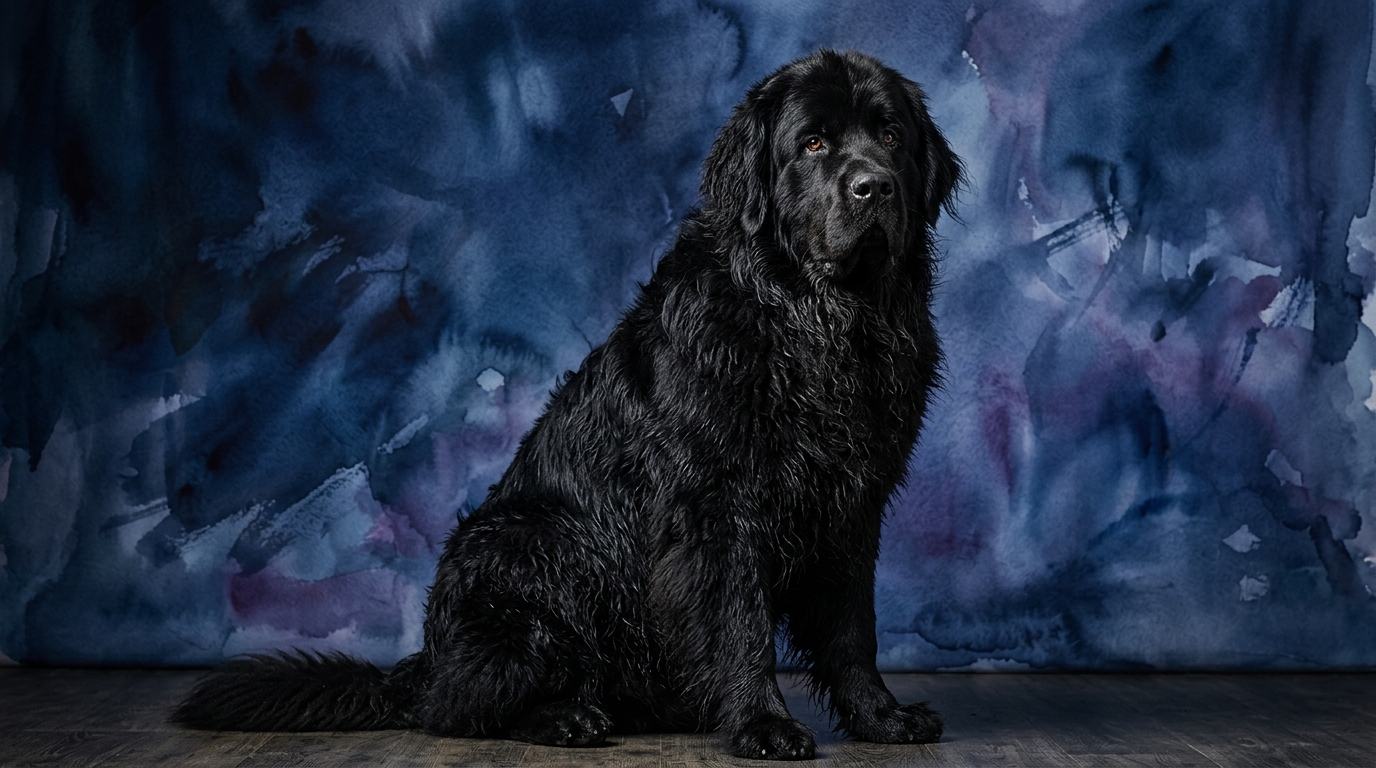

Side-by-Side IQ Profile: Unpacking Cognitive Strengths
To truly understand the intellectual distinctions between these two impressive breeds, The Cosmic Pet Pet IQ Lab employs a five-dimensional cognitive framework. This allows us to move beyond broad generalizations and appreciate the specific facets of their mental prowess.
The Newfoundland, a Working breed, is ranked #34 by Coren, while the Chesapeake Bay Retriever, a Sporting breed, holds a higher Coren rank at #27. This initial ranking hints at differences in obedience intelligence, but our deeper dive reveals a more intricate picture.
**Problem Solving:** The Newfoundland scores 3/5 in problem-solving, indicating a capacity for methodical thinking and applying learned solutions, often preferring to rely on established routines or guidance from their human companions. Their approach tends to be less about novel independent strategizing and more about working through challenges with a calm, deliberate demeanor. In contrast, the Chesapeake Bay Retriever achieves a 4/5, showcasing a more pronounced aptitude for independent thought and adaptive strategies. This breed often excels at navigating complex environments, figuring out solutions to obstacles in their path, and making quick decisions in dynamic situations, a trait honed by their demanding retrieving work.
**Training Speed:** Both breeds register an impressive 4/5 in training speed, suggesting that both Newfoundlands and Chesapeake Bay Retrievers are adept at acquiring and retaining new commands and behaviors. This metric highlights their capacity for learning and responsiveness to instruction. The underlying motivations for this quick learning, however, differ significantly, influencing the training approach an owner might adopt.
**Social Intelligence:** Here, the Newfoundland truly shines with a perfect 5/5. This score reflects an exceptional ability to read and respond to human emotions, understand subtle social cues, and form deep, empathetic bonds. Newfoundlands are highly attuned to their family's moods and needs, often anticipating desires and offering comfort without direct command. The Chesapeake Bay Retriever, with a 3/5, displays a more independent and less overtly socially focused intelligence. While capable of forming strong bonds, their social interactions are often more transactional or task-oriented, and they may not possess the same innate drive to interpret and cater to human emotional states.
**Instinctive Drive:** The Newfoundland's 5/5 in instinctive drive points to an incredibly strong, innate predisposition towards their historical roles, particularly water rescue and guardianship. This drive is not merely for a specific task but encompasses a profound inherent desire to protect and assist, making them naturally inclined towards acts of heroism and care. The Chesapeake Bay Retriever, scoring 3/5, possesses a strong, focused drive for retrieving, characteristic of sporting breeds. However, this score suggests their instinctive drive, while potent for their specific work, might be less broadly applied or less intensely generalized towards diverse 'helping' behaviors compared to the Newfoundland's all-encompassing protective instincts.
**Memory:** Both breeds share a 4/5 for memory, indicating that both Newfoundlands and Chesapeake Bay Retrievers retain information, commands, and experiences effectively. This robust memory serves them well in their respective roles, whether recalling complex sequences of commands for a working task or remembering household routines and family members over time.
Where Newfoundland Wins Cognitively
The Newfoundland's cognitive superiority largely resides in its exceptional social intelligence and potent instinctive drive. Their 5/5 social intelligence means they possess an unparalleled ability to connect with humans on an emotional level, often demonstrating profound empathy. This manifests as a natural inclination to comfort, an uncanny knack for understanding unspoken cues, and an eagerness to be an integrated, supportive member of the family unit. This social acuity makes them highly receptive to training methods rooted in positive reinforcement and relationship building, as they genuinely desire to please their cherished companions.
Furthermore, their 5/5 instinctive drive, deeply rooted in their history as water rescue dogs, equips them with an inherent desire to protect and assist. This isn't just a learned behavior; it's a fundamental part of their being, guiding them to act courageously and selflessly in situations where help is needed. This powerful, benevolent drive, combined with their memory (4/5), enables them to learn and execute complex 'helping' behaviors, making them exceptional candidates for therapy work, service roles, or simply as vigilant, gentle protectors within a family setting. Their cognitive strengths make them intuitive companions, capable of anticipating needs and offering comfort, a nuanced form of intelligence that goes beyond mere command execution.
Where Chesapeake Bay Retriever Wins Cognitively
The Chesapeake Bay Retriever's cognitive edge is most apparent in its superior problem-solving abilities and independent working intelligence. With a 4/5 in problem-solving, Chessies exhibit a remarkable capacity for critical thinking and adapting to novel situations. This trait, vital for a retriever navigating challenging terrain and water conditions, allows them to strategize and execute solutions with minimal human intervention. They are less likely to wait for explicit directions and more inclined to figure things out independently, a testament to their resourcefulness and mental agility.
Their higher Coren rank (#27) also suggests a stronger aptitude for obedience and working intelligence compared to the Newfoundland. While both breeds show a 4/5 in training speed, the Chessie's problem-solving acumen means they can quickly grasp complex sequences and apply them in varied scenarios, making them highly efficient learners for specific, challenging tasks. This blend of quick learning and independent thought makes them exceptionally capable in competitive dog sports, hunting, and other activities requiring both mental and physical dexterity. Their memory (4/5) further supports their ability to recall intricate retrieving patterns and navigate diverse environments effectively, demonstrating a robust, task-oriented cognitive framework.
Which is Easier to Train and Why
Both the Newfoundland and the Chesapeake Bay Retriever boast a 4/5 training speed, indicating a strong capacity for learning commands. However, the 'ease' of training often hinges on their differing social and instinctive drives, which dictate their motivations and responsiveness. The Newfoundland's high social intelligence (5/5) means they are inherently eager to please and deeply attuned to their owner's emotional state. This makes them highly responsive to positive reinforcement, praise, and training methods that strengthen the bond, as their primary motivation is often rooted in connection and approval. Their strong instinctive drive for service further enhances their willingness to learn tasks that involve helping or protecting, making them receptive to gentle, consistent guidance. While their size and strength necessitate early and consistent training to manage, their cooperative nature generally makes the process rewarding.
The Chesapeake Bay Retriever, with its 3/5 social intelligence and 4/5 problem-solving, presents a different training dynamic. While they learn quickly, their independence and focus on task might mean they are less motivated by purely social approval. Chessies thrive on stimulating, challenging tasks and clear, consistent direction. They might be more inclined to test boundaries or seek their own solutions if training isn't engaging or if they perceive inconsistencies. Owners need to be firm, fair, and creative, leveraging the Chessie's problem-solving skills by incorporating variety and challenges into training sessions. While equally capable learners, their training requires a more assertive and task-oriented approach compared to the Newfoundland's more relationship-driven responsiveness.
Which Suits Active Owners vs Relaxed Owners
The choice between a Newfoundland and a Chesapeake Bay Retriever largely depends on an owner's lifestyle and energy levels. Newfoundlands, despite their massive size, are often described as 'gentle giants' and possess a relatively calm demeanor indoors. However, their 5/5 instinctive drive and high social intelligence mean they are not suited for entirely relaxed owners who prefer minimal interaction. They require consistent, moderate exercise, such as daily walks and opportunities for swimming, and thrive on being an integral part of family life. Their cognitive needs are met through social engagement, purposeful 'jobs' like cart pulling or carrying items, and consistent, gentle training. They suit owners who are active in a family-oriented way, valuing companionship and purposeful, lower-impact activities over high-energy sports.
The Chesapeake Bay Retriever, on the other hand, is unequivocally a breed for active, dedicated owners. As a sporting dog with 4/5 problem-solving and a strong retrieving instinct, they possess abundant energy and a need for significant physical and mental stimulation. They excel in activities like hiking, swimming, retrieving games, and dog sports such as agility or obedience trials. Without sufficient outlets for their drive and intelligence, Chessies can become bored, leading to destructive behaviors. They are best suited for individuals or families who embrace an outdoorsy lifestyle, enjoy rigorous exercise, and are prepared to engage their dog in structured work or challenging activities regularly. Their independence means they thrive with owners who provide clear leadership and consistent training, rather than simply seeking a relaxed, low-maintenance companion.
The Verdict
Choose a Newfoundland if you seek an empathetic, protective, and deeply socially intelligent companion who thrives on being an integral, gentle part of family life and engaging in purposeful, lower-impact activities. Their inherent desire to help and connect makes them unparalleled emotional anchors.
Opt for a Chesapeake Bay Retriever if you are an active, dedicated owner seeking a resilient, independent problem-solver for outdoor adventures, challenging dog sports, or demanding retrieving work. They require consistent physical and mental engagement from an owner who appreciates their self-reliant, task-oriented intelligence.
🧠 Find Your Pet's IQ Score
Our Pet IQ Lab assessment covers 25+ tests across 5 cognitive dimensions — personalized to your breed.
Take the Full IQ Test →Frequently Asked Questions
Are Newfoundlands truly good swimmers?
Yes, Newfoundlands are exceptional swimmers, a trait deeply ingrained in their breed history for water rescue. Their dense, water-resistant coat, webbed feet, and powerful build make them natural and eager aquatic companions, often seeking out water whenever possible.
Do Chesapeake Bay Retrievers get along well with children and other pets?
Chesapeake Bay Retrievers can be good family dogs, but their lower social intelligence and independent nature mean they require early socialization and consistent training. They are often best suited for families with older, respectful children and may require careful introductions to other pets due to their strong prey drive and focused personality.
What kind of mental stimulation do these breeds need to thrive?
Newfoundlands thrive on social interaction, gentle problem-solving games, and purposeful tasks that allow them to 'help,' such as carrying items or participating in therapy work. Chesapeake Bay Retrievers need more rigorous mental challenges like advanced obedience, scent work, complex retrieving drills, and puzzle toys that engage their strong problem-solving skills and independent thinking.