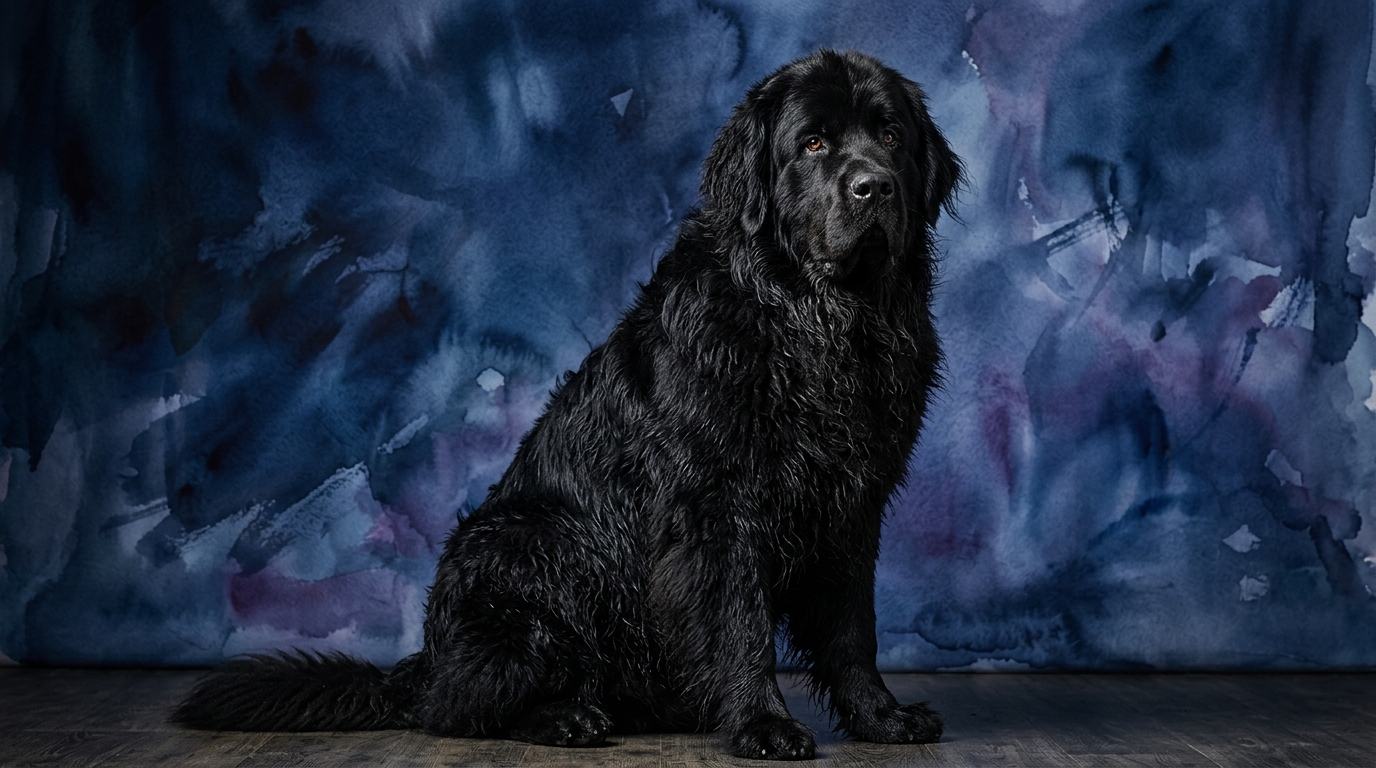

Side-by-Side Cognitive Profiles: Newfoundland vs. Clumber Spaniel
The Cosmic Pet Pet IQ Lab employs a five-dimensional framework to assess canine cognition, providing a nuanced view beyond simple rankings. For the Newfoundland, a dog from the Working Group, we observe a Coren rank of #34, indicating a strong capacity for understanding and executing commands. Their Problem Solving score of 3/5 suggests they are capable of learning and applying solutions to familiar challenges but may not instinctively innovate. Training Speed, at 4/5, points to a breed that picks up new commands with commendable efficiency, often eager to please their human companions. Where Newfoundlands truly shine is in Social Intelligence, scoring a perfect 5/5, reflecting their profound ability to read human cues and form deep, cooperative bonds. Their Instinctive Drive, also 5/5, highlights powerful natural predispositions for tasks like water rescue and companionship, while Memory, at 4/5, indicates excellent retention of learned behaviors and associations.
In contrast, the Clumber Spaniel, a member of the Sporting Group, holds a Coren rank of #55, placing them in the category of solid working intelligence. Their Problem Solving ability matches the Newfoundland at 3/5, suggesting a similar practical approach to obstacles, relying on learned patterns rather than spontaneous invention. Training Speed for the Clumber Spaniel is rated at 3/5, meaning they require consistent, patient instruction and may take more repetitions to solidify new commands compared to faster learners. Their Social Intelligence, at 3/5, indicates a more independent nature; while they form bonds, they might not be as overtly attuned to human emotional states or as driven by a desire to cooperate as the Newfoundland. Instinctive Drive, also 3/5, points to a strong, focused drive for their specific sporting purpose—scenting and flushing game—but perhaps less broad applicability in other instinctive tasks. Finally, their Memory score of 3/5 suggests they retain information adequately, particularly for tasks directly related to their work, but may benefit from regular reinforcement.
Where the Newfoundland Excels Cognitively
The Newfoundland's cognitive strengths are deeply rooted in their history as working dogs alongside humans, particularly in maritime environments. Their perfect 5/5 in Social Intelligence is not merely about friendliness; it signifies an exceptional capacity for empathy, understanding subtle human non-verbal cues, and a profound desire for partnership. This translates into a dog that intuitively knows when its human is distressed or needs comfort, often responding with unsolicited affection or protective presence. This social attunement makes them highly cooperative, always seeking to understand and work with their handler.
Furthermore, their 5/5 Instinctive Drive is a testament to natural predispositions that align closely with human assistance. This isn't just a general 'drive' but a specific, powerful inclination towards protective guardianship, gentle caretaking (especially with children), and their renowned water rescue abilities. They possess an inherent understanding of how to aid a struggling person in water, often without direct command, showcasing an adaptive application of instinct that few breeds can match. This combination of social acuity and strong, benevolent instincts makes them profoundly responsive and intuitive companions in a wide array of real-world scenarios.
Where the Clumber Spaniel Shines Cognitively
While the Newfoundland excels in social cooperation, the Clumber Spaniel's cognitive strengths lie in a different domain: methodical, independent work. Their 3/5 scores across Problem Solving, Social Intelligence, Instinctive Drive, and Memory, when viewed through the lens of their sporting heritage, reveal a dog built for sustained, focused tasks requiring endurance and self-reliance rather than constant human interaction. A Clumber Spaniel’s problem-solving often manifests in their persistent and thorough approach to a scent trail, systematically working through complex environmental challenges to locate game without needing frequent input or validation from their handler.
Their particular brand of instinctive drive, though rated 3/5 overall, is highly specialized and powerful within its niche. This drive is not about broad assistance but about a dedicated, unwavering focus on scent work and flushing game. They exhibit a quiet determination and perseverance, meticulously covering ground. This steadfastness, combined with a more reserved social nature, allows them to concentrate on their task with minimal distraction, making them highly effective in their intended role as a hunting companion. They are not necessarily looking to 'please' in the same way a Newfoundland might, but rather to perform their job with quiet competence and thoroughness, often finding their greatest reward in the successful completion of the hunt itself.
Training Dynamics: Newfoundland vs. Clumber Spaniel
When it comes to training, the cognitive differences between these two breeds become particularly apparent. The Newfoundland, with its 4/5 Training Speed and 5/5 Social Intelligence, is generally more straightforward to train. They possess a natural eagerness to engage with their human companions and a strong desire to cooperate, which makes them highly receptive to positive reinforcement. Their ability to quickly grasp commands and their excellent memory (4/5) mean that once a behavior is learned, it tends to stick. They thrive on interactive training sessions that reinforce their bond with their owner, often performing best when they feel they are working in partnership.
The Clumber Spaniel, however, presents a different training experience. With a Training Speed of 3/5 and Social Intelligence also at 3/5, they require a more patient, consistent, and perhaps less emotionally driven approach. Clumbers can be independent thinkers, sometimes described as having a stubborn streak, which means they might not always offer immediate, enthusiastic compliance. They respond best to clear, fair, and consistent methods, often valuing routine and predictability. While they are capable learners, owners might need to employ more varied motivational techniques and understand that a Clumber's performance is often driven by their internal motivation for the task itself rather than a constant need for human affirmation. Training a Clumber is less about speed and more about building a solid foundation of trust and respect for their methodical nature.
Matching Breeds to Lifestyles: Active vs. Relaxed Owners
The Newfoundland is an ideal companion for owners who lead an active, family-oriented lifestyle and desire a highly integrated canine presence. Their substantial size and thick coat mean they are not suited for apartment living unless ample outdoor space and frequent walks are provided. They require regular, moderate exercise, often enjoying activities like swimming, long walks, and supervised play. Their high social intelligence means they thrive on constant companionship and can become anxious or destructive if left alone for extended periods. Owners who enjoy outdoor adventures, especially near water, and are prepared for a large, devoted, and sometimes slobbery companion will find the Newfoundland to be an unparalleled family member. They are gentle giants who excel in roles where they can be part of the family's daily life, offering comfort, protection, and boundless affection.
The Clumber Spaniel, with its more reserved demeanor and moderate energy levels, is better suited for owners who appreciate a quieter, more self-contained companion. While they benefit from regular walks and opportunities for scent work, they are not typically high-energy dogs that demand constant vigorous activity. Their instinctive drive for scenting means they greatly benefit from mental stimulation through activities like nose work, tracking, or simply having a secure yard to explore with their keen sense of smell. They can adapt well to various living situations, including homes with smaller yards, as long as their exercise needs are met. Owners who enjoy methodical training, appreciate an independent spirit, and prefer a dog that is affectionate but not overly demanding of attention will find the Clumber Spaniel to be a steady and loyal presence, content to be near their family without always being the center of attention.
The Verdict
Choose the Newfoundland if you seek a deeply empathetic, highly cooperative, and instinctively protective companion for an active, family-centric lifestyle, especially if you appreciate a large dog with a strong desire for partnership and water activities.
Opt for the Clumber Spaniel if you value a steady, independent, and methodical companion that excels in focused tasks like scent work, requires consistent but patient training, and fits a more relaxed yet mentally stimulating home environment.
🧠 Find Your Pet's IQ Score
Our Pet IQ Lab assessment covers 25+ tests across 5 cognitive dimensions — personalized to your breed.
Take the Full IQ Test →Frequently Asked Questions
Are Newfoundlands difficult to manage due to their size?
While their size is substantial, Newfoundlands are often described as gentle giants. Early socialization and consistent training are crucial to ensure they are well-mannered, but their inherent social intelligence and cooperative nature generally make them manageable companions despite their imposing stature.
Do Clumber Spaniels require extensive grooming?
Clumber Spaniels have a dense, weather-resistant coat that requires regular grooming to prevent matting, especially around their feathery areas. Weekly brushing, along with occasional trimming, is typically sufficient to keep their coat healthy and clean.
Which breed is more prone to separation anxiety?
Given their high social intelligence and strong desire for companionship, Newfoundlands are generally more prone to developing separation anxiety if left alone for extended periods. Clumber Spaniels, with their more independent nature, tend to be more tolerant of alone time, though consistent companionship is still important for their well-being.