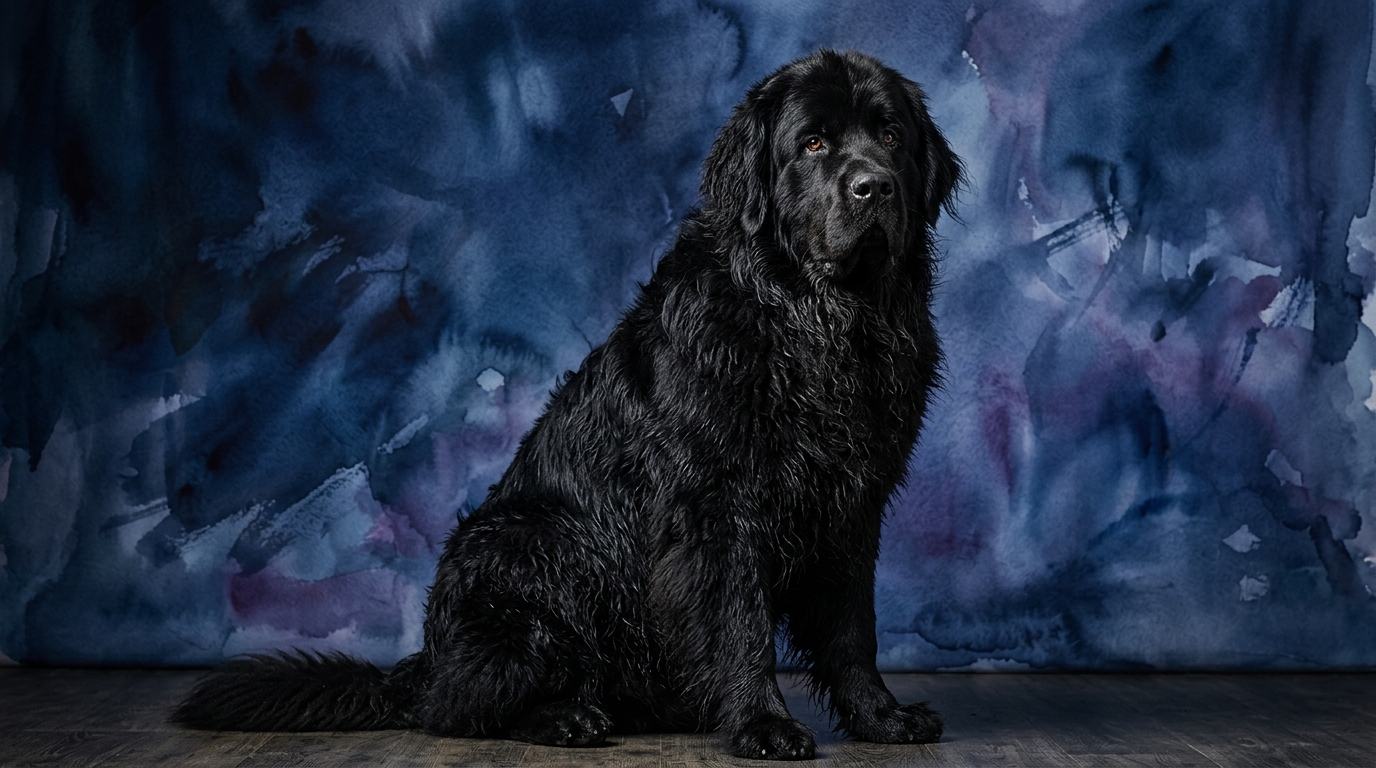
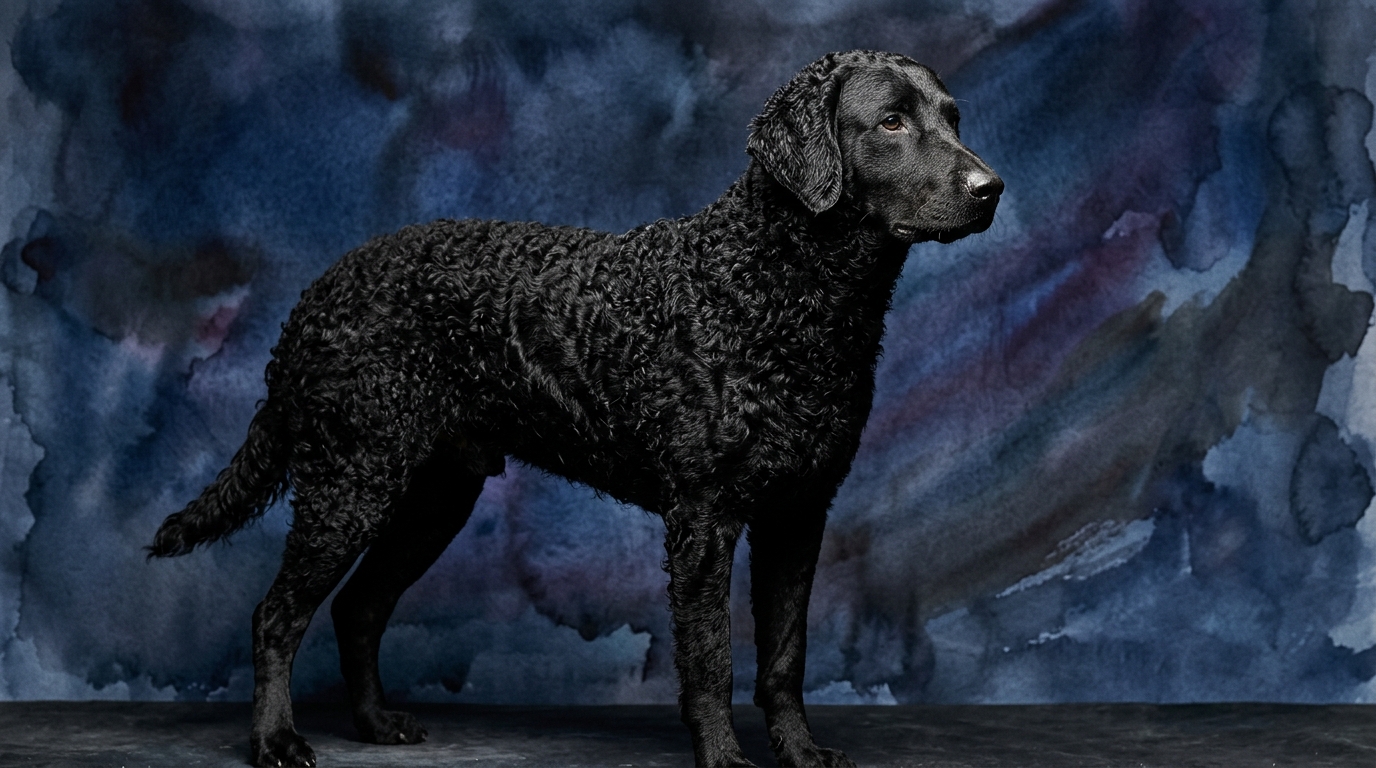
Side-by-Side IQ Profile: Newfoundland vs. Curly-Coated Retriever
The Cosmic Pet Pet IQ Lab's assessment provides a granular view into the minds of these two distinct breeds. The Newfoundland, a stalwart of the Working Group, presents a balanced yet distinctly empathetic cognitive profile. Its problem-solving ability is rated at 3/5, indicating a capacity to navigate novel situations with thoughtful consideration, often involving human interaction or safety. Training speed for the Newfoundland scores 4/5, reflecting its eagerness to learn and respond to cues, likely driven by its exceptional social intelligence. This breed truly shines in social intelligence at 5/5, demonstrating a profound understanding of human emotions and intentions, making it an incredibly perceptive companion. Its instinctive drive is also very high at 5/5, primarily channeled into its historical role as a water rescue dog, showcasing a powerful innate urge to protect and aid. Memory, crucial for retaining commands and routines, is solid at 4/5, allowing for reliable recall over time.
In contrast, the Curly-Coated Retriever, a member of the Sporting Group, displays a cognitive makeup tailored for independent field work. Its problem-solving ability is rated 3/5, on par with the Newfoundland, but often applied to navigating complex terrains or strategizing retrieves. Training speed for the Curly is 3/5, suggesting it learns at a steady pace, though perhaps with a more independent streak than the Newfoundland. Social intelligence for the Curly-Coated Retriever is rated 3/5; while capable of deep bonds, it may not exhibit the same overt emotional attunement as its Working Group counterpart, preferring a more self-reliant approach. Its instinctive drive, at 3/5, is focused on its retrieving heritage, displaying a consistent but less intense drive than the Newfoundland's life-saving instincts. Memory for the Curly is strong at 4/5, enabling it to recall locations of multiple retrieves and complex routes, a vital asset in its field work.
Where the Newfoundland Excels Cognitively
The Newfoundland's cognitive superiority is most evident in its profound social intelligence (5/5) and powerful instinctive drive (5/5). This breed possesses an almost unparalleled ability to perceive and respond to human emotional states, making it an exceptional therapy dog and family companion. Their high social IQ means they often anticipate needs, offer comfort instinctively, and can read subtle human cues that other breeds might miss. This empathetic understanding translates into a highly cooperative nature during training, contributing to its faster training speed (4/5) as they actively seek to collaborate with their human partners. Furthermore, their instinctive drive, primarily for water rescue, is a testament to a deep-seated cognitive programming that compels them to act heroically in emergencies, demonstrating problem-solving under pressure with a focus on safety and assistance. This drive is not merely physical; it's a cognitive imperative to protect and serve, a complex blend of instinct and situational awareness that sets them apart.
Where the Curly-Coated Retriever's Cognitive Profile Shines Differently
While the Curly-Coated Retriever’s raw scores for problem-solving (3/5) and memory (4/5) are on par with the Newfoundland, its cognitive strength lies in the specific application of these abilities within its sporting context, often with a greater degree of self-reliance. Its problem-solving manifests in navigating varied and challenging terrains to locate and retrieve game, strategizing the most efficient path through thick cover or across water, frequently with minimal direct handler intervention. This requires a unique blend of spatial reasoning and independent decision-making. The Curly's robust memory (4/5) is particularly adept at recalling the fall location of multiple birds and the intricate details of a field, allowing for efficient and precise retrieves over large areas. This isn't just about remembering commands, but about retaining complex environmental information essential for its work. Its 3/5 instinctive drive, while lower than the Newfoundland's, is consistently focused on its retrieving task, demonstrating a persistent and dedicated cognitive focus on its primary function as a gun dog.
Which is Easier to Train and Why: Real Behavioral Differences
Based on their respective IQ profiles, the Newfoundland (training speed 4/5) is generally easier to train than the Curly-Coated Retriever (training speed 3/5). The primary reason for this difference lies in their social intelligence. The Newfoundland's exceptional social intelligence (5/5) means it thrives on human interaction and collaboration. This breed possesses an inherent desire to please and a keen awareness of its owner's moods and intentions, making it highly responsive to positive reinforcement and eager to learn new commands. Their gentle nature and willingness to cooperate mean they often pick up new tasks quickly and reliably, making early training a relatively smooth experience.
Conversely, the Curly-Coated Retriever's lower social intelligence (3/5) and inherent independence mean training requires more patience, consistency, and a deep understanding of its character. While intelligent and capable of learning, the Curly may not always view training as a collaborative venture in the same way a Newfoundland does. They can be more prone to independent thought or becoming bored with repetitive drills, requiring a trainer to be creative, engaging, and firm without being harsh. Their self-reliant working style means they are less inclined to constantly seek human approval for every action, which can sometimes be misinterpreted as stubbornness but is rather a reflection of their cognitive design for independent problem-solving in the field. Training a Curly often involves tapping into their natural retrieving drive and making lessons fun and stimulating to keep their attention.
Ideal Owners: Active vs. Relaxed Lifestyles
The Newfoundland's cognitive and physical attributes align well with a more relaxed owner, provided they can accommodate its substantial size and grooming needs. While they require regular exercise to maintain health, their energy levels are generally moderate. Their high social intelligence means they thrive on companionship and being an integral part of family life, making them excellent indoor companions for owners who are home frequently. They are content with leisurely walks, supervised outdoor play, and plenty of cuddle time, valuing mental stimulation through interaction over intense physical exertion. Owners who appreciate a calm, empathetic presence and are prepared for a large, devoted companion will find the Newfoundland a perfect fit.
The Curly-Coated Retriever, with its sporting background and more independent cognitive style, is better suited for active owners. This breed needs consistent physical and mental stimulation to prevent boredom and channel its instinctive drives appropriately. Activities like retrieving games, long hikes, swimming, agility, or actual field work are ideal for a Curly. Their memory and problem-solving skills are best utilized when given tasks to perform, making them excellent partners for owners who enjoy an active outdoor lifestyle and are willing to engage in structured training and dog sports. An owner who understands and respects the Curly's self-reliant nature and can provide ample opportunities for it to 'work' will see this breed flourish.
The Verdict: When to Choose Each Breed
The Verdict
Choose the Newfoundland if you seek an empathetic, gentle giant companion who thrives on close family bonds and offers profound social understanding, even if you lead a moderately active lifestyle. Its strong instinctive drive for protection and aid makes it a loyal, watchful family member.
Opt for the Curly-Coated Retriever if you are an active individual or family looking for a self-reliant, task-oriented sporting companion who excels in field work and thrives on consistent physical and mental challenges. Its independent spirit and focused drive make it a dedicated partner for adventures.
🧠 Find Your Pet's IQ Score
Our Pet IQ Lab assessment covers 25+ tests across 5 cognitive dimensions — personalized to your breed.
Take the Full IQ Test →Frequently Asked Questions
Are Newfoundlands suitable for first-time dog owners?
Yes, Newfoundlands can be suitable for first-time owners due to their gentle temperament, high social intelligence, and eagerness to please, which makes training more manageable. However, their large size and grooming needs require a commitment to proper care and early socialization.
Do Curly-Coated Retrievers make good family pets?
Curly-Coated Retrievers can be excellent family pets for active families who understand their need for mental and physical engagement and appreciate their independent nature. They form strong bonds with their family but may be less outwardly demonstrative than some other breeds.
Which breed requires more grooming?
The Newfoundland generally requires significantly more grooming due to its thick, dense double coat, which needs regular brushing to prevent mats and control shedding. The Curly-Coated Retriever's unique single coat is relatively low maintenance, requiring less frequent brushing.