
Side-by-Side IQ Profile: Newfoundland vs. Dachshund
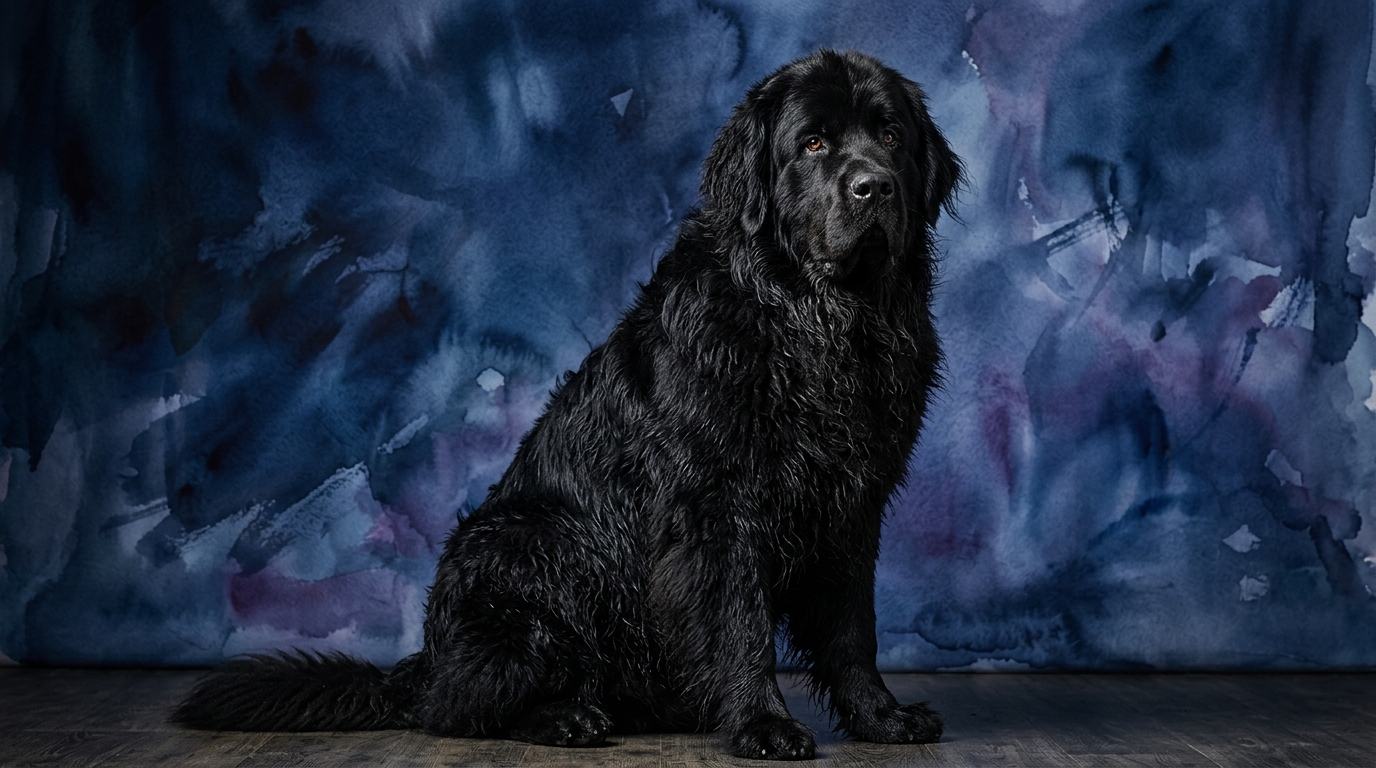
The Cosmic Pet Pet IQ Lab employs five key dimensions to assess canine cognitive function, offering a nuanced understanding beyond simple obedience. For the Newfoundland, a breed revered for its gentle nature and working heritage, its profile paints a picture of a compassionate and driven companion.
Newfoundland Cognitive Dimensions:
Problem Solving (3/5): While not their primary cognitive strength, Newfoundlands can navigate complex situations, particularly when it involves aiding humans or other animals. Their problem-solving often manifests in practical, real-world scenarios rather than abstract puzzles, such as finding a path to retrieve a child from water or gently maneuvering around obstacles to reach a distressed individual.
Training Speed (4/5): These gentle giants possess a commendable training speed, driven by their strong desire to please their human companions. They absorb commands and routines with relative ease, especially when positive reinforcement is used consistently. Their focus on cooperation makes them receptive learners, though their sheer size can sometimes make physical execution of precise movements slower.
Social Intelligence (5/5): Here, Newfoundlands truly shine, exhibiting an unparalleled capacity for understanding and responding to human emotions and social cues. They form deep bonds, often anticipating needs and offering comfort, making them exceptional therapy animals and family protectors. Their ability to integrate seamlessly into a household dynamic and read subtle signals is a hallmark of their breed.
Instinctive Drive (5/5): The Newfoundland's instinctive drive is extraordinarily powerful, primarily rooted in their historical role as water rescue dogs and guardians. This manifests as a profound urge to protect, assist, and retrieve, particularly in aquatic environments. Their innate desire to 'save' is so strong it often overrides other impulses, propelling them into action without direct command.
Memory (4/5): Newfoundlands possess a robust memory, retaining training, routines, and experiences over long periods. They remember people, places, and specific commands with clarity, which contributes significantly to their reliability as working dogs and companions. This strong recall aids in consistent behavior and reinforces their learned responses to various situations.
In stark contrast, the Dachshund, with its distinctive long body and tenacious spirit, showcases a different set of cognitive strengths, shaped by its history as a determined hunter of burrowing animals.
Dachshund Cognitive Dimensions:
Problem Solving (4/5): Dachshunds exhibit a remarkable aptitude for problem-solving, often driven by their independent nature and original purpose as badger hunters. They are adept at figuring out how to get what they want, whether it's navigating complex environments to track a scent or devising strategies to reach a forbidden treat. This cognitive strength often comes with a determined, sometimes stubborn, approach.
Training Speed (2/5): Their training speed is notably lower than many breeds, not due to a lack of capacity, but rather a strong sense of independence and self-will. Dachshunds learn, but they often choose *when* to demonstrate that learning. Their focus is often on their own agenda, particularly following interesting scents, which can make consistent obedience a prolonged endeavor.
Social Intelligence (3/5): While affectionate with their chosen family, Dachshunds' social intelligence is more focused on their immediate pack rather than a broad understanding of complex human social dynamics. They can be wary of strangers and other animals, preferring the company of those they trust implicitly. Their social interactions are often direct and less nuanced than those of breeds bred for extensive human collaboration.
Instinctive Drive (5/5): The Dachshund's instinctive drive is exceptionally potent, dominated by their powerful scenting and hunting instincts. This manifests as an irrepressible urge to track, dig, and pursue prey, often with single-minded determination. Their drive is so strong that it can make them oblivious to distractions, focusing intently on a trail or a perceived burrow.
Memory (3/5): Dachshunds have a functional memory, remembering important routines, people, and the location of high-value items. However, their memory can sometimes be overshadowed by their immediate instinctive drives, especially when a compelling scent or a hunting opportunity presents itself. While they recall information, it might not always be prioritized over their independent pursuits.
Where the Newfoundland Wins Cognitively
Newfoundlands exhibit a profound advantage in social intelligence, scoring a perfect 5/5. This manifests as an exceptional capacity for empathy, understanding subtle human cues, and forming deep, intuitive bonds. Unlike many breeds, their cognitive architecture is finely tuned to human interaction, making them natural emotional support animals and cooperative partners in tasks requiring nuanced communication. Their memory, at 4/5, also serves this social aptitude, allowing them to recall specific human needs, preferences, and past interactions, which enhances their role as compassionate companions. Furthermore, their instinctive drive (5/5) is uniquely channeled towards protection and rescue, particularly in water, a complex, altruistic behavior requiring more than simple stimulus-response.
Where the Dachshund Wins Cognitively
The Dachshund's cognitive strength particularly shines in problem-solving, where it scores an impressive 4/5. This isn't just about navigating physical spaces; it's about independent thought and determination to achieve a goal, often against human wishes. Their minds are wired for tenacious, self-directed exploration and overcoming obstacles, a legacy of their badger-hunting heritage. This translates into a remarkable ability to strategize how to get to a desired location, outsmart child-proof latches, or persistently follow a scent trail regardless of distractions. Their intense instinctive drive (5/5) for tracking and digging fuels this problem-solving, making them relentless in their pursuits and highly effective at tasks requiring focused, independent determination.
Which Is Easier to Train and Why
When it comes to ease of training, the Newfoundland (Training Speed 4/5) generally presents a more straightforward experience than the Dachshund (Training Speed 2/5). This significant difference stems directly from their core cognitive profiles. Newfoundlands possess a strong social intelligence and an innate desire to please, making them highly receptive to instruction and eager to cooperate. Their training is often a partnership, built on mutual understanding and positive reinforcement. They absorb commands quickly and reliably, seeing training as an opportunity for connection and utility.
Conversely, the Dachshund's independent problem-solving and powerful instinctive drive often translate into a more challenging training journey. While they are certainly capable of learning, their primary motivation isn't always human approval. They are more inclined to follow their nose or pursue a perceived mission, sometimes deeming human commands secondary to their own objectives. This self-directed nature requires immense patience, consistency, and creative motivation from their owners. Their keen memory (3/5) allows them to recall what they've learned, but their strong will means they might choose to selectively apply it, especially if a more enticing scent or digging opportunity arises.
Which Suits Active Owners vs. Relaxed Owners
For active owners seeking a highly engaged and cooperative companion, the Newfoundland often proves to be an ideal match. Their high instinctive drive for rescue and protection, combined with their strong social intelligence, means they thrive on purpose-driven activities and close human interaction. They require consistent mental stimulation, often through training, water activities, or roles that allow them to 'work' alongside their owners, even if it's just carrying groceries. Their need for companionship and their desire to participate in family life makes them excellent partners for long walks, hikes, or even therapy work, where their gentle nature and robust memory can shine.
Relaxed owners, or those who appreciate a dog with a strong independent streak and a nuanced sense of companionship, might find the Dachshund more suitable, provided they understand and respect its unique cognitive makeup. While not requiring vast amounts of physical activity in the same way a Newfoundland does, Dachshunds still need outlets for their formidable problem-solving skills and intense instinctive drive, particularly for scent work and digging. A relaxed owner for a Dachshund isn't necessarily inactive but one who can provide mental enrichment through puzzle toys, supervised digging spots, or short, engaging scent games. They are content with cozy cuddles but also demand respect for their independent spirit and their need to 'hunt' (even if it's just a squeaky toy under the couch).
The Verdict
Choose a Newfoundland if you seek a deeply empathetic, highly trainable, and instinctively protective companion for a family-oriented, moderately active lifestyle, particularly if water activities or gentle companionship are desired.
Opt for a Dachshund if you appreciate an independent, tenacious problem-solver with a strong hunting drive, suitable for owners who can provide consistent mental engagement and respect a dog's self-directed nature in a less physically demanding environment.
🧠 Find Your Pet's IQ Score
Our Pet IQ Lab assessment covers 25+ tests across 5 cognitive dimensions — personalized to your breed.
Take the Full IQ Test →Frequently Asked Questions
Are Newfoundlands good apartment dogs despite their size?
While large, Newfoundlands are surprisingly adaptable if they receive sufficient daily exercise and mental stimulation. Their calm indoor demeanor and high social intelligence mean they thrive on being close to their family, making a spacious apartment workable if their outdoor needs are met.
Do Dachshunds really dig a lot?
Yes, their strong instinctive drive for digging, rooted in their badger-hunting heritage, is very pronounced. Owners should provide appropriate outlets, like a designated digging pit or sturdy chew toys, to redirect this natural behavior constructively and prevent unwanted landscaping projects.
Which breed is better with children?
Newfoundlands, with their perfect 5/5 social intelligence and gentle nature, are often considered exceptional with children, exhibiting patience and a protective instinct. Dachshunds can be good with respectful children in their own family but may be less tolerant of boisterous behavior from unfamiliar children due to their more independent social intelligence.