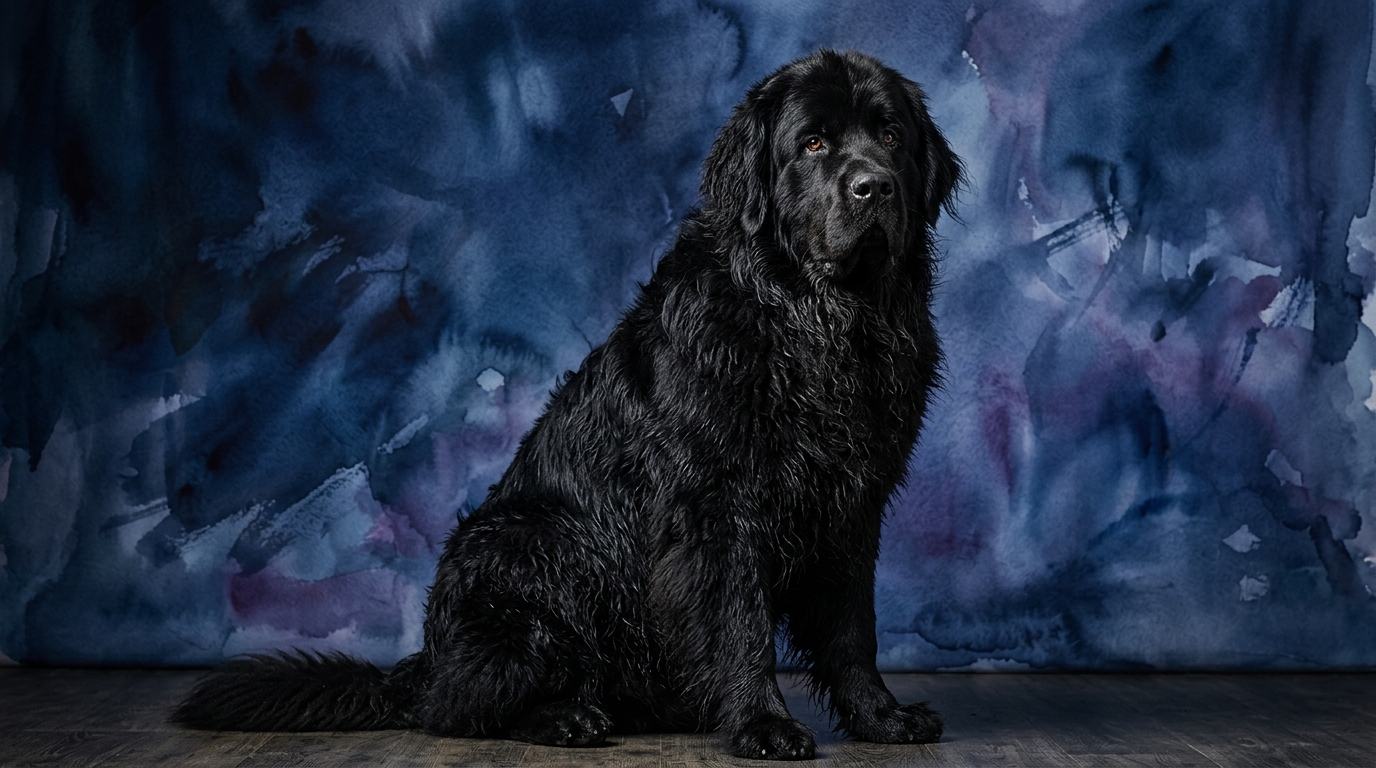
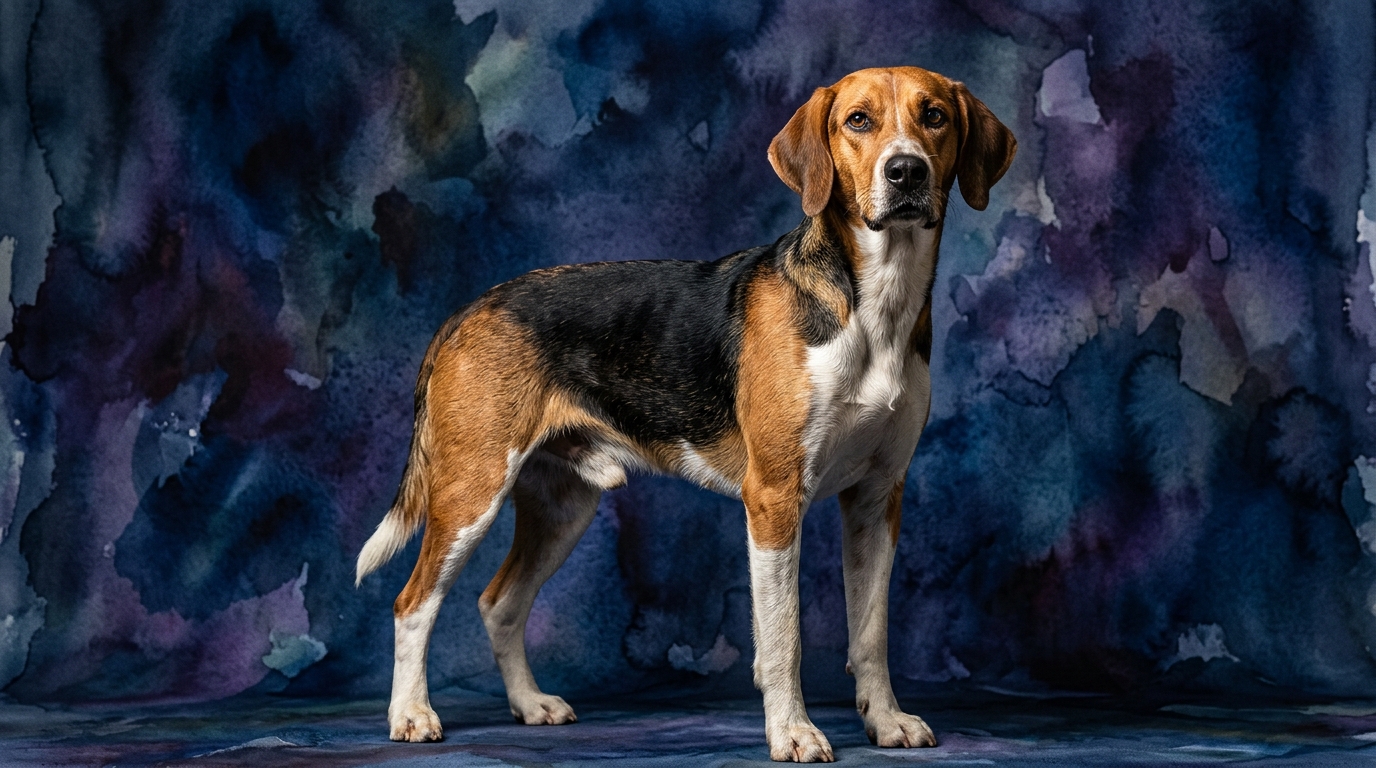
Side-by-Side IQ Profile: Newfoundland vs. English Foxhound
At The Cosmic Pet Pet IQ Lab, we analyze canine cognition across five key dimensions to provide a nuanced understanding of each breed's mental landscape. Let's break down the scores for the Newfoundland and the English Foxhound.
The **Newfoundland**, a Working group dog, demonstrates a well-rounded cognitive profile, reflecting its historical role as a water rescue and companion animal. Its Problem Solving is rated 3/5, indicating a practical intelligence for navigating real-world scenarios rather than abstract puzzles. Training Speed scores an impressive 4/5, suggesting a quick grasp of commands and a willingness to learn. Where the Newfoundland truly shines is in Social Intelligence, earning a perfect 5/5 for its exceptional empathy and ability to understand human cues and emotions. Its Instinctive Drive is also 5/5, manifesting as a powerful innate desire to protect, nurture, and assist, particularly in water. Finally, its Memory is strong at 4/5, allowing it to retain a wide array of commands and experiences. Its Coren rank of #34 further underscores its capacity for obedience and working intelligence.
In contrast, the **English Foxhound**, a member of the Hound group, presents a different cognitive blueprint, less focused on human-centric tasks and more on its ancestral hunting purpose. Its Problem Solving is rated 3/5, primarily geared towards deciphering complex scent trails and navigating terrain during a pursuit, rather than solving novel human-designed challenges. Training Speed is 3/5, indicating that while trainable, it often requires more consistent effort and patience due to its independent nature. Social Intelligence is 3/5; while capable of bonding, its focus is typically on its task or pack dynamics rather than nuanced human emotional states. Its Instinctive Drive, also 3/5, is powerfully directed towards scent-tracking and prey drive, a persistent and enduring focus on the hunt. Memory scores 3/5, effective for recalling routes and scent patterns crucial for its work, but perhaps less for arbitrary human commands. The English Foxhound is not Coren-ranked, which is typical for many hound breeds whose specialized intelligence doesn't always align with traditional obedience metrics.
Where the Newfoundland Wins Cognitively
The Newfoundland's cognitive strengths are particularly evident in its capacity for social engagement and its specific brand of instinctive action. With a 5/5 in Social Intelligence, this breed possesses an almost unparalleled ability to perceive and respond to human emotions, making them exceptional companions and therapy animals. They are not merely present; they are actively attuned to the emotional states of those around them, often offering comfort or support without direct prompting. This deep empathetic connection is a significant cognitive advantage for integration into human families.
Furthermore, the Newfoundland's 4/5 Training Speed and 4/5 Memory work in tandem to make them highly receptive learners. They absorb new commands with relative ease and retain that knowledge consistently, a trait vital for their historical roles in water rescue where quick, precise responses were paramount. Their 5/5 Instinctive Drive isn't just a general energy; it's a specific, powerful impulse towards nurturing, protection, and assistance, often expressed as a keen awareness of their environment and the safety of their human companions. This drive requires complex decision-making and a nuanced understanding of situations, distinguishing it from a simple prey drive. The Newfoundland's Coren rank of #34 further solidifies its standing as a breed that excels in understanding and executing human directives, showcasing a robust capacity for obedience and problem-solving within a human context.
Where the English Foxhound Wins Cognitively
While the English Foxhound's overall scores might appear lower in general intelligence metrics, its cognitive victories lie in its highly specialized, purpose-driven intellect. Its 3/5 in Problem Solving, while not geared towards abstract puzzles, is profoundly effective in its domain: scent-tracking. This breed possesses an extraordinary ability to process and interpret complex olfactory information, following faint trails over vast distances and varied terrain for hours on end. This sustained focus and analytical prowess in scent detection is a sophisticated cognitive skill, demanding immense concentration and a systematic approach to environmental data.
The English Foxhound's Instinctive Drive, also rated 3/5, is a testament to its unwavering dedication to its primary function. This drive translates into an incredible stamina and persistence, allowing it to maintain an objective and independent mindset during a pursuit. Its memory (3/5) is particularly strong for recalling routes, landmarks, and subtle changes in scent patterns, which are critical for its work. This isn't just about remembering a path; it's about building a complex mental map of an ever-changing olfactory landscape. The English Foxhound's cognitive strength is in its single-minded, autonomous decision-making in the field, a self-reliance that allows it to operate effectively without constant human oversight once engaged in a task. This specialized intellect, while not traditionally 'obedient,' is a profound adaptation for its working role.
Which is Easier to Train and Why?
When it comes to trainability, the Newfoundland generally presents a more straightforward experience for owners. Their exceptional 5/5 Social Intelligence means they are deeply motivated by human approval and connection. They understand and respond positively to cues, making them eager participants in training sessions. Coupled with a 4/5 Training Speed and 4/5 Memory, Newfoundlands quickly grasp new commands and retain them with minimal repetition. Their instinctive drive, which often aligns with a desire to please and assist, further reinforces positive training outcomes, making them highly responsive to positive reinforcement methods.
The English Foxhound, on the other hand, can be a more challenging prospect for conventional obedience training. Their 3/5 Social Intelligence means they are less driven by the desire for constant human approval and more by their own internal motivations, especially when a compelling scent is present. Their 3/5 Training Speed requires more patience, consistency, and repetition from the owner. The English Foxhound's powerful 3/5 Instinctive Drive, primarily focused on scent and pursuit, can easily override human commands, particularly in outdoor environments where smells are abundant. Training an English Foxhound often demands creative approaches that incorporate their natural drives, such as scent work or lure coursing, to keep them engaged, rather than relying solely on traditional obedience exercises. Their independence means they are less inclined to offer immediate compliance if they perceive a more interesting 'task' at hand.
Which Suits Active Owners vs. Relaxed Owners?
The choice between a Newfoundland and an English Foxhound also hinges significantly on an owner's lifestyle and activity level. The Newfoundland, while a large and powerful breed, can surprisingly adapt to both active and somewhat relaxed owners, though they are not couch potatoes. They require regular, moderate exercise—daily walks, swimming, and opportunities for mental engagement. Their energy often comes in bursts, followed by periods of calm companionship. They thrive on being part of family activities and don't demand constant, high-intensity physical output, making them suitable for owners who enjoy a balanced pace of life but can still provide ample space and consistent engagement.
Conversely, the English Foxhound is unequivocally suited for active owners. Bred for immense endurance and the ability to cover vast distances during a hunt, these dogs possess boundless stamina. They require significant daily physical exercise that goes beyond a casual stroll; long runs, extensive hikes, or structured activities like canicross are often necessary to satisfy their energy demands. Without sufficient outlets for their physical and mental energy, an English Foxhound can become bored, destructive, or vocal. Owners who lead an active, outdoor-oriented lifestyle and are prepared to dedicate substantial time to exercise and stimulating their dog's powerful scenting abilities will find the English Foxhound a rewarding, albeit demanding, companion. A relaxed owner would quickly find themselves overwhelmed by this breed's energy and drive.
The Verdict: When to Choose Each Breed
The Verdict
For those seeking an empathetic, highly trainable companion deeply attuned to human emotion, capable of complex tasks, and offering a gentle yet protective presence, the Newfoundland is an excellent choice.
If you're an active individual or family who thrives on extensive outdoor adventures, can provide significant exercise, and appreciates a highly independent, focused working dog with an extraordinary nose, the English Foxhound might be your match.
🧠 Find Your Pet's IQ Score
Our Pet IQ Lab assessment covers 25+ tests across 5 cognitive dimensions — personalized to your breed.
Take the Full IQ Test →Frequently Asked Questions
Is the Newfoundland a good choice for first-time dog owners?
Yes, their high social intelligence and eagerness to please make them relatively forgiving and easier to train. Their gentle nature and willingness to cooperate can simplify the learning curve for new owners, though their large size does require confidence in handling.
What kind of mental stimulation does an English Foxhound need?
English Foxhounds thrive on activities that engage their powerful sense of smell and endurance. Scent work, tracking games, long hikes in varied environments, and even structured 'find it' games are excellent for their cognitive and physical well-being, preventing boredom.
How do the breeds compare in terms of their natural drives?
The Newfoundland possesses a strong instinctive drive towards nurturing, protection, and water rescue, often expressed as gentleness and vigilance for its family's safety. The English Foxhound's drive is primarily focused on scent-tracking and sustained pursuit, making them tireless and singularly focused when following a trail.