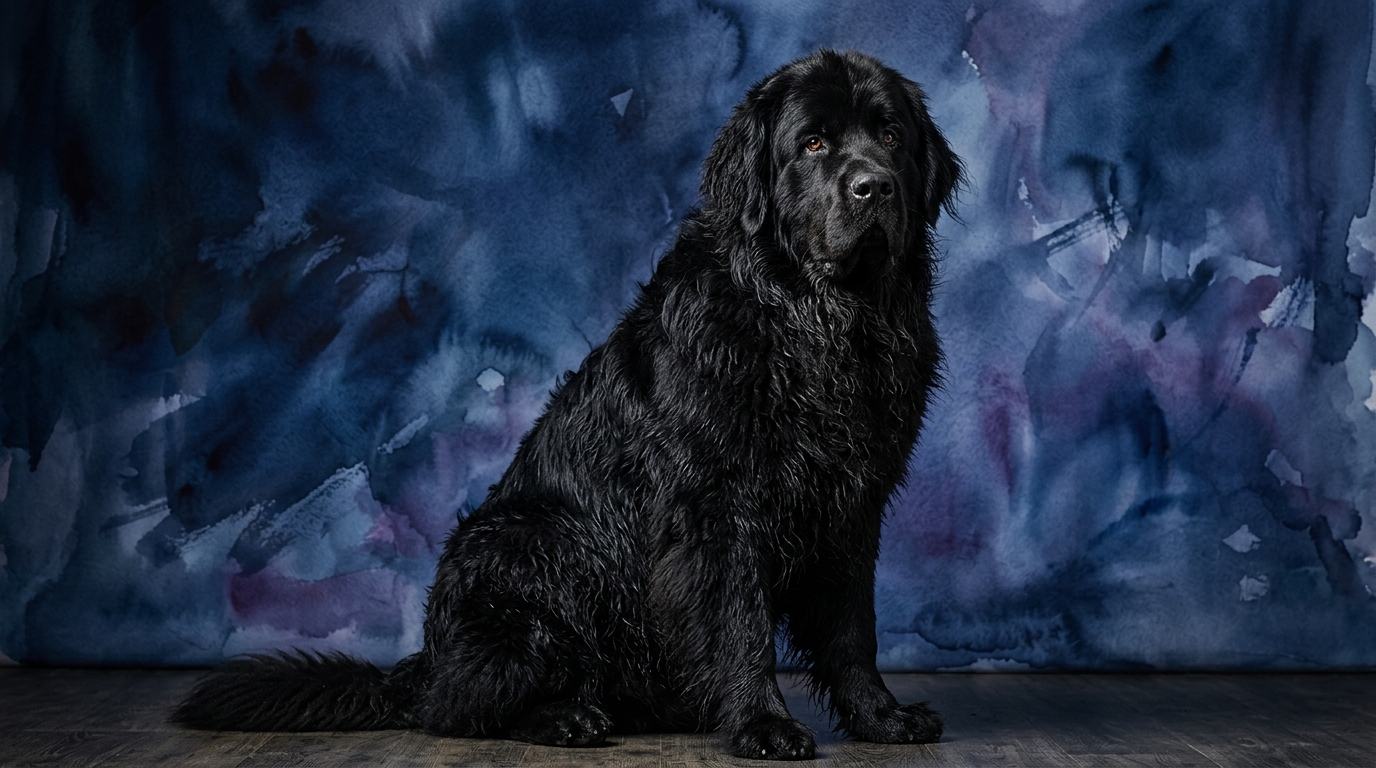
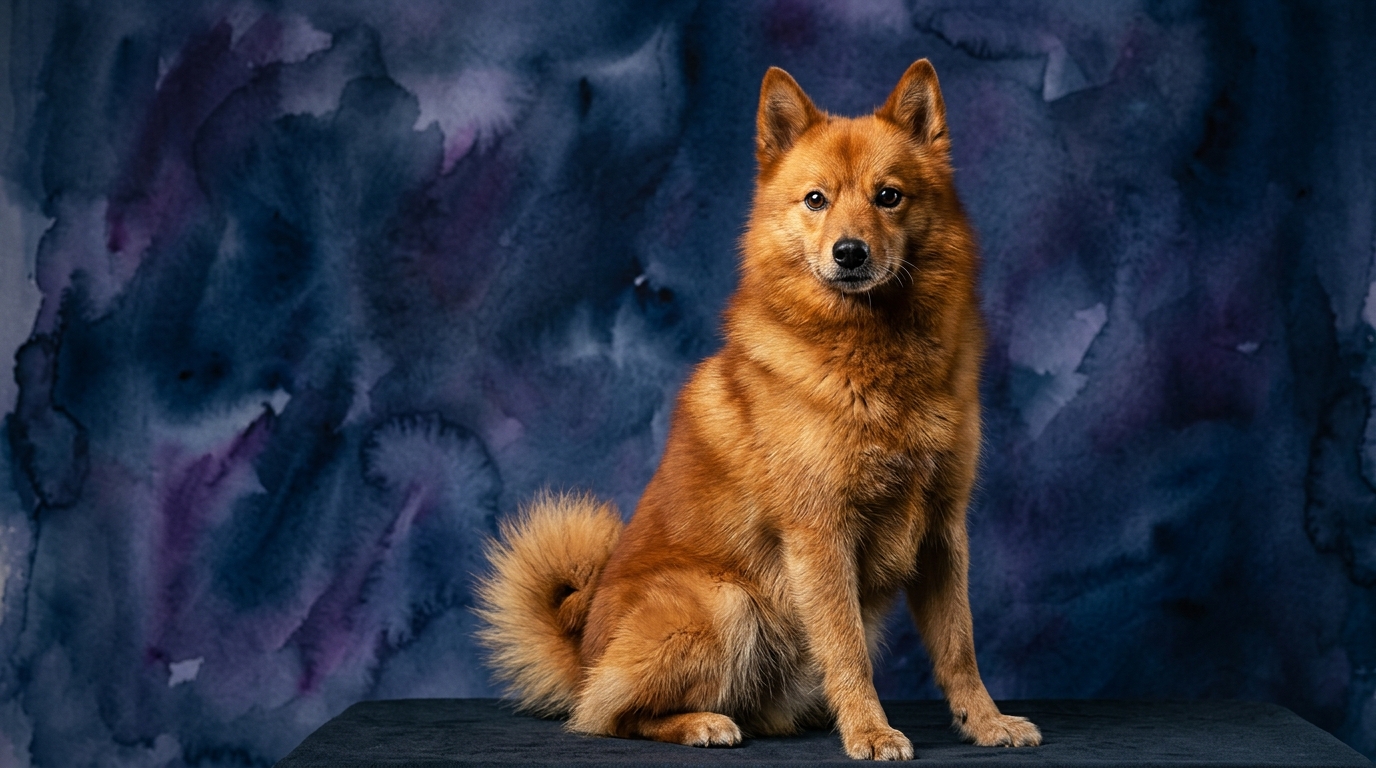
Side-by-Side Cognitive Profiles: Newfoundland vs. Finnish Spitz
At The Cosmic Pet Pet IQ Lab, we evaluate canine intelligence across five key dimensions. Let's delve into how the Newfoundland and Finnish Spitz measure up, revealing their unique cognitive strengths and inclinations.
The Newfoundland, a dog from the Working group, exhibits a Problem Solving score of 3/5. These dogs demonstrate practical problem-solving, particularly in scenarios involving aid or navigation. They are adept at figuring out how to retrieve objects from water or assist a struggling human, showcasing a functional intelligence focused on real-world application rather than abstract puzzles. Their Training Speed is rated at 4/5, meaning they typically grasp new commands and routines with impressive speed. Their strong desire to cooperate and their attentive nature means they often require fewer repetitions than many other breeds to solidify a lesson. Social Intelligence is an undeniable strength for the Newfoundland, scoring a perfect 5/5. This breed possesses an extraordinary capacity to read human emotions and intentions, being highly empathetic and understanding subtle cues in body language and tone, which enables them to anticipate needs and respond with remarkable sensitivity. Their Instinctive Drive, also rated at 5/5, is centered around rescue, nurturing, and protection of their family, including a profound water rescue instinct and a strong inclination to 'mother' or guard children, demonstrating a complex, altruistic cognitive programming. Finally, their Memory, at 4/5, indicates strong long-term retention of complex sequences of commands, remembering people and places over extended periods, and recalling past experiences that shape their future interactions and behaviors.
The Finnish Spitz, from the Non-Sporting group, has a Problem Solving score of 3/5. Their problem-solving skills are primarily geared towards their ancestral hunting role, making them clever at locating game, navigating dense terrain, and using their environment to their advantage while working independently, focusing on practical, instinct-driven solutions. Their Training Speed is 3/5; while capable of learning, the Finnish Spitz generally requires more patient and consistent training. Their independent spirit means they may not always be as driven to please as some breeds, often needing more motivational techniques and repetition to internalize commands. Social Intelligence for the Finnish Spitz is 3/5; this breed forms deep bonds with its immediate family but tends to be more reserved with strangers, with their social intelligence focused on their inner circle. While they understand household dynamics, they may not possess the broad empathetic range seen in breeds specifically developed for constant human companionship. Their Instinctive Drive is also 3/5, with their primary drive being a strong prey drive, particularly for birds, and their unique vocalization (yodeling) used to alert hunters. This drive is self-directed and less centered on human partnership compared to a Newfoundland's rescue instincts. Their Memory is rated at 3/5, indicating a good memory for established routines, familiar environments, and basic commands. While they retain information, their recall for highly complex or abstract training sequences might not be as robust or immediate as breeds with higher training speed scores.
Where the Newfoundland Shines Cognitively
The Newfoundland's superior social intelligence is a clear cognitive advantage. Their ability to profoundly understand and respond to human emotions, often anticipating needs before they are articulated, sets them apart. This isn't just about simple obedience; it's about an empathetic connection that allows them to seamlessly integrate into family life, offering comfort and assistance based on subtle cues in body language and tone.
Their powerful instinctive drive for rescue and nurturing also showcases a complex cognitive framework. It involves assessing situations, identifying potential distress, and initiating action, such as pulling a person from water or gently guiding a child away from perceived danger. This selfless problem-solving, deeply ingrained, reflects a sophisticated understanding of cause and effect in a social context, demonstrating a protective instinct that goes beyond mere reaction.
Furthermore, their higher training speed stems from a strong desire for cooperation and an ability to focus intently on their human handler. This cognitive readiness to learn and a natural inclination to form a working partnership means they absorb lessons more efficiently and reliably, making them exceptionally responsive to guidance and eager to participate in training activities.
Where the Finnish Spitz Excels Cognitively
The Finnish Spitz excels in a different sphere: independent problem-solving rooted in their hunting heritage. Their cognitive strengths lie in their capacity to work autonomously in the field, using their senses to locate game, navigating complex natural environments, and employing their distinctive vocalization to communicate findings. This demonstrates a specialized form of intelligence focused on self-reliance and strategic pursuit, rather than direct partnership.
Their acute sensory perception and its application are also a cognitive triumph. The ability to process faint scents, distant sounds, and subtle visual cues, then synthesize this information to pinpoint prey and maintain focus over extended periods, is a testament to their specialized mental acuity. This isn't just about having good senses; it's about how their brain processes and utilizes that data for a specific, goal-oriented purpose.
The Finnish Spitz's determination and singular focus when engaged in their primary drive, like tracking a bird, highlight a concentrated cognitive effort. While they may not be as broadly socially intelligent, their unwavering mental resolve and persistence in a task they are bred for represent a unique and potent form of cognitive strength, allowing them to excel in their specialized niche with remarkable tenacity.
Training Dynamics: Which Breed is More Amenable?
Between the two, the Newfoundland is generally considered easier to train due to its exceptional social intelligence (5/5) and faster training speed (4/5). Their innate desire to please their human companions, coupled with their strong memory and ability to focus, means they often pick up commands quickly and reliably. They thrive on positive reinforcement and the opportunity to work alongside their people, making training a highly rewarding experience for both dog and owner. Their gentle nature means they respond well to calm, consistent methods.
The Finnish Spitz, while perfectly capable of learning, can present more of a challenge. Their independent nature and slightly lower training speed (3/5) mean they may require more patience, creativity, and consistent motivation. They are not as inherently driven by human approval and might need training to feel like a game or a beneficial activity for them, rather than just a command to follow. Their strong prey drive can also be a significant distraction, demanding focused effort to maintain attention in varied environments.
Lifestyle Match: Active vs. Relaxed Owners
The Newfoundland, despite its impressive size, generally suits more relaxed owners. Once past their boisterous puppy stage, their energy levels are moderate, and they are content with daily walks, opportunities for a swim (which they adore), and plenty of time spent lounging with their family. They thrive on companionship and gentle interaction, making them ideal for households seeking a calm, devoted presence rather than a constant adventure partner. Their exercise needs are consistent but not demanding of high-intensity activity.
Conversely, the Finnish Spitz is better suited for active owners. This agile and spirited breed possesses considerable energy and requires consistent mental and physical stimulation to prevent boredom. They enjoy outdoor activities such as hiking, scent work, and opportunities to express their natural instincts in a safe environment. Their vocal nature also means they can be excellent companions for owners who enjoy a dog that communicates actively and engages with its surroundings.
The Verdict
If you seek an exceptionally empathetic, devoted companion who thrives on close family bonds and gentle interaction, and you value a dog that is eager to please and quick to learn social cues, the Newfoundland is an ideal choice.
If you appreciate an independent, spirited, and vocal companion with a strong hunting drive, and you are prepared to engage in consistent, stimulating training and provide ample opportunities for physical and mental activity, the Finnish Spitz could be your match.
🧠 Find Your Pet's IQ Score
Our Pet IQ Lab assessment covers 25+ tests across 5 cognitive dimensions — personalized to your breed.
Take the Full IQ Test →Frequently Asked Questions
Is the Newfoundland good with children?
Yes, Newfoundlands are renowned for their gentle and patient nature with children, often displaying a nurturing instinct. Their high social intelligence allows them to adapt well to family dynamics and be protective without being aggressive.
Do Finnish Spitz bark a lot?
Finnish Spitz are known as "barking bird dogs" and have a tendency to be quite vocal, using a distinctive yodel or bark to alert to perceived threats or game. While this can be managed with training, their inherent nature is to communicate vocally.
What kind of exercise does a Newfoundland need?
Newfoundlands require regular, moderate exercise, including daily walks and opportunities for swimming, which they adore. While not high-energy, consistent physical activity is crucial for their joint health and overall well-being.