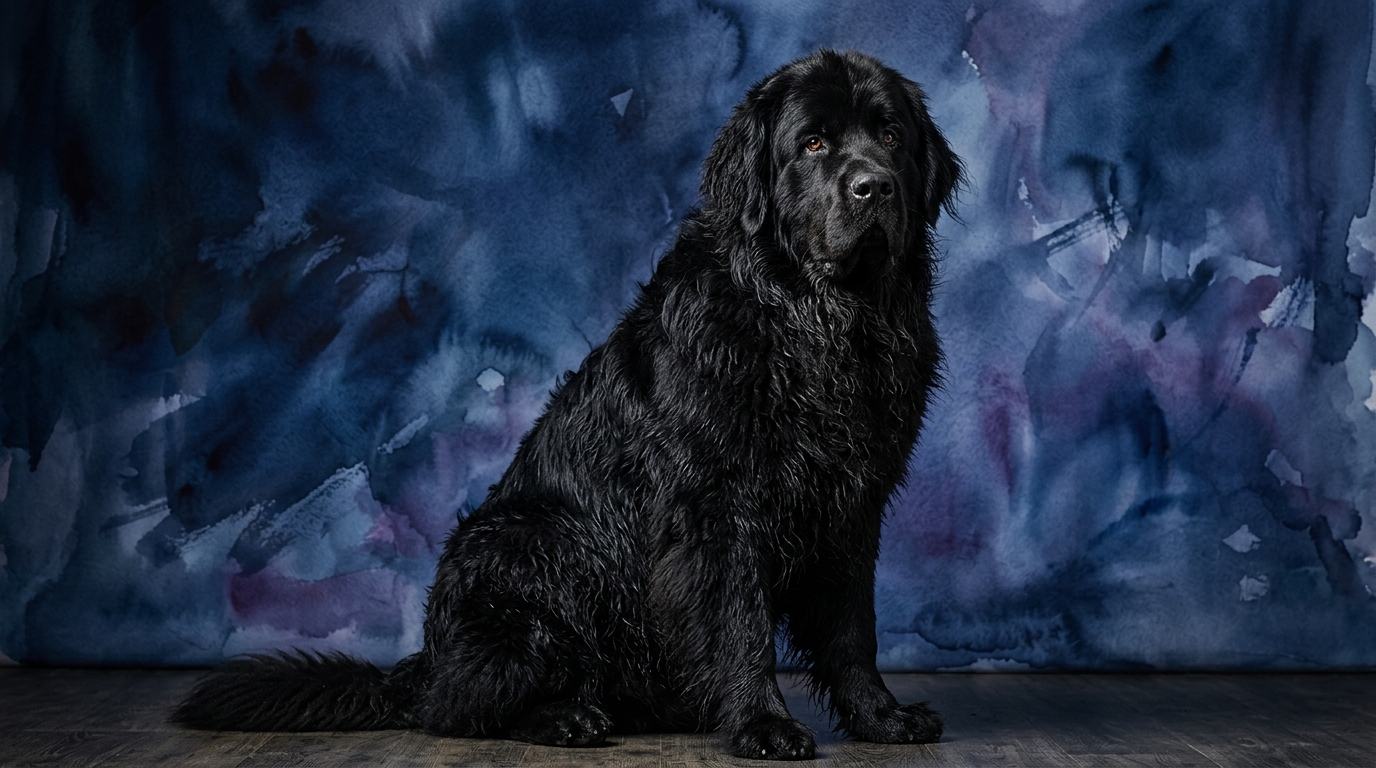
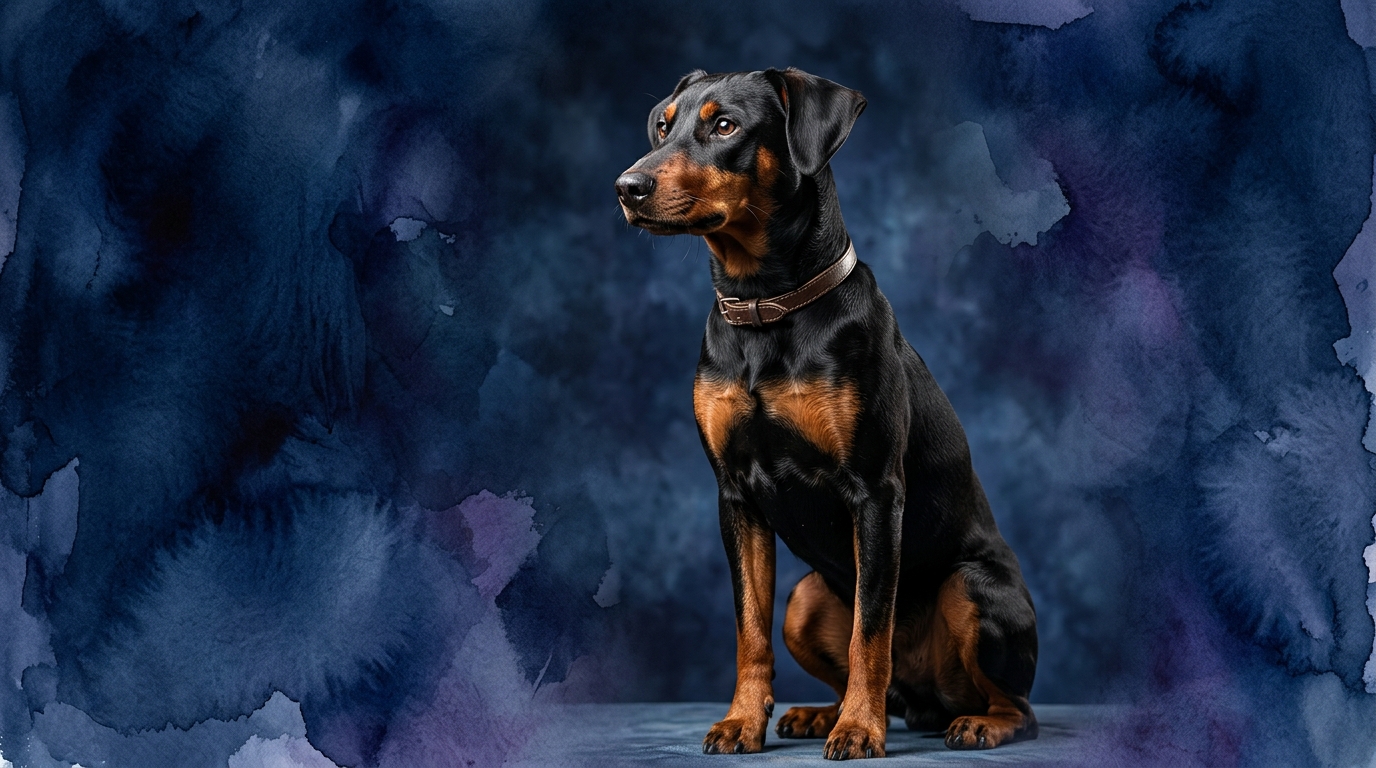
Side-by-Side IQ Profile: Newfoundland vs. German Pinscher
The Cosmic Pet Pet IQ Lab employs a five-dimensional framework to assess canine cognition, providing a nuanced understanding beyond simple obedience. For the Newfoundland, a Working breed ranked #34 by Coren, its profile shows a Problem Solving score of 3/5, indicating an ability to navigate practical challenges without always seeking complex abstract solutions. Their Training Speed is 4/5, suggesting a readiness to absorb and execute commands efficiently, often driven by a desire to cooperate. Social Intelligence is a standout at 5/5, reflecting an exceptional capacity to understand and respond to human emotions and social cues. Instinctive Drive, particularly for roles like water rescue and companionship, is also high at 5/5, while Memory sits at a solid 4/5, enabling them to retain routines and learned behaviors effectively.
In contrast, the German Pinscher, also a Working breed but without a Coren ranking, presents a more balanced, moderate cognitive profile across the board. Its Problem Solving ability is rated 3/5, similar to the Newfoundland, meaning they are practical thinkers but not necessarily inclined towards elaborate mental puzzles. Their Training Speed is 3/5, implying they learn at a steady pace, requiring consistent reinforcement rather than immediate mastery. Social Intelligence is 3/5, indicating they form strong bonds with their immediate family but might be more reserved or discerning in new social contexts. Instinctive Drive, encompassing their guarding and vermin-control heritage, is 3/5, a moderate level that can be channeled. Finally, Memory is also 3/5, suggesting adequate recall and retention of information, though perhaps not with the same depth as a Newfoundland.
Where the Newfoundland Excels Cognitively
The Newfoundland's cognitive strengths primarily lie in its exceptional social intelligence and powerful instinctive drives, which manifest as profound empathy and a deep-seated desire to assist. With a 5/5 in Social Intelligence, these dogs are adept at reading human body language, tone, and emotional states, allowing them to offer comfort or respond to distress with remarkable accuracy. This isn't just about being friendly; it's a sophisticated capacity for understanding and integration into the human social fabric, making them superb therapy dogs or companions for individuals who benefit from an emotionally perceptive animal.
Their 5/5 Instinctive Drive is not merely a high energy level, but a targeted, powerful inclination towards specific tasks, historically water rescue and 'nanny' roles. This drive means they possess an innate understanding of how to engage in helpful behaviors, often without explicit command, such as instinctively pulling a person from water or gently supervising children. Their 4/5 Training Speed complements this, allowing them to quickly learn complex sequences for service work, search and rescue, or competitive obedience, leveraging their cooperative spirit and substantial memory capacity to become reliable partners in tasks requiring both physical capability and cognitive collaboration.
Where the German Pinscher Shines Cognitively
While the German Pinscher's individual cognitive scores are moderate, their strengths lie in a combination of alert perceptiveness and focused independent action, which are crucial for their historical roles. Their 3/5 Problem Solving, though not exceptional, is applied with a keen awareness of their surroundings. This allows them to quickly assess situations, particularly regarding perceived threats or changes in their environment, and formulate a direct, practical response without excessive deliberation. This quick, decisive thinking is a hallmark of a watchful guardian.
The German Pinscher's cognitive edge is often seen in its self-reliance and tenacity, especially when pursuing a goal. Their moderate Instinctive Drive (3/5) includes a strong prey drive and a territorial instinct, which, combined with their practical problem-solving, makes them highly effective at vermin control or alert guarding. They demonstrate a persistent focus, using their memory (3/5) to recall boundaries and potential dangers, and their social intelligence (3/5) to discern friend from foe, making them discerning protectors who rely on their own observational skills to a greater degree than the more socially collaborative Newfoundland.
Training Dynamics: Which is Easier and Why?
When considering ease of training, the Newfoundland generally presents a more straightforward path for most owners due to its superior social intelligence and faster training speed. Their 5/5 Social Intelligence means they are inherently motivated to please their human companions, readily picking up on cues and responding to positive reinforcement with enthusiasm. Coupled with a 4/5 Training Speed, they grasp new commands and routines quickly, often showing a natural inclination to cooperate and form a working partnership. This makes foundational obedience, house-training, and even more advanced tasks a relatively smooth process, as they actively seek to understand and comply.
The German Pinscher, with its 3/5 scores across Training Speed, Social Intelligence, and Memory, requires a more patient and consistent approach. While capable of learning, their moderate social drive means they may not always be as intrinsically motivated by human approval, sometimes preferring to operate with a degree of independence. Their practical problem-solving is often applied to their own interests, meaning training must be engaging and clearly demonstrate the benefit to the dog. Owners must be prepared to be firm, fair, and creative in their training methods, using varied rewards and maintaining a stimulating environment to keep the Pinscher focused and willing to learn, overcoming their occasional independent streak.
Owner Suitability: Active vs. Relaxed Lifestyles
For owners seeking a deeply connected, collaborative companion who thrives on shared activities and emotional reciprocity, the Newfoundland is an excellent match. Their immense social intelligence and strong instinctive drive for companionship mean they flourish in homes where they are integral to family life, receiving consistent interaction and affection. While they require regular exercise, including swimming if possible, their temperament often leans towards a more relaxed, gentle pace once their needs are met, making them suitable for owners who appreciate a calm presence after periods of engagement. They excel in roles like therapy work or as devoted family guardians, offering gentle supervision rather than alert patrolling.
Conversely, the German Pinscher is better suited for active owners who appreciate a more independent, watchful, and energetic partner. Their moderate instinctive drive and problem-solving, combined with a discerning social intelligence, mean they thrive with owners who can provide consistent mental stimulation and structured physical activity. They benefit from activities such as agility, obedience trials, or roles where their natural alertness and tenacity can be channeled, like barn hunt or as active hiking companions. Owners who enjoy a dog that makes its own observations and acts with a degree of self-reliance, rather than constantly seeking human direction, will find the German Pinscher a rewarding and engaging partner.
The Verdict
Choose the Newfoundland if you desire an exceptionally empathetic, cooperative, and gentle giant who thrives on deep social connection and is eager to work collaboratively.
Opt for the German Pinscher if you prefer an alert, independent, and energetic companion who excels at watchful observation and benefits from structured mental and physical challenges.
🧠 Find Your Pet's IQ Score
Our Pet IQ Lab assessment covers 25+ tests across 5 cognitive dimensions — personalized to your breed.
Take the Full IQ Test →Frequently Asked Questions
Do Newfoundlands really have an instinct for water rescue?
Yes, Newfoundlands possess a remarkable 5/5 instinctive drive, which historically includes a strong inclination for water rescue. Their physical build and temperament align with this, often leading them to instinctively attempt to 'save' people in water, even without formal training, showcasing their deep-seated desire to assist.
Are German Pinschers difficult to socialize given their moderate social intelligence?
German Pinschers are not difficult to socialize, but their 3/5 social intelligence means they are more discerning than some breeds. Early and consistent positive exposure to various people, places, and other animals is crucial to help them develop confidence and appropriate social manners, ensuring they are well-adjusted and comfortable in different environments.
Which breed is better for a first-time dog owner?
For a first-time dog owner, the Newfoundland is generally easier due to its higher social intelligence and training speed, making it more forgiving of novice mistakes and eager to cooperate. The German Pinscher's independent streak and need for consistent, firm guidance might be more challenging for someone new to dog ownership, requiring a more experienced hand.