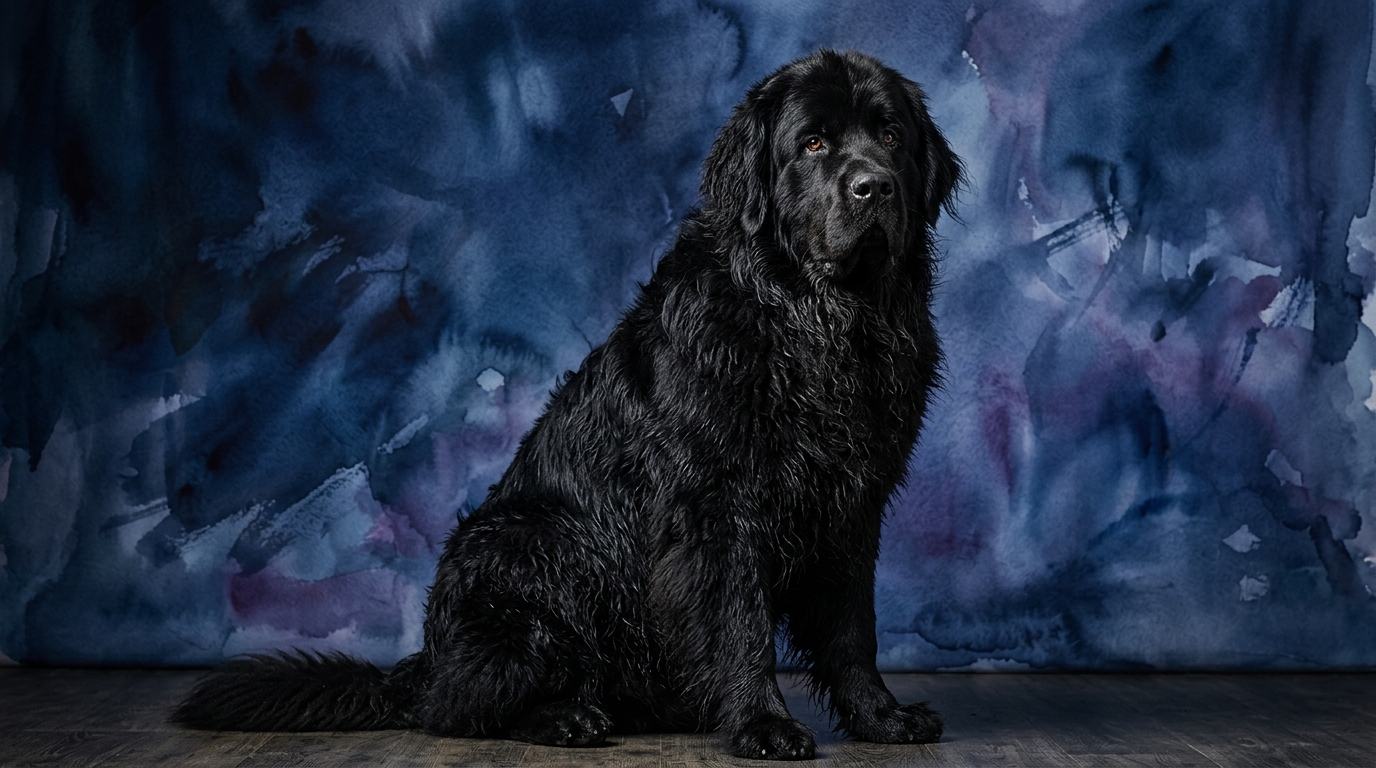
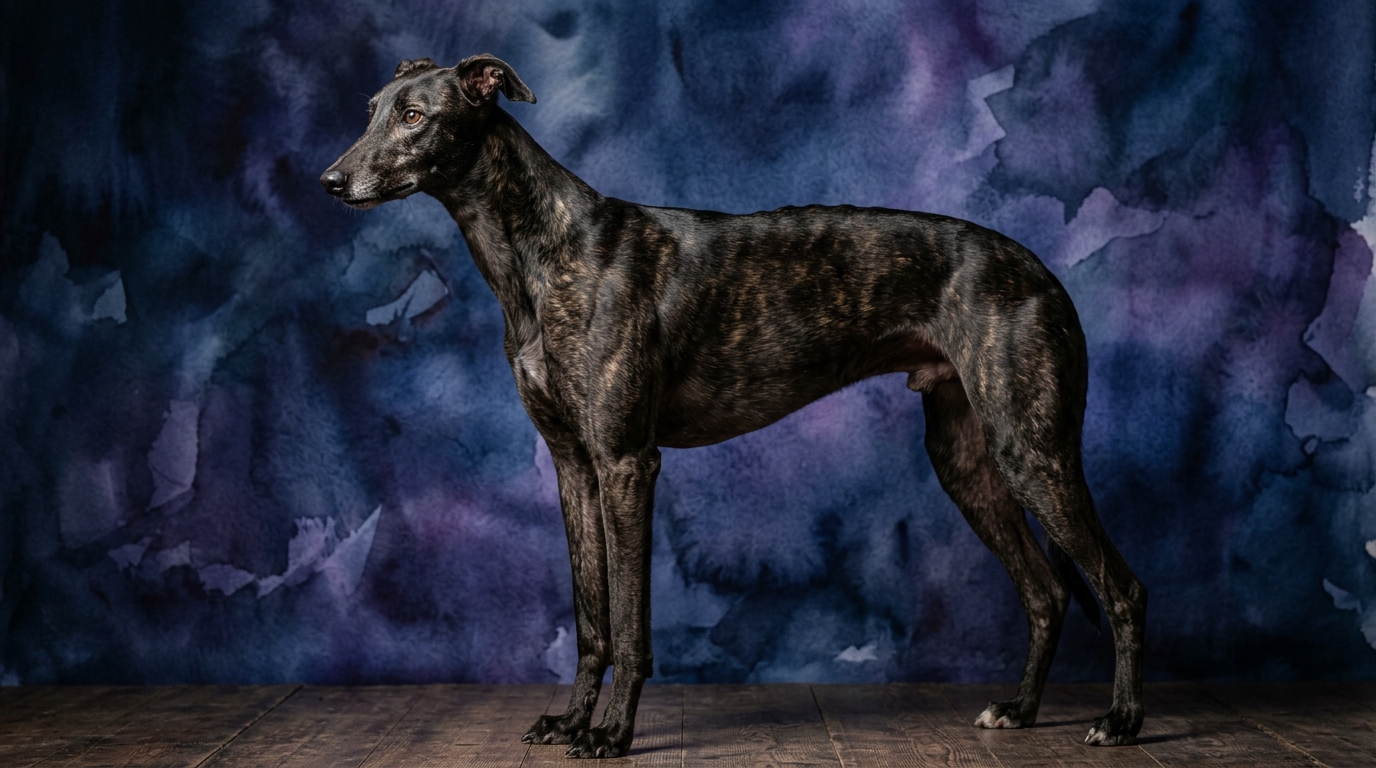
Side-by-Side IQ Profile: Newfoundland vs. Greyhound
The Cosmic Pet Pet IQ Lab provides a detailed framework for understanding canine cognition across five key dimensions. Examining these profiles for the Newfoundland and Greyhound uncovers their inherent mental blueprints.
For the **Newfoundland** (Coren rank #34, Working Group): Problem Solving (3/5) indicates they can tackle complex tasks, especially those involving physical challenges or care-giving, often through persistent effort rather than immediate insight. Training Speed (4/5) highlights their responsiveness and willingness to learn new cues and behaviors with relative ease. Social Intelligence (5/5) is a standout, reflecting their exceptional ability to read human emotions, navigate group dynamics, and form deep, empathetic bonds. Instinctive Drive (5/5) is profoundly expressed in their natural inclination for water rescue and protection, guiding many of their actions. Memory (4/5) allows them to retain a vast array of learned commands, experiences, and social interactions, making them reliable companions.
For the **Greyhound** (Coren rank #46, Hound Group): Problem Solving (3/5) suggests they are capable of finding solutions, often through learned patterns or physical manipulation, particularly in tasks related to their prey drive or environmental navigation. Training Speed (2/5) points to a more independent learning style; they can be sensitive and require patient, consistent methods rather than quick repetition. Social Intelligence (3/5) indicates they form strong bonds with their immediate family but can be reserved or less overtly expressive in larger social settings or with strangers. Instinctive Drive (5/5) is overwhelmingly dominated by their powerful prey drive and the innate urge to chase, which is fundamental to their being. Memory (3/5) is functional for routines and practical commands, though perhaps less geared towards intricate social nuances or abstract concepts.
Where the Newfoundland Wins Cognitively
The Newfoundland's cognitive strengths shine brightest in areas requiring profound empathy and cooperative problem-solving, particularly those involving human welfare. Their exceptional Social Intelligence (5/5) means they are not just good at following commands, but excel at understanding and responding to subtle human cues, emotional states, and even anticipating needs. This makes them unparalleled in roles requiring emotional support or assistance where reading a person is paramount. For instance, a Newfoundland might instinctively nudge a distressed owner or guide a child away from perceived danger, demonstrating a level of social awareness that goes beyond mere training.
Coupled with their high Training Speed (4/5) and strong Memory (4/5), Newfoundlands are adept at learning complex sequences of tasks that benefit others, such as retrieving specific items, providing mobility support, or even participating in elaborate theatrical performances. Their Problem Solving (3/5), while not necessarily lightning-fast, is often directed towards benevolent outcomes; they will work diligently to figure out how to help, whether it's navigating a tricky path to a person in distress or patiently learning a multi-step assistance routine. This convergence of social acumen, trainability, and memory positions them as exceptional partners in service and companionship roles.
Where the Greyhound Wins Cognitively
The Greyhound’s cognitive edge lies in its specialized intelligence for speed, pursuit, and spatial reasoning within dynamic environments. Their powerful Instinctive Drive (5/5) for chasing is not merely a physical attribute but a cognitive one, involving rapid assessment of moving targets, prediction of trajectories, and efficient pathfinding. When a Greyhound is in pursuit, their problem-solving (3/5) manifests as an immediate, fluid calculation of distance, velocity, and optimal interception points, often without conscious deliberation. This is a highly specialized form of intelligence honed over centuries for effective hunting.
Furthermore, their cognitive strengths include an acute awareness of their surroundings in an open field setting. While their Social Intelligence (3/5) might be lower, their ability to process visual information quickly and react with incredible precision is a testament to a different kind of mental agility. They can make split-second decisions based on environmental changes, rapidly adjusting their course during a high-speed run to avoid obstacles or maintain sight of a target. This makes them less about abstract reasoning and more about immediate, effective action in a physically demanding, often unpredictable context.
Which is Easier to Train and Why?
When considering ease of training, the Newfoundland generally presents a more straightforward experience due to its higher scores in Training Speed (4/5) and Social Intelligence (5/5). Newfoundlands possess an inherent desire to cooperate and please their human companions, a trait that makes them highly receptive to instruction. They pick up new cues relatively quickly and respond enthusiastically to positive reinforcement, thriving on the bond and interaction training provides. Their strong memory (4/5) ensures that once a behavior is learned, it's retained effectively, leading to consistent performance.
The Greyhound, with a Training Speed of 2/5 and Social Intelligence of 3/5, requires a different approach. Their independent streak, a legacy of their hunting background where they often worked with less direct human intervention, means they are not always motivated by pleasing humans in the same way a Newfoundland might be. They are also sensitive dogs, meaning harsh or overly repetitive methods are counterproductive and can lead to shutdown or resistance. Training Greyhounds demands immense patience, gentle methods, and understanding their unique motivations, such as the intrinsic reward of the chase or comfort. While they are capable of learning, their learning curve is generally slower and requires more nuanced engagement from the trainer, often focusing on making training feel like a game or a beneficial routine rather than a demand.
Which Suits Active Owners vs. Relaxed Owners?
The Newfoundland, while a large and powerful working dog, possesses a versatile temperament that can surprisingly suit both active and relatively relaxed owners, provided their fundamental needs are met. For active owners, Newfoundlands are excellent companions for long walks, hikes, and especially water-based activities, where their instincts truly shine. Their stamina allows for sustained moderate exercise. However, they are also famously calm and devoted indoors, often content to lounge near their family once their exercise requirements are fulfilled. This makes them suitable for relaxed owners who can commit to daily moderate walks and mental engagement, but appreciate a quiet, affectionate presence in the home. They need mental stimulation, but not necessarily constant high-impact activity.
The Greyhound presents a unique paradox: an incredibly athletic breed that is often described as a '45 mph couch potato.' This makes them surprisingly well-suited for relaxed owners, provided those owners can accommodate their specific need for intense, short bursts of activity. Greyhounds require a secure, fenced area where they can sprint at full speed for 15-20 minutes a day, satisfying their powerful instinctive drive. Beyond these brief, exhilarating runs, Greyhounds are typically very calm, quiet, and even lazy indoors, content to nap on a soft bed for much of the day. They are not endurance partners for long hikes or jogs, but rather require owners who understand and respect their distinct exercise pattern: explosive speed followed by profound rest. Active owners who wish for a running partner might find a Greyhound's endurance limitations frustrating, while relaxed owners who can provide a safe space for daily sprints will find them to be wonderfully low-key indoor companions.
The Verdict: When to Choose Each Breed
The Verdict
Choose a Newfoundland if you seek a profoundly empathetic, cooperative companion adept at complex tasks involving human interaction and physical assistance, valuing a strong social bond and a steady, reliable temperament.
Choose a Greyhound if you appreciate an independent spirit, a dog with a profound need for bursts of speed, and a calm, quiet indoor presence once their exercise needs are met, valuing their unique blend of athleticism and gentle demeanor.
🧠 Find Your Pet's IQ Score
Our Pet IQ Lab assessment covers 25+ tests across 5 cognitive dimensions — personalized to your breed.
Take the Full IQ Test →Frequently Asked Questions
Are Newfoundlands good at learning tricks?
Yes, with a training speed of 4/5 and high social intelligence, Newfoundlands generally enjoy learning new behaviors and tricks, especially when it involves interaction with their people. They respond well to positive reinforcement and remember cues effectively.
Do Greyhounds enjoy puzzle toys?
Greyhounds have a problem-solving score of 3/5, meaning they can engage with puzzle toys, but their interest might be more focused on the immediate reward than the process itself. Toys that dispense treats quickly or simulate a chase can be particularly engaging for them.
Which breed is more adaptable to new environments?
Newfoundlands, with a social intelligence of 5/5, tend to adapt smoothly to new environments and social situations, especially when their human companions are present. Greyhounds, at 3/5 social intelligence, might take longer to warm up and feel secure in unfamiliar settings, preferring routine and their trusted circle.