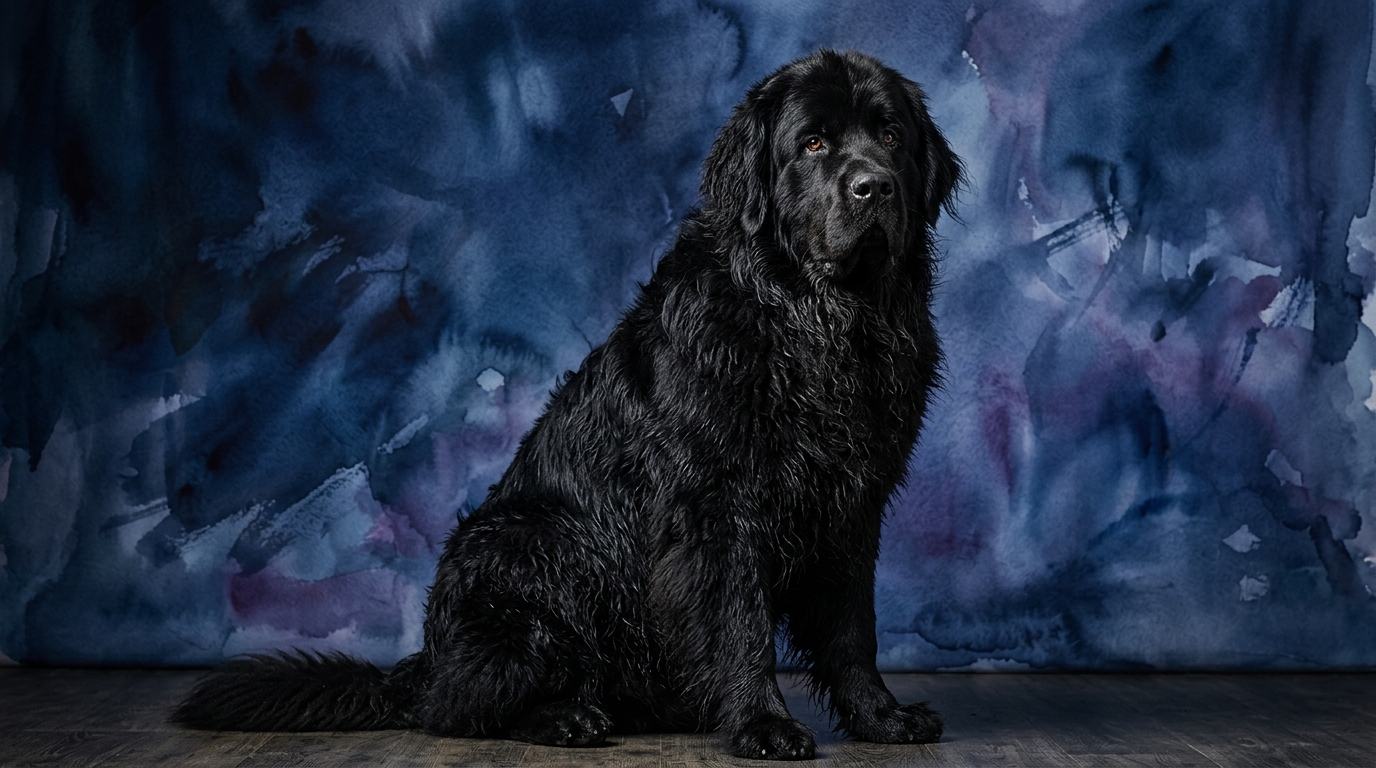

Side-by-Side Cognitive Profiles: Newfoundland vs. Lhasa Apso
At The Cosmic Pet Pet IQ Lab, we delve beyond superficial observations to map the unique cognitive strengths of each breed. The Newfoundland, a Working Group dog, ranks #34 on the Coren scale, reflecting a solid aptitude for understanding and executing commands. Their problem-solving capacity is rated 3/5, indicating they can navigate complex situations and learn through experience, though they might not always be the quickest to innovate without guidance. Training speed for a Newfoundland is a robust 4/5; they typically grasp new commands and routines with impressive alacrity, driven by a deep desire to connect and collaborate with their human companions. Social intelligence is a standout 5/5, showcasing an exceptional ability to read human emotions, anticipate needs, and form profound, empathetic bonds. Their instinctive drive is also a perfect 5/5, rooted in their historical roles of water rescue and loyal guardianship, manifesting as a strong, purposeful motivation. Memory is rated 4/5, ensuring they retain learned information, routines, and experiences over time.
Conversely, the Lhasa Apso, a Non-Sporting Group dog, holds a Coren rank of #68, placing them in the average category, yet still demonstrating a capable mind. Their problem-solving score is 3/5, similar to the Newfoundland, but often manifests in a more independent, self-serving manner, adept at navigating their environment for personal comfort or advantage. Training speed is a 3/5, suggesting they learn at a steady pace but may require more consistent, patient instruction due to their independent streak. Social intelligence for the Lhasa Apso is 3/5; while observant of their human family's behaviors, their deep social connection is often reserved for a select few, and they can be more reserved or aloof with strangers. Their instinctive drive is 3/5, primarily focused on their historical role as watchful temple guardians, emphasizing territoriality, alertness, and companionship within their trusted circle rather than broad outward-focused tasks. Memory is rated 3/5, indicating they retain information adequately, though perhaps requiring more frequent reinforcement compared to breeds with higher scores.
Where the Newfoundland Shines Cognitively
The Newfoundland's cognitive superiority primarily resides in its exceptional social intelligence and powerful instinctive drives, which synergistically enhance its trainability and problem-solving in human-centric contexts. Their 5/5 social intelligence means they are profoundly attuned to human emotional states and intentions, making them extraordinarily responsive and empathetic companions. This deep understanding allows them to anticipate needs, offer comfort, and participate in collaborative tasks with a remarkable willingness. For example, a Newfoundland can intuit when a family member is distressed and offer gentle reassurance, a testament to their emotional processing capabilities.
Coupled with a 5/5 instinctive drive, particularly for water rescue and protection, Newfoundlands excel in purposeful work alongside humans. This drive isn't merely about physical action; it's a cognitive predisposition to engage in tasks that benefit others, making them uniquely suited for roles like therapy dogs or search and rescue. Their quicker training speed (4/5) is a direct consequence of this potent combination of social eagerness and intrinsic motivation, as they readily form associations between commands and the positive reinforcement of human approval and fulfilling their innate purpose.
The Lhasa Apso's Unique Cognitive Strengths
While the Lhasa Apso's social intelligence and instinctive drives are rated lower in broad terms, their cognitive strengths are highly specialized and effective within their specific historical niche. Their 3/5 problem-solving, though numerically similar to the Newfoundland, often presents as a more independent and resourceful approach to challenges, particularly those that benefit their own comfort or security. A Lhasa Apso might ingeniously figure out how to access a forbidden couch or manipulate a situation to get extra attention, demonstrating a practical, self-directed form of intelligence. This isn't about pleasing a handler but about navigating their immediate world to their advantage.
Furthermore, their instinctive drive (3/5) is intensely focused on territorial guardianship. This translates into heightened observational skills and an acute awareness of their surroundings. While not broadly empathetic, their social intelligence (3/5) excels in discerning potential threats or changes within their trusted domain, making them vigilant watchdogs. They form deep, albeit selective, bonds with their chosen family, demonstrating a focused loyalty and an ability to interpret the nuances of their inner circle's behavior, even if they remain aloof with strangers. Their cognitive strengths lie in their self-sufficiency, acute sensory perception for security, and a tenacious spirit in achieving their own objectives.
Training Dynamics: Newfoundland vs. Lhasa Apso
When it comes to ease of training, the Newfoundland generally presents a more straightforward experience due to its high social intelligence and eagerness to please. Their 4/5 training speed is bolstered by their inherent desire for human companionship and cooperation; they thrive on positive reinforcement and readily form strong working relationships. A Newfoundland's motivation is often tied to pleasing its handler and fulfilling its perceived role within the family, making them highly receptive to instruction. They are less likely to question commands and more inclined to comply, viewing training as a shared activity that strengthens their bond.
The Lhasa Apso, with its 3/5 training speed and more independent nature, typically requires a different approach. Their historical role as guardians fostered a self-reliant mindset, meaning they are less inherently driven to simply 'please' a human. Training a Lhasa Apso demands exceptional patience, consistency, and a keen understanding of what motivates them, which often involves appealing to their self-interest or providing clear, positive incentives. Their problem-solving abilities might be directed towards finding ways around commands rather than complying, and their selective social intelligence means they might not see the inherent value in every instruction if it doesn't align with their own perceived purpose. Success with a Lhasa Apso often comes from making training feel like their idea or a game rather than a strict directive.
Matching Breeds to Lifestyles: Active vs. Relaxed Owners
The Newfoundland is an ideal companion for owners who lead an active, purposeful lifestyle and seek a highly cooperative, emotionally sensitive partner. While not requiring intense, high-impact exercise, they thrive on regular, moderate activity, especially swimming, which engages their powerful instinctive drives and physical prowess. Owners who enjoy long walks, trips to the lake, or engaging in gentle canine sports will find a Newfoundland to be a willing and joyful participant. Their high social intelligence means they benefit immensely from being an integral part of family activities, requiring consistent mental stimulation through interaction and training to prevent boredom.
In contrast, the Lhasa Apso is better suited for owners who appreciate an independent, watchful, and selectively affectionate companion. They do not demand extensive physical exercise, making them a good fit for more relaxed indoor lifestyles, though daily walks and playtime are still essential for their well-being. What they do require, however, is an owner who understands their tenacious and sometimes stubborn nature, providing consistent boundaries and mental enrichment to channel their keen observational skills and guardian instincts constructively. They thrive in environments where they feel secure and can offer their focused loyalty to their chosen few, making them excellent companions for those who value a dog's independent spirit and protective presence.
The Verdict
Opt for the Newfoundland if you seek a highly empathetic, cooperative companion eager to engage in collaborative tasks and deep social bonding.
Select the Lhasa Apso for an independent, watchful companion who thrives on selective affection and a keen awareness of their immediate domain.
🧠 Find Your Pet's IQ Score
Our Pet IQ Lab assessment covers 25+ tests across 5 cognitive dimensions — personalized to your breed.
Take the Full IQ Test →Frequently Asked Questions
Is the Newfoundland good with children?
Yes, their exceptional social intelligence and gentle nature make them remarkably patient and protective with children, often acting as 'nanny' dogs. They possess a natural understanding of vulnerability and a strong instinct to nurture, making them safe and loving family members.
Are Lhasa Apsos difficult to house train?
Their independent streak can sometimes extend to house training, requiring diligent consistency and positive reinforcement to establish good habits. Owners must be patient and proactive, using crate training and frequent outdoor trips to achieve success.
Do Newfoundlands require a lot of exercise?
While not hyperactive, Newfoundlands benefit greatly from regular, moderate exercise, especially swimming, to engage both their physical body and their powerful instinctive drives. Consistent activity helps maintain their physical health and mental well-being, preventing boredom and potential behavioral issues.