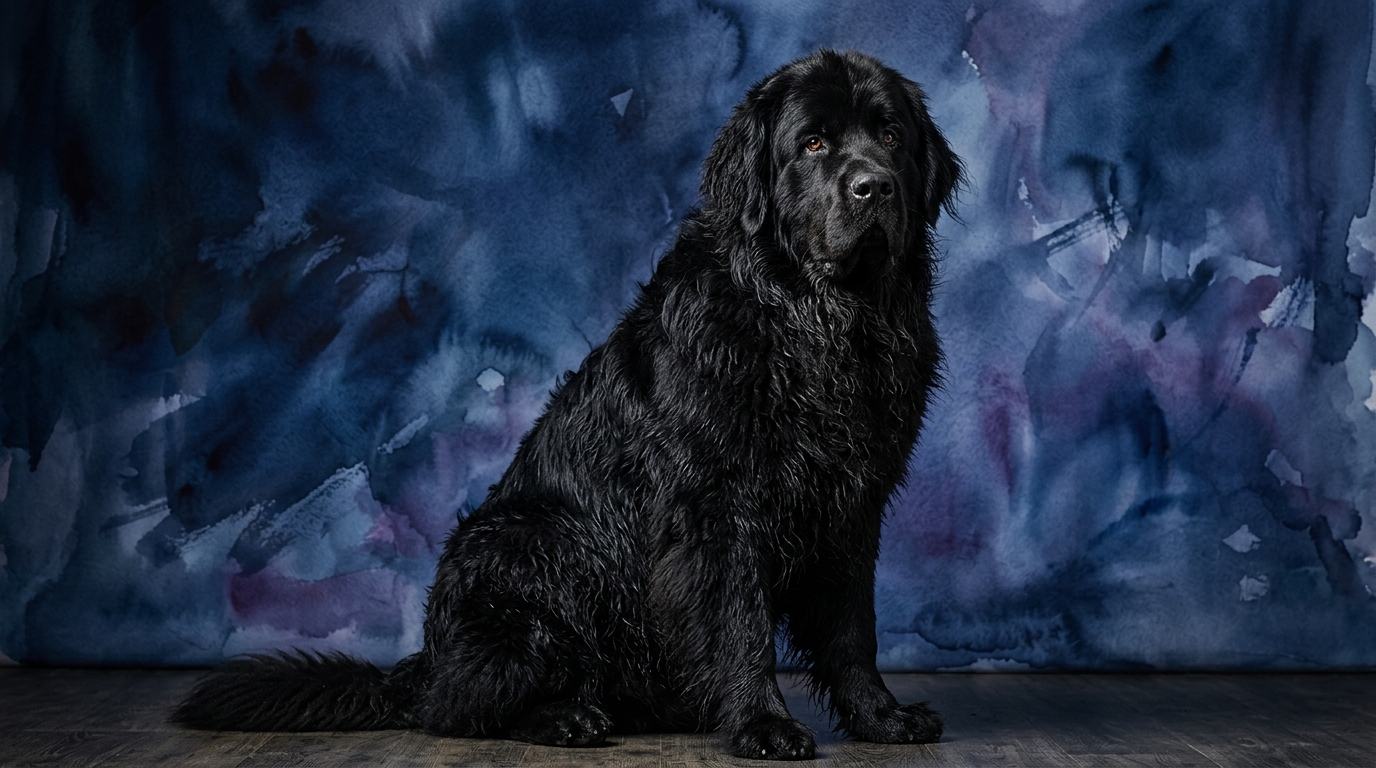
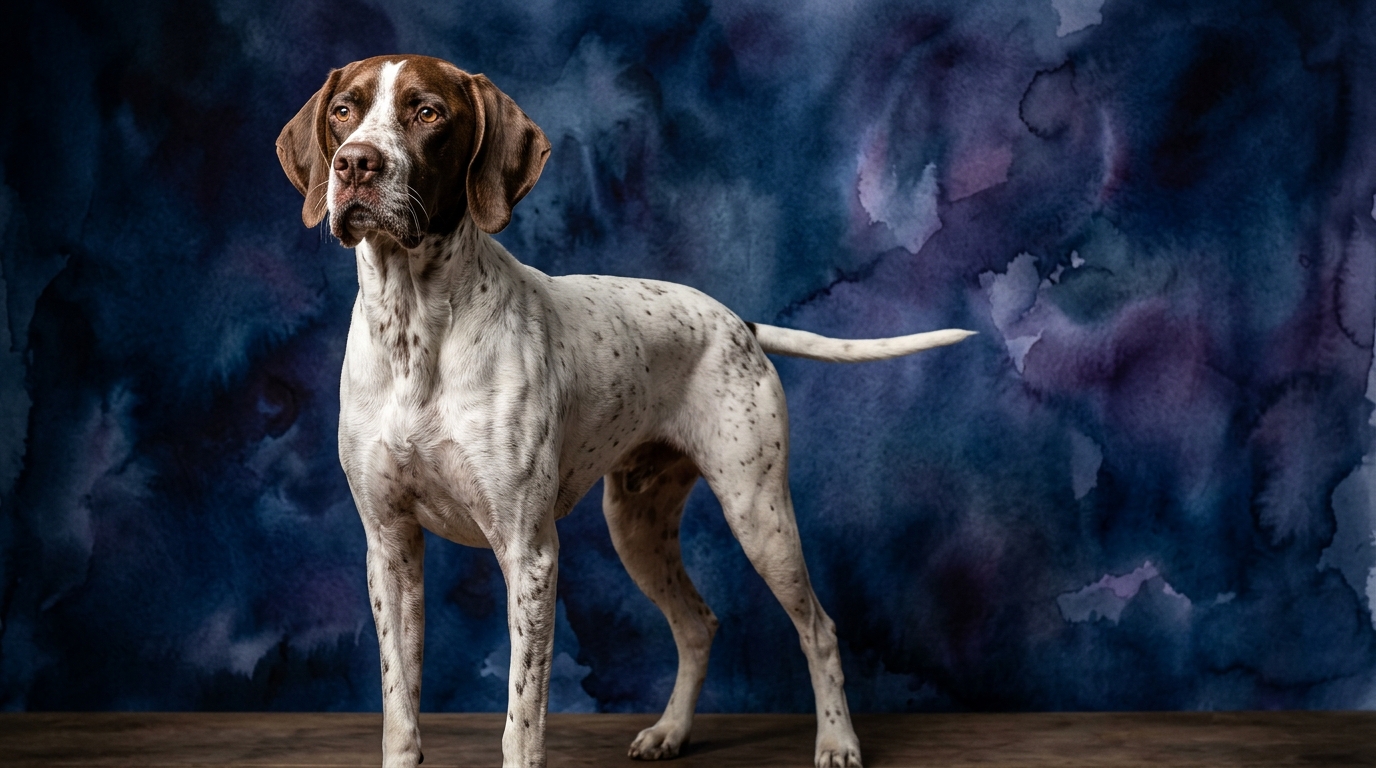
Side-by-side IQ Profile
The Cosmic Pet Pet IQ Lab employs five key dimensions to evaluate canine cognition, providing a nuanced perspective beyond simple rankings. For the majestic Newfoundland, a Working group dog, and the athletic Pointer, a Sporting group dog, these dimensions reveal distinct strengths tailored to their ancestral purposes.
**Newfoundland (Coren Rank #34):**
**Problem Solving (3/5):** Newfoundlands exhibit practical problem-solving, particularly in scenarios involving assistance or navigation. Their cognitive capacity shines when figuring out how to retrieve a person from water or maneuvering around obstacles to reach a family member. This isn't about complex puzzles but rather effective, real-world task resolution.
**Training Speed (4/5):** These gentle giants are generally eager to please and respond well to consistent, positive reinforcement. Their capacity to quickly grasp commands and routines makes them relatively facile to train, especially when the training fosters their natural inclination to cooperate and help.
**Social Intelligence (5/5):** This is where the Newfoundland truly excels. Their profound empathy, ability to read human emotions, and gentle disposition are unparalleled. They form deep bonds, often acting as intuitive companions, understanding subtle cues and providing comfort without explicit instruction.
**Instinctive Drive (5/5):** The Newfoundland's instinctive drive is overwhelmingly geared towards rescue and companionship. Their powerful urge to protect, assist, and be an integral part of their human family is a defining characteristic, driving much of their behavior and learning.
**Memory (4/5):** Newfoundlands possess a robust memory, retaining commands, learned routines, and the identities of people and places over extended periods. This contributes to their reliability and consistency in tasks and interactions.
**Pointer (Not Coren-Ranked):**
**Problem Solving (3/5):** Pointers demonstrate a distinct type of problem-solving, primarily focused on their hunting tasks. This includes efficiently quartering a field, locating scent, and navigating terrain to find game. Their cognitive abilities are highly specialized for practical, on-the-field challenges.
**Training Speed (3/5):** While Pointers are capable of learning, their training speed is moderate. They can be independent thinkers, which means training requires consistent, clear methods and strong motivation, often linked to their prey drive. They excel in learning specific hunting commands but may take longer to generalize concepts.
**Social Intelligence (3/5):** Pointers are affectionate with their families and enjoy interaction, but their social intelligence leans more towards a working partnership rather than profound emotional attunement. They are generally less sensitive to subtle human emotional shifts compared to the Newfoundland, valuing companionship but with a more independent streak.
**Instinctive Drive (3/5):** The Pointer's primary instinctive drive is centered around hunting: scenting, locating, and pointing game. This drive is powerful and consuming when engaged, but it's a more focused, task-specific drive rather than the broad, all-encompassing social and rescue drive of the Newfoundland.
**Memory (3/5):** Pointers have a functional memory, recalling hunting patterns, specific commands, and familiar routes in the field. This memory serves their working purpose effectively, allowing them to perform complex sequences of actions during a hunt.
Where Newfoundland Wins Cognitively
The Newfoundland's cognitive strengths firmly reside in the realm of social and emotional intelligence. With a perfect 5/5 in social intelligence, they possess an exceptional capacity for empathy, understanding nuanced human emotions, and responding with appropriate comfort or assistance. This translates into an intuitive ability to anticipate needs, offer gentle support, or even perform impromptu “rescues” of children from pools. Their strong instinctive drive (5/5) is channeled into cooperation and protection, making them proactive partners in family life. This breed doesn't just respond to commands; they often act on their own initiative to safeguard or comfort, demonstrating a deep understanding of their role within the human pack. Their problem-solving, while rated 3/5, is particularly effective in human-centric situations where ingenuity is required to help or retrieve, like navigating complex environments to reach someone in distress.
Where Pointer Wins Cognitively
Pointers, while not scoring as high in broad social metrics, demonstrate superior specialized cognitive abilities directly tied to their heritage as hunting dogs. Their problem-solving (3/5) is acutely focused on the intricacies of the field: efficiently covering ground, interpreting complex scent trails, and making independent decisions about bird location. This requires a unique blend of spatial reasoning, sensory discrimination, and strategic thinking that is less about human interaction and more about environmental mastery. Their instinctive drive (3/5) is profoundly rooted in prey detection and pointing, demanding immense focus and perseverance. This drive, combined with their moderate memory (3/5) for field patterns and specific game locations, allows them to perform intricate, repetitive hunting tasks with remarkable precision and endurance. They excel at processing vast amounts of environmental data to achieve a specific, tangible goal.
Which Is Easier to Train and Why
When considering ease of training in a general companion context, the Newfoundland generally presents a more straightforward path. Their elevated training speed (4/5) combined with their exceptional social intelligence (5/5) means they are inherently more receptive to human instruction and eager to please. Newfoundlands thrive on positive reinforcement and the strong bond they form with their trainers, readily understanding expectations and responding consistently. Their powerful instinctive drive towards cooperation and protection further motivates them to learn and comply. Pointers, with a training speed of 3/5 and social intelligence of 3/5, can be more challenging for a novice owner. While trainable, their independent nature and highly focused prey drive (3/5) can sometimes make them less inclined to follow commands if a compelling scent or visual stimulus distracts them. Training a Pointer often requires more patience, consistency, and a deeper understanding of their breed-specific motivations, frequently leveraging their innate drive for scent work to maintain engagement.
Which Suits Active Owners vs Relaxed Owners
The choice between a Newfoundland and a Pointer also hinges significantly on an owner's lifestyle. A Newfoundland, despite its massive size, can adapt surprisingly well to a more relaxed owner, provided their substantial social needs are met and they receive regular, moderate exercise. While they enjoy a good swim or a leisurely walk, their primary “activity” often revolves around being a deeply integrated family member, requiring significant human interaction and gentle companionship. Their calm demeanor indoors, once their basic needs are met, makes them suitable for owners who prioritize emotional connection and a less intense physical routine. Conversely, the Pointer is unequivocally a breed for active owners. Their heritage demands extensive physical exertion and mental stimulation related to their hunting instincts. An owner who enjoys long runs, extensive hikes, field trials, or even competitive scent work will find a fulfilling partner in a Pointer. They are not content with short strolls and require significant daily outlets for their energy and prey drive; a truly relaxed owner would likely find a Pointer's needs overwhelming.
The Verdict
For those seeking a profound emotional connection and a gentle, intuitive family member deeply involved in daily life, the Newfoundland is the clear choice.
If you desire an energetic, task-oriented partner for rigorous outdoor adventures and specialized field work, the Pointer will be an unmatched companion.
🧠 Find Your Pet's IQ Score
Our Pet IQ Lab assessment covers 25+ tests across 5 cognitive dimensions — personalized to your breed.
Take the Full IQ Test →Frequently Asked Questions
Are Newfoundlands good for first-time dog owners?
Yes, their gentle nature, strong desire to please, and high social intelligence often make them a good fit for first-time owners who are prepared for their size, grooming needs, and significant bonding requirements. Consistent positive training methods yield excellent results.
How much exercise does a Pointer need daily?
Pointers require substantial daily exercise, typically 1-2 hours of vigorous activity, such as running, hiking, or dedicated field work, to satisfy their energy levels and instinctive drives. Mental stimulation through training and scent games is also crucial.
Do Newfoundlands drool a lot?
Yes, Newfoundlands are known for their drooling, especially after drinking water, eating, or during excitement. Owners should be prepared for this characteristic and typically keep a “drool rag” handy.