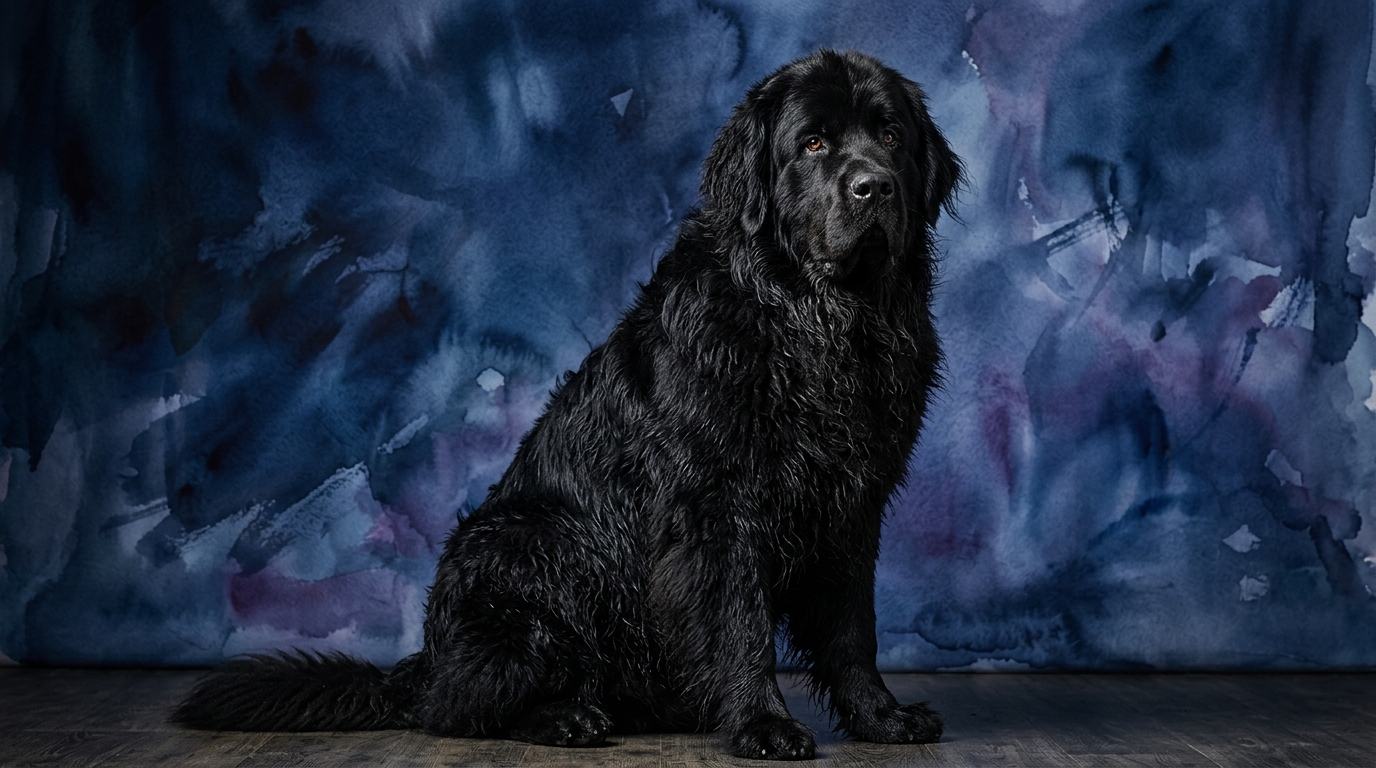
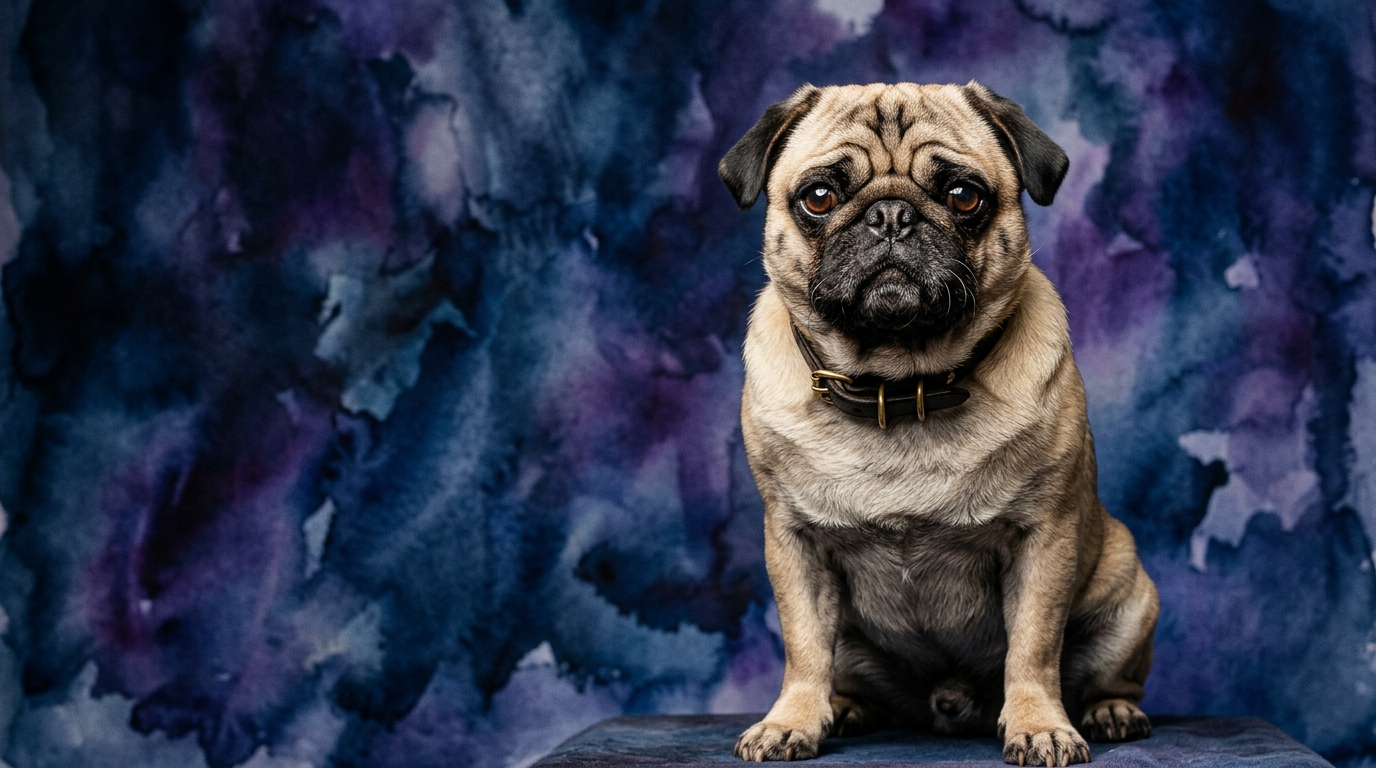
Side-by-Side IQ Profile: Newfoundland vs. Pug
The Cosmic Pet Pet IQ Lab evaluates canine cognition across five distinct dimensions, offering a granular view of each breed's mental architecture. For the Newfoundland, a Working breed ranked #34 by Coren, its IQ profile paints a picture of a capable and empathetic companion.
Newfoundland IQ Breakdown:
Problem Solving (3/5): These dogs exhibit a moderate capacity for independent thought, often applying practical solutions to physical challenges. Their working heritage means they can assess situations and devise strategies, particularly when the task aligns with their inherent drive, such as figuring out how to retrieve a floating object or navigate a complex path.
Training Speed (4/5): Newfoundlands are generally eager to please and possess a commendable ability to absorb new commands and routines with relatively few repetitions. Their cooperative nature and desire to work alongside their human companions contribute to their responsiveness during training sessions.
Social Intelligence (5/5): With an exceptional understanding of human emotions and intentions, Newfoundlands are deeply empathetic and highly attuned to their family's needs. They often anticipate their owner's desires, demonstrating remarkable sensitivity and forming profoundly strong bonds.
Instinctive Drive (5/5): This breed possesses a robust and powerful set of innate behaviors, prominently featuring a strong drive for water rescue, protection, and companionship. This deep-seated instinct often guides their actions and motivations, making them reliable in situations where these drives are activated.
Memory (4/5): Newfoundlands demonstrate excellent recall, retaining learned behaviors, commands, and the faces of individuals they interact with over long periods. This strong memory contributes significantly to their consistency and reliability as companions and working dogs.
In contrast, the Pug, a Toy breed ranked #57 by Coren, presents a different cognitive blueprint, one that prioritizes social connection and comfort over complex task performance.
Pug IQ Breakdown:
Problem Solving (2/5): Pugs tend to approach challenges with less emphasis on independent strategizing, often preferring to engage with their human companions for solutions rather than devising complex plans themselves. Their focus is typically more on social interaction and comfort than on intricate problem-solving tasks.
Training Speed (2/5): While capable of learning, Pugs generally require more patience and repetition during training. They can possess an independent, sometimes stubborn streak, and their motivation is often driven by immediate rewards or comfort, making consistent engagement crucial for progress.
Social Intelligence (5/5): Pugs excel in the realm of social acumen, demonstrating an outstanding ability to read human moods, expressions, and intentions. They are masters at using their charm and expressive faces to solicit attention, affection, and comfort, thriving on close companionship.
Instinctive Drive (2/5): Compared to breeds with specific working roles, Pugs exhibit a lower level of predefined instinctive drives for tasks like hunting or retrieving. Their primary “instinct” often revolves around seeking warmth, comfort, food, and constant human companionship.
Memory (3/5): Pugs have a moderate capacity for remembering commands, routines, and, importantly, the people who provide them with affection and treats. Their recall is often influenced by the perceived enjoyment or reward associated with the memory, making pleasant associations key.
Where the Newfoundland Wins Cognitively
The Newfoundland’s cognitive superiority is evident in its robust Problem Solving (3/5) and powerful Instinctive Drive (5/5). They are not just physically capable; they apply practical intelligence to navigate complex environments or retrieve objects from challenging situations, often demonstrating a clear understanding of cause and effect. Their inherent drive for specific tasks, particularly water rescue and guardianship, means they possess an internal compass that directs their actions with purpose and reliability. This deep-seated motivation, coupled with a commendable Training Speed (4/5), enables them to rapidly internalize complex command sequences and adapt to intricate routines, making them exceptionally responsive and dependable in demanding scenarios where decisive action and learned behaviors are critical. Their strong memory (4/5) further solidifies their ability to retain and apply these learned skills over time.
Where the Pug Wins Cognitively
While the Newfoundland excels in task-oriented cognition, the Pug’s cognitive triumph is unmistakably in the realm of social intelligence (5/5), which they leverage with unparalleled finesse. Both breeds share a perfect score in this dimension, but the Pug applies it distinctively: they are consummate masters of companionable interaction. A Pug’s mind is exquisitely tuned to subtle human cues, not necessarily to perform a complex task, but to elicit affection, attention, or a coveted treat. Their moderate memory (3/5) is particularly sharp for recalling individuals, pleasant experiences, and routines that consistently lead to social rewards, such as the sound of a treat bag or the specific tone of voice that signals cuddle time. This makes them incredibly adept at forming deep emotional connections and seamlessly integrating into family life as charming, perceptive companions.
Which is Easier to Train, and Why?
The Newfoundland is generally considered easier to train, primarily due to its higher Training Speed (4/5) and a profound Instinctive Drive (5/5) that often aligns with human objectives. These dogs possess an innate desire to cooperate and a strong work ethic, translating into a readiness to learn and respond to commands with admirable consistency. Their capacity to grasp new concepts quickly, coupled with a reliable memory (4/5) for learned behaviors, means they internalize multi-step commands and complex routines effectively when positive reinforcement is applied.
In stark contrast, the Pug, with a Training Speed of 2/5, presents a greater training challenge. While certainly capable of learning, their motivation is often more self-serving, prioritizing comfort, food, or immediate gratification over compliance. This requires trainers to employ significant patience, shorter, highly engaging sessions, and exceptionally high-value rewards to overcome their sometimes-independent or “what’s in it for me?” attitude, making the process more demanding.
Which Suits Active Owners vs. Relaxed Owners?
An active owner seeking a substantial canine companion for robust outdoor adventures, water sports, or even competitive obedience would find the Newfoundland an ideal, purpose-driven match. Its high instinctive drive (5/5), considerable problem-solving capacity (3/5) for practical situations, and inherent physical endurance make it perfectly suited for engaging in structured activities, long hikes, and roles that demand both mental and physical engagement. These dogs thrive when given a job or a clear purpose.
Conversely, the Pug is exquisitely suited for more relaxed owners who prioritize intimate companionship, indoor comfort, and gentle, leisurely strolls. Its primary cognitive strengths are geared towards social interaction (5/5) and observation rather than strenuous activity or complex task completion. The Pug’s moderate instinctive drive (2/5) and lower problem-solving focus make it a delightful, low-key companion for a more sedentary or home-centric lifestyle, content to be a charming presence by its owner’s side.
The Verdict
Choose a Newfoundland if you value a capable, purpose-driven companion for activities demanding physical prowess, problem-solving, and a strong sense of duty, particularly in outdoor or water-centric environments.
Opt for a Pug if your lifestyle prioritizes an affectionate, charming, and socially astute companion who thrives on close human interaction and requires less vigorous physical or mental exertion.
🧠 Find Your Pet's IQ Score
Our Pet IQ Lab assessment covers 25+ tests across 5 cognitive dimensions — personalized to your breed.
Take the Full IQ Test →Frequently Asked Questions
Do Newfoundlands really have a strong rescue instinct?
Yes, Newfoundlands possess a powerful instinctive drive (5/5) for rescue, especially in water. This innate predisposition is a hallmark of their breed, guiding their behavior and making them natural lifeguards.
Are Pugs difficult to house train?
Pugs can sometimes be more challenging to house train due to their lower training speed (2/5) and a tendency to be easily distracted. Consistent routines, frequent potty breaks, and positive reinforcement are crucial for success.
How does social intelligence differ between these two breeds?
Both breeds score 5/5 in social intelligence, meaning they are highly attuned to human emotions and cues. The Newfoundland often uses this to anticipate needs and assist, while the Pug primarily uses it to foster close bonds and secure attention.