
Side-by-Side IQ Profile: Unpacking Breed Cognition
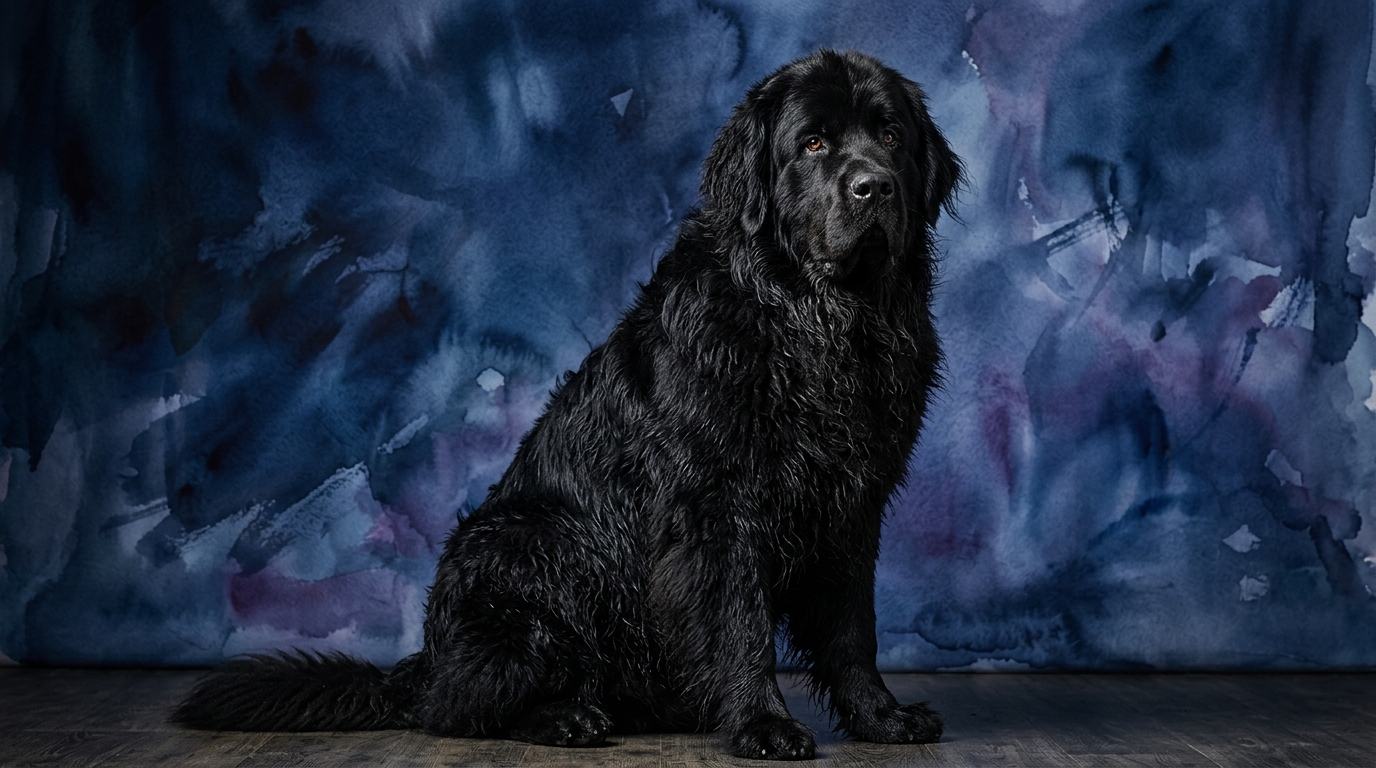
The Cosmic Pet Pet IQ Lab employs a multi-dimensional framework to assess canine intelligence, moving beyond simple obedience to explore the nuanced facets of a dog's mind. For the Newfoundland, a Working breed, its profile reflects a powerful blend of cooperation and inherent drive. Its Problem Solving is rated 3/5, indicating an ability to navigate familiar challenges but perhaps less inclination for novel, abstract puzzles. Training Speed, at 4/5, suggests a quick grasp of commands and routines, often eager to please. Social Intelligence, a standout 5/5, highlights its exceptional capacity for understanding human cues, empathy, and group dynamics—a critical trait for a rescue dog. Instinctive Drive, also 5/5, speaks to its strong innate behaviors, whether it's water retrieval or protective instincts. Memory, at 4/5, underpins its ability to retain learned behaviors and social interactions over time.
In contrast, the Sussex Spaniel, a Sporting breed, presents a profile optimized for its specific field work. Its Problem Solving mirrors the Newfoundland at 3/5, indicating practical intelligence rather than abstract reasoning. Training Speed is 3/5, suggesting a steady but perhaps more deliberate learning pace, requiring consistent reinforcement. Social Intelligence, at 3/5, implies a strong bond with its immediate family but potentially less outwardly expressive social awareness compared to the Newfoundland. Instinctive Drive, also 3/5, points to a focused drive for scent work and flushing game, rather than broader, more complex instinctive behaviors. Memory, rated 3/5, supports its ability to recall specific hunting tasks and learned commands.
Where the Newfoundland Wins Cognitively
The Newfoundland's cognitive strengths truly shine in areas demanding empathy, cooperation, and a strong work ethic directed towards human well-being. Its unparalleled 5/5 Social Intelligence makes it exceptionally attuned to human emotions and intentions, enabling it to anticipate needs and respond with remarkable sensitivity. This manifests in its historical role as a water rescue dog, where assessing a distressed swimmer's state and executing a safe retrieval requires profound social understanding beyond mere command following. Furthermore, its 4/5 Training Speed, coupled with this high social intelligence, means Newfoundlands are often more receptive to complex, multi-step training sequences, especially when the training involves working alongside a human partner towards a shared goal. Their 5/5 Instinctive Drive isn't just about raw power; it’s about a deeply ingrained, purposeful drive to assist and protect, a cognitive advantage in situations requiring self-initiated intervention. A Newfoundland is more likely to assess a situation and act appropriately without direct command if it perceives distress, a testament to its integrated social and instinctive cognition.
Where the Sussex Spaniel Wins Cognitively
While the Sussex Spaniel's scores might appear lower in some categories, its cognitive profile is exquisitely tailored for its original purpose, demonstrating a focused efficiency rather than broad social aptitude. Its 3/5 Instinctive Drive, while not as expansive as the Newfoundland's, is highly specialized and persistent, allowing it to meticulously follow scent trails and flush game with unwavering determination. This singular focus, coupled with its 3/5 Problem Solving, means it excels at practical, task-oriented challenges directly related to its hunting heritage, such as navigating dense cover or locating hidden prey. Unlike the Newfoundland's social problem-solving, the Sussex Spaniel's cognitive strength lies in its ability to systematically process environmental cues for a specific objective. Its 3/5 Social Intelligence, though lower, often translates into a deep, singular devotion to its primary handler, making it a highly focused and loyal partner in the field. This less distributed social attention can be an advantage for owners seeking a dog whose primary focus is on their immediate human companion and task at hand, rather than a broad engagement with everyone.
Which is Easier to Train and Why
When considering ease of training, the Newfoundland generally holds an advantage due to its higher Training Speed (4/5) and exceptional Social Intelligence (5/5). Newfoundlands possess a strong innate desire to please and cooperate, making them highly responsive to positive reinforcement and eager participants in training sessions. Their ability to quickly grasp cues and understand human intentions means they often learn new commands and complex routines with fewer repetitions. For instance, teaching a Newfoundland a "stay" command is often expedited by its natural inclination to remain close and its strong social bond, whereas a Sussex Spaniel might require more consistent, patient reinforcement to override its independent scent-driven impulses.
The Sussex Spaniel, with a Training Speed of 3/5, requires a more patient and consistent approach. While certainly trainable, they may take longer to solidify commands and can be more prone to distractions, especially when their powerful instinctive drive (3/5) for scent work takes over. Their cognitive focus is often directed outward into the environment, processing olfactory information, which can make sustained attention on a handler more challenging initially. Owners of Sussex Spaniels often find success by incorporating their natural drives into training, such as using scent games or reward systems that appeal to their foraging instincts, and by maintaining a calm, authoritative presence to guide their focus.
Which Suits Active Owners vs. Relaxed Owners
The Newfoundland, despite its calm demeanor indoors, is ultimately suited for owners who can provide a moderately active lifestyle and appreciate a large, engaged companion. Its 5/5 Instinctive Drive and 4/5 Memory mean it thrives with purposeful activities like swimming, long walks, or even carting, which engage both its body and mind. Owners who are active in outdoor pursuits and enjoy having a cooperative, gentle giant by their side will find the Newfoundland a fulfilling partner. Its high social intelligence also means it flourishes in family environments where it receives ample interaction and can be an integral part of daily life, making it less suitable for owners seeking a purely independent outdoor dog.
The Sussex Spaniel fits a slightly different niche. While a Sporting breed, its activity needs are often more focused and less overtly strenuous than some other spaniels. Its 3/5 Instinctive Drive is satisfied by regular, moderate exercise, particularly opportunities for sniffing and exploring in secure areas. Relaxed owners who enjoy leisurely walks, engaging in scent work or retrieving games in their yard, and appreciate a devoted, calm presence indoors will find the Sussex Spaniel a wonderful fit. They are less suited for owners looking for a jogging partner or a dog that requires constant high-intensity activity, preferring quality engagement and a comfortable home life over endless exertion. Their moderate social intelligence means they are deeply content with their chosen human companions, not needing to be the life of every party.
The Verdict
Choose a Newfoundland if you are an active, family-oriented individual or family seeking a highly cooperative, empathetic, and gentle giant who thrives on social interaction and purposeful, moderate activity like water sports or long walks. This breed is ideal for those who appreciate a dog with a strong protective instinct and a profound desire to be an integrated, contributing member of the household.
Opt for a Sussex Spaniel if you are a more relaxed owner who values a devoted, calm, and focused companion with moderate exercise needs, particularly enjoying scent-based activities and shorter, consistent walks. This breed suits those who appreciate a dog with a singular bond, a relatively independent streak when engaged in its instinctive pursuits, and a generally tranquil presence indoors.
🧠 Find Your Pet's IQ Score
Our Pet IQ Lab assessment covers 25+ tests across 5 cognitive dimensions — personalized to your breed.
Take the Full IQ Test →Frequently Asked Questions
Are Newfoundlands difficult to manage due to their large size and strong instincts?
While large, Newfoundlands are generally gentle and cooperative due to their high social intelligence and desire to please, making them manageable with consistent training and appropriate socialization from a young age. Their strong instincts are often directed towards helpful, protective behaviors rather than aggression.
Do Sussex Spaniels make good family pets despite their lower social intelligence score?
Yes, Sussex Spaniels can make excellent family pets; their 3/5 social intelligence primarily indicates a tendency to form deep bonds with a select few rather than being overly gregarious with strangers. They are devoted to their immediate family, offering a calm and loving presence, though they may be less outwardly expressive or tolerant of boisterous play from young children than some other breeds.
What kind of mental stimulation do Sussex Spaniels need to stay content?
Sussex Spaniels thrive on mental stimulation that engages their strong instinctive drive for scent work and problem-solving related to their hunting heritage. Activities like scent games, moderate retrieving, and structured exploration during walks where they can follow interesting smells are highly beneficial for their cognitive well-being.