Side-by-Side Cognitive Profiles
At The Cosmic Pet Pet IQ Lab, we evaluate canine intelligence across five key dimensions, offering a nuanced view beyond simple 'smart' labels. For the Newfoundland and Swedish Vallhund, these profiles paint a picture of specialized cognitive strengths.
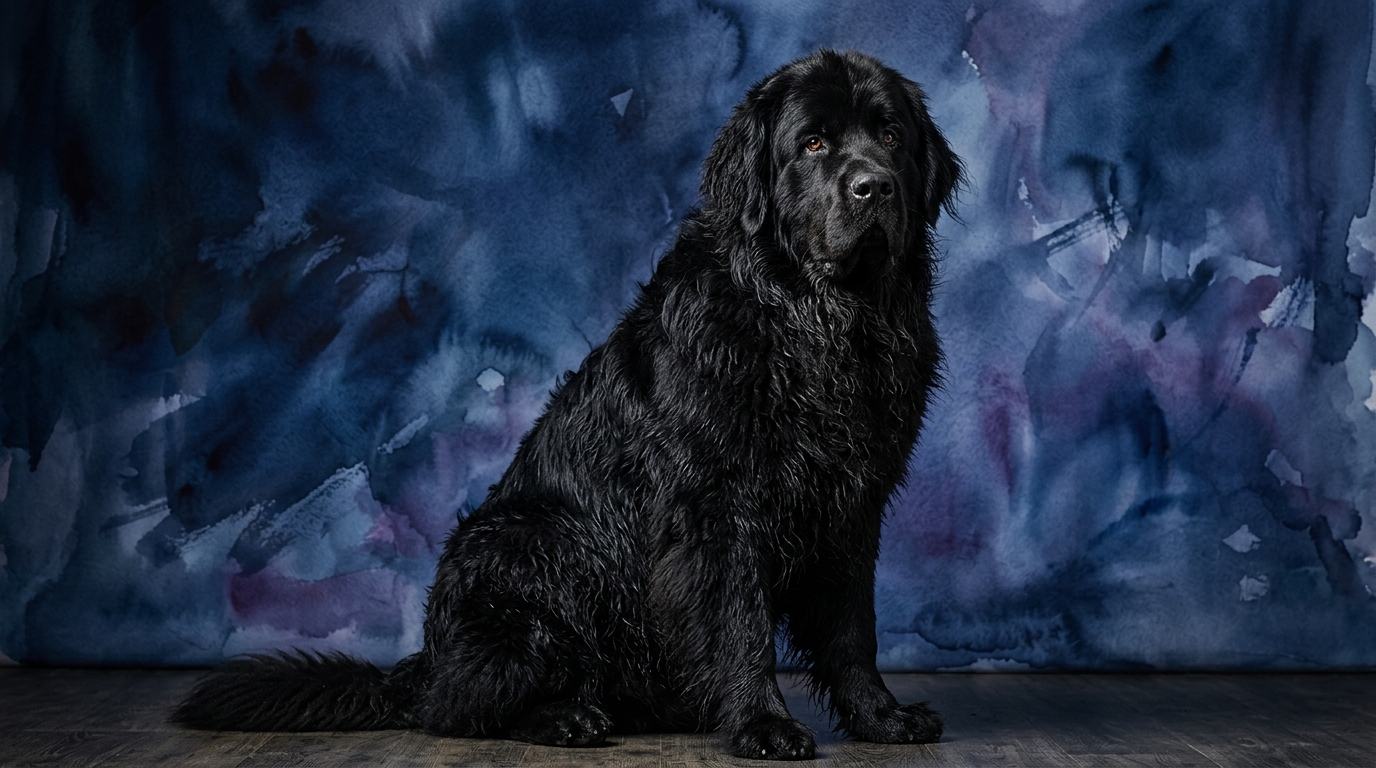
The Newfoundland, a Working breed ranked #34 by Coren, exhibits a Problem Solving score of 3/5, indicating competence in navigating challenges, particularly those related to its protective and rescue roles. Its Training Speed is rated 4/5, suggesting a quick grasp of new commands, while its Social Intelligence is an exceptional 5/5, highlighting its profound empathy and connection to humans. An Instinctive Drive of 5/5 underscores its powerful inherent motivations for guarding and companionship, complemented by a Memory score of 4/5, ensuring long-term retention of learned behaviors.
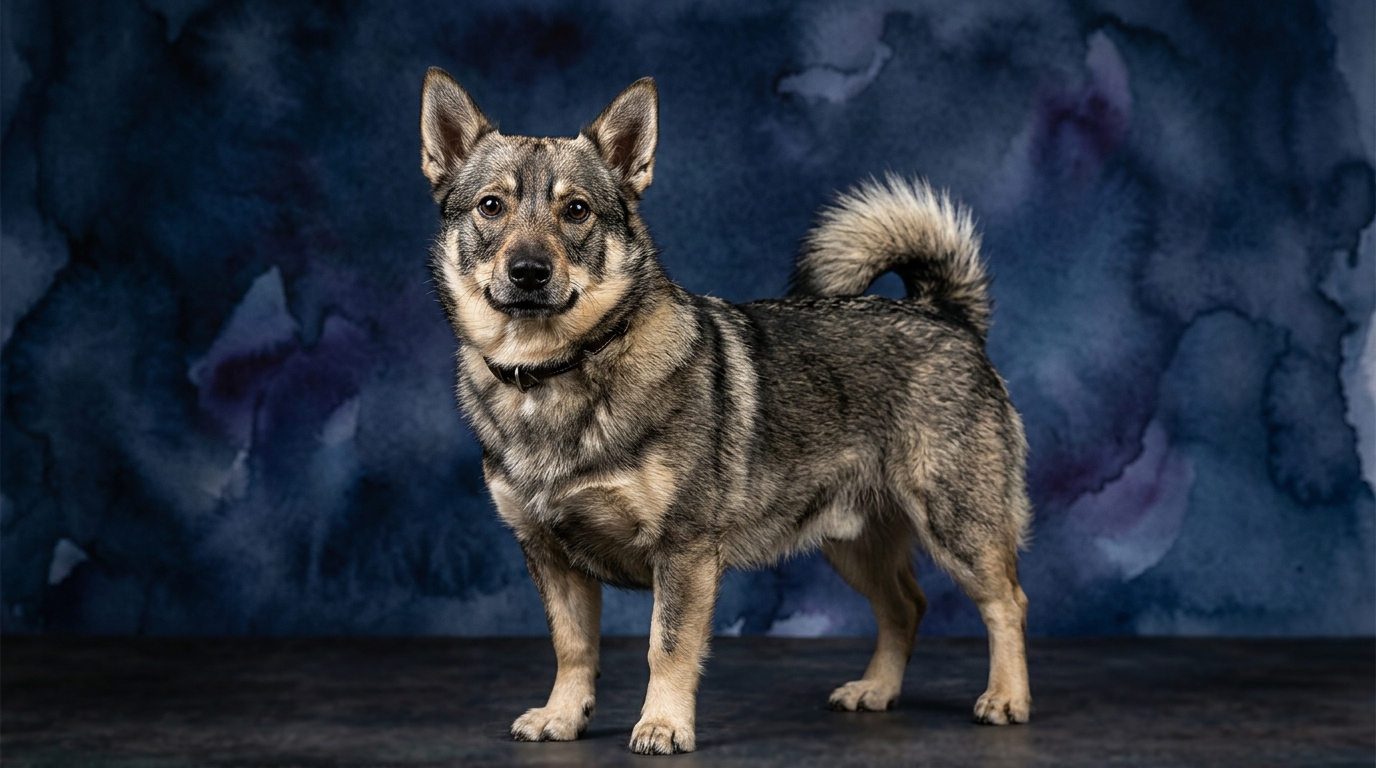
The Swedish Vallhund, a Herding breed not Coren-ranked, shares a Problem Solving score of 3/5, demonstrating practical intelligence in its environment. Its Training Speed is 3/5, indicating a moderate learning pace. Social Intelligence for the Vallhund stands at 3/5, reflecting attentiveness but a more independent nature compared to the Newfoundland. Its Instinctive Drive is also 3/5, specifically focused on herding, and its Memory is rated 3/5, requiring consistent reinforcement to keep skills sharp.
Where the Newfoundland Excels Cognitively
The Newfoundland's cognitive profile showcases several distinct advantages, primarily driven by its inherent role as a companion and rescue dog. Its Social Intelligence, rated at an exceptional 5/5, is a clear standout. This isn't merely about being friendly; it signifies an unparalleled capacity for understanding and responding to subtle human emotions and complex social cues. This deep empathy allows Newfoundlands to form incredibly profound bonds, making them highly effective in roles requiring nuanced interaction, such as therapy work or assisting individuals with disabilities, where their ability to read a room or sense distress is a critical cognitive strength.
Another significant advantage is the Newfoundland's Instinctive Drive, also rated 5/5. This translates into a powerful, intrinsic motivation to work alongside humans, particularly in protective or life-saving capacities. This isn't just raw energy; it's a cognitive blueprint for purposeful action, making them exceptionally reliable in tasks where their natural inclinations align with human objectives, like water rescue or guarding. Furthermore, its Training Speed of 4/5, combined with its social acumen, means it often grasps new concepts and commands more quickly than many other breeds, including the Vallhund, reflecting a cognitive efficiency that streamlines the initial training process.
Where the Swedish Vallhund's Cognition Shines
While its scores might appear modest when contrasted with the Newfoundland, the Swedish Vallhund's cognitive profile is perfectly adapted for its historical role as a herding dog. Its Instinctive Drive, rated 3/5, is specifically geared towards managing livestock, providing a sharp, focused intellect for precision, agility, and strategic movement. This isn't about broad protection but about intricate control, demonstrating a highly specialized form of working intelligence that allows it to operate effectively in dynamic environments.
The Vallhund's Problem Solving ability, rated 3/5 and matching the Newfoundland, manifests differently due to its herding background. They often apply their problem-solving skills to navigating complex terrain or outmaneuvering animals, showcasing a persistent and clever approach that relies on agility and quick decisions rather than brute force or deep social connection. This independence in problem-solving can be an asset when tasks require a dog to act without constant human direction.
Its Memory (3/5) and Training Speed (3/5), while not top-tier, contribute to a resilient and adaptable learner. The Vallhund's cognitive makeup allows it to retain essential herding patterns and respond to cues effectively, even if it requires more repetition. This resilience, coupled with a keen awareness of its surroundings, means it learns what is necessary for its immediate environment and purpose, rather than being overly dependent on human validation for every action.
Ease of Training: Newfoundland vs. Swedish Vallhund
When considering ease of training, the Newfoundland generally presents a more straightforward experience compared to the Swedish Vallhund, primarily due to its superior scores in Training Speed (4/5) and Social Intelligence (5/5). Newfoundlands exhibit a strong desire to please their human companions, a direct outcome of their deep social intelligence. This means they are highly attentive to human cues and find intrinsic reward in cooperative tasks. When taught a new command, a Newfoundland's high social intelligence helps it quickly understand the human's intention, and its faster training speed means fewer repetitions are needed for the behavior to become ingrained. For instance, a Newfoundland is likely to quickly learn to 'stay' not just because it understands the command, but because it perceives its owner's desire for compliance and finds satisfaction in fulfilling that expectation.
In contrast, the Swedish Vallhund, with a Training Speed of 3/5 and Social Intelligence of 3/5, requires a more engaging and consistent approach. While capable of learning, Vallhunds are often described as having a more independent and sometimes stubborn streak, a legacy of their herding role where they needed to make decisions autonomously. They learn, but might not always be as eager to comply purely for the sake of pleasing. Training a Vallhund often demands a trainer who can make learning feel like a game or a puzzle, tapping into their persistent problem-solving abilities and herding instincts. For example, teaching a Vallhund to 'heel' might involve more varied reinforcement and a slightly longer process to overcome their natural inclination to explore or herd, rather than simply walk politely beside their human. Their memory (3/5) also suggests a need for more regular reinforcement to keep commands sharp.
Matching Canine Cognition to Owner Lifestyle
The Newfoundland is a surprisingly versatile companion, capable of adapting to both active and more relaxed ownership styles, though its size and working heritage mean it benefits immensely from purpose. For owners who enjoy long, leisurely walks, swimming, or engaging in calm, cooperative activities like therapy work or carting, the Newfoundland's high social intelligence and strong instinctive drives for companionship make it an ideal fit. A relaxed owner who values a serene, deeply connected presence will appreciate a Newfoundland's calm demeanor indoors and its desire to be near its people. However, 'relaxed' doesn't mean sedentary; they still require regular, moderate exercise to maintain physical and mental health. Their problem-solving (3/5) and memory (4/5) mean they appreciate mental engagement through consistent routines and gentle challenges, rather than constant high-intensity stimulation.
The Swedish Vallhund, on the other hand, is unequivocally suited for active owners. Its herding background imbues it with a persistent energy level and a cognitive need for engagement that extends beyond simple walks. Owners who enjoy dog sports like agility, obedience, flyball, or who can provide opportunities for 'work' that taps into their instinctive drive (3/5) for herding will find the Vallhund thrives. Their problem-solving (3/5) and memory (3/5) are best stimulated through varied, challenging activities that require them to think and move. A relaxed owner who cannot provide consistent mental and physical outlets might find a Vallhund becomes restless or develops undesirable behaviors, like attempting to 'herd' family members or furniture. They are curious, watchful, and require an owner who can channel their focused energy and independent spirit into constructive activities.
The Verdict
Choose the Newfoundland if you desire a profoundly empathetic, cooperative partner that excels in social roles and offers steadfast companionship, thriving with a purpose-driven but not necessarily high-octane lifestyle.
Choose the Swedish Vallhund if you are an active owner seeking a spirited, agile, and independent problem-solver that thrives on consistent mental and physical challenges and enjoys engaging in dog sports or working tasks.
🧠 Find Your Pet's IQ Score
Our Pet IQ Lab assessment covers 25+ tests across 5 cognitive dimensions — personalized to your breed.
Take the Full IQ Test →Frequently Asked Questions
Does the Newfoundland's Problem Solving score of 3/5 mean it's not capable of learning complex tasks?
Not at all. A score of 3/5 indicates competence in problem-solving, meaning Newfoundlands can certainly learn complex tasks, especially those tied to their strong instinctive drives like rescue or service work. Their strength lies more in cooperative learning and tasks where their social intelligence can guide them, rather than independent, novel puzzle-solving.
How does the Swedish Vallhund's Herding Instinctive Drive (3/5) manifest in a non-farm home?
In a non-farm environment, the Vallhund's herding drive often translates into behaviors like nipping at heels, circling people or other pets, and trying to 'gather' family members. This isn't aggression, but a natural instinct to control movement, and it requires consistent training and redirection into appropriate outlets like herding games or agility.
Given their different social intelligence scores, how do they typically interact with strangers?
A Newfoundland (Social Intelligence 5/5) is generally more open, welcoming, and intuitive with strangers, often sensing intentions and responding with gentle curiosity or calm acceptance. A Swedish Vallhund (Social Intelligence 3/5) tends to be more reserved and watchful, assessing new people with a degree of independence before offering trust or engagement, reflecting its more focused social cognition.