
Side-by-Side IQ Profile: Norfolk Terrier vs. Keeshond
The Cosmic Pet Pet IQ Lab employs a five-dimensional framework to assess canine intelligence, offering a nuanced view beyond simple 'smart' or 'not smart' labels. For the Norfolk Terrier, a robust small terrier, its profile shows a consistent and balanced intelligence across the board, with every dimension scoring 3 out of 5. This consistent scoring indicates a reliable and adaptable mind, well-suited to its original purpose of vermin control and its current role as a spirited companion. Its lack of a Coren ranking doesn't diminish its cognitive capabilities but rather highlights a different emphasis in its breed development and assessment.
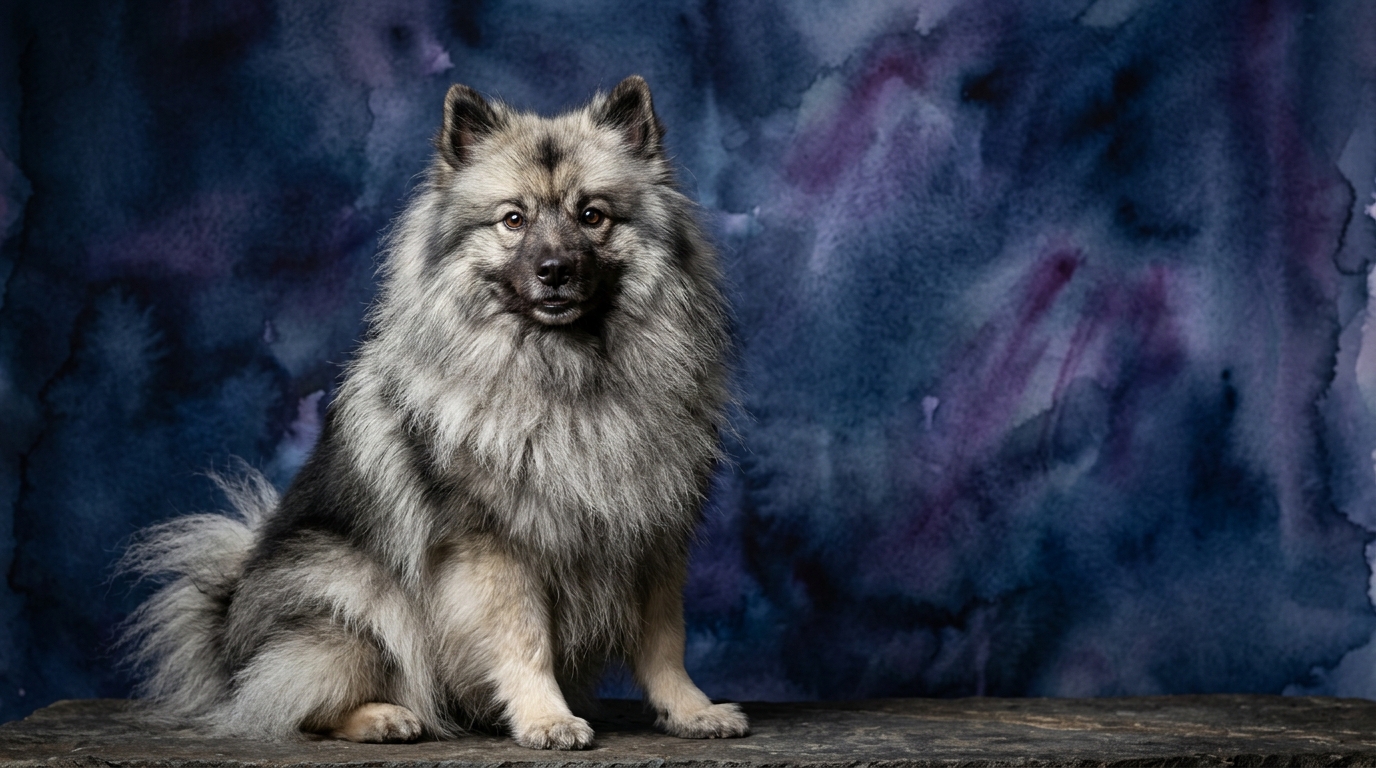
In contrast, the Keeshond, a captivating Northern breed from the Non-Sporting group, presents a profile with notable strengths, earning it a respectable Coren rank of #16. The Keeshond's scores reveal a dog with specific cognitive advantages that make it particularly amenable to training and companionship. Let's break down each dimension to see where these two breeds diverge and converge.
**Problem Solving:** The Norfolk Terrier scores 3/5 in problem-solving, suggesting a practical, hands-on approach to overcoming obstacles. These dogs are adept at figuring out immediate, tangible challenges, often relying on persistence and a keen sense of their environment. They might not devise complex multi-step solutions but are highly effective at their direct aims. The Keeshond, with a score of 4/5, demonstrates a more advanced capacity for problem-solving. This breed can often grasp abstract concepts quicker and apply learned solutions to new situations, indicating a greater cognitive flexibility and ability to strategize beyond immediate instinct.
**Training Speed:** Both breeds show solid potential for learning, but with different acquisition rates. The Norfolk Terrier's 3/5 in training speed means it learns new commands and routines at a steady, moderate pace. Consistency and positive reinforcement are crucial for solidifying behaviors. The Keeshond, scoring 4/5, is quicker to pick up new tasks and commands. This faster training speed is a significant advantage for owners who enjoy teaching complex sequences or participating in competitive obedience, as the Keeshond often thrives on the mental engagement of rapid learning.
**Social Intelligence:** Both breeds share a 3/5 score in social intelligence, indicating a good understanding of human cues and social dynamics. They are generally responsive to their owners' moods and intentions, capable of forming strong bonds and adapting to household routines. This score suggests they are neither overly independent to the point of ignoring social signals nor excessively reliant, finding a comfortable middle ground in their interactions. For both, a 3/5 means they are generally good at reading and responding to their human companions, making them intuitive family members.
**Instinctive Drive:** With both breeds scoring 3/5 for instinctive drive, neither is overwhelmingly driven by primal urges compared to breeds specifically bred for intense hunting or herding. For the Norfolk Terrier, this 3/5 reflects its terrier heritage of chasing and digging, but without the obsessive intensity seen in some working lines. For the Keeshond, the 3/5 score points to a moderate natural inclination for companionship and alertness, rather than a strong prey drive or territoriality that could be challenging for the average owner. This moderate drive makes both adaptable as family pets, less prone to extreme behavioral challenges rooted in instinct.
**Memory:** Here we see the most significant divergence. The Norfolk Terrier's 3/5 memory indicates a reliable recall for familiar routines, commands, and experiences, but perhaps with less capacity for retaining highly detailed or complex sequences over long periods without reinforcement. The Keeshond truly shines in this dimension with a remarkable 5/5 score. This exceptional memory means the Keeshond not only learns quickly but retains information for extended durations, making previously learned behaviors easy to reactivate even after long breaks. This superior recall contributes significantly to its higher Coren ranking and overall trainability.
Where the Norfolk Terrier's Cognitive Strengths Lie
While the Keeshond demonstrates higher numerical scores in certain areas, the Norfolk Terrier's cognitive profile, marked by consistent 3/5 scores across all dimensions, presents a different kind of strength: a robust, practical, and balanced intelligence particularly suited to its terrier heritage. Its problem-solving, rated 3/5, indicates a tenacious and resourceful mind, adept at figuring out immediate, tangible challenges, often with a self-directed approach. This isn't about solving abstract puzzles, but about effectively navigating its environment to achieve a goal, whether it's finding a dropped treat or outsmarting a small pest. This practical intelligence makes them excellent companions for those who appreciate a dog with independent thought and a determined spirit.
The Norfolk Terrier's balanced social intelligence (3/5) means it is perceptive enough to understand human moods and desires, fostering strong bonds, yet retains a degree of independence characteristic of terriers. It's not a dog that constantly seeks direction but rather partners with its owner. Its consistent memory (3/5) ensures it reliably recalls essential commands and routines, making it a perfectly capable learner, albeit one that benefits from consistent, engaging training sessions. The beauty of the Norfolk Terrier's intelligence lies in its well-rounded nature; no single cognitive area overwhelms the others, resulting in a dog that is adaptable, sensible, and capable across a range of situations without being overly complex or demanding in its cognitive needs.
Where the Keeshond's Cognitive Strengths Shine
The Keeshond's cognitive profile highlights a companion animal with a clear aptitude for learning and retention, making it a standout in many aspects of cooperative training. Its 4/5 score in problem-solving demonstrates a capacity for understanding and executing more intricate tasks. This breed isn't just persistent; it actively seeks to understand the 'how' and 'why' of a situation, often learning through observation and applying logic, which can lead to clever, sometimes mischievous, solutions to perceived problems like opening cabinets. This higher problem-solving ability means they thrive on mental challenges and can become bored or invent their own 'fun' if not adequately stimulated.
The Keeshond's exceptional 5/5 memory is a significant cognitive asset, allowing it to master a vast repertoire of commands and tricks and retain them with minimal refreshers. This superior recall makes advanced obedience, agility, or even complex trick training highly rewarding. Coupled with a 4/5 training speed, the Keeshond is a joy to teach, often grasping new concepts in just a few repetitions. This blend of quick learning and enduring memory positions the Keeshond as a prime candidate for roles requiring precision, consistency, and a broad knowledge base, such as therapy work or competitive dog sports. Their cognitive makeup is geared towards active engagement with their human partners, absorbing and retaining information with remarkable efficiency.
Which is Easier to Train and Why?
Based on the Pet IQ Lab data, the Keeshond is generally easier to train compared to the Norfolk Terrier. The primary reasons lie in its higher scores for Training Speed (Keeshond 4/5 vs. Norfolk 3/5) and Memory (Keeshond 5/5 vs. Norfolk 3/5). A Keeshond's faster training speed means it will grasp new commands and behaviors more quickly, often requiring fewer repetitions before understanding. This rapid acquisition of knowledge makes training sessions more efficient and immediately rewarding for both dog and owner.
Furthermore, the Keeshond's exceptional memory ensures that once a behavior is learned, it is retained for a long time, minimizing the need for constant refreshers. This translates to a more reliable dog in various situations, as commands learned months ago can still be recalled effectively. While the Norfolk Terrier is certainly trainable, its 3/5 scores in both training speed and memory suggest a need for more consistent repetition and reinforcement to solidify learning. Terriers are also known for their independent streak and occasional stubbornness, which can sometimes manifest as a deliberate choice not to comply, even when they understand the command. The Keeshond, typically eager to please its family and thriving on interaction, tends to be more cooperative and less prone to such independent decision-making during training.
Which Suits Active Owners vs. Relaxed Owners?
The choice between a Norfolk Terrier and a Keeshond largely depends on the owner's lifestyle and their preferred type of engagement. For owners who are generally relaxed but appreciate a dog with a robust, self-sufficient character, the Norfolk Terrier could be an excellent fit. Its instinctive drive of 3/5 means it has energy and a need for activity, but it's not typically a high-strung, constantly-on-the-go breed. They enjoy walks, playtime, and exploring their environment, but are also content to relax indoors with their family. Their problem-solving (3/5) means they benefit from mental stimulation that allows them to use their terrier wit, such as puzzle toys or supervised digging areas, rather than requiring constant instruction or complex tasks. They suit owners who appreciate a dog with a strong personality and aren't necessarily looking for a canine partner for intense, structured activities every day.
Conversely, the Keeshond is better suited for more active owners, particularly those who enjoy engaging in cooperative activities and providing consistent mental stimulation. While its instinctive drive is also 3/5, its higher scores in problem-solving (4/5), training speed (4/5), and especially memory (5/5) indicate a dog that thrives on regular mental challenges and learning opportunities. Keeshonds often excel in dog sports like agility, obedience, or rally, and they enjoy regular training sessions that keep their minds sharp. They are highly attuned to their owners and flourish when given tasks and roles within the family. An active owner for a Keeshond isn't necessarily one who runs marathons, but one who is committed to daily walks, engaging playtime, and ongoing training to satisfy their intelligent companion's need for purposeful interaction and mental exercise.
The Verdict
Choose the Norfolk Terrier if you appreciate a spirited, independent companion with practical intelligence and a balanced cognitive profile, seeking a dog that is robust in mind and body without excessive demands for complex training.
Opt for the Keeshond if you desire a highly trainable, intelligent companion with exceptional memory and a keen aptitude for learning, perfect for owners who enjoy engaging in regular mental challenges and cooperative activities with their dog.
🧠 Find Your Pet's IQ Score
Our Pet IQ Lab assessment covers 25+ tests across 5 cognitive dimensions — personalized to your breed.
Take the Full IQ Test →Frequently Asked Questions
Is a Norfolk Terrier difficult to train?
Norfolk Terriers are not difficult to train, but their 3/5 training speed and independent terrier spirit mean they require consistent, positive reinforcement and patience; they may take more repetitions than some other breeds to solidify commands, but they are certainly capable learners.
Do Keeshonds need a lot of mental stimulation?
Yes, Keeshonds, with their 4/5 problem-solving and 5/5 memory, thrive on mental stimulation; regular training, puzzle toys, and engaging activities are crucial to keep their intelligent minds occupied and prevent boredom or potential behavioral issues.
Which breed is better for first-time dog owners?
The Keeshond, with its higher trainability and eagerness to please, might be slightly more forgiving for a first-time dog owner willing to commit to consistent training and mental engagement, whereas the Norfolk Terrier's independent streak might require a bit more understanding of terrier specific traits.