A Side-by-Side Look at Cognitive Profiles
The Cosmic Pet Pet IQ Lab assesses canine cognition across five crucial dimensions: Problem Solving, Training Speed, Social Intelligence, Instinctive Drive, and Memory. Intriguingly, both the Norfolk Terrier and the Otterhound register an identical 3/5 score in every single category. This parity doesn't suggest an identical mental landscape, but rather a moderate, functional level of these traits expressed through the distinct lenses of their breed-specific purposes and inherent dispositions. Understanding these nuances requires looking beyond the numbers to their historical roles and characteristic behaviors.
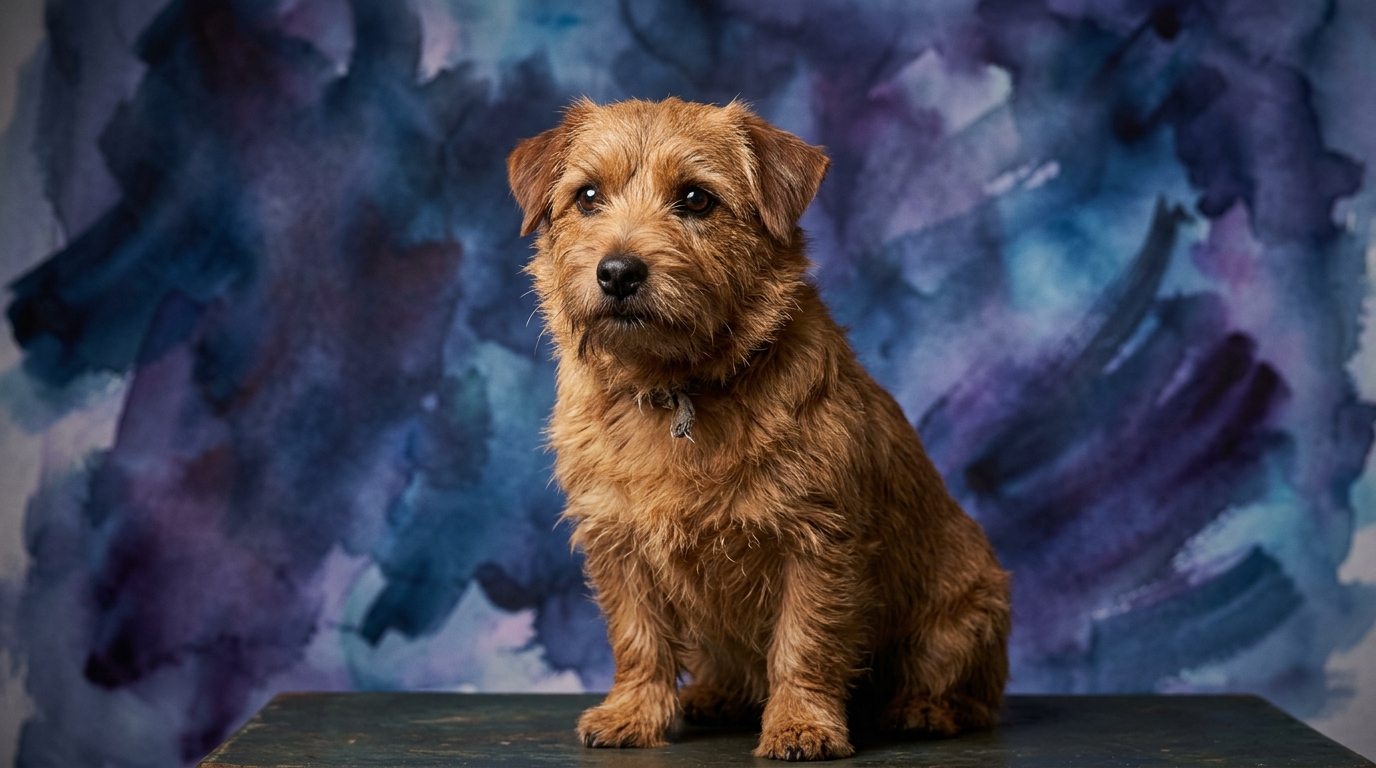
For the Norfolk Terrier, a small but robust working terrier, these 3/5 scores paint a picture of a practical, assertive mind. Their Problem Solving at 3/5 means they are adept at finding creative, often independent, solutions to immediate challenges, particularly those involving navigating tight spaces or pursuing small prey. Training Speed at 3/5 indicates they can learn commands at a reasonable pace, but their independent streak often means they'll weigh whether complying serves their own interests. Social Intelligence at 3/5 suggests they are capable of reading human cues within their familiar circle, yet they possess a confident, sometimes selective social style. Their Instinctive Drive at 3/5 is pronounced in typical terrier behaviors like digging, barking, and chasing. Finally, Memory at 3/5 ensures they retain learned behaviors and environmental information effectively, applying it to future situations.
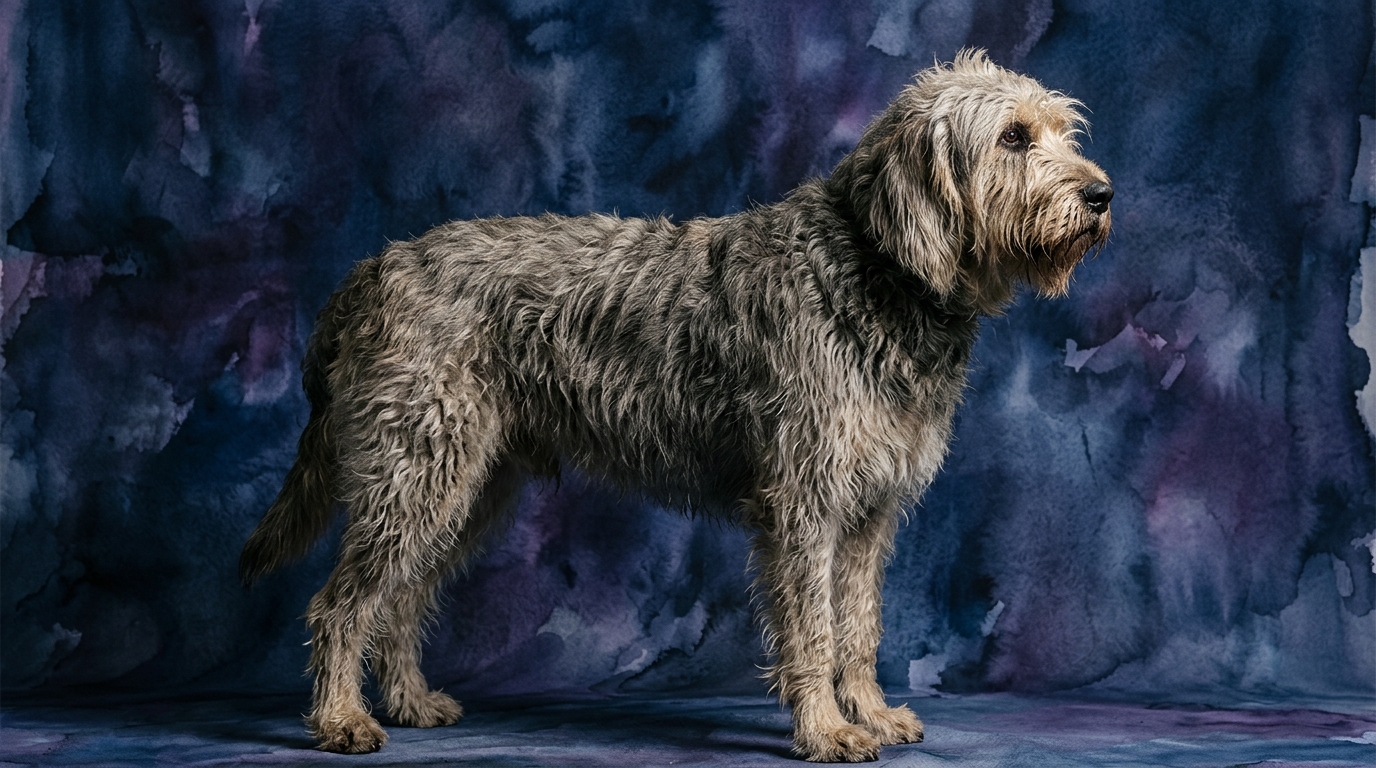
The Otterhound, a large, shaggy scent hound, interprets these same 3/5 scores through its specialized heritage. Their Problem Solving at 3/5 is highly focused on olfactory challenges, meticulously deciphering complex scent trails over varied terrain. Training Speed at 3/5 means they too learn at a moderate pace, but their formidable scent drive can easily divert their attention from handler commands. Social Intelligence at 3/5 points to a generally amiable and cooperative nature within a pack or family unit, though they might appear oblivious to subtle human signals when engrossed in a scent. Their Instinctive Drive at 3/5 is overwhelmingly centered on their powerful nose and endurance for the hunt, often accompanied by a deep, resonant bay. Memory at 3/5 is particularly strong for scent patterns and geographical routes, essential for their work, allowing them to recall specific locations or trails with remarkable accuracy.
Where the Norfolk Terrier's Mind Shines
The Norfolk Terrier's cognitive strengths distinctly manifest in their independent, tenacious approach to problem-solving. Their 3/5 in Problem Solving often translates into a spirited determination to achieve a goal, whether it's retrieving a hidden toy from a confined space or figuring out how to bypass a minor barrier in their path. This isn't about abstract reasoning, but rather a practical, hands-on ingenuity, demonstrating quick decision-making and adaptability in varied, often challenging, environments. They excel at tasks that require persistence and a bit of clever maneuvering.
Furthermore, their moderate social intelligence allows them to quickly assess interpersonal dynamics, often asserting themselves with a confident demeanor that can be both endearing and challenging. They are adept at navigating complex household routines and can learn intricate multi-step tricks, provided the training is engaging and taps into their desire for interaction and challenge. This blend of practical intellect and social perceptiveness makes them uniquely capable of integrating into family life as an active, opinionated participant, often seeming to 'understand' unspoken cues or anticipate events.
The Otterhound's Unique Intellectual Edge
The Otterhound's intellectual prowess is profoundly shaped by its historical role as a specialized scent hound. Their 3/5 in Problem Solving is not about quick, manipulative solutions, but about a deep, sustained focus on olfactory information. They possess an extraordinary ability to meticulously follow and interpret complex scent trails over long distances and varied landscapes, effectively "reading" a narrative through smell. This requires immense concentration and an unwavering persistence, allowing them to filter out environmental distractions that would overwhelm other breeds, showcasing a highly specialized and enduring form of intelligence.
Their social intelligence, while also a 3/5, leans towards a more cooperative and amiable pack mentality. Otterhounds thrive in group settings, often displaying a gentle tolerance and a desire to be part of the collective activity, rather than dominating it. Their Memory, also rated 3/5, is particularly robust for scent imprints and geographical routes, enabling them to recall specific locations associated with interesting smells or retrace intricate paths. This cognitive mapping based on olfactory cues is a distinct strength, allowing them to navigate their world with a unique sensory-driven precision.
Training Dynamics: Terrier Tenacity vs. Hound Focus
Both breeds score 3/5 in Training Speed, yet the practicalities of training them diverge significantly due to their inherent temperaments. The Norfolk Terrier, with its assertive terrier heritage, can grasp commands quickly but may exhibit selective hearing if the command doesn't align with its immediate interest. Their independent spirit means training requires a firm yet fair handler, consistent positive reinforcement, and making the learning process feel like a stimulating game they want to win. Overcoming their occasional stubbornness demands patience and creativity to keep them engaged and motivated, reinforcing that compliance is always rewarding.
The Otterhound, while possessing a generally good-natured disposition, presents a different training challenge. Their powerful Instinctive Drive for scent work, also a 3/5, means they can become profoundly distracted by an interesting smell, effectively 'tuning out' their handler in favor of an olfactory adventure. Training an Otterhound demands immense patience, engaging and consistent methods, and often requires starting in environments with minimal scent distractions. Their desire to please their human companions is present, but it must consistently compete with the overwhelming allure of a captivating scent trail. Therefore, while both learn at a moderate rate, managing their attention and motivation during training sessions defines their respective challenges.
Matching Minds to Lifestyles: Active Explorers vs. Companionable Souls
For active owners, both breeds offer unique companionship, though their activity needs are channeled differently. The Norfolk Terrier, despite its compact size, is a robust and energetic dog requiring regular exercise and ample mental stimulation. Owners who enjoy varied outdoor activities like brisk walks, moderate hikes, or engaging in interactive games that challenge their problem-solving (3/5) and instinctive drives (3/5) will find the Norfolk a good match. They thrive on having a 'job,' even if it's learning new tricks or searching for hidden treats, and their adaptable social intelligence allows them to fit into various social settings with proper early socialization.
The Otterhound, a larger and more deliberate breed, also requires significant exercise, particularly opportunities to engage their powerful nose. Active owners who appreciate long, meandering walks, scent work, or providing a securely fenced yard for olfactory exploration will find the Otterhound's instinctive drive (3/5) and endurance fulfilling. For owners seeking a more relaxed companion indoors, the Otterhound can be a calm, affectionate presence after a good exercise session. However, their size, potential for a booming bay (a manifestation of their drive), and strong scent focus mean they are less suited for very quiet, confined living spaces. The Norfolk, while active, can adapt more readily to smaller homes if their mental and physical needs are met, and their more 'involved' social intelligence makes them a constant, interactive presence in daily family life.
The Verdict
Choose the Norfolk Terrier if you seek a compact, confident companion who enjoys interactive challenges and thrives on being an active, opinionated participant in family life, offering a blend of affectionate loyalty and spirited independence.
Opt for the Otterhound if you appreciate a large, good-natured dog whose intelligence is expressed through a powerful nose and a calm, amiable demeanor indoors, suited for owners who can provide ample opportunities for scent exploration and tolerate a deep, resonant voice.
🧠 Find Your Pet's IQ Score
Our Pet IQ Lab assessment covers 25+ tests across 5 cognitive dimensions — personalized to your breed.
Take the Full IQ Test →Frequently Asked Questions
Do Norfolk Terriers and Otterhounds have similar temperaments despite their identical IQ scores?
While both breeds score 3/5 across cognitive dimensions, their temperaments differ due to breed purpose. Norfolk Terriers are typically spirited, confident, and independent, reflecting their terrier heritage, whereas Otterhounds are generally more amiable, boisterous, and scent-driven, characteristic of hounds.
Which breed is better for a first-time dog owner, considering their cognitive profiles?
Neither breed is typically recommended for absolute first-time owners without prior research, as both require consistent training and management of their strong drives. However, the Norfolk Terrier's smaller size and adaptable nature might present slightly fewer physical challenges than the large, scent-driven Otterhound, provided their spirited personality is understood.
How does the 'instinctive drive' score of 3/5 manifest differently in these two breeds?
For the Norfolk Terrier, a 3/5 instinctive drive translates to strong urges for digging, barking, and chasing small prey, typical of a vermin hunter. In the Otterhound, this same 3/5 score manifests as an overwhelming drive to follow a scent trail, often with a deep bay, reflecting their historical role as a specialized water hound.