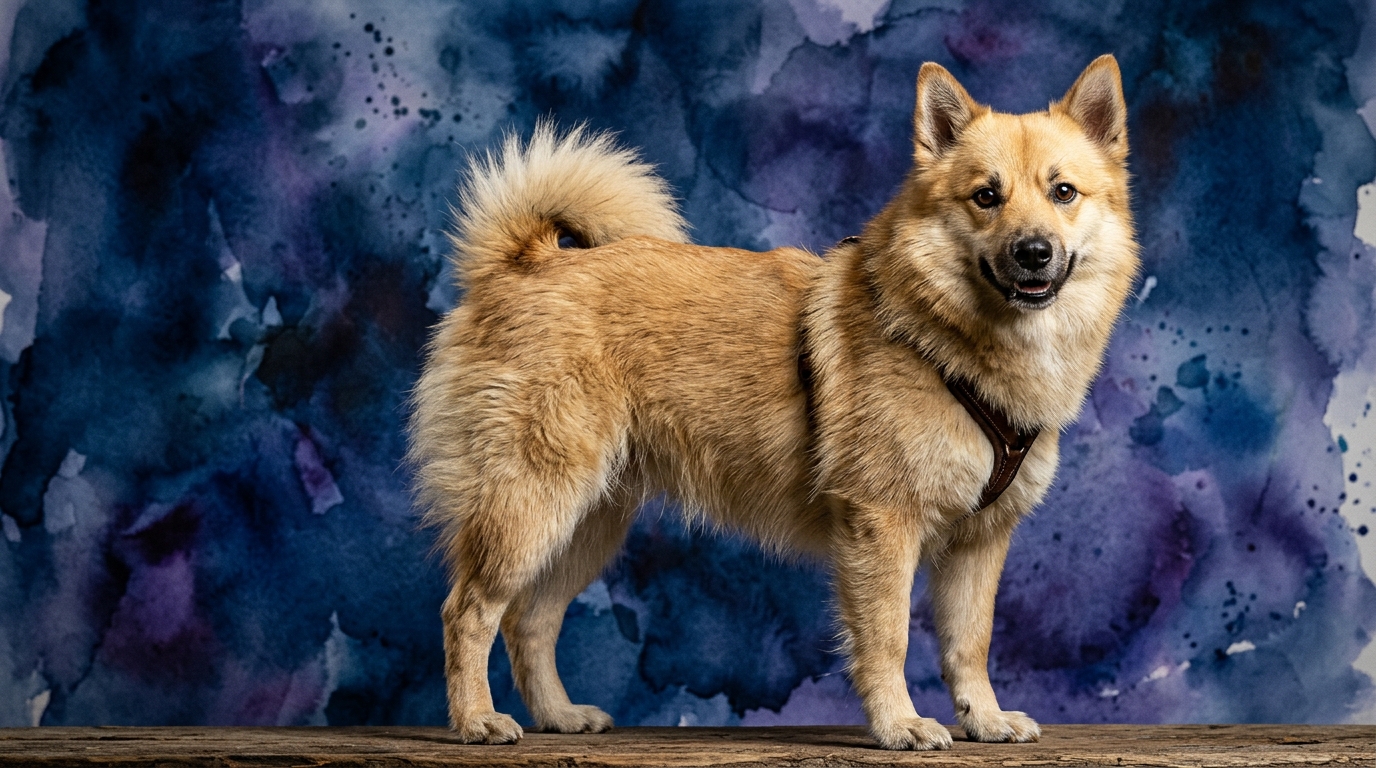

Side-by-Side IQ Profile: Norwegian Buhund
**Problem Solving (3/5):** This score reflects a moderate capacity to navigate new situations and figure out solutions. For the Buhund, this often translates to understanding complex herding patterns or anticipating livestock movements, requiring strategic thinking within a cooperative framework. They can deduce how to achieve a goal, like moving a flock through a gate, by observing and reacting.
**Training Speed (3/5):** A 3/5 in training speed indicates a moderate ability to grasp new commands and routines. Buhunds are generally eager to please and form strong bonds, which can make them responsive, learning sequences of commands for herding or dog sports with consistent instruction. They pick up on cues and repetitions effectively.
**Social Intelligence (3/5):** This score points to a moderate aptitude for understanding and responding to human and other animal cues. A Buhund's social intelligence is often directed towards their handler in a working partnership, reading subtle body language and vocalizations, and interacting appropriately with livestock, demonstrating a nuanced understanding of social dynamics.
**Instinctive Drive (3/5):** This reflects a moderate, yet purposeful, set of innate behaviors. For the Norwegian Buhund, this strong herding drive compels them to gather, move, and protect. While not overwhelming, this instinct is a powerful motivator for their actions and requires appropriate outlets to be fulfilled.
**Memory (3/5):** A 3/5 in memory suggests a moderate capacity to recall past experiences, commands, and learned behaviors. Buhunds can remember complex routines, the layout of their environment, and specific instructions, which is crucial for tasks requiring sequential actions or navigating familiar terrains over time.
Side-by-Side IQ Profile: Norwich Terrier
**Problem Solving (3/5):** For the Norwich Terrier, a 3/5 in problem solving often manifests as tenacious ingenuity in pursuit of a goal, particularly when it involves exploring tight spaces or outsmarting small prey. They are adept at finding routes, overcoming obstacles, and persisting until a solution is found, often independently.
**Training Speed (3/5):** This score means the Norwich Terrier has a moderate ability to learn. While they grasp concepts quickly, their independent terrier spirit can sometimes mean they learn what *they* want to learn, or comply when it suits their purpose. They respond well to positive reinforcement and engaging, varied training sessions.
**Social Intelligence (3/5):** A Norwich Terrier's social intelligence at 3/5 is typically focused on their human companions, showing a moderate ability to read moods and engage in playful interaction. They are generally outgoing and can adapt to various social situations, though they retain a characteristic terrier assertiveness with other animals or strangers.
**Instinctive Drive (3/5):** This score highlights a moderate, but highly focused, instinctive drive. The Norwich Terrier possesses a strong prey drive, an urge to dig, and a bold, adventurous spirit characteristic of their vermin-hunting heritage. This drive is a fundamental part of their being and needs structured outlets.
**Memory (3/5):** A 3/5 in memory for the Norwich Terrier signifies a moderate ability to recall learned behaviors, locations of interest, and the routines of their household. They can remember where they buried a toy or the path to a favorite sniffing spot, retaining information relevant to their immediate environment and pursuits.
Where Norwegian Buhund Wins Cognitively
Despite identical numerical scores, the Norwegian Buhund's cognitive strengths lean towards cooperative problem-solving and nuanced social interaction within a working partnership. Their 3/5 in Problem Solving, while mirroring the Norwich Terrier's score, is often applied to tasks requiring foresight and strategic planning involving multiple, dynamic variables, such as guiding livestock. This involves not just reacting to a single stimulus but anticipating movements and making decisions that impact a group. Their 3/5 Social Intelligence is distinctly geared towards understanding complex human signals and communicating effectively in a team-oriented context, facilitating a more fluid back-and-forth communication with their handler during tasks. This cooperative mindset, stemming from their herding origins, means their cognitive application of memory and training speed is often more directed towards learning and executing sequential, multi-step commands that benefit a shared objective, rather than purely independent action.
Where Norwich Terrier Wins Cognitively
The Norwich Terrier, also scoring 3/5 across the board, showcases its cognitive prowess in areas demanding independent tenacity and focused, determined problem-solving. Their 3/5 in Problem Solving shines when faced with a challenge requiring singular focus, such as navigating a complex burrow system or figuring out how to retrieve a hidden toy in a confined space. This often involves trial-and-error, persistence, and a certain cunning to overcome obstacles. Their 3/5 Instinctive Drive, while numerically matching the Buhund's, is intensely concentrated on their prey drive and exploration, leading them to apply their cognitive skills to tasks like tracking scents or finding the most efficient way to dig. Their memory, at 3/5, is particularly adept at recalling specific locations of interest or opportunities for independent investigation, reinforcing their self-reliant nature. While both breeds are moderately socially intelligent, the Norwich Terrier's 3/5 often translates into a keen ability to read individual human emotions and respond with spirited affection or playful challenge, rather than a cooperative work dynamic.
Which Is Easier to Train and Why
Both breeds share a 3/5 Training Speed score, indicating they are moderately quick to learn, but the *ease* of training can differ significantly due to their inherent temperaments and motivations. The Norwegian Buhund, with its strong herding background, generally approaches training with an eager-to-please attitude and a desire for partnership. Their 3/5 Social Intelligence makes them attuned to their handler's cues, and their cooperative nature often translates into a willingness to comply and work together. While they can be independent thinkers, their motivation often aligns with pleasing their human and engaging in structured activities. This means they might learn complex obedience routines or dog sports relatively smoothly, provided the training is consistent and engaging. In contrast, the Norwich Terrier, despite the same 3/5 Training Speed, can present a different training experience due to its independent terrier spirit and pronounced 3/5 Instinctive Drive. While they grasp commands quickly, their strong prey drive and inherent tenacity mean they can be easily distracted by scents or movement, and may choose to follow their instincts over a command if not sufficiently motivated or managed. Training a Norwich often requires more patience, creativity in making training highly rewarding, and a firm but fair approach to channel their independent streak into desired behaviors. Their quick learning is often balanced by a strong will, making consistency and clear boundaries paramount.
Which Suits Active Owners vs. Relaxed Owners
When considering activity levels, both breeds are energetic, but their energy expression and the type of activity they thrive on differ. The Norwegian Buhund is a spirited herding dog, meaning its 3/5 Instinctive Drive manifests as a need for regular, sustained physical and mental engagement. They are well-suited for active owners who enjoy long hikes, jogging, or participating in dog sports like agility, obedience, or even actual herding trials. Their cooperative nature and 3/5 Social Intelligence make them excellent partners for these activities, thriving on shared experiences and tasks. A Buhund requires an owner who can commit to providing consistent outlets for their drive and cognitive engagement to prevent boredom and destructive behaviors. Conversely, the Norwich Terrier, while also energetic, often expresses its 3/5 Instinctive Drive in bursts of intense activity, punctuated by periods of relaxation. They need outlets for their strong prey drive and desire to explore, which can include vigorous play sessions, structured walks with opportunities for sniffing and digging (in appropriate areas), or engaging in earthdog trials. They suit owners who might not be looking for a constant running companion but can provide consistent, focused opportunities for their terrier to 'work' and satisfy their adventurous spirit. While they can be content to relax indoors, they need their daily dose of stimulating outdoor exploration. Therefore, the Buhund aligns with owners seeking a continuous, cooperative activity partner, while the Norwich Terrier suits owners who can provide focused, high-intensity engagement in shorter bursts, respecting their independent spirit and innate drives.
The Verdict
Choose the Norwegian Buhund if you seek a cooperative, versatile working partner eager to engage in sustained physical activities and mental challenges, thriving on a shared purpose and consistent interaction.
Opt for the Norwich Terrier if you appreciate a bold, tenacious, and independent companion with a spirited personality, prepared to channel their focused energy and strong instincts into engaging exploration and purposeful play.
🧠 Find Your Pet's IQ Score
Our Pet IQ Lab assessment covers 25+ tests across 5 cognitive dimensions — personalized to your breed.
Take the Full IQ Test →Frequently Asked Questions
Do their identical IQ scores mean they are equally easy to live with?
Not necessarily. While their core cognitive capacities are rated similarly, their breed-specific instincts and temperaments significantly influence their day-to-day behavior and how they interact with their environment and owners. The Buhund's cooperative nature versus the Norwich's independence will shape the living experience.
How does their breed group influence their 3/5 Instinctive Drive score?
The breed group dictates the *direction* of their drive. For the Herding Buhund, it's about gathering and moving; for the Terrier Norwich, it's about hunting and digging. Both are moderate in intensity (3/5), but their manifestation and the outlets they require are distinct.
Can a Norwich Terrier learn complex tricks like a Norwegian Buhund?
Both breeds have a 3/5 Training Speed and Memory, meaning they are capable of learning complex tricks. However, a Buhund might be more motivated by pleasing its handler and the cooperative aspect, while a Norwich Terrier might require more creative, high-value rewards to maintain focus on intricate, non-instinctive tasks.