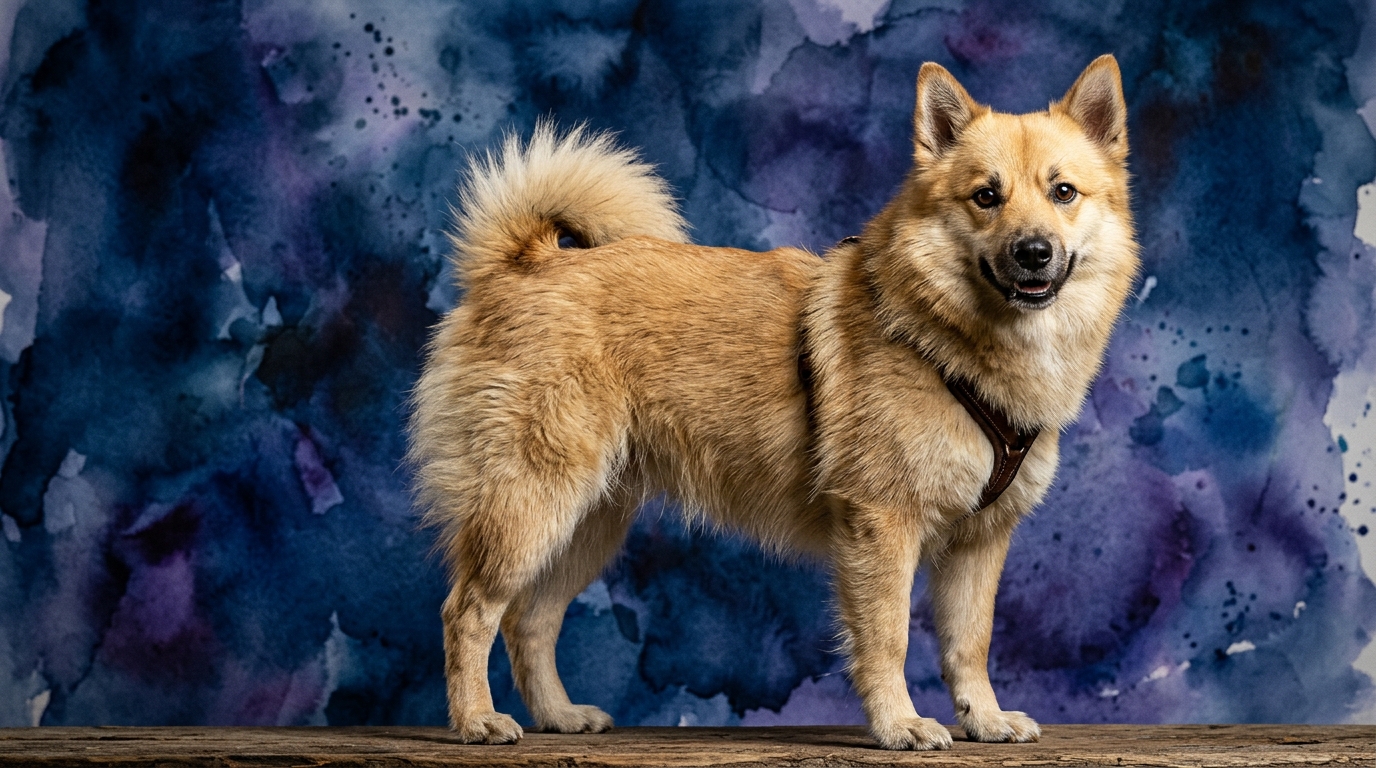

Side-by-Side Cognitive Profile
The Cosmic Pet Pet IQ Lab assesses canine intelligence across five key dimensions, and both the Norwegian Buhund and the Rhodesian Ridgeback exhibit a balanced 3/5 rating in each, suggesting capable but not exceptional cognitive abilities that are well-suited to their breed purposes. For the Norwegian Buhund, a herding dog, their Problem Solving score of 3/5 indicates they can navigate complex situations within their working context, such as managing livestock, but might require some guidance for more abstract human-created puzzles. Their Training Speed, also 3/5, means they learn new commands and routines at a moderate pace, benefiting greatly from consistent, positive reinforcement rather than quick, one-off lessons.
A Social Intelligence score of 3/5 for the Buhund reflects their ability to read human cues and interact appropriately within a family structure, though they are not typically described as profoundly intuitive or empathetic to subtle emotional shifts. Their Instinctive Drive, rated 3/5, speaks to a moderate but present herding instinct that can manifest as a desire to gather family members or other pets, requiring appropriate outlets and management. Finally, a Memory score of 3/5 suggests the Buhund retains learned behaviors, routines, and familiar faces well, making them reliable companions once training is established, though they might not recall every minor detail over long periods.
The Rhodesian Ridgeback, a hound breed, shares these 3/5 ratings across the board, but these scores manifest differently due to their distinct heritage. Their Problem Solving at 3/5 points to an ability to make independent decisions in the field, crucial for tracking and cornering game, yet they might not be inclined to solve complex mechanical puzzles without strong motivation. The Ridgeback’s Training Speed of 3/5 implies they are capable learners, but their independent nature often means they require more patience and consistency than some more biddable breeds, as they weigh commands against their own perceived priorities.
For Social Intelligence, a 3/5 rating means Ridgebacks understand human communication and social structures, often forming deep bonds with their families, but they can be reserved and discerning with strangers rather than overtly social. Their Instinctive Drive, also 3/5, is particularly notable for its strength in prey drive and a protective nature, stemming from their historical role as guardians and hunters, which can strongly influence their behavior. Lastly, a Memory score of 3/5 ensures Ridgebacks remember their training, routines, and important people, contributing to their reliability as companions, though their independence can sometimes make them appear to 'forget' commands if a more compelling stimulus is present.
Where the Norwegian Buhund Excels Cognitively
The Norwegian Buhund’s cognitive strengths are deeply rooted in their herding background, where quick, adaptive thinking is paramount. They excel in situations requiring dynamic problem-solving, such as anticipating the movements of a flock or navigating a changing landscape during a herding trial. This means they are often adept at tasks that involve predicting outcomes based on subtle environmental cues or reacting swiftly to unexpected shifts, making them quite agile thinkers in interactive scenarios. Their social intelligence, while rated 3/5, is particularly tuned to cooperative work, allowing them to collaborate effectively with a handler, often reading body language and intent to adjust their actions accordingly. This translates into a nuanced understanding of their human partners and a willingness to engage in structured activities.
Furthermore, their instinctive drive, though moderate, is often channeled into a desire to 'manage' their environment, which can be a cognitive advantage in specific contexts. This drive, combined with their problem-solving ability, makes them proficient at understanding spatial relationships and executing multi-step tasks that involve moving objects or people from one place to another. They often demonstrate a keen awareness of their surroundings, quickly noting changes and assessing potential 'threats' or deviations from the norm, making them excellent, attentive watchdogs who process information about their territory efficiently.
Where the Rhodesian Ridgeback Excels Cognitively
The Rhodesian Ridgeback's cognitive strengths are forged in their heritage as independent hunters and guardians, where self-reliance and keen observation are vital. They demonstrate superior ability in tasks requiring sustained focus over distance and strategic pursuit, such as tracking a scent or visually locking onto a moving object. Their problem-solving capacity, rated 3/5, shines when they are given a directive and allowed to figure out the 'how' independently, often employing clever tactics to achieve a goal rather than rigidly following a set procedure. This makes them highly effective in roles where independent decision-making in complex environments is preferred over constant handler direction.
Their instinctive drive, also 3/5, is a powerful cognitive asset for tasks demanding endurance and determination, such as long-distance running or guarding territory. This manifests as an unwavering commitment to a perceived task, whether it's patrolling a yard or following a compelling scent trail, showcasing a remarkable capacity for sustained mental engagement in their chosen pursuit. The Ridgeback's memory, while 3/5, is particularly strong for familiar routes, territories, and the habits of their family, contributing to their reliability as guardians who remember intruders or unusual patterns. They possess a strong spatial awareness, making them excellent navigators and protectors of their home range.
Which is Easier to Train and Why?
When considering ease of training, the Norwegian Buhund generally presents a more straightforward experience for the average owner due to their inherent desire to work cooperatively with humans. Their herding background instills a natural inclination to respond to direction and engage in structured tasks, which translates into a moderate training speed (3/5) that is receptive to positive reinforcement. They often thrive on the mental stimulation of learning new commands and participating in activities like agility or obedience, making them eager partners in training sessions. Their social intelligence, while 3/5, supports this by making them generally attuned to their handler's moods and intentions, fostering a responsive training dynamic.
In contrast, the Rhodesian Ridgeback, with its independent sighthound and guardian heritage, can pose more of a challenge for novice trainers or those seeking immediate compliance. While their training speed is also 3/5, their strong instinctive drive and tendency for independent thought mean they often require more patience, consistency, and creative motivation. They are not inherently driven to 'please' in the same cooperative sense as a herding dog; instead, they weigh commands against their own priorities or compelling environmental stimuli, such as a distant squirrel. Effective training for a Ridgeback often involves building a strong relationship based on mutual respect, clear boundaries, and making training sessions rewarding enough to compete with their natural independent inclinations and strong prey drive.
Suitability for Active vs. Relaxed Owners
Both the Norwegian Buhund and the Rhodesian Ridgeback are breeds that require an active lifestyle, making neither truly suitable for a genuinely 'relaxed' or sedentary owner. However, the *type* of activity they thrive on differs significantly, guiding owners toward the better fit. The Norwegian Buhund, as a herding dog, demands both physical exercise and substantial mental engagement. They excel with owners who enjoy structured activities like agility, obedience, herding games, or long, interactive hikes where the dog can be mentally stimulated by new sights and sounds. Their moderate instinctive drive means they need a purpose, and without it, they can become bored and potentially destructive. An active owner for a Buhund is someone prepared to integrate their dog into daily life with consistent training and engaging play.
The Rhodesian Ridgeback, on the other hand, requires a more physically demanding and expansive form of activity. Owners who are avid runners, hikers, or have access to large, securely fenced areas where their dog can gallop freely will find the Ridgeback a suitable companion. Their powerful build and historical role mean they need significant daily exertion to be content, often preferring long, sustained physical output rather than short bursts of highly structured mental work. While they appreciate mental challenges, their primary need is for physical outlets that satisfy their endurance and prey drive. Therefore, an active owner for a Ridgeback is someone committed to providing ample opportunities for vigorous physical exercise, often in more open spaces.
The Verdict
Choose the Norwegian Buhund if you seek a cooperative, mentally agile partner for structured activities and enjoy a vocal, engaged companion who thrives on shared tasks and problem-solving.
Opt for the Rhodesian Ridgeback if you desire an independent, physically robust companion for extensive outdoor adventures and appreciate a more reserved, watchful presence that excels in self-reliant endeavors.
🧠 Find Your Pet's IQ Score
Our Pet IQ Lab assessment covers 25+ tests across 5 cognitive dimensions — personalized to your breed.
Take the Full IQ Test →Frequently Asked Questions
Are Norwegian Buhunds good family dogs?
Norwegian Buhunds generally make excellent family dogs due to their social intelligence and cooperative nature, often bonding closely with all family members. They are typically good with children if properly socialized and can be playful and affectionate companions, though their herding instinct might lead them to 'herd' young ones.
How much exercise does a Rhodesian Ridgeback need daily?
Rhodesian Ridgebacks require a significant amount of daily exercise, typically at least one to two hours of vigorous activity. This can include long runs, brisk walks, hiking, or secure off-leash play in a large area to satisfy their endurance and physical needs.
What kind of training is most effective for a Rhodesian Ridgeback?
Effective training for a Rhodesian Ridgeback relies on consistency, patience, and positive reinforcement methods that motivate them, rather than relying solely on compliance. Building a strong bond and making training sessions engaging and rewarding helps overcome their independent streak, focusing on clear communication and fair boundaries.