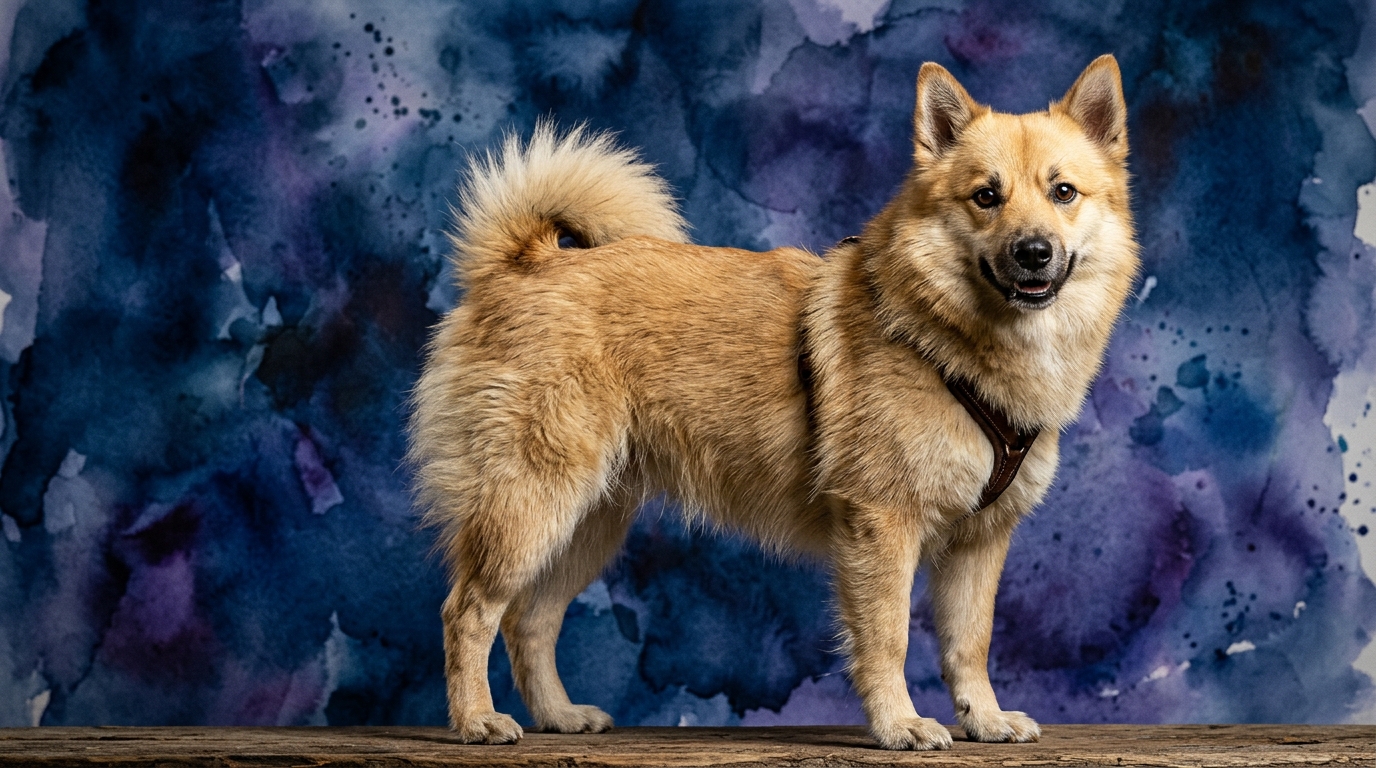

Side-by-Side IQ Profile: Herding vs. Toy
The Cosmic Pet Pet IQ Lab categorizes both Norwegian Buhunds and Russian Toys as having a 3/5 score across all five cognitive dimensions: problem-solving, training speed, social intelligence, instinctive drive, and memory. While the numerical scores are identical, the practical manifestation of these abilities is deeply influenced by each breed's historical role and physical attributes.
For the **Norwegian Buhund (Herding)**, its **Problem Solving (3/5)** suggests a practical, task-oriented approach to challenges, likely rooted in its livestock management history. They might methodically figure out how to move a gate or gather scattered items, demonstrating physical, goal-directed solutions. Its **Training Speed (3/5)** indicates a steady learning pace, receptive to commands that align with their natural drives. **Social Intelligence (3/5)** for a Buhund translates to reading the dynamics of their human 'flock' and other animals, discerning moods and routines. Its **Instinctive Drive (3/5)** is heavily influenced by herding, manifesting as an urge to gather, patrol, and protect. Finally, its **Memory (3/5)** means retaining learned commands, routines, and experiences effectively, contributing to their reliability.
The **Russian Toy (Toy)**, despite identical scores, expresses these traits differently. Its **Problem Solving (3/5)** often manifests in navigating its immediate environment for comfort or advantage, cleverly accessing a favorite nap spot or coaxing attention. The **Training Speed (3/5)** suggests they are receptive learners, especially with engaging, rewarding sessions catering to their desire for interaction. For **Social Intelligence (3/5)**, the Russian Toy exhibits a keen ability to interpret human cues and emotional states within their close-knit family, making them empathetic companions. Its **Instinctive Drive (3/5)** primarily leans towards companionship and interaction, though a curious, terrier-like drive for small critters persists. Their **Memory (3/5)** allows them to recall routines, specific people, and past experiences with clarity, contributing to their consistent companionship.
Where Norwegian Buhund Wins Cognitively
Despite identical numerical scores, the Buhund's cognitive strengths are distinctly shaped by its herding lineage. Its 3/5 problem-solving ability, for instance, translates into a practical aptitude for spatial reasoning and managing dynamic groups. A Buhund can excel at tasks requiring them to anticipate movement, strategically position themselves, or orchestrate a 'gathering' of objects or people, showing a natural understanding of cause-and-effect within a physical, often expansive, environment. This contrasts with a companion breed whose problem-solving might be more focused on manipulating human attention.
Furthermore, its 3/5 instinctive drive, when appropriately channeled, gives the Buhund a unique advantage in goal-oriented activities that mimic its ancestral work. This drive isn't just a general energy; it's a predisposition towards specific behaviors like patrolling, alerting, and maintaining order. This focused drive makes them particularly adept at dog sports like agility or obedience, where their moderate training speed is amplified by an inherent desire to work and achieve a clear objective, rather than purely seeking human approval.
Where Russian Toy Wins Cognitively
The Russian Toy, with its identical 3/5 scores, demonstrates a distinct cognitive advantage in the realm of social attunement within a close-knit human family. Its 3/5 social intelligence is exquisitely refined for interpreting subtle human emotional cues and adapting its behavior accordingly. This isn't just about reading a person's mood; it's about anticipating needs, offering comfort, or initiating play at just the right moment, making them exceptionally intuitive companions. This level of nuanced social understanding, while not scoring higher, is optimized for the intricate dynamics of a domestic setting.
Moreover, its 3/5 problem-solving, though moderate, is often applied with remarkable ingenuity to achieve social outcomes or personal comfort within a home environment. A Russian Toy might cleverly 'solve' the problem of being ignored by bringing a toy, nudging a hand, or finding a strategically visible spot for a nap. Their solutions are often highly effective at eliciting desired human responses, showcasing a pragmatic intelligence honed by generations of close companionship. Their memory (3/5) also shines in remembering who gives the best treats or which family member is most susceptible to their charms.
Which Is Easier to Train and Why
Comparing their 3/5 training speed, neither breed presents an overwhelmingly easy or difficult training experience, but their motivations and potential challenges differ significantly. The Norwegian Buhund, with its herding background and moderate instinctive drive, often finds structured training rewarding, especially if it involves tasks or 'jobs.' They respond well to clear, consistent commands and positive reinforcement, particularly when training taps into their natural desire to work and achieve a purpose. However, their moderate independence means they might occasionally test boundaries or find their own 'solutions' if training isn't engaging enough or if their herding instincts aren't given appropriate outlets, potentially leading to stubbornness.
The Russian Toy, while also scoring 3/5 in training speed, tends to be highly motivated by human interaction and positive attention. Their small size and desire for companionship often make them eager participants in training sessions, especially if these are short, fun, and treat-based. They are generally responsive and want to please their primary caregivers, which can make basic obedience and trick training a relatively smooth process. However, their moderate instinctive drive, sometimes manifesting as a keen curiosity or a desire for comfort, can lead to distractions in busy environments. Consistency is crucial for both, but the Buhund might require more mental stimulation and purpose-driven tasks, while the Russian Toy thrives on positive social engagement.
Which Suits Active Owners vs. Relaxed Owners
For active owners seeking a canine partner, the Norwegian Buhund presents a compelling choice. Its inherent 3/5 instinctive drive and moderate problem-solving capacity mean it thrives on physical and mental challenges. These dogs are well-suited for activities like hiking, agility, herding trials, or even long walks where they can explore and engage their senses. An active owner who can provide consistent training, engage them in purposeful activities, and channel their herding instincts into constructive outlets will find the Buhund a rewarding and robust companion.
Conversely, the Russian Toy is often a better fit for more relaxed owners or those seeking a devoted, portable companion. While they enjoy play and short bursts of activity, their physical needs are considerably less demanding than a herding breed. Their 3/5 social intelligence makes them excel at being attentive, empathetic companions who are content with indoor games, short strolls, and ample lap time. A relaxed owner who values close companionship, enjoys teaching fun tricks, and appreciates a dog highly attuned to their emotional state will find the Russian Toy a delightful and engaging presence.
The Verdict
Choose the Norwegian Buhund if you seek a robust, work-oriented companion eager for purposeful activities, thriving on challenges that engage its practical problem-solving and moderate instinctive drive. They fit well with active lifestyles and owners who appreciate a dog with a 'job.'
Opt for the Russian Toy if you desire a devoted, highly social companion whose moderate intelligence shines in nuanced human interaction and whose primary joy is intimate family life. They are ideal for owners valuing close emotional bonds and indoor companionship.
🧠 Find Your Pet's IQ Score
Our Pet IQ Lab assessment covers 25+ tests across 5 cognitive dimensions — personalized to your breed.
Take the Full IQ Test →Frequently Asked Questions
Do Norwegian Buhunds and Russian Toys learn at the same pace?
Both breeds score a 3/5 in training speed, indicating a moderate learning pace. However, their motivations differ; Buhunds respond well to purposeful tasks, while Russian Toys thrive on positive social interaction during training. Consistency is key for both to learn effectively.
How does their problem-solving ability manifest differently despite identical scores?
A Norwegian Buhund's 3/5 problem-solving is often practical and physical, rooted in herding, like figuring out how to navigate obstacles. A Russian Toy's 3/5 problem-solving is more often geared towards social manipulation or comfort within a home, like getting attention or finding a cozy spot.
Which breed is better with other pets or children based on their social intelligence?
Both score 3/5 in social intelligence, but this manifests differently. The Buhund's social intelligence might involve managing a 'flock' and can be good with respectful children and other pets. The Russian Toy's social intelligence is finely tuned for intimate human bonds, making them generally good with known family members and pets, though their small size requires careful interactions with very young children.