Side-by-Side Cognitive Profiles: The Pet IQ Lab Lens
The Pet IQ Lab assesses canine intelligence across five critical dimensions, providing a framework to understand how different breeds process information and interact with their world. For both the Norwegian Buhund and the Saluki, each dimension is rated at a consistent 3/5, yet the interpretation of these scores is deeply enriched by their breed-specific heritage.
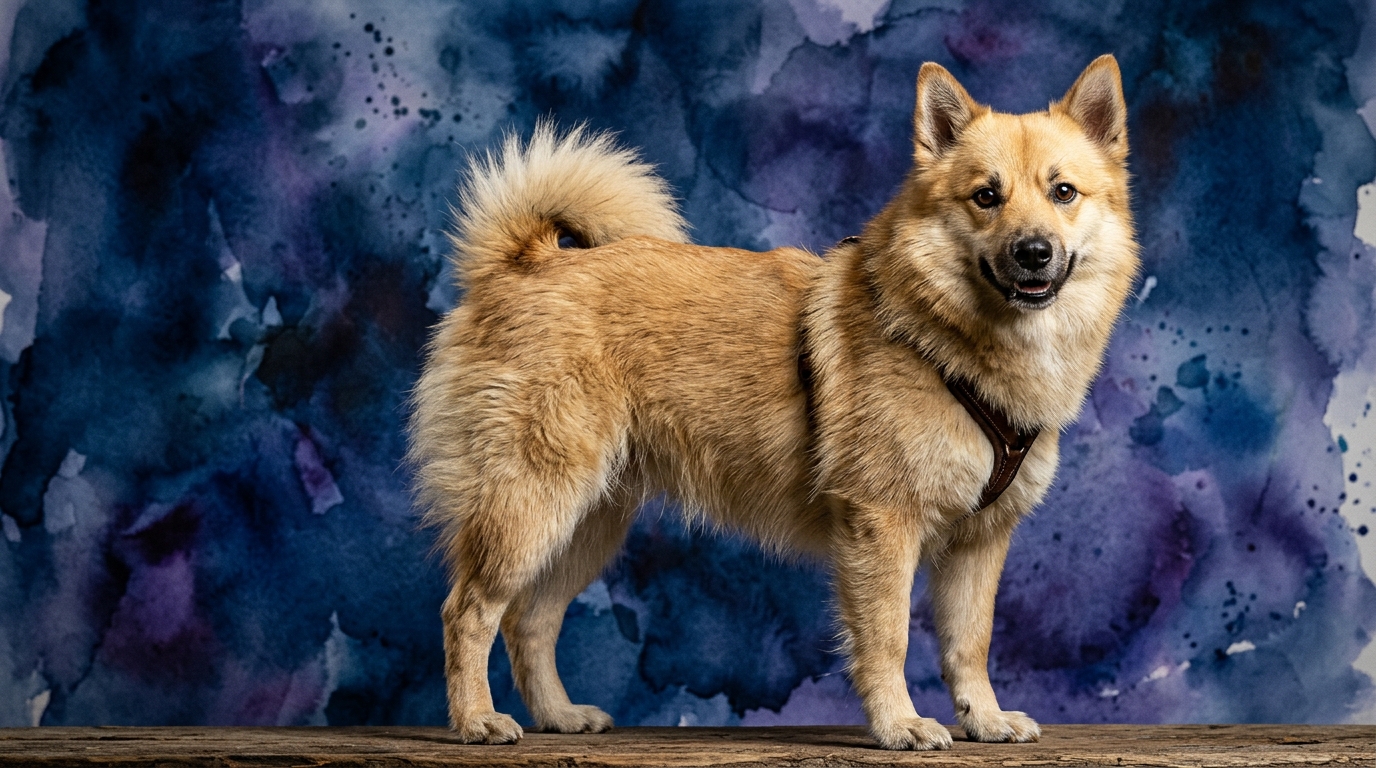
For the Norwegian Buhund, a Herding Group dog, their **Problem Solving (3/5)** often translates to practical, real-time decision-making in dynamic environments. They excel at figuring out how to manage livestock, anticipating movements, and adapting strategies on the fly to guide animals. Their problem-solving isn't just about abstract puzzles; it's about understanding complex, fluid situations and finding effective solutions to achieve a goal, often involving spatial reasoning and cause-and-effect in a working context. Their **Training Speed (3/5)** reflects a steady pace in absorbing new commands and routines, fueled by an eagerness to engage and work alongside their human companions. They are generally responsive and motivated by positive reinforcement, quickly connecting actions with desired outcomes, especially when the training feels purposeful or like a collaborative task. In **Social Intelligence (3/5)**, Buhunds display a keen awareness of their human family's moods and intentions, often acting as sensitive companions. In a working context, their social intelligence extends to understanding the subtle cues of livestock, predicting their behavior, and reacting appropriately. They thrive on interaction and can be quite attuned to social dynamics within their household. The Buhund's core **Instinctive Drive (3/5)** is herding, manifesting as a strong desire to gather, control, and protect. While not always expressed with livestock, it can translate into an inclination to keep their human 'flock' together, an alertness to their surroundings, and a natural inclination to be watchful and protective of their territory and family. Finally, their **Memory (3/5)** is robust, enabling them to retain complex sequences of commands, remember specific routes, and recall past experiences with people or other animals, crucial for their historical role where remembering herd patterns, boundaries, and learned responses was paramount.
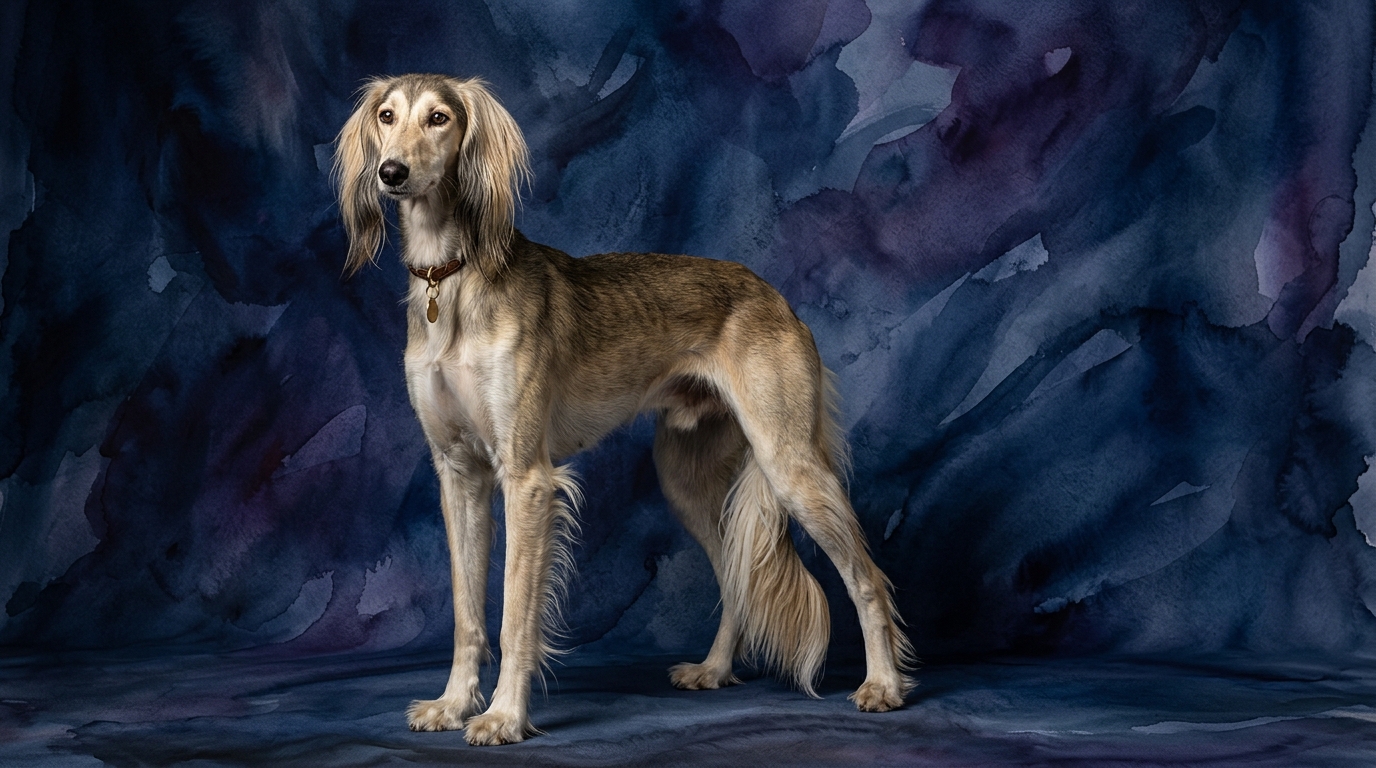
The Saluki, a Hound Group breed, exhibits its 3/5 scores through a different lens. Their **Problem Solving (3/5)** often manifests as independent strategic thinking, particularly in pursuit. They excel at assessing terrain, calculating the quickest or most efficient route to intercept a moving target, and navigating obstacles with grace and foresight. Their problem-solving is less about following directives and more about autonomous decision-making in high-stakes, fast-paced scenarios. Regarding **Training Speed (3/5)**, Salukis can learn new commands and behaviors with similar speed to the Buhund. However, their independent nature means they often need a compelling reason or reward to *execute* a learned behavior consistently. They quickly grasp what's being asked, but their willingness to perform might be contingent on their current interest or perceived benefit, rather than an inherent desire to please. Their **Social Intelligence (3/5)** often sees Salukis described as sensitive and deeply bonded with their chosen family members, though they can be reserved with strangers. This allows them to pick up on subtle emotional cues and adapt their behavior, forming strong, affectionate relationships, often expressing their affection in a more dignified, less overtly demonstrative manner. The Saluki's dominant **Instinctive Drive (3/5)** is coursing and hunting by sight, manifesting as an intense desire to chase anything that moves swiftly and an innate ability to spot distant objects. Their entire physiology and mental focus are geared towards the pursuit of prey, making this a powerful and defining aspect of their cognitive makeup. Their **Memory (3/5)** is strong for locations, familiar routes, and the habits of their environment, vital for a sighthound that might range far from its handler during a hunt, needing to recall its way back or remember areas where prey was previously sighted. They also remember injustices or uncomfortable situations with remarkable clarity.
Where the Norwegian Buhund Shines Cognitively
The Norwegian Buhund's cognitive strengths lie particularly in their *application* of problem-solving and social intelligence within a collaborative framework. Their herding heritage has honed an ability to understand and respond to human directives with a clear sense of purpose. This means their problem-solving, while rated 3/5, is often directed towards cooperative goals, such as navigating a complex agility course or learning intricate multi-step tasks, where working *with* their human is the primary motivation. They exhibit a strong capacity for sequential learning and remembering routines, making them adept at activities requiring a structured approach. Furthermore, their social intelligence often translates into a keen desire for interaction and partnership, making them highly receptive to feedback and subtle cues from their handlers, which can streamline the learning process in team-based activities.
Where the Saluki Excels Cognitively
The Saluki's cognitive prowess is most evident in its independent decision-making and sensory acuity, especially concerning its instinctive drive. While also rated 3/5 for problem-solving, a Saluki's strength lies in rapid, autonomous strategic planning in open environments. They possess an exceptional ability to process visual information quickly, identify targets from a distance, and plot an optimal course of action without direct human input. Their memory, also 3/5, is often geared towards spatial recall – remembering vast territories, subtle landscape features, and the precise locations of past chases or interesting scents. This breed's social intelligence, while expressed differently, allows for deep, sensitive bonds, and they are highly attuned to environmental changes, demonstrating a quiet observational intelligence crucial for a hunter. Their cognitive strengths are rooted in self-reliance and acute perception.
Navigating Training: Buhund's Cooperation vs. Saluki's Independence
Despite both breeds scoring 3/5 for training speed, the *experience* of training them can feel quite different due to their underlying motivations and historical roles. The Norwegian Buhund, as a herding dog, typically possesses an inherent desire to work cooperatively with its handler. This breed often finds satisfaction in pleasing its human and thrives on having a job or purpose, which translates into a generally more biddable and eager attitude during training sessions. Their social intelligence and instinctive drive for partnership mean they often respond well to positive reinforcement and clear, consistent direction, viewing training as a collaborative effort. They are typically more forgiving of handler errors and maintain focus readily, making them rewarding for those who enjoy structured training.
In contrast, the Saluki, a sighthound bred for independent pursuit, approaches training with a different mindset. While they learn commands quickly (3/5 training speed), their strong instinctive drive and problem-solving skills are often directed towards self-determined goals, particularly chasing. This means a Saluki might understand a command perfectly but choose not to execute it if something more interesting, like a distant squirrel, captures their attention. Their independence can be perceived as stubbornness, requiring a trainer to be exceptionally patient, creative, and consistent, using high-value rewards and making training feel like a game or a beneficial exchange rather than a strict command. Effective Saluki training often hinges on understanding their deep-seated prey drive and finding ways to channel it or work around it, rather than trying to suppress it entirely, focusing on engagement over strict obedience.
Lifestyle Match: Active Partnership vs. Independent Companionship
When considering which breed aligns with a particular lifestyle, their cognitive makeups offer clear guidance. The Norwegian Buhund, with its strong instinctive drive for herding and cooperative problem-solving, thrives with active owners who can provide consistent engagement and purpose. They are well-suited for individuals or families interested in dog sports like agility, obedience, or rally, where their memory and social intelligence can be fully utilized in a team setting. Their need for mental stimulation and physical activity means they are not content to be mere couch potatoes; they require regular outlets for their energy and intellect, often enjoying long walks, hikes, or structured play sessions that mimic their working heritage. An owner who appreciates a dog that actively participates in daily life and seeks interaction will find a Buhund to be an engaging and fulfilling companion, eager to be involved in all family activities.
The Saluki, conversely, while also requiring regular exercise to satisfy its powerful sighthound instincts, often suits owners who appreciate a more independent and dignified companion. Their problem-solving and memory are geared towards autonomous action, and while they enjoy activity, they might prefer bursts of intense running in a secure area over constant, structured tasks. After their exercise needs are met, Salukis are typically content to relax quietly indoors, often finding a comfortable spot to observe their surroundings. They are not generally 'velcro' dogs and appreciate their personal space, making them ideal for owners who enjoy a dog's presence without constant demands for attention. Owners who understand and respect a Saluki's independent spirit and its inherent prey drive, providing safe outlets for running and mental engagement without expecting constant biddability, will find a deeply loyal and affectionate, albeit sometimes aloof, companion who values quiet companionship.
The Verdict
Choose a Norwegian Buhund if you seek an active, cooperative partner eager for shared activities and structured learning, valuing a dog that thrives on purpose and interaction.
Opt for a Saluki if you appreciate an independent, dignified companion that enjoys intense bursts of activity followed by quiet relaxation, respecting their self-reliant nature and strong prey drive.
🧠 Find Your Pet's IQ Score
Our Pet IQ Lab assessment covers 25+ tests across 5 cognitive dimensions — personalized to your breed.
Take the Full IQ Test →Frequently Asked Questions
Do Norwegian Buhunds bark a lot?
Yes, Buhunds are known for being vocal, stemming from their herding instinct to alert and communicate. They often bark to announce visitors, express excitement, or signal perceived changes in their environment, requiring consistent training to manage this trait effectively.
Are Salukis good with other pets?
Salukis can coexist peacefully with other pets, especially if raised with them from a young age. However, their strong prey drive means small, fast-moving animals like cats or rabbits can trigger their chase instinct, requiring careful introductions and supervision to ensure safety.
How much exercise do these breeds need daily?
Both breeds require substantial daily exercise. A Norwegian Buhund needs at least an hour of vigorous activity, often enjoying structured play or training. Salukis benefit from regular opportunities to run at full speed in a safe, enclosed area, alongside daily walks, totaling 60-90 minutes of activity.