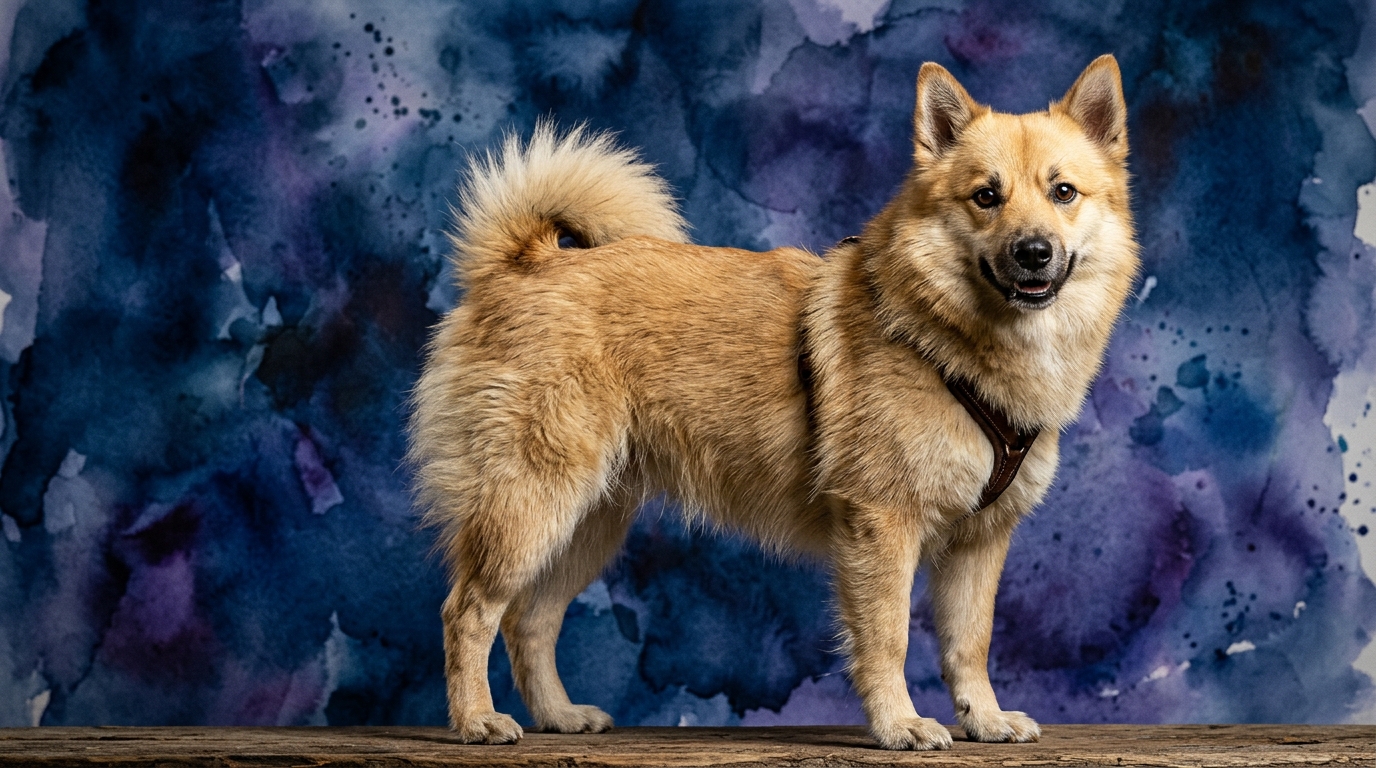

Side-by-Side Pet IQ Profile: Buhund vs. WFT
**Problem Solving (3/5):** For the Norwegian Buhund, this score reflects a moderate capacity for navigating complex scenarios, often applied to herding challenges like moving flocks or finding lost animals. Their solutions tend to be practical and focused on efficiency in managing a group. For the Wire Fox Terrier, a 3/5 points to moderate ingenuity in pursuit of prey, involving strategies for digging, navigating tight spaces, or outsmarting small animals with persistent, individualistic effort.
**Training Speed (3/5):** A moderate training speed for the Norwegian Buhund means they learn new commands and routines effectively with consistency. Their herding background makes them generally cooperative partners, though an independent streak can emerge if motivation wanes. This 3/5 score for the Wire Fox Terrier implies they grasp concepts moderately fast, but their strong will and inherent distractions, especially scents, often make consistent application challenging, requiring high-value rewards.
**Social Intelligence (3/5):** The Norwegian Buhund's moderate social intelligence allows them to read cues reasonably well, adapting to family dynamics and showing appropriate responses in various settings, though they can be reserved with strangers initially. For the Wire Fox Terrier, a 3/5 manifests as an acute awareness of human intentions, particularly regarding adventure. They form strong bonds but can be independent in interactions, sometimes asserting their own will.
**Instinctive Drive (3/5):** This score highlights a moderate, but purposeful, instinctive drive in the Norwegian Buhund, rooted in herding: gathering, protecting, and monitoring. It's expressed as a watchful nature, a desire to keep their 'flock' together, and keen environmental awareness. A 3/5 instinctive drive in the Wire Fox Terrier is profoundly shaped by their terrier heritage: hunting vermin. This translates into a strong prey drive, persistent digging, and an eagerness to investigate every scent and rustle.
**Memory (3/5):** A moderate memory means the Norwegian Buhund retains training, routines, and environmental layouts well. This aids their herding duties and companion role, where consistency builds trust and understanding over time. The Wire Fox Terrier's 3/5 memory suggests they remember learned behaviors and past experiences, both positive and negative, influencing future interactions and aiding their independent explorations and hunting strategies.
Where the Norwegian Buhund Wins Cognitively
The Norwegian Buhund's cognitive strengths are most apparent in scenarios demanding consistent oversight and cooperative problem-solving within a group. Their herding lineage has refined their capacity to anticipate movements, understand complex spatial relationships within a dynamic environment, and make independent decisions that benefit the collective. This translates into a natural aptitude for tasks involving monitoring, guiding, and maintaining order, making them adept at activities like rally obedience, advanced trick training requiring sequential understanding, or even structured search games. Their moderate social intelligence, paired with a channelable instinctive drive, allows them to subtly influence and manage, rather than simply react, a skill invaluable in family settings and structured canine sports where teamwork is paramount.
Where the Wire Fox Terrier Wins Cognitively
The Wire Fox Terrier excels in cognitive domains requiring intense focus on a singular, often self-directed task, pursued with relentless determination. Their terrier brain is engineered for independent hunting, making them masters of resourcefulness and persistence when faced with a challenge, particularly one that ignites their prey drive. This manifests as a superior ability to track scents, to ingeniously strategize methods for reaching an objective (like a hidden toy), and to maintain high energy and concentration during stimulating activities. Their moderate problem-solving skills are frequently applied to overcoming physical obstacles or outsmarting perceived 'prey,' making them formidable competitors in earth dog trials, agility courses, or scent work where individual initiative and drive are highly valued.
Training Dynamics: Easier to Train?
Despite both breeds scoring 3/5 in training speed, the *experience* of training can feel quite different due to their underlying behavioral drivers. The Norwegian Buhund, with its herding background, generally approaches training as a cooperative partnership. They are often eager to please and understand their role within a 'flock' structure, making them more amenable to following commands and working alongside their human. Their moderate instinctive drive is channelable; they respond well to positive reinforcement and clear guidance, appreciating routine and structure. Distractions, while present, are often manageable.
The Wire Fox Terrier, conversely, brings a strong independent streak to the training arena. While they *can* learn quickly, their formidable instinctive drive, particularly their prey drive, often competes for their attention. Training a Wire Fox Terrier demands immense patience, creativity, and a consistent ability to make training more rewarding than chasing a squirrel or digging up the garden. They thrive on variety and challenges, but their strong will means an owner must demonstrate leadership and make the training 'game' irresistible, often requiring more effort to maintain focus and compliance compared to the more collaborative Buhund.
Matching Breeds to Owner Lifestyles
Both breeds demand a significant commitment to physical and mental activity, making them better suited for active owners. The Norwegian Buhund, with its herding energy, thrives on activities that provide purpose, such as long hikes, agility, or canine sports like herding trials. They need consistent engagement to prevent boredom, which can manifest as vocalization or destructive behaviors. Their need for social interaction and moderate exercise makes them excellent companions for owners who enjoy shared outdoor adventures and structured training sessions.
Neither the Norwegian Buhund nor the Wire Fox Terrier is ideal for a truly 'relaxed' owner who prefers minimal daily engagement. The Wire Fox Terrier, with its relentless drive and need for vigorous physical and mental outlets, is almost exclusively for owners who are prepared for daily, energetic engagement, often involving robust play, structured training, and opportunities to satisfy their digging and hunting instincts in appropriate, controlled ways. Their high energy and independent nature can be overwhelming for a more laid-back lifestyle.
The Verdict
Choose the Norwegian Buhund if you seek a cooperative, watchful companion eager to engage in structured activities and share your daily routines, valuing a dog that actively participates in family life.
Opt for the Wire Fox Terrier if you are an energetic, experienced owner who appreciates a tenacious, independent dog with a keen wit and a relentless drive for adventure and mental challenges.
🧠 Find Your Pet's IQ Score
Our Pet IQ Lab assessment covers 25+ tests across 5 cognitive dimensions — personalized to your breed.
Take the Full IQ Test →Frequently Asked Questions
Do Norwegian Buhunds bark a lot?
Norwegian Buhunds are known for their vocal nature, often using barks to alert their families to new sights, sounds, or visitors, a trait stemming from their watchful herding role. While they can be trained to moderate their barking, it's an inherent aspect of their communication style.
Are Wire Fox Terriers good with children?
Wire Fox Terriers can be good with older, respectful children who understand how to interact with an energetic and sometimes feisty dog, as their robust play style might be too much for very young kids. Supervision is always recommended, and early socialization is key to fostering positive interactions.
How much exercise do these breeds need daily?
Both breeds require substantial daily exercise; the Norwegian Buhund needs at least an hour of vigorous activity and mental engagement, while the Wire Fox Terrier often demands more, ideally 60-90 minutes of high-intensity play, running, or structured training to satisfy their boundless energy and drive.