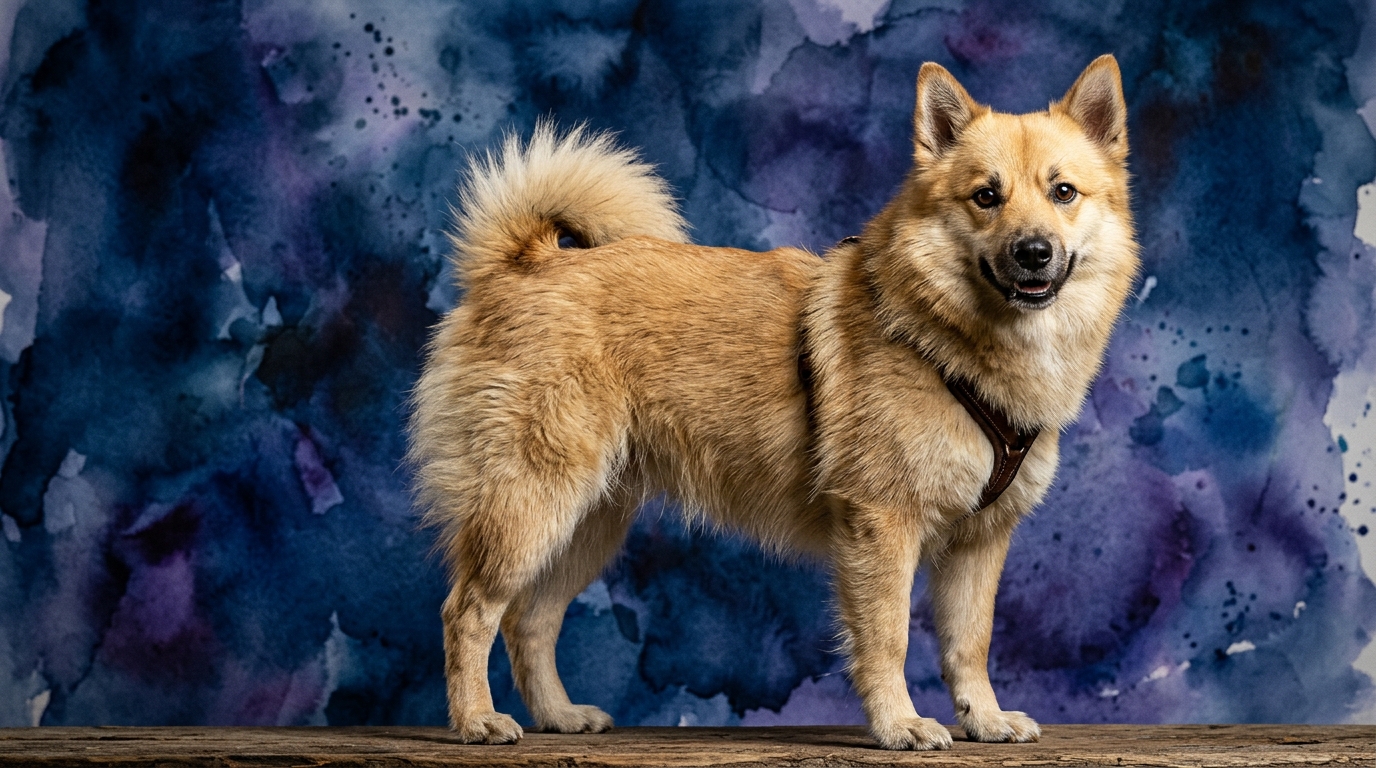
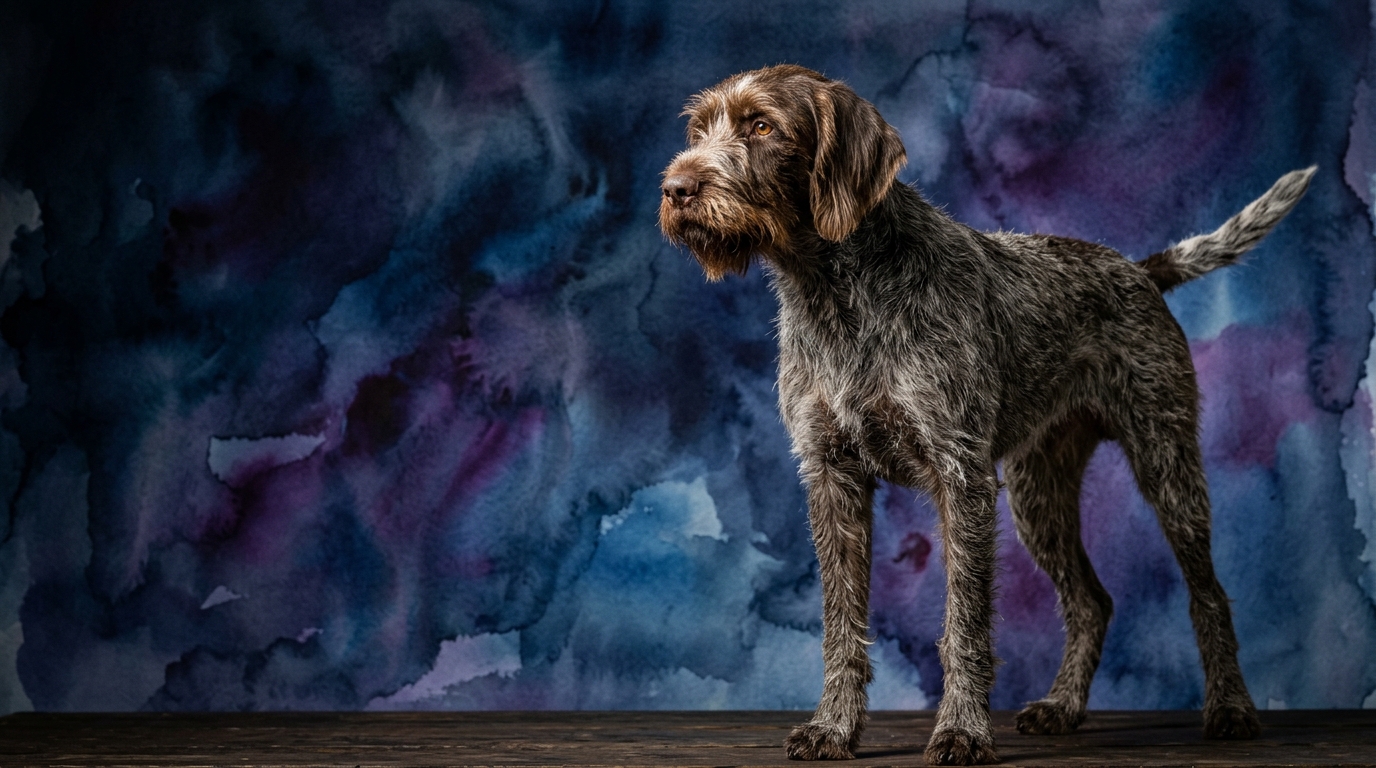
Side-by-Side Cognitive Profile: Buhund vs. Griffon
At The Cosmic Pet Pet IQ Lab, we assess intelligence across five key dimensions. Interestingly, both the Norwegian Buhund and the Wirehaired Pointing Griffon register a solid 3/5 across the board. While the scores are numerically identical, the manifestation of these cognitive traits is deeply colored by their breed histories.
For the **Norwegian Buhund (Herding Group)**:
Problem Solving (3/5): This moderate score indicates a practical intelligence for navigating their environment and managing their "flock." Buhunds excel at assessing situations, such as identifying perceived threats or organizing household dynamics, often employing self-directed, practical solutions rooted in their herding heritage.
Training Speed (3/5): Buhunds learn new commands at a reasonable pace, but their independent spirit means consistent, engaging methods are crucial. They grasp concepts well, yet their occasional self-direction requires patient, clear guidance to solidify behaviors.
Social Intelligence (3/5): A moderate capacity to read human cues and bond deeply with family is characteristic. However, their herding instinct can lead to attempts to "manage" family members, necessitating early socialization and firm boundaries to refine their social interactions.
Instinctive Drive (3/5): Their drive is rooted in herding, manifesting as a moderate but persistent urge to gather, alert, and protect. This translates into vigilant observation and an active desire to maintain order within their perceived territory.
Memory (3/5): Buhunds retain learned commands, routines, and past experiences effectively, contributing to their reliability. This memory aids their role as companions and guardians, helping them recall territory layouts and established household patterns.
For the **Wirehaired Pointing Griffon (Sporting Group)**:
Problem Solving (3/5): For a Griffon, this score translates to an ability to independently locate game, navigate varied terrain, and adapt to changing hunting conditions. They are practical thinkers in the field, making rapid decisions to achieve their goal of finding and pointing birds.
Training Speed (3/5): Grifffons are generally receptive learners, eager to please their handler in a cooperative working partnership. Their desire to work makes them attentive, though patient repetition may be needed to solidify complex sequences, especially given their field independence.
Social Intelligence (3/5): Grifffons typically display a moderate capacity for understanding human emotions and forming deep, affectionate family bonds. They are companionable, adaptable, and generally good with children and other animals, thriving on inclusion within their human pack.
Instinctive Drive (3/5): The Griffon's moderate drive is heavily focused on hunting – pointing, retrieving, and water work. This persistent, purposeful motivation requires outlets and guides their natural behaviors in pursuit of game, making them focused workers when engaged.
Memory (3/5): A 3/5 memory means Grifffons effectively remember training cues, scent patterns, and game locations. This is crucial for retaining complex hunting sequences and handler signals, allowing them to build upon past experiences and perform consistently.
Where the Norwegian Buhund Excels Cognitively
While both breeds share a 3/5 problem-solving capacity, the Norwegian Buhund's cognitive strengths shine particularly in scenarios demanding independent vigilance and practical, environmental problem-solving within a domestic setting. Their herding heritage means they often excel at assessing dynamic situations, like identifying a perceived threat to their 'flock' (their family) or figuring out how to direct movement within the home, even without direct commands. This isn't about abstract puzzles, but rather demonstrating a keen ability to observe their surroundings, anticipate changes, and react with a self-directed purpose rooted in their ancestral role as a watchful farm dog.
Their social intelligence, also rated 3/5, manifests uniquely; Buhunds possess a nuanced understanding of their family's hierarchy and routines, often taking on a self-appointed 'manager' role. This means they might proactively alert you to a strange noise or attempt to gather family members when they perceive things are 'out of order,' demonstrating a subtle yet effective cognitive advantage in maintaining their household's perceived equilibrium. This proactive, independent assessment of their social environment is a distinctive cognitive advantage.
Where the Wirehaired Pointing Griffon Excels Cognitively
The Wirehaired Pointing Griffon, with its identical 3/5 problem-solving score, showcases its cognitive prowess in contexts demanding focused, cooperative outdoor work. Their ability to independently track and locate game while remaining responsive to a handler's distant cues demonstrates a sophisticated form of environmental problem-solving. This isn't just about following a scent; it involves navigating varied terrain, interpreting subtle changes in wind and ground cover, and making rapid decisions to pinpoint game, all while maintaining a cooperative mindset with their human partner. Their cognitive strength lies in this blend of self-reliance and responsiveness within a task-oriented framework.
Their 3/5 instinctive drive is a testament to their specialized memory and focus. Grifffons excel at remembering scent patterns and the location of past game, building a mental map of their hunting grounds. This memory, combined with their training speed, allows them to quickly learn and execute complex multi-step commands related to hunting, displaying a cognitive efficiency in mastering sequences that directly contribute to their working purpose. Their ability to retain and apply these specific, task-oriented memories over time provides a unique cognitive advantage in their domain.
Which Is Easier to Train and Why?
When comparing which breed might feel 'easier' to train, despite both possessing a 3/5 training speed, the underlying behavioral differences are key. The Norwegian Buhund, with its herding background, often exhibits a more independent streak. They absorb commands at a moderate pace, but their instinct to make their own decisions, whether about managing the household or barking at perceived intruders, can sometimes make them seem less immediately compliant. Training a Buhund requires consistent, engaging methods that appeal to their desire for purpose, coupled with firm but fair boundaries to channel their self-directed nature. They respond well to positive reinforcement but may test limits, requiring a trainer who values consistency over immediate speed.
The Wirehaired Pointing Griffon, while equally rated at 3/5 for training speed, often presents as more 'biddable' in a cooperative training setting due to their sporting heritage. Their instinctive drive to work with a human partner to achieve a goal – like finding game – translates into an eagerness to learn and please. They are generally responsive to commands and motivated by opportunities to engage their natural instincts through structured activities. While they can be distracted by scents, their desire to collaborate means they often pick up new tasks with an enthusiastic willingness, making them feel easier to guide for owners who can provide clear direction and channel their inherent drive into productive outlets. The Griffon's cooperative nature often streamlines the training process, especially when purpose-driven.
Which Suits Active Owners vs. Relaxed Owners?
Neither the Norwegian Buhund nor the Wirehaired Pointing Griffon are suitable for truly 'relaxed' owners in the sense of a sedentary lifestyle; both breeds demand significant engagement. However, the type of activity they thrive on differs. The Norwegian Buhund, with its herding and vigilant nature, suits an active owner who can provide consistent mental stimulation, structured training, and opportunities for purposeful activity beyond just physical exercise. This includes puzzle toys, obedience work, agility, and activities that allow them to 'manage' or 'observe' within a safe framework. Owners must be prepared to manage their vocal tendencies and independent decision-making with consistent boundaries. Their need is more for a 'manager' of their environment and social structure.
The Wirehaired Pointing Griffon is ideal for an owner whose definition of 'active' involves rigorous outdoor pursuits and cooperative tasks. These dogs excel with owners who can integrate them into hunting, hiking, long runs, or competitive dog sports like hunt tests or agility. Their strong instinctive drive and desire to work alongside a human means they need an owner who can consistently provide outlets for their pointing and retrieving instincts, whether in actual hunting or simulated scenarios. A Griffon thrives when their physical and mental energy is directed towards a shared goal, making them perfect for owners who want a true working partner for their adventures rather than just a companion for leisurely strolls.
The Verdict
Choose the Norwegian Buhund if you seek a vigilant, independent companion who thrives on managing their environment and family with a keen observational intelligence and a desire for purposeful engagement, appreciating an owner who provides consistent structure and mental challenges.
Opt for the Wirehaired Pointing Griffon if you are an active individual seeking a cooperative, task-oriented partner for rigorous outdoor adventures, valuing a dog whose problem-solving and memory excel in focused, scent-driven work and shared objectives.
🧠 Find Your Pet's IQ Score
Our Pet IQ Lab assessment covers 25+ tests across 5 cognitive dimensions — personalized to your breed.
Take the Full IQ Test →Frequently Asked Questions
Do Norwegian Buhunds bark a lot?
Yes, Buhunds are known for their vocal nature, a trait stemming from their herding and guardian roles where barking served as an alert or a way to gather livestock. Consistent training and early socialization are crucial to manage this tendency and teach them appropriate times to vocalize.
Are Wirehaired Pointing Griffons good with children?
Grifffons generally possess a gentle and patient temperament, making them suitable family dogs, often good with children. Their cooperative and affectionate nature means they usually enjoy being part of family activities, though supervision is always recommended with any dog-child interaction, and early socialization helps foster positive relationships.
How much exercise do these breeds need daily?
Both breeds require substantial daily exercise. A Norwegian Buhund needs at least an hour of vigorous activity, including walks, play, and mental stimulation like training or puzzle games, to prevent boredom. A Wirehaired Pointing Griffon typically needs even more, often two or more hours of intense physical activity, ideally involving running, swimming, or engaging in their natural pointing and retrieving instincts, to keep them content and healthy.