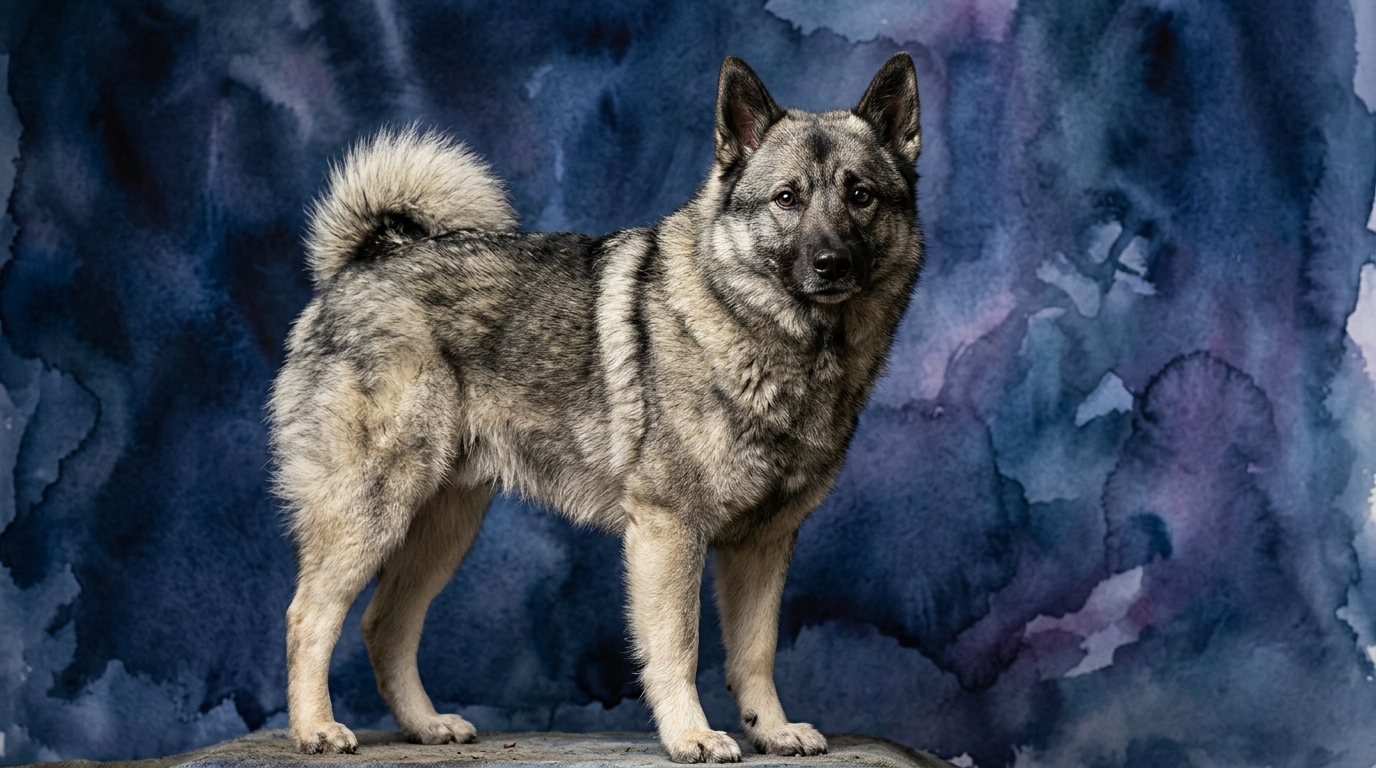

Side-by-Side IQ Profile: Elkhound vs. Toy Spaniel
The Cosmic Pet Pet IQ Lab employs a five-dimensional framework to assess canine intelligence, offering a granular view beyond simple 'smart' labels. Let's delve into how the Norwegian Elkhound and the English Toy Spaniel stack up.
**Norwegian Elkhound (Coren Rank #36)**: This hardy hound's cognitive profile reflects its heritage as a skilled hunting companion.
* **Problem Solving (4/5)**: The Elkhound exhibits a strong capacity for independent thought, a trait honed over centuries for tracking and holding large game. They are adept at navigating complex environments and devising strategies to achieve goals, often requiring mental stimulation to prevent boredom-driven behaviors.
* **Training Speed (4/5)**: These dogs possess a quick grasp of new commands and routines, learning rapidly when motivated. However, their independent spirit means they require consistent, engaging training methods that respect their drive and avoid rote repetition, responding best to tasks that feel purposeful.
* **Social Intelligence (3/5)**: Elkhounds form strong bonds with their primary human companions but can be reserved or discerning with strangers. Their social understanding is geared towards pack dynamics and clear communication within their established circle, rather than seeking universal approval.
* **Instinctive Drive (3/5)**: Their ancestral role as hunting dogs imbues them with a pronounced prey drive and a keen sense of smell. This manifests as a desire to explore, track, and engage with their environment using their senses, requiring outlets for these natural inclinations.
* **Memory (4/5)**: Elkhounds demonstrate excellent recall for learned commands, routines, and environmental details. They remember past experiences and the outcomes of their actions, contributing to their efficient problem-solving and adaptable nature.
**English Toy Spaniel (Not Coren-ranked)**: This charming companion breed presents a cognitive makeup suited for affectionate domesticity.
* **Problem Solving (3/5)**: The English Toy Spaniel shows moderate problem-solving abilities, capable of understanding simple puzzles and navigating household challenges. Their cognitive efforts are often directed towards understanding human cues and maintaining their comfortable environment rather than complex, independent tasks.
* **Training Speed (3/5)**: These spaniels learn at a steady pace, capable of mastering basic obedience and tricks. They thrive on positive reinforcement and consistent, gentle guidance, often motivated by the desire to please their owners and earn affection.
* **Social Intelligence (3/5)**: English Toy Spaniels are highly attuned to human emotions and social dynamics within their family unit, displaying an empathetic nature. They generally enjoy interactions with familiar people and other pets, valuing companionship and harmony.
* **Instinctive Drive (3/5)**: While a toy breed, they retain a moderate level of spaniel curiosity and a gentle inclination to explore their immediate surroundings. Their drives are typically expressed in less intense forms than a working breed, often satisfied by interactive play and companionship.
* **Memory (3/5)**: They possess a solid memory for routines, familiar faces, and learned commands. This allows them to quickly settle into a household rhythm and anticipate daily activities, contributing to their ease of living as a companion.
Where the Norwegian Elkhound Wins Cognitively
The Norwegian Elkhound clearly outpaces the English Toy Spaniel in areas demanding independent thought and rapid acquisition of complex skills. Their Problem Solving score of 4/5 reflects an innate ability to reason through novel situations, a necessity for a breed historically tasked with tracking game through varied terrain without constant human direction. This translates into a dog that can figure out how to open gates, locate hidden toys, or even devise strategies during interactive games, often showing impressive ingenuity.
Furthermore, their Training Speed, also at 4/5, indicates a quicker uptake of advanced commands and multi-step tasks. While they might challenge the trainer with their independent streak, once they understand the 'why' or find the task engaging, they commit it to memory and execute efficiently. This cognitive strength makes them suitable for advanced obedience, agility, or scent work, where analytical thinking and quick learning are paramount. Their superior memory (4/5) reinforces this, allowing them to retain a vast repertoire of learned behaviors and environmental knowledge, making them highly adaptable to new situations once they've processed them.
Where the English Toy Spaniel Wins Cognitively
While the English Toy Spaniel's scores might not reach the Elkhound's heights in raw problem-solving or training speed, their cognitive strengths lie in areas that foster harmonious companionship and emotional connection. The Spaniel's equivalent Social Intelligence score (3/5) is expressed differently; it's less about pack hierarchy and more about nuanced emotional attunement. They excel at reading human body language, anticipating moods, and offering comfort, making them exceptional emotional support animals.
Their problem-solving (3/5) and memory (3/5) are perfectly adequate for navigating a domestic environment with grace, understanding household rules, and remembering their favorite cuddle spots or walk routes. This breed 'wins' in its capacity to integrate seamlessly into a human family as a gentle, empathetic presence, requiring less intense mental stimulation to feel fulfilled. Their cognitive profile is optimized for a life of devoted companionship, where intricate problem-solving isn't a daily requirement, but understanding and responding to human needs is paramount.
Which is Easier to Train, and Why?
Based on their respective IQ profiles, the Norwegian Elkhound, with a Training Speed of 4/5, demonstrates a quicker capacity for learning new commands. However, 'easier' is a nuanced term here. The Elkhound's independent nature, a hallmark of its hound heritage, means it often requires a trainer to be more engaging and consistent, understanding that the dog needs to see the purpose or benefit in a task. They might learn quickly but possess a strong will, sometimes opting to follow their own instincts if not properly motivated.
For instance, teaching a recall might be swift, but ensuring they *always* execute it when a compelling scent distraction is present requires significant effort to override their instinctive drive. In contrast, the English Toy Spaniel, with a Training Speed of 3/5, learns at a steady pace, often driven by a desire to please and a love for positive reinforcement. While they might take a little longer to grasp complex concepts, their inherent cooperative spirit can make the training process feel smoother and less confrontational for many owners. They are less likely to challenge authority or wander off on an independent scent mission, making basic obedience relatively straightforward due to their focus on their human companion.
Which Suits Active Owners vs. Relaxed Owners?
The cognitive profiles of these two breeds clearly delineate their suitability for different owner lifestyles. The Norwegian Elkhound, with its high Problem Solving (4/5), Training Speed (4/5), and Instinctive Drive (3/5), is undeniably a match for active owners. This breed thrives on mental challenges and physical exertion. An Elkhound needs regular, vigorous exercise, opportunities for scent work or tracking, and engaging training sessions to keep its sharp mind occupied. Owners who enjoy hiking, dog sports like agility or obedience, or who are prepared to provide daily structured mental enrichment will find a fulfilling partnership.
A relaxed owner might struggle with an Elkhound's innate drive to explore and solve problems, potentially leading to boredom-induced destructive behaviors or excessive vocalization. Conversely, the English Toy Spaniel, with its moderate scores across all dimensions, is an ideal companion for relaxed owners. Their cognitive needs are largely met through companionship, gentle play, and a comfortable home environment. While they appreciate short walks and interactive toys, they do not possess the same inherent drive for intense physical or mental tasks. An owner who enjoys quiet evenings, gentle strolls, and ample cuddle time will find the English Toy Spaniel's calm, affectionate nature a perfect fit, as their cognitive makeup is geared towards peaceful domesticity rather than demanding intellectual pursuits.
The Verdict
Choose the Norwegian Elkhound if you are an active, experienced owner eager to engage a sharp, independent mind in structured training, outdoor adventures, and consistent mental challenges.
Choose the English Toy Spaniel if you seek a gentle, empathetic companion for a relaxed lifestyle, valuing emotional connection and a calm presence over intense physical or mental demands.
🧠 Find Your Pet's IQ Score
Our Pet IQ Lab assessment covers 25+ tests across 5 cognitive dimensions — personalized to your breed.
Take the Full IQ Test →Frequently Asked Questions
Is the Norwegian Elkhound a good choice for first-time dog owners?
The Elkhound's independent nature and strong drives, coupled with its need for consistent, engaging training and mental stimulation, can be a challenge for novice owners. They require an owner who understands their specific cognitive needs and can provide firm, positive leadership.
Do English Toy Spaniels require a lot of grooming?
Yes, English Toy Spaniels have a long, silky coat that requires regular grooming to prevent tangles and mats. Daily brushing is often recommended, along with occasional professional grooming, to maintain their coat's health and appearance.
What kind of living environment is best for a Norwegian Elkhound?
Norwegian Elkhounds thrive in homes with secure outdoor spaces, as their instinctive drive and need for exercise necessitate room to explore and burn energy. They are generally adaptable but benefit from environments where their natural tendencies can be safely expressed, such as rural or suburban settings with active owners.