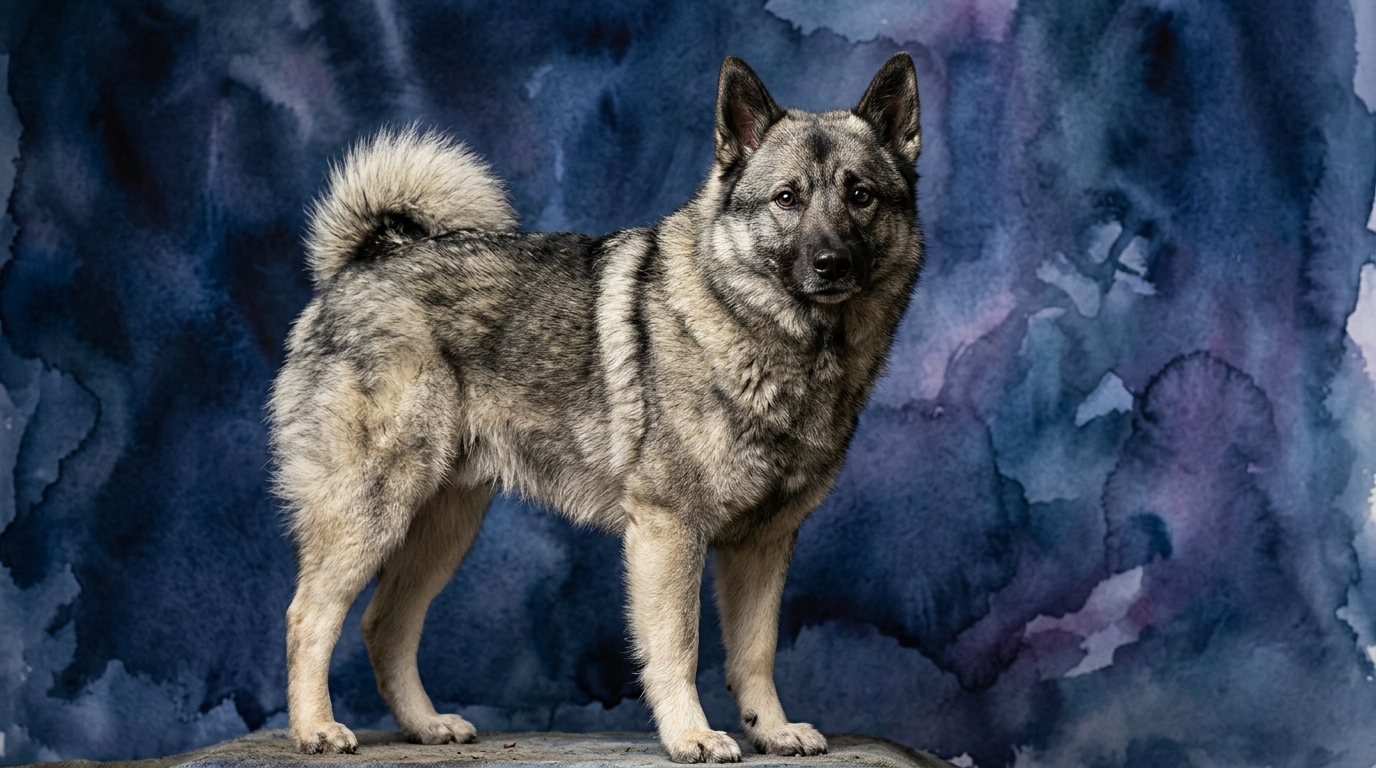

Side-by-Side IQ Profile: Elkhound vs. Coonhound
To understand the unique mental makeup of these two hounds, let's break down their cognitive profiles across five key dimensions:
**Norwegian Elkhound (Coren rank #36)**
**Problem Solving (4/5):** Demonstrates a notable capacity for independent thought, often finding solutions to environmental challenges like opening gates or retrieving out-of-reach toys.
**Training Speed (4/5):** Typically grasps new commands and routines with relative swiftness, requiring fewer repetitions and showing an efficient learning process.
**Social Intelligence (3/5):** Forms strong bonds and understands human cues but can display an independent streak or reserve with strangers, relying on its own judgment.
**Instinctive Drive (3/5):** Possesses a moderate yet significant hunting drive, particularly for tracking large game, with instincts generally manageable and redirectable.
**Memory (4/5):** Exhibits strong retention of learned behaviors, routines, and experiences, recalling commands accurately over time.
**Redbone Coonhound (Not Coren-ranked)**
**Problem Solving (3/5):** Approaches problems with a more straightforward, often instinct-driven methodology, applying persistence and known tracking methods rather than abstract thought.
**Training Speed (3/5):** Learns at a steady pace but generally requires more consistent repetition; focus can be diverted by compelling scents, extending learning time.
**Social Intelligence (3/5):** Amiable and forms deep family connections, responsive to human emotion, yet its strong independent nature can sometimes override immediate social compliance.
**Instinctive Drive (3/5):** Its robust, deeply ingrained drive for scent tracking and treeing game often serves as the primary lens through which it interacts with its world.
**Memory (3/5):** Possesses functional memory for routines and commands, though recall might be less precise or quickly accessed if powerful sensory input competes for attention.
Where the Norwegian Elkhound Excels Cognitively
The Norwegian Elkhound's cognitive profile distinctly outshines the Redbone Coonhound in several key areas, primarily due to its superior Problem Solving (4/5 vs. 3/5), Training Speed (4/5 vs. 3/5), and Memory (4/5 vs. 3/5). An Elkhound's enhanced problem-solving ability means it is more likely to independently figure out how to manipulate latches, open food containers, or navigate complex routes to a desired object. This isn't merely about brute force; it's about assessing a situation and applying a logical sequence of actions. Their quicker training speed translates into fewer repetitions required to master a new command or trick, making obedience training a more efficient and rewarding process. For instance, an Elkhound might learn to 'stay' perfectly after ten short sessions, while a Redbone might need twenty. Furthermore, their stronger memory ensures that once a command or routine is learned, it is retained with greater fidelity over longer periods, reducing the need for frequent refreshers. This cognitive advantage makes them adaptable companions who can quickly adjust to new environments or expectations with less confusion.
Where the Redbone Coonhound's Cognition Shines
While the Redbone Coonhound's raw scores might not surpass the Elkhound's in a direct numerical comparison, its cognitive strengths lie in the specialized application of its Instinctive Drive (3/5) and a particular type of persistent focus. The Redbone's entire cognitive architecture is finely tuned for its primary purpose: tracking. Its problem-solving, while rated lower overall, becomes exceptionally keen when centered on a scent trail, demonstrating an unwavering determination to follow a lead, often over vast distances and varied terrain. This isn't about opening a gate; it's about the complex cognitive mapping and sensory processing required to differentiate and follow a specific scent among countless others. While their overall memory is rated 3/5, their scent memory is extraordinary, allowing them to recall specific trails or the absence of a target scent, influencing their persistent search. This specialized cognitive prowess, a deep immersion in their sensory world, means they excel in tasks requiring sustained, focused effort guided by olfactory cues, making them peerless in their field.
Training Dynamics: Elkhound vs. Coonhound
Between these two breeds, the Norwegian Elkhound is generally easier to train, a direct reflection of its higher scores in Training Speed (4/5) and Problem Solving (4/5), coupled with its strong Memory (4/5). An Elkhound typically grasps new commands and concepts with fewer repetitions, showing a more eager disposition to engage in structured learning. Their ability to solve problems means they often understand the *why* behind a command more quickly. For example, teaching an Elkhound to fetch a specific item might involve them understanding the object's name and location. The Redbone Coonhound, with its Training Speed of 3/5 and powerful Instinctive Drive (3/5), presents a more significant training challenge. Their intense focus on scent can make them 'selectively deaf' when a compelling trail is nearby, overriding learned commands. While they learn, their independent nature and propensity to follow their nose mean training requires exceptional patience, consistency, and often, creative methods.
Lifestyle Match: Active Owners vs. Relaxed Owners
The choice between these breeds largely depends on an owner's lifestyle and their capacity for engaging with a dog's specific needs. The Norwegian Elkhound, with its balanced intelligence and moderate instinctive drive, suits active owners who appreciate a partner for hiking, jogging, or dog sports like agility or obedience trials. Their cognitive need for problem-solving and quicker training speed means they thrive on mental challenges and structured activities, enjoying downtime after being mentally and physically engaged. In contrast, the Redbone Coonhound is definitively for the highly active owner, particularly one who can channel its profound instinctive drive for tracking. Their endurance and unwavering commitment to a scent trail demand extensive physical outlets, often in varied terrain. A Redbone Coonhound requires long, vigorous runs, extensive scent work, or activities fulfilling their innate purpose. A relaxed owner may find themselves overwhelmed by a Redbone's boundless energy and deep-seated desire to explore with its nose.
The Verdict
Choose the Norwegian Elkhound if you seek a responsive, adaptable companion for diverse activities, appreciating its quicker learning and problem-solving abilities in a family setting.
Opt for the Redbone Coonhound if you are a highly active individual dedicated to long outdoor adventures or scent work, ready to embrace a dog whose world revolves around its powerful olfactory senses.
🧠 Find Your Pet's IQ Score
Our Pet IQ Lab assessment covers 25+ tests across 5 cognitive dimensions — personalized to your breed.
Take the Full IQ Test →Frequently Asked Questions
Do Norwegian Elkhounds bark a lot, and is this related to their intelligence?
Norwegian Elkhounds can be vocal, often using barks to alert or express excitement, which is partly tied to their problem-solving and social intelligence scores. They use their voice as a communication tool, indicating awareness of their surroundings or a desire to engage, rather than just mindless noise.
Can a Redbone Coonhound be a good family pet despite its strong hunting drive?
Yes, a Redbone Coonhound can be an excellent family pet, provided their significant exercise needs and strong instinctive drive are met. Their social intelligence allows them to bond deeply with family members, but consistent training and ample outlets for their scenting abilities are crucial for a harmonious household.
How do their memory differences impact daily life for owners?
The Elkhound's higher memory score means they'll retain house rules and commands with greater consistency, requiring fewer reminders. The Redbone's functional memory means owners need to be more diligent with reinforcement, especially when competing with strong sensory distractions, to maintain learned behaviors effectively.