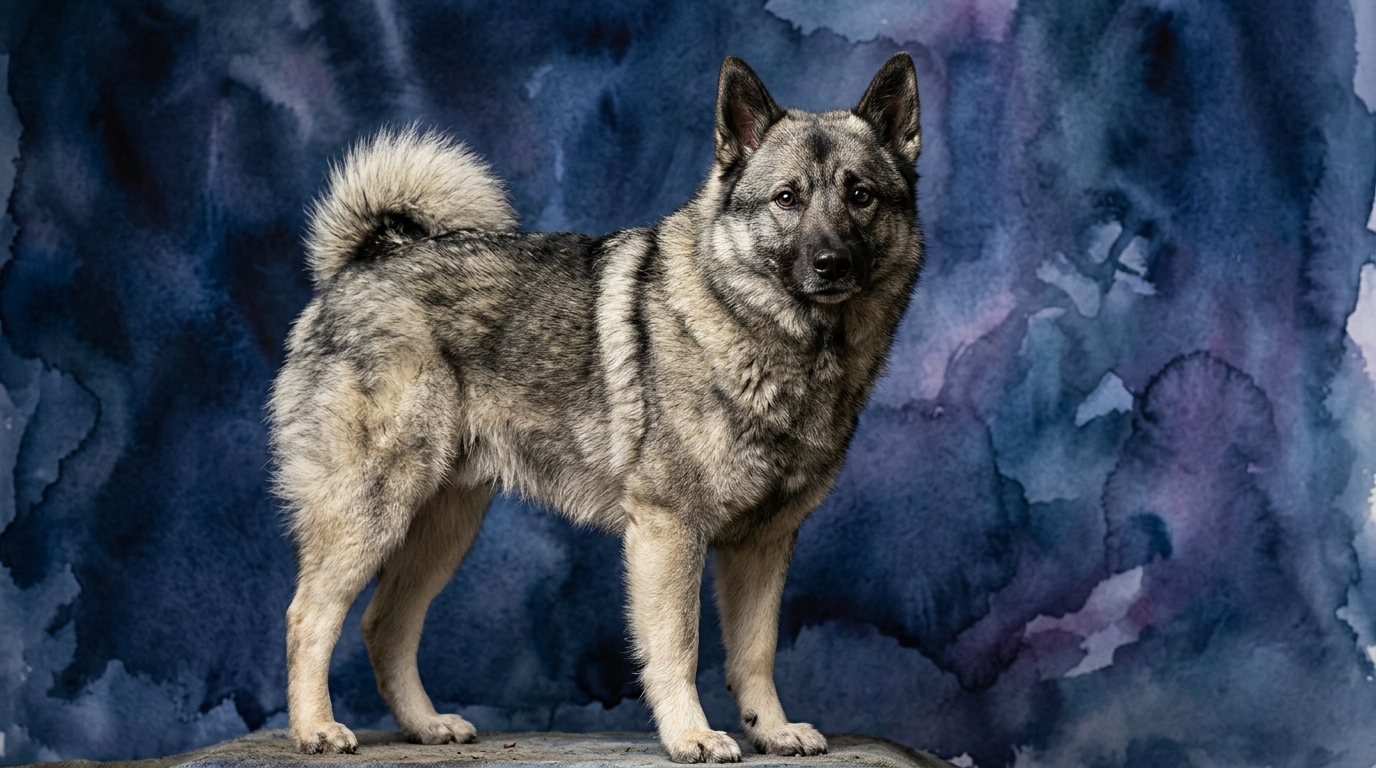

Side-by-side IQ profile
The Norwegian Elkhound, ranked #36 by Coren, demonstrates a formidable intellect honed for its hunting heritage. It scores 4/5 in Problem Solving, reflecting its need for independent strategic thinking to track large game, and 4/5 in Training Speed, indicating a rapid grasp of commands. Its Memory is also strong at 4/5, vital for recalling vast territories and learned strategies. Social Intelligence and Instinctive Drive are rated at 3/5, suggesting a balanced pack dynamic and a strong but manageable hunting instinct.
In contrast, the Toy Fox Terrier, though not Coren-ranked, presents a consistent cognitive profile, scoring 3/5 across all five dimensions: Problem Solving, Training Speed, Social Intelligence, Instinctive Drive, and Memory. This indicates a capable but perhaps less intensely specialized intellect than the Elkhound, geared more towards adaptable companionship and quick, responsive interactions rather than sustained, independent wilderness work.
Where Norwegian Elkhound wins cognitively
The Norwegian Elkhound's cognitive strengths distinctly outshine the Toy Fox Terrier in areas demanding independent, sustained mental application and robust recall. Its 4/5 Problem Solving reflects a deep-seated ability to strategize and adapt in complex, expansive environments, a trait refined over generations for tracking and holding large prey without constant human direction. This involves critical decision-making and navigating challenging terrain. Coupled with a superior Memory (4/5), the Elkhound excels at retaining vast geographical knowledge and intricate scent trails, crucial for its demanding work. This breed's cognitive architecture is built for endurance and self-reliance in the face of significant environmental challenges.
Where Toy Fox Terrier wins cognitively
While not numerically superior in individual cognitive scores, the Toy Fox Terrier's intellect excels in its efficiency and precise suitability for its specialized roles. Its consistent 3/5 across all categories means its Problem Solving is perfectly adequate for quickly figuring out puzzle toys or navigating agility courses, where its small size and agility make it appear particularly sharp. The Toy Fox Terrier's Social Intelligence, also 3/5, often manifests as a highly focused, human-centric engagement, making it exceptionally adept at reading cues and responding interactively in a companion setting. This breed's cognitive profile is finely tuned for quick, agile responses and close human partnership, making it a functional "win" for owners seeking a spirited, responsive, and adaptable companion.
Which is easier to train and why
The Norwegian Elkhound's 4/5 Training Speed suggests it will grasp new commands more quickly than the Toy Fox Terrier (3/5). However, the Elkhound's independent nature and strong instinctive drive (both 3/5) mean that while it learns fast, it often requires a handler with firm, consistent leadership to channel its will and maintain focus amidst distractions. Its training is about harnessing a powerful, self-reliant mind.
The Toy Fox Terrier, conversely, might take a bit longer to learn new commands due to its 3/5 Training Speed, but its social intelligence (3/5) and desire for interaction often make it a highly motivated and eager student. Its smaller stature and adaptability to indoor training can make it feel "easier" to manage for trick training or basic obedience, especially for owners who enjoy positive reinforcement and interactive play.
Which suits active owners vs relaxed owners
The Norwegian Elkhound is unequivocally suited for active owners who embrace outdoor lifestyles and can provide rigorous physical and mental challenges. Their heritage demands extensive exercise, long hikes, and engaging activities that stimulate their problem-solving mind and keen senses. A relaxed owner would likely struggle with an Elkhound's boundless energy and potential for boredom-induced behaviors.
The Toy Fox Terrier, while energetic, offers more versatility for owners with varying activity levels. They enjoy active play and walks, but their smaller size means their exercise needs can often be met with shorter, more frequent bursts of activity and engaging indoor games. They can adapt well to apartment living with sufficient enrichment, making them a better fit for owners who enjoy consistent, moderate interaction without necessarily requiring an extreme outdoor regimen.
The Verdict
Choose the Norwegian Elkhound if you are an active, experienced owner who thrives on challenging outdoor adventures, values a dog's independent problem-solving and memory for complex tasks, and can provide consistent leadership and mental stimulation for a robust hunting breed.
Opt for the Toy Fox Terrier if you desire a spirited, agile, and highly interactive companion whose quick wit and focused social intelligence shine in domestic settings, and whose exercise needs are met through consistent moderate activity, trick training, and engaging indoor play.
🧠 Find Your Pet's IQ Score
Our Pet IQ Lab assessment covers 25+ tests across 5 cognitive dimensions — personalized to your breed.
Take the Full IQ Test →Frequently Asked Questions
Do Norwegian Elkhounds make good family dogs despite their independent nature?
Yes, Elkhounds can be excellent family dogs, forming strong bonds with their human "pack." Their social intelligence allows them to integrate well, but their independent streak means they benefit from clear boundaries and consistent training from all family members to ensure a harmonious household.
Is a Toy Fox Terrier's problem-solving ability suitable for advanced trick training or dog sports?
Absolutely, a Toy Fox Terrier's 3/5 problem-solving and training speed, combined with their agility and desire for interaction, make them well-suited for advanced trick training, obedience, and dog sports like agility. They excel at tasks requiring quick thinking and nimble execution, thriving on the mental challenge.
How does the instinctive drive differ between these two breeds in a home environment?
The Elkhound's instinctive drive often manifests as a strong urge to track scents and bay, potentially leading to wandering or vocalization if not managed, while the Toy Fox Terrier's drive is typically directed at small prey, which might mean chasing squirrels or being relentless with squeaky toys. Both require outlets for their instincts to prevent frustration, but the Elkhound's is generally more powerful and wide-ranging.