
Side-by-side IQ profile
The Cosmic Pet Pet IQ Lab employs five core dimensions to map a breed's cognitive strengths, offering a granular view beyond general perceptions. For the Norwich Terrier, a plucky member of the Terrier group, its profile presents a consistent average across the board, scoring 3 out of 5 in every category. This indicates a dog with solid, predictable cognitive functions. Its Problem Solving at 3/5 suggests it can navigate typical household challenges and learn routines, but complex, multi-step puzzles might require more guidance. Training Speed also at 3/5 means it learns new commands at a moderate pace, requiring consistent repetition and patience from its human companions to solidify behaviors. Social Intelligence, likewise 3/5, points to a dog that understands social cues adequately, interacting appropriately with family and familiar individuals, though it might not be the most emotionally intuitive of breeds. Its Instinctive Drive at 3/5 signifies a moderate expression of its innate breed-specific behaviors, such as digging or chasing, which are present but manageable rather than overwhelming. Finally, its Memory score of 3/5 means it retains learned information and routines well enough for daily life, but might not recall obscure commands or infrequent experiences with perfect accuracy.
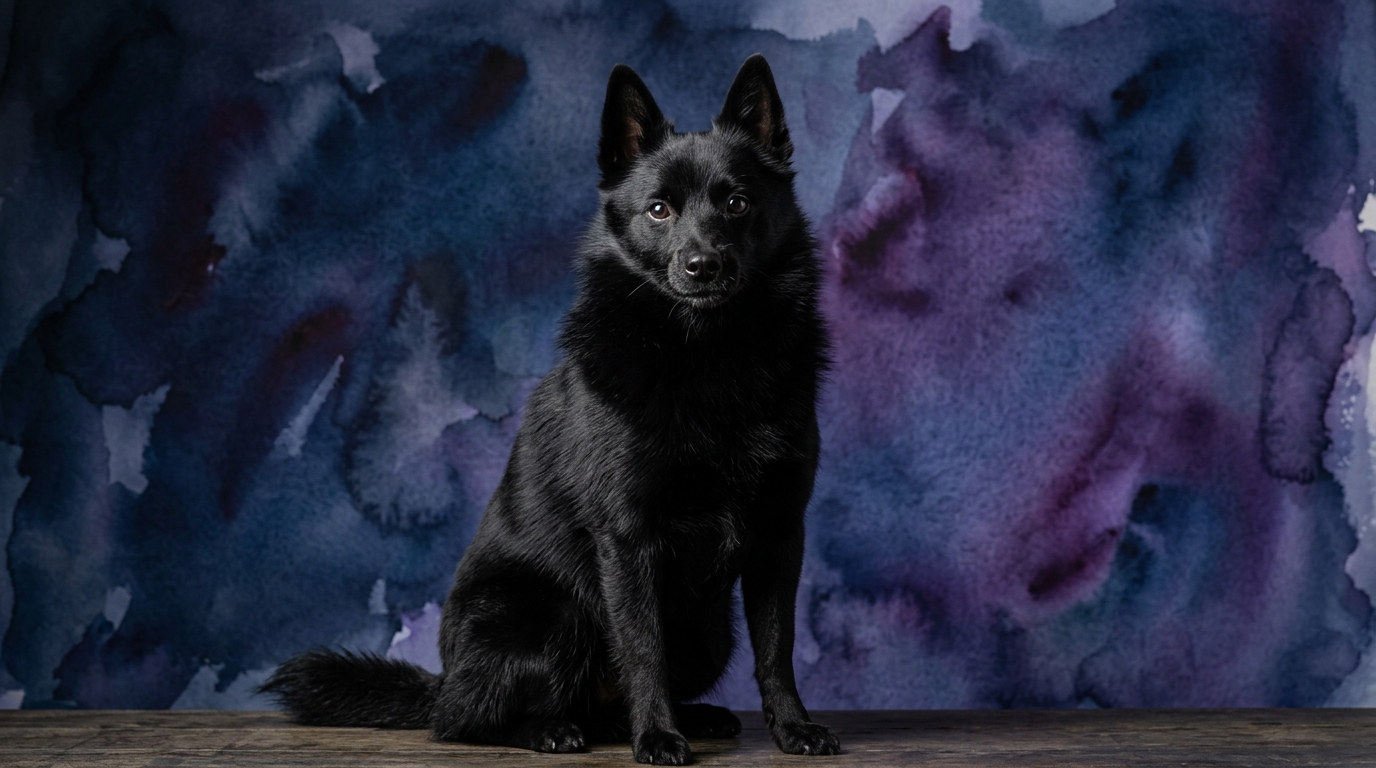
In stark contrast, the Schipperke, a spirited member of the Non-Sporting group and ranked #15 in Coren's list of working and obedience intelligence, showcases a profile marked by impressive cognitive peaks. Its Problem Solving ability soars to a perfect 5/5, indicating a breed that excels at independent thought and finding creative solutions, whether manipulating a latch or devising a new play sequence. This breed's Training Speed is also a remarkable 5/5, meaning it picks up new commands and complex sequences with astonishing rapidity, often requiring minimal repetitions to grasp a concept fully. However, its Social Intelligence, like the Norwich, stands at a moderate 3/5. This suggests a dog that understands its place within the family unit and responds to human interactions, but might not possess the profound empathy or desire to please that characterizes some other breeds, potentially leading to an independent streak in its social interactions. Its Instinctive Drive, also 3/5, points to a moderate level of its inherent traits, such as its historical role as a barge dog and vermin hunter, which will manifest but are generally manageable. Lastly, the Schipperke’s Memory is another outstanding 5/5, allowing it to retain a vast repertoire of commands, routines, and experiences with exceptional precision and longevity.
Where Norwich Terrier wins cognitively
While the Schipperke's profile boasts higher scores in several key areas, the Norwich Terrier's consistent 3/5 across all cognitive dimensions presents its own unique advantages, particularly for certain lifestyles. The Norwich's moderate Problem Solving (3/5) means it is less likely to outwit its owners or engage in complex mischief driven by boredom or intellectual challenge. This predictability benefits owners preferring a dog that follows routines without constantly testing boundaries or devising new mischief. Its balanced instinctive drive (3/5) means that while it retains the plucky tenacity of a terrier, these drives are typically expressed in a more controlled and less overwhelming manner compared to breeds with higher scores, making them easier to integrate into a family setting without constant management of intense chasing or digging behaviors.
Furthermore, the Norwich's moderate Social Intelligence (3/5) can translate into a more independent and less "needy" companion. While affectionate with its family, it isn't typically defined by an overwhelming desire to constantly please or seek attention, which some owners find refreshing. This cognitive profile means they are less prone to separation anxiety born from hyper-social dependency and can often be content with their own company for reasonable periods, provided they receive adequate exercise and interaction. Its consistent cognitive profile makes for a dog whose mental needs are generally met through regular family engagement and moderate enrichment, rather than requiring specialized training or constant intellectual challenges to prevent boredom-induced behaviors. For an owner seeking a dependable, spirited companion with clear, manageable cognitive demands, the Norwich Terrier's balanced intellect offers a unique win.
Where Schipperke wins cognitively
The Schipperke’s cognitive profile clearly distinguishes it as a formidable intellect, securing significant wins in several critical areas. Its perfect 5/5 in Problem Solving stands out, revealing a dog with an exceptional capacity for independent thought and strategic planning. This means a Schipperke can quickly assess new situations, understand cause-and-effect, and figure out how to achieve desired outcomes, whether that involves manipulating a latch to escape a crate or devising a complex game. This mental agility makes them incredibly engaging companions for owners who appreciate a dog capable of true partnership in activities.
Coupled with its 5/5 Training Speed, the Schipperke emerges as a top-tier candidate for advanced obedience, agility, trick training, and complex task mastery. They absorb new commands and multi-step sequences with remarkable speed, often needing only a few repetitions to solidify a behavior. This rapid learning curve allows owners to progress quickly through training levels, exploring activities that challenge many other breeds. The Schipperke’s equally impressive 5/5 Memory further solidifies these wins. It ensures that once a command or concept is learned, it is retained with outstanding precision over long periods, meaning less refresher training is needed and complex repertoires of behaviors are easily recalled. This superior memory also contributes to their ability to learn and adhere to elaborate routines, making them highly predictable. For owners seeking a dog that can truly excel in performance sports or intellectual challenges, the Schipperke’s cognitive strengths are unparalleled in this comparison.
Which is easier to train and why
When evaluating ease of training, the Schipperke holds a distinct advantage, primarily due to its exceptional Training Speed (5/5) and Problem Solving (5/5) scores. A Schipperke will typically grasp new commands and complex sequences with remarkable quickness, often picking up concepts in just a few repetitions. This means that an owner can progress through basic obedience and into advanced tricks or sports much faster, experiencing fewer plateaus and more rapid achievements. Their high problem-solving ability means they don't just memorize; they *understand* the underlying principles of a task, adept at generalizing learned behaviors.
In contrast, the Norwich Terrier, with its moderate Training Speed (3/5), will require a more patient and consistent approach. While capable of learning all necessary commands, they will generally need more repetitions and longer training sessions to solidify behaviors. Their moderate Problem Solving (3/5) means they might not independently figure out the "why" behind a command as readily as a Schipperke, relying more on direct instruction and habituation. The Norwich’s terrier nature, even with a moderate instinctive drive (3/5), can also introduce an independent streak; they might question the necessity of a command if it doesn't align with their immediate interests, requiring owners to be highly engaging and motivational. While both benefit from positive reinforcement, a Schipperke's quick uptake makes it appear "easier" in terms of raw speed and intellectual engagement, whereas a Norwich demands a steadfast, encouraging, and creative approach.
Which suits active owners vs relaxed owners
The cognitive profiles of the Norwich Terrier and Schipperke offer clear guidance for matching them with owners' activity levels and desired mental engagement. The Schipperke, with its 5/5 scores in Problem Solving, Training Speed, and Memory, is an ideal fit for active owners who thrive on providing consistent mental stimulation and engaging in structured activities. These dogs are not content with mere physical exercise; their sharp minds demand outlets like agility, advanced obedience, puzzle toys, and learning new tricks to prevent boredom and potential destructive behaviors stemming from under-stimulated intellect. An owner who enjoys teaching complex tasks, participating in dog sports, or daily brain games will find the Schipperke an incredibly rewarding and responsive partner. Their moderate instinctive drive means their physical needs are manageable, but their mental needs are substantial, making them suitable for owners who are "active" in a cognitive sense.
Conversely, the Norwich Terrier, with its consistent 3/5 scores across all cognitive dimensions, is better suited for owners seeking a companion with more moderate and predictable mental demands. While they still require regular exercise and mental engagement typical of any dog, their needs are not as intensely focused on complex problem-solving or rapid learning. They are content with consistent routines, moderate playtime, and engaging walks rather than needing a constant stream of novel intellectual challenges. A Norwich will appreciate an owner who provides regular, gentle training and consistent social interaction, but won't demand the same level of intellectual "work" that a Schipperke thrives on. This makes them a good choice for relaxed owners who enjoy companionship and moderate activity without the commitment to high-level dog sports or continuous mental enrichment.
The Verdict
Choose the Norwich Terrier if you seek a consistently balanced, predictable companion whose moderate cognitive demands align with a more relaxed lifestyle and an appreciation for steady, patient training.
Opt for the Schipperke if you are an owner eager to engage a brilliant, quick-witted dog in advanced training, complex problem-solving, and performance sports, embracing its need for intense mental stimulation.
🧠 Find Your Pet's IQ Score
Our Pet IQ Lab assessment covers 25+ tests across 5 cognitive dimensions — personalized to your breed.
Take the Full IQ Test →Frequently Asked Questions
Are Schipperkes prone to mischief due to their high problem-solving abilities?
Yes, a Schipperke's 5/5 problem-solving score means they can indeed devise creative ways to get into things or achieve goals if their minds are not adequately stimulated. Providing ample mental enrichment and consistent training is crucial to channel their cognitive strengths constructively and prevent unwanted behaviors.
How does a Norwich Terrier's moderate memory affect daily life and training?
A Norwich Terrier's 3/5 memory score means they retain information adequately for daily routines and learned commands, but might require more consistent refreshers for less frequently practiced behaviors. Owners should focus on regular, positive reinforcement to solidify learning, especially for crucial commands.
Can a Norwich Terrier learn complex tasks despite its average training speed?
Absolutely, a Norwich Terrier can learn complex tasks, though it will likely require more patience, repetition, and a highly engaging training approach compared to a breed with a 5/5 training speed. Their moderate problem-solving and memory mean they are capable, but progress will be steadier rather than rapid.