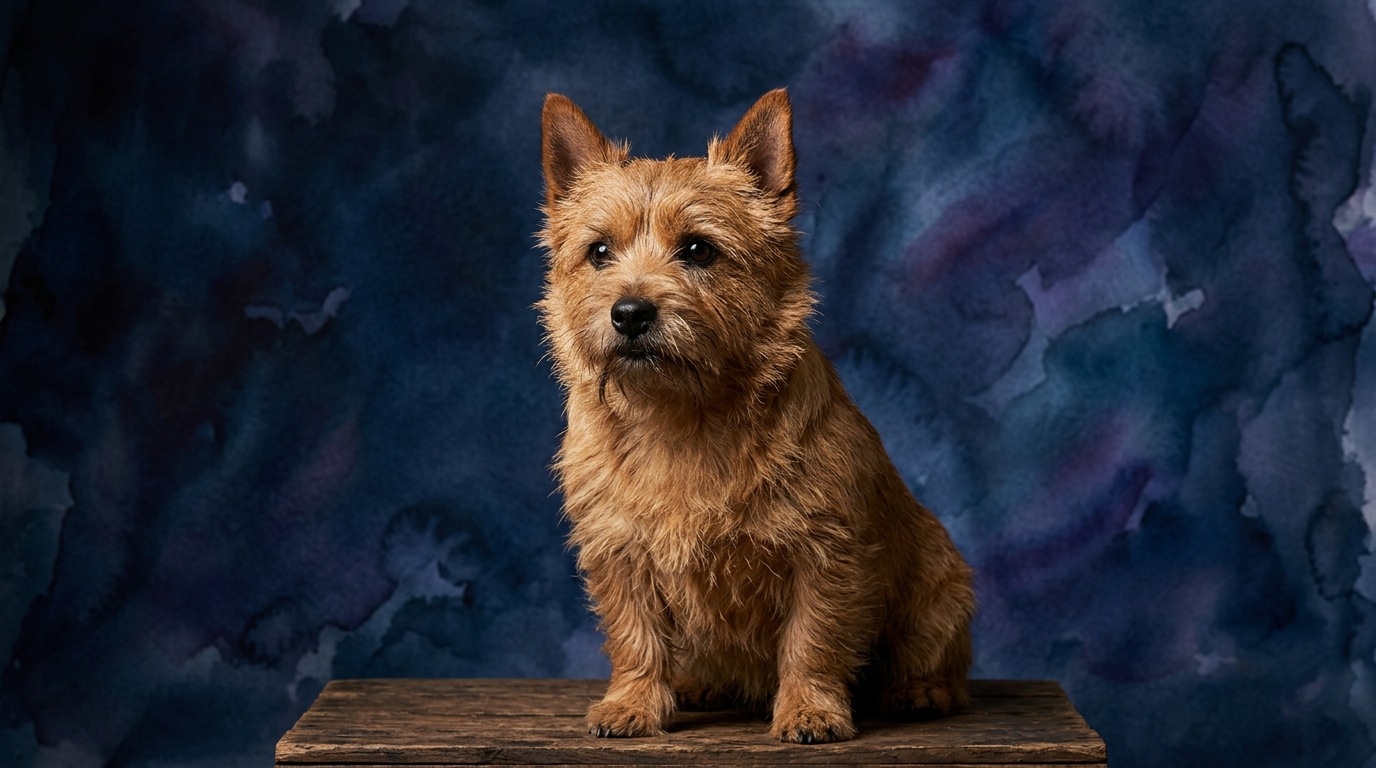
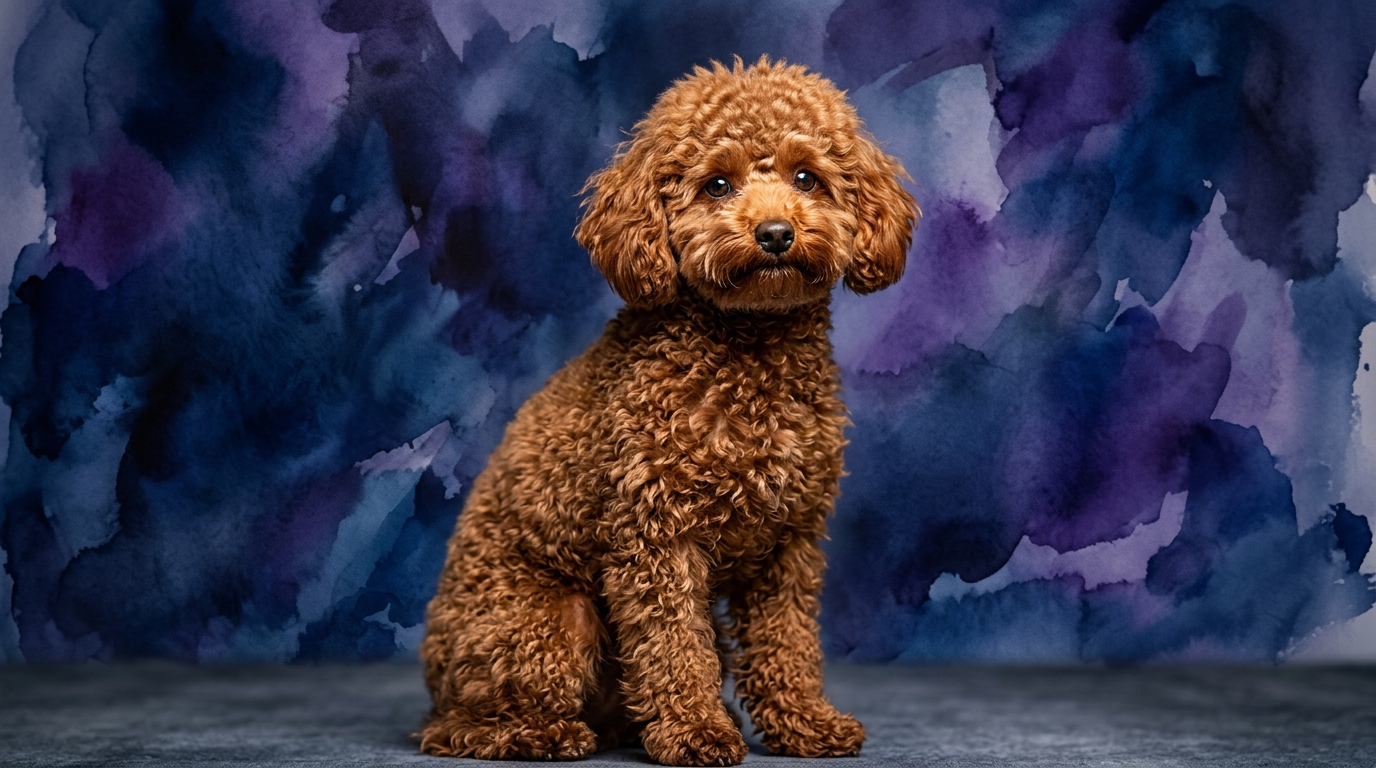
Side-by-Side IQ Profile: Norwich Terrier vs. Toy Poodle
The Cosmic Pet Pet IQ Lab employs a five-dimensional framework to assess canine intelligence, offering a nuanced perspective beyond simple rankings. For the Norwich Terrier, a breed not traditionally ranked by Coren, its profile reflects a tenacious spirit. Their Problem Solving is rated 3/5, indicating a capacity for practical solutions, often through persistence and independent thought. Training Speed also sits at 3/5, suggesting they can learn, but their independent nature requires consistent effort. Social Intelligence is 3/5, meaning they are attuned to their family's dynamics but might be more reserved with outsiders. Instinctive Drive, at 3/5, points to their terrier heritage, manifesting as a drive for digging and chasing. Finally, Memory is 3/5, signifying they retain learned behaviors and routines, but perhaps not complex sequences over extended periods without reinforcement.
In contrast, the Toy Poodle, ranking #2 in Coren's intelligence list, presents a different cognitive landscape. Their Problem Solving is a remarkable 5/5, showcasing an ability to quickly grasp cause and effect, adapt strategies, and solve novel challenges with agility. Training Speed is also 5/5, indicating an exceptional capacity for rapid learning and a strong desire to cooperate. Their Social Intelligence is 3/5, similar to the Norwich, implying sensitivity to human emotions within their trusted circle, but not necessarily universal extroversion. Instinctive Drive is 3/5, manifesting more as a retrieving instinct from their larger ancestors, rather than a strong prey drive. Memory stands at 5/5, highlighting their superior ability to recall commands, routines, and intricate sequences even after long intervals.
Where the Norwich Terrier Excels Cognitively
While the Toy Poodle often garners attention for its rapid learning, the Norwich Terrier possesses cognitive strengths rooted in its historical role as a vermin hunter. Their 3/5 in Problem Solving, while not top-tier for abstract tasks, signifies a resourceful, independent problem-solver. This manifests as a dog capable of devising practical, often physical, solutions to immediate environmental challenges, such as finding a way around a barrier or locating a hidden toy through scent and persistence. They are less about rapid, human-directed puzzle-solving and more about self-directed ingenuity in tangible situations. This tenacity, combined with their 3/5 Instinctive Drive, means they excel in pursuits requiring robust determination and an unwavering focus on a goal, even when faced with obstacles.
The Norwich’s cognitive advantage lies in its self-reliance and grit. Unlike breeds that might wait for human direction, a Norwich Terrier's problem-solving is often internally driven. This can be seen in their ability to navigate complex outdoor environments, tracking scents, or patiently working to achieve a desired outcome, such as excavating a perceived burrow. Their memory, while not photographic, is sufficient to retain the practical skills and routines essential for their independent endeavors, making them adept at remembering successful strategies for their specific, often physical, challenges.
Where the Toy Poodle Shines Cognitively
The Toy Poodle's cognitive profile paints a picture of exceptional adaptability and rapid learning, making it a standout in many intellectual pursuits. Their 5/5 in Problem Solving means they quickly understand new concepts, excel at complex puzzle toys, and can adapt their behavior based on novel situations with impressive speed. This isn't just about simple cause-and-effect; it's about abstract reasoning and applying learned principles to new contexts. When faced with an unfamiliar task, a Toy Poodle is likely to experiment with solutions and quickly identify the most effective approach.
Coupled with their stellar 5/5 in Training Speed and Memory, Toy Poodles are remarkably efficient learners. They pick up new commands and routines with minimal repetition, often seeming to anticipate what is expected of them. This allows them to master advanced obedience, agility courses, and even complex trick training with relative ease. Their memory ensures that these learned behaviors are retained over long periods, making them reliable performers. This combination of quick comprehension, rapid acquisition, and strong retention positions the Toy Poodle as a highly versatile and capable canine partner in virtually any structured learning environment.
Which Is Easier to Train and Why?
When it comes to ease of training, the Toy Poodle holds a distinct advantage, primarily due to its 5/5 rating in both Training Speed and Memory. Toy Poodles possess an intrinsic eagerness to please their handlers and a keen ability to quickly process and retain information. This means they often pick up new commands in just a few repetitions and reliably recall them, even after extended breaks. Their high cognitive flexibility allows them to adapt rapidly to different training methods and environments, making them responsive and cooperative students.
The Norwich Terrier, with its 3/5 Training Speed and Memory, presents a different training experience. While certainly capable of learning, their independent terrier spirit and moderate desire to please mean training requires more patience, consistency, and creative motivation. A Norwich may understand a command but choose to obey only if it perceives a clear benefit or if the request aligns with its current interests. Their inherent drive to explore and act independently can sometimes be interpreted as 'stubbornness,' requiring an owner to be more engaging and persistent to achieve consistent results compared to the more naturally compliant Toy Poodle.
Which Suits Active Owners vs. Relaxed Owners?
For active owners, both breeds can be suitable, albeit in different ways. An active owner seeking a partner for dog sports like agility, obedience, or rally will find the Toy Poodle an exceptional match. Their high Problem Solving, Training Speed, and Memory make them natural athletes in these mentally and physically demanding disciplines. They thrive on intellectual challenges and intricate sequences, making them ideal for owners who enjoy structured, goal-oriented activities. Their moderate Instinctive Drive also means they can channel their energy effectively into these pursuits.
The Norwich Terrier, with its sturdy build and inherent terrier drive, also suits an active owner, particularly one who appreciates outdoor adventures and activities that tap into their natural instincts. They excel in earthdog trials, scent work, and long walks or hikes where they can explore and engage their senses. While they might not be as eager for repetitive obedience drills, they thrive with robust, varied physical activity and mental stimulation that allows for some independent problem-solving. For more relaxed owners, the Toy Poodle can adapt well, provided their considerable cognitive needs are met through puzzle toys, interactive games, and daily engagement to prevent boredom. A truly relaxed owner might find the Norwich Terrier more challenging, as their independent spirit and need for outlets for their instinctive drives can lead to self-directed, sometimes mischievous, behaviors if not properly managed.
The Verdict
Choose a Norwich Terrier if you appreciate a resilient, self-reliant companion with a strong personality, perfect for an owner who enjoys engaging with their dog's independent spirit and providing outlets for their earthy instincts.
Opt for a Toy Poodle if you seek a highly adaptable, intelligent partner eager to learn, excelling in structured training, dog sports, and thriving on consistent intellectual challenges and close companionship.
🧠 Find Your Pet's IQ Score
Our Pet IQ Lab assessment covers 25+ tests across 5 cognitive dimensions — personalized to your breed.
Take the Full IQ Test →Frequently Asked Questions
Are Norwich Terriers difficult to train?
Norwich Terriers are not inherently difficult, but their independent nature and moderate training speed mean they require more patience and consistency than some other breeds. They respond best to positive reinforcement and clear, engaging instruction, often needing more repetition to solidify commands.
Do Toy Poodles need a lot of mental exercise?
Absolutely. With their exceptional problem-solving and memory, Toy Poodles thrive on mental stimulation. Puzzle toys, learning new tricks, and engaging in dog sports are crucial to keep their keen minds engaged and prevent boredom-induced behaviors.
Which breed is better for first-time dog owners?
The Toy Poodle is generally more forgiving for first-time owners due to their high trainability and eagerness to please, making the learning curve for both dog and owner smoother. Norwich Terriers, while charming, might present more of a challenge with their independent streak and specific terrier needs, often benefiting from an owner with prior dog experience.