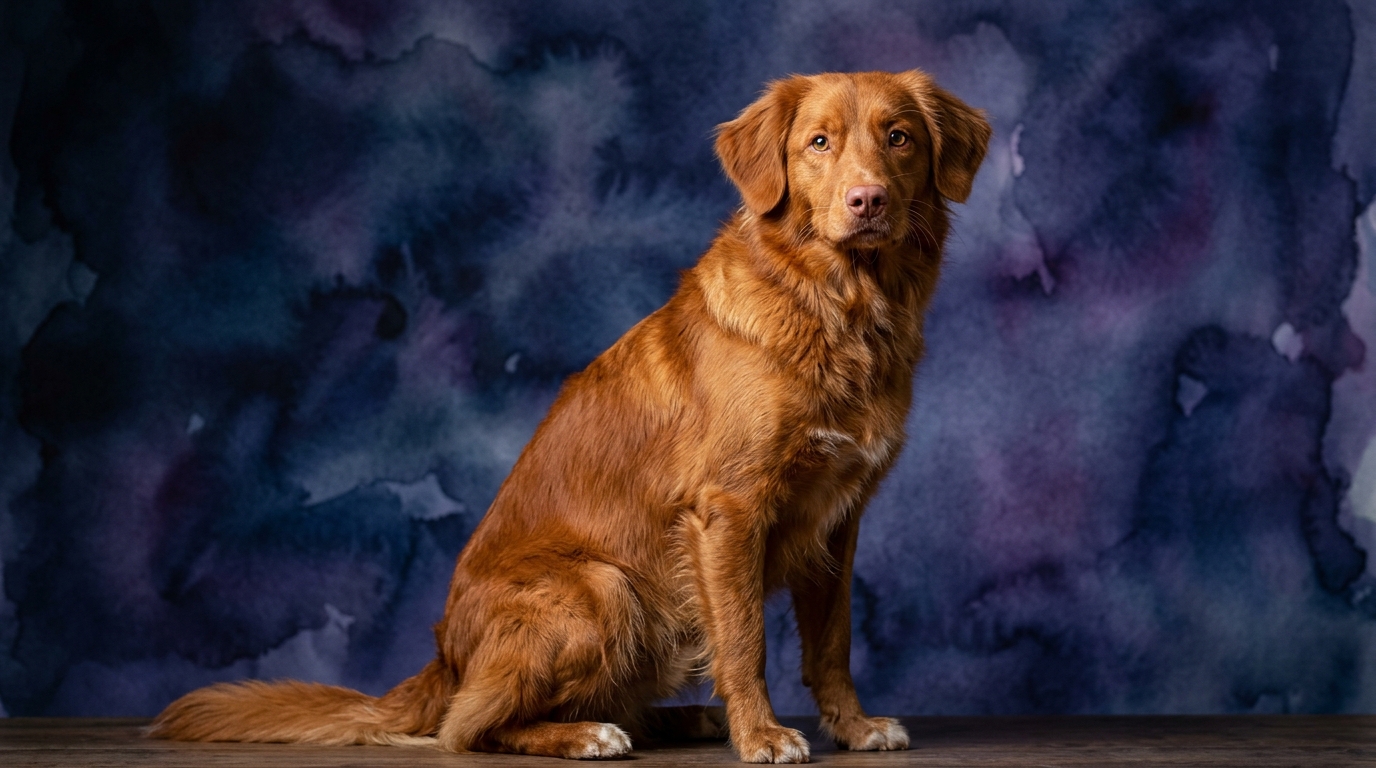
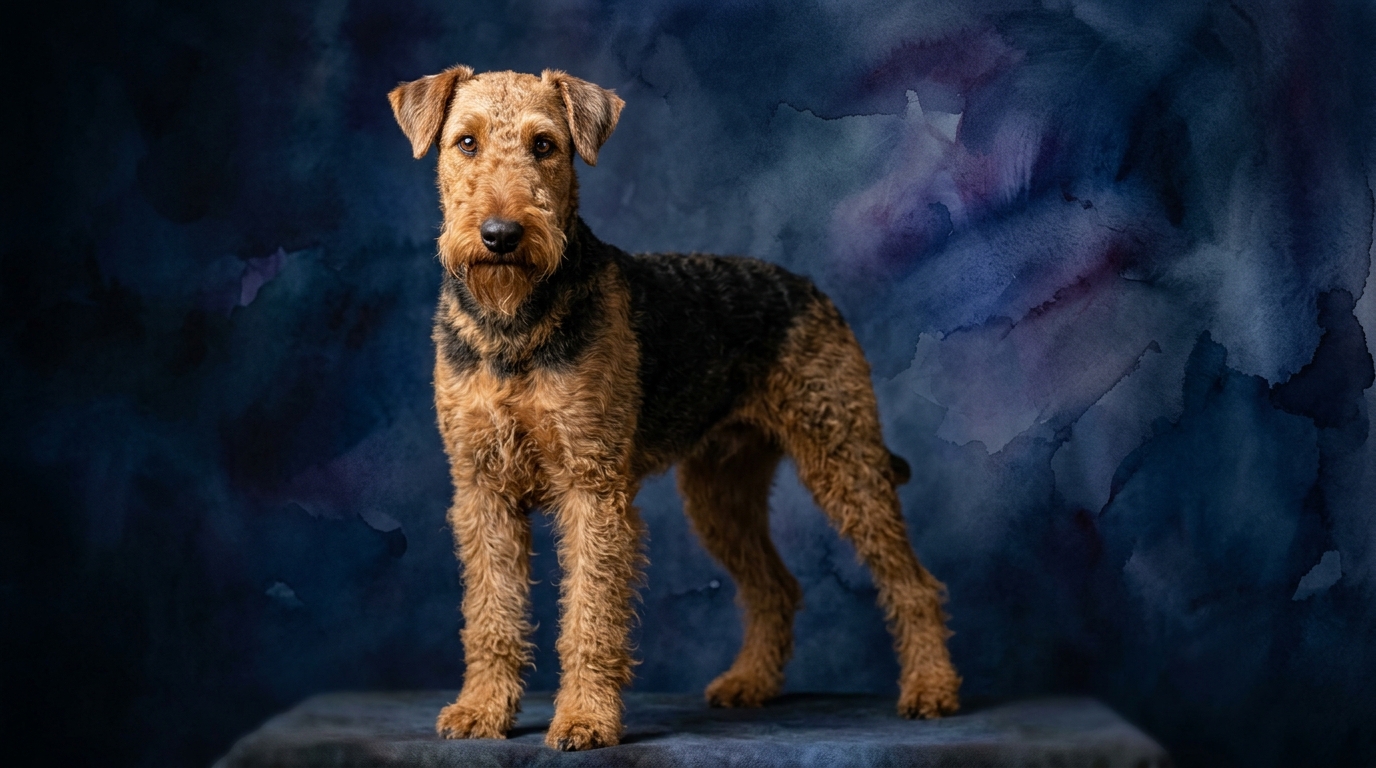
Side-by-Side Cognitive Profiles: Toller vs. Airedale
The Cosmic Pet Pet IQ Lab provides a five-dimensional framework to understand canine intelligence, offering a nuanced view beyond simple comparisons. For the Nova Scotia Duck Tolling Retriever, we observe a balanced profile, with scores of 3/5 across all dimensions: Problem Solving, Training Speed, Social Intelligence, Instinctive Drive, and Memory. This indicates a consistent, capable canine mind, adept at its specialized tasks.
In contrast, the Airedale Terrier presents a profile showing marked strengths in specific areas, aligning with its Coren rank of #29. It scores 4/5 in Problem Solving, Training Speed, and Memory, while matching the Toller with 3/5 in Social Intelligence and Instinctive Drive. This suggests a dog with a more pronounced capacity for independent thought, rapid learning, and long-term retention.
Breaking down the individual dimensions, 'Problem Solving' for the Toller (3/5) signifies a practical approach to challenges, typically within known parameters, often seeking handler guidance. The Airedale's (4/5) higher score indicates a dog more inclined to independently strategize and overcome novel obstacles, demonstrating resourceful thinking.
'Training Speed' at 3/5 for the Toller suggests a solid capacity to absorb and perform commands, benefiting from clear, consistent methods. The Airedale's 4/5 in this area points to a quicker grasp of new instructions and concepts, though this speed must be coupled with engaging motivation to maintain focus given their independent streak.
'Social Intelligence' for both breeds sits at 3/5. This means both are capable of understanding human cues and intentions within their social groups. The Toller's social acumen often manifests as a desire for cooperative partnership, while the Airedale's might be more about observing and navigating their environment with a degree of self-reliance.
Regarding 'Instinctive Drive,' both breeds also score 3/5, but their drives manifest differently. The Toller's drive is intrinsically linked to its retrieving heritage, focusing on scent work, water retrieving, and prey drive directed towards bringing items back. The Airedale's drive, typical of terriers, includes a strong prey drive, digging, chasing, and a robust territorial instinct, requiring appropriate outlets.
Finally, 'Memory' for the Toller is 3/5, indicating a good ability to recall learned behaviors, routines, and familiar people or places. The Airedale's 4/5 in Memory suggests an enhanced capacity for retaining complex sequences, commands, and experiences over extended periods, contributing to their adaptability and learning prowess.
Where the Nova Scotia Duck Tolling Retriever Excels Cognitively
While the Toller's individual scores might not reach the Airedale's peaks, its cognitive strength lies in its balanced and consistent application, particularly within its working domain. A Toller's 3/5 in Problem Solving is often channeled into efficient, practical solutions for retrieving tasks, making them less likely to deviate with independent, potentially off-task, problem-solving. Their instinctual drive, specifically honed for retrieving, makes them exceptionally good at focused, repetitive tasks that align with their breed purpose.
The Toller's consistent 3/5 across the board points to a reliable, predictable cognitive partner. Their social intelligence, while not off-the-charts, is geared towards effective cooperation with a handler, allowing them to follow complex multi-step retrieving commands with precision and enthusiasm. This makes them highly effective in roles requiring sustained, cooperative effort rather than independent initiative.
Where the Airedale Terrier Demonstrates Cognitive Superiority
The Airedale Terrier's cognitive advantages are evident in its higher scores for Problem Solving (4/5), Training Speed (4/5), and Memory (4/5). This breed exhibits a pronounced capacity for independent thought and creative solutions, often figuring out how to achieve a goal even when obstacles are present. Their elevated Problem Solving means they are less reliant on direct handler instruction to navigate challenges, sometimes to their owner's surprise.
Their superior Training Speed allows them to grasp new commands and concepts quickly, making them responsive to varied training regimens. Coupled with a 4/5 in Memory, Airedales can retain a broad repertoire of behaviors and experiences, enabling them to apply past learning to new situations. This cognitive agility makes them formidable learners capable of mastering complex tasks and adapting to diverse environments with relative ease.
Training Dynamics: Which Breed is More Amenable?
When considering ease of training, the Airedale's 4/5 Training Speed suggests a quicker initial uptake of commands compared to the Toller's 3/5. However, 'speed' doesn't always equate to 'simplicity.' Airedales, with their robust Problem Solving and independent nature, can sometimes choose to apply their intellect in ways that aren't handler-approved. Their strong will means that while they learn fast, they might require more consistent motivation and proofing to ensure compliance over self-directed action.
The Toller, with its 3/5 Training Speed, might require more repetitions or more engaging methods initially, but its cooperative social intelligence and focused instinctive drive often lead to a more consistently biddable partner, especially when tasks align with their retrieving instincts. They thrive on working *with* their handler, whereas an Airedale might sometimes prefer to work *around* their handler. Therefore, while the Airedale might learn faster, the Toller might offer more consistent reliability in trained behaviors over the long term for an owner who values partnership.
Matching Breeds to Lifestyles: Active vs. Relaxed Owners
Both the Nova Scotia Duck Tolling Retriever and the Airedale Terrier are active breeds, but the nature of their activity requirements differs due to their cognitive profiles. The Toller, with its balanced 3/5 scores, is ideal for an active owner who enjoys outdoor pursuits like hiking, swimming, and especially dog sports such as retrieve trials or dock diving. Their social intelligence means they thrive on cooperative interaction during these activities, making them excellent partners for shared adventures. They need a 'job' that engages their retrieving drive, but their cognitive demands are often satisfied through consistent, purposeful activity.
The Airedale Terrier, with its higher Problem Solving and Memory, demands an owner who is not only active but also prepared for significant mental engagement. These dogs need varied challenges, complex training, and activities that allow them to use their independent thinking. Simply walking them isn't enough; they need puzzles, advanced obedience, agility, or scent work to prevent boredom and destructive behaviors. Their strong instinctive drive also requires outlets, meaning owners must be prepared to manage and channel powerful natural urges like chasing or digging. A relaxed owner would quickly find an Airedale's unmet cognitive needs manifesting as problematic behaviors, making them unsuitable for a low-key household.
The Verdict
Choose the Nova Scotia Duck Tolling Retriever if you seek a cooperative, consistently biddable partner for specific sporting activities like retrieving, valuing a balanced cognitive profile and prepared for positive, consistent reinforcement.
Opt for the Airedale Terrier if you relish a mentally agile, independent, and tenacious companion, ready to channel their substantial problem-solving and memory into challenging training and varied, engaging activities.
🧠 Find Your Pet's IQ Score
Our Pet IQ Lab assessment covers 25+ tests across 5 cognitive dimensions — personalized to your breed.
Take the Full IQ Test →Frequently Asked Questions
Does the Airedale's higher Problem Solving score make it 'smarter' than the Toller?
Not necessarily 'smarter' overall, but it indicates the Airedale is more inclined to independent thought and finding novel solutions to obstacles without direct handler input. The Toller's cognitive strengths lie in focused cooperation and efficient execution within its specialized working domain.
How does the Instinctive Drive score of 3/5 differ between these two breeds?
While both score 3/5, the manifestation differs significantly. The Toller's drive is highly geared towards retrieving, scenting, and water work, reflecting its purpose as a duck dog. The Airedale's drive often manifests as a strong prey drive, digging, and territorial instincts, reflecting its terrier heritage and historical use as a versatile hunter.
Can a Toller learn complex tasks like an Airedale?
Tollers can certainly learn complex sequences, especially those directly related to their retrieving tasks, and perform them with precision. However, the Airedale's 4/5 Memory suggests a slightly greater capacity for retaining varied and abstract information over longer periods, making them potentially more adaptable to a wider range of complex, non-instinctual learning.