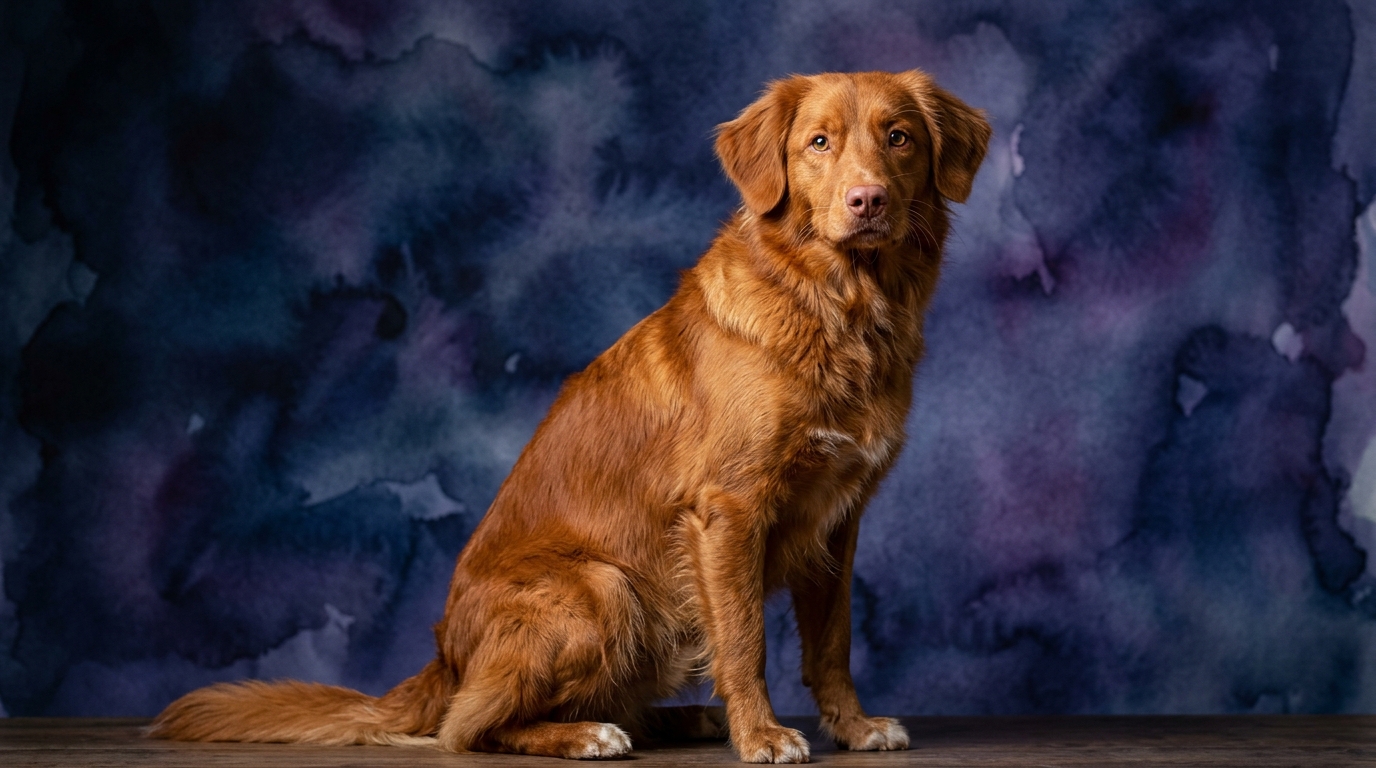
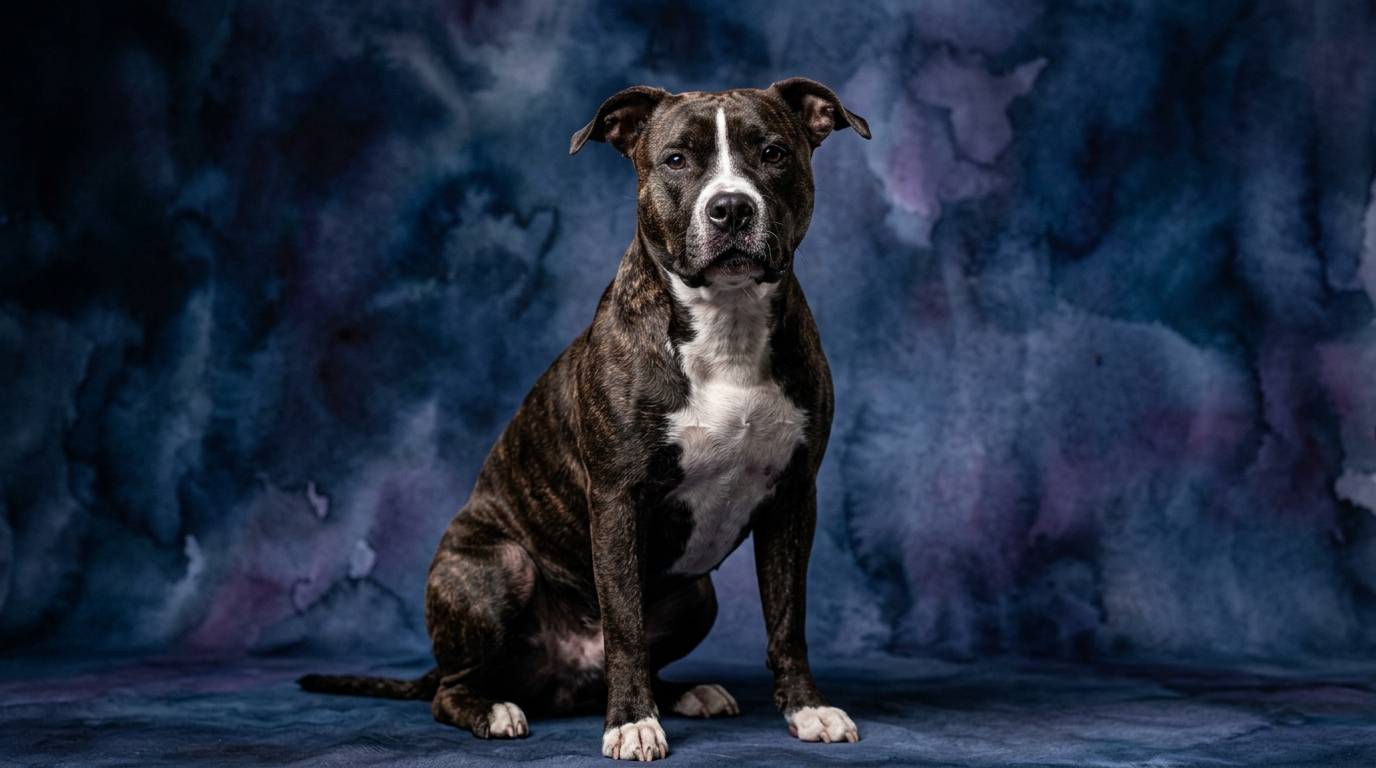
Side-by-Side Cognitive Profile: Toller vs. AmStaff
The Nova Scotia Duck Tolling Retriever presents a balanced cognitive profile, with all five dimensions—problem solving, training speed, social intelligence, instinctive drive, and memory—scoring a solid 3 out of 5. This indicates a capable intellect, particularly geared towards its working purpose. Their 3/5 problem-solving suggests an ability to navigate moderate challenges, like finding a downed bird. A 3/5 training speed means they absorb new commands steadily. Social intelligence at 3/5 points to a generally cooperative nature, adept at reading handler cues during tasks. Their 3/5 instinctive drive is foundational to their retrieving enthusiasm, while a 3/5 memory ensures good retention of learned behaviors.
The American Staffordshire Terrier also scores 3 out of 5 in problem solving, training speed, social intelligence, and instinctive drive, aligning closely with the Toller. This signifies a practical approach to challenges and a steady learning pace. Their 3/5 social intelligence means they are generally perceptive of human emotions and capable of forming strong bonds. However, the AmStaff distinguishes itself with a superior memory score of 4 out of 5. This enhanced retention means they are adept at remembering commands, intricate sequences, and past experiences over extended periods, making established training highly durable. Their 3/5 instinctive drive reflects a determined engagement with their environment, characteristic of their terrier heritage.
Where the Nova Scotia Duck Tolling Retriever Wins Cognitively
The Toller's cognitive strength lies not in an outlier score, but in the harmonious integration of its balanced intellect (all 3/5 scores) to excel at its specialized sporting role. Their 3/5 problem solving is precisely suited for real-world scenarios like navigating complex terrain or water currents to retrieve, requiring practical application rather than abstract puzzle-solving. This balanced intellect allows focus on tasks without being overwhelmed by excessive sensitivity or overthinking. The 3/5 social intelligence is key for cooperative partnership with a handler, enabling them to read subtle cues and work effectively in dynamic hunting environments. This consistent, reliable cognitive output makes them exceptionally effective in their niche.
Where the American Staffordshire Terrier Wins Cognitively
The American Staffordshire Terrier’s clearest cognitive advantage is its superior memory, scoring 4/5, a point higher than the Toller. This translates into exceptional retention of learned commands, complex sequences, and past experiences, making training highly efficient and durable once behaviors are established. An AmStaff is more likely to remember specific rules or intricate routines for extended periods, potentially reducing the need for constant refreshers. Furthermore, the AmStaff holds a Coren rank of #48 for obedience and working intelligence, a distinction the Toller does not share. This ranking signifies a recognized capacity for understanding new commands quickly and obeying them reliably, indicating a robust overall processing ability for formal training that complements their impressive memory.
Which is Easier to Train and Why
While both breeds share a 3/5 training speed, the American Staffordshire Terrier’s 4/5 memory gives it a distinct advantage in long-term training efficacy. An AmStaff is more likely to retain learned behaviors and commands with greater precision over time, potentially requiring less frequent reinforcement to maintain proficiency. This superior retention means once a concept is grasped, it tends to stick more firmly. The Toller, with its 3/5 memory, learns reliably and eagerly, especially when tasks align with its strong instinctive drive, but may benefit from more consistent practice to solidify recall and complex sequences. Both respond well to positive reinforcement, but the AmStaff's combination of steady learning and exceptional recall often makes the overall training journey feel more enduring.
Matching Intellect to Lifestyle: Active vs. Relaxed Owners
The Nova Scotia Duck Tolling Retriever, a true sporting dog, is best suited for highly active owners. Their instinctive drive (3/5) for retrieving and inherent stamina mean they thrive on consistent, vigorous activity that engages both body and mind. Owners who enjoy extensive hiking, running, swimming, or participate in dog sports will find the Toller an enthusiastic and tireless partner. They require substantial daily exercise and purposeful mental stimulation; without it, they can become bored, restless, or develop undesirable behaviors. A less active owner will likely struggle to meet the Toller's inherent need for a 'job' and physical outlet.
The American Staffordshire Terrier, while energetic and athletic, can adapt to a slightly broader spectrum of owner activity levels, fitting active to moderately active households. They certainly enjoy vigorous play, long walks, and mental challenges, excelling in obedience or rally. However, their strong social intelligence (3/5) means they also cherish companionship and can be content with a good daily walk, structured playtime, and plenty of indoor family interaction. They are less driven by a specific, intense working 'job' than the Toller. A moderately active owner committed to daily exercise, consistent training, and ample quality time can enjoy an AmStaff, provided their fundamental needs for activity and mental engagement are met.
The Verdict
Choose the Nova Scotia Duck Tolling Retriever if you are an active individual or family seeking a dedicated, balanced partner for outdoor pursuits, especially those involving retrieving or water, valuing a reliable intellect suited for dynamic tasks.
Choose the American Staffordshire Terrier if you prioritize a companion with impressive memory and recognized trainability for a wide range of obedience and companion roles, and can provide consistent socialization and structured engagement.
🧠 Find Your Pet's IQ Score
Our Pet IQ Lab assessment covers 25+ tests across 5 cognitive dimensions — personalized to your breed.
Take the Full IQ Test →Frequently Asked Questions
Is the Nova Scotia Duck Tolling Retriever a good family dog?
Yes, Tollers can be excellent family dogs, forming strong bonds with their people. However, their energetic disposition means they thrive in homes that can provide ample exercise and mental stimulation, making them ideal for active families committed to their needs.
Are American Staffordshire Terriers difficult to train?
No, American Staffordshire Terriers are generally considered quite trainable, especially given their 3/5 training speed and 4/5 memory scores. They respond very well to positive reinforcement and consistent methods, and their eagerness to please makes them capable learners.
How much exercise do these breeds need daily?
Nova Scotia Duck Tolling Retrievers require substantial daily exercise, typically 60-90 minutes of vigorous activity like running, swimming, or retrieving games. American Staffordshire Terriers also need regular exercise, usually 45-60 minutes of brisk walks or active play, to keep them physically and mentally content.