Side-by-Side IQ Profile: Unpacking Identical Scores
While both the Nova Scotia Duck Tolling Retriever and the Borzoi register identical scores across the five core IQ dimensions, their breed-specific expressions of these traits are anything but uniform. These scores reflect a baseline capacity, but the context of their historical work illuminates how each breed channels these cognitive abilities.
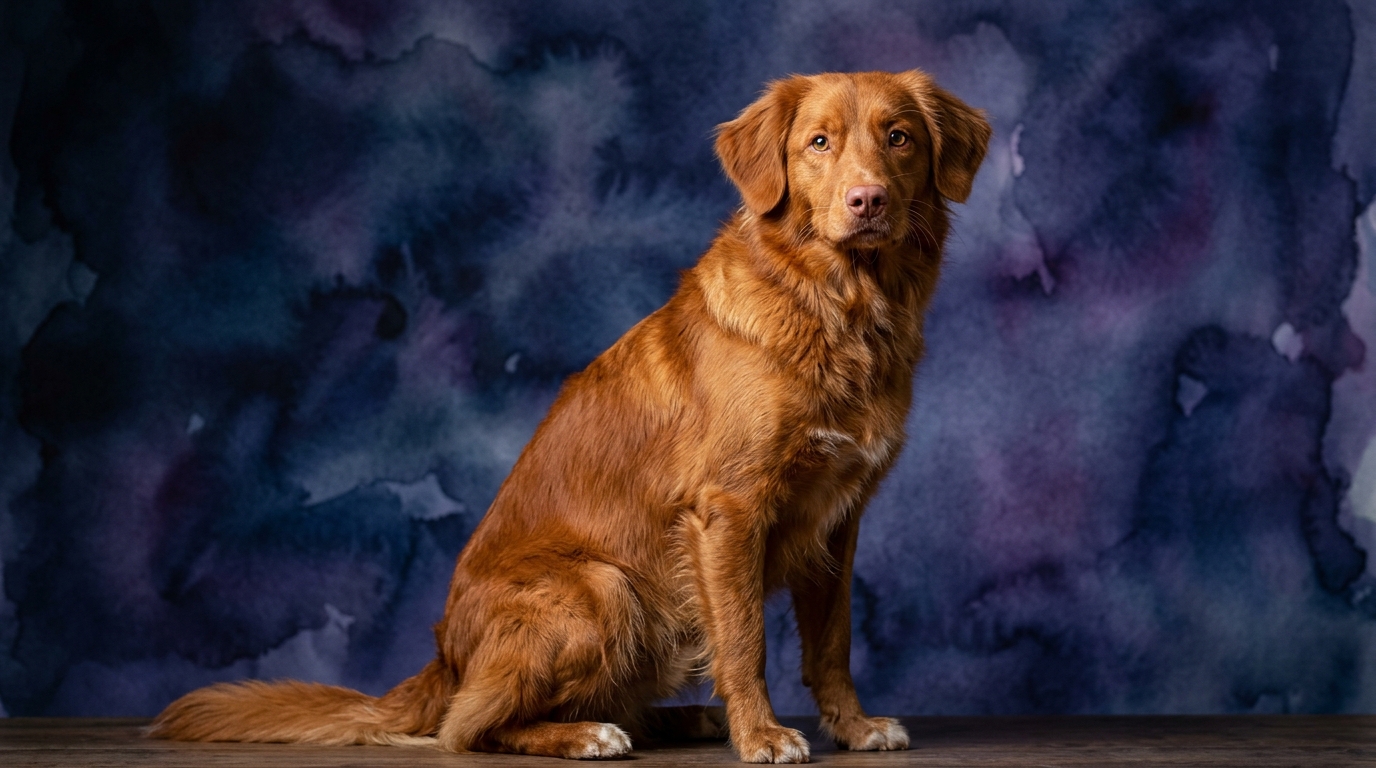
The Nova Scotia Duck Tolling Retriever, a vibrant sporting dog, exhibits a Problem Solving score of 3/5, manifesting in their adaptive ability to locate and retrieve waterfowl from complex environments, often requiring them to adjust strategies based on scent, wind, and cover. Their Training Speed of 3/5 is supported by a strong desire to collaborate with their handler, learning multi-stage commands for retrieving or agility with consistent positive reinforcement. Social Intelligence at 3/5 means they are attuned to human cues and family dynamics, though they can be reserved with strangers, observing before engaging. An Instinctive Drive of 3/5 highlights their compelling prey drive for birds, combined with the unique 'tolling' behavior to lure ducks. Their Memory, also 3/5, is crucial for recalling specific retrieve locations, learned commands, and handler expectations.
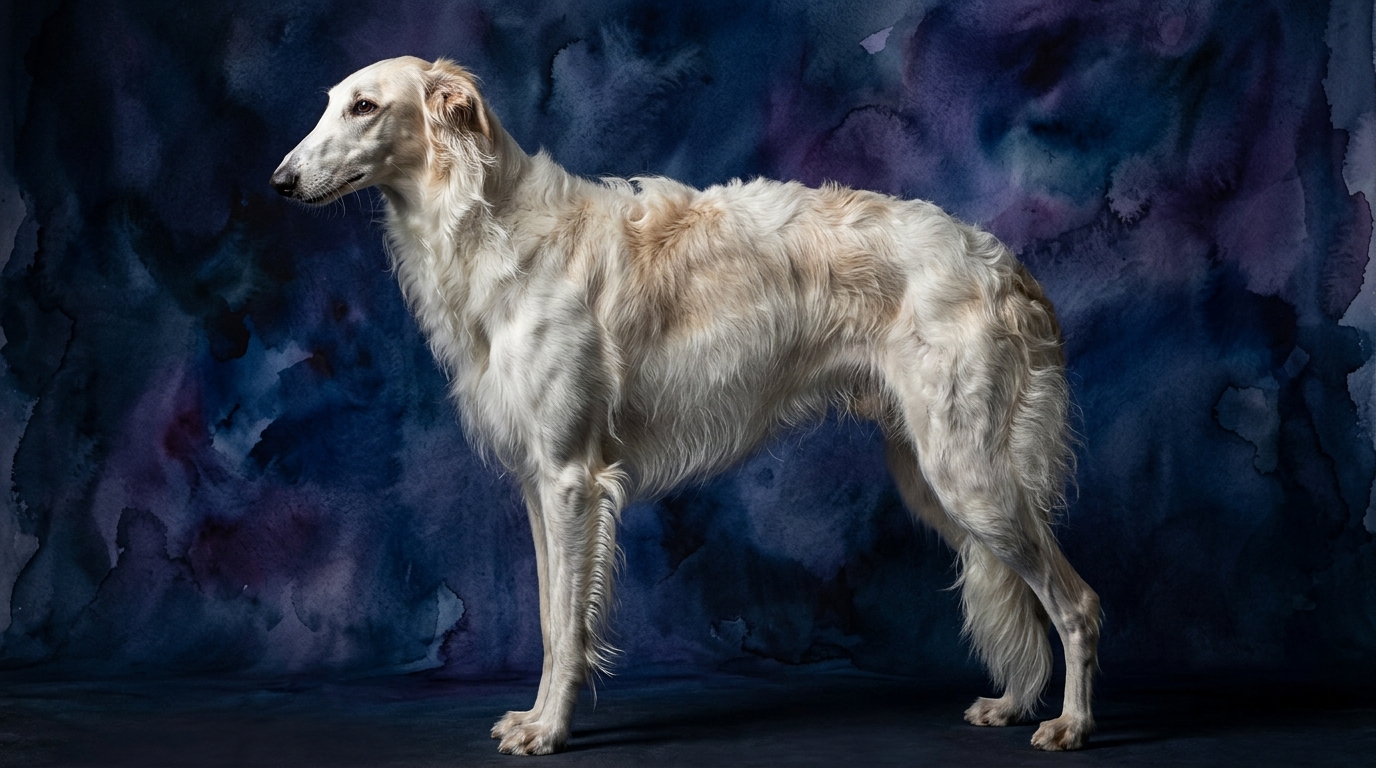
The Borzoi, a majestic hound breed, also scores 3/5 in Problem Solving, but this typically translates into independent decision-making during a high-speed chase, assessing terrain and prey movement without direct human instruction. Their Training Speed of 3/5 often reflects a quick grasp of concepts, yet their independent nature means compliance might require more motivation than a strong desire to please, placing them at Coren rank #75, indicating more repetitions are needed for reliability. Social Intelligence at 3/5 means they are deeply affectionate and perceptive with their immediate family, yet famously aloof or indifferent towards strangers, reading social situations with a calm detachment. An Instinctive Drive of 3/5 underscores their powerful sighthound prey drive, compelling them to pursue fast-moving objects with incredible focus and speed. Their Memory, also 3/5, is vital for remembering familiar hunting grounds, established routines, and the nuanced interactions within their family unit.
Where the Nova Scotia Duck Tolling Retriever Wins Cognitively
The Nova Scotia Duck Tolling Retriever excels in cognitive tasks that demand active collaboration and a multi-step problem-solving approach within a partnership. Their unique 'tolling' behavior, which involves enticing waterfowl by playing and disappearing along the shoreline, is a complex sequence requiring sustained focus, adaptability, and an understanding of cause and effect in manipulating another species. This isn't just instinct; it's a learned and refined cognitive strategy.
Furthermore, their superior biddability and eagerness to work alongside a human partner mean they are more adept at interpreting subtle handler cues and executing complex, sequential commands in dynamic environments. A Toller's cognitive strength lies in their ability to integrate various sensory inputs (scent, sight, sound) with learned behaviors to achieve a shared goal, making them particularly effective in dog sports like obedience, agility, and, of course, their intended purpose of waterfowl retrieval. They demonstrate a proactive engagement in solving problems *with* their person, rather than solely independently.
Where the Borzoi Wins Cognitively
The Borzoi's cognitive strengths shine in areas demanding independent decision-making, spatial awareness at speed, and rapid, unassisted problem-solving in pursuit. Their history as wolf hunters required them to operate autonomously over vast, open terrains, making split-second judgments about a prey animal's trajectory, the most efficient interception path, and navigating obstacles without human direction. This is a form of high-stakes, real-time problem-solving that few other breeds are capable of.
Their keen eyesight and ability to process visual information at high speeds allow them to track and predict prey movements over long distances, demonstrating exceptional focus and a highly specialized form of instinctive drive. A Borzoi's memory, while scoring the same, is particularly effective at recalling vast landscapes and the nuances of a chase, allowing them to learn and refine their hunting strategies. Their social intelligence, while expressed differently, gives them a quiet observational capacity, allowing them to assess situations from a distance before committing, a valuable trait for an independent hunter.
Which is Easier to Train and Why
Despite their identical 3/5 Training Speed scores, the Nova Scotia Duck Tolling Retriever is generally considered easier to train for obedience and collaborative tasks compared to the Borzoi. This difference stems primarily from their inherent motivations and historical roles. Tollers possess a strong 'work ethic' and an innate desire to please their handler, making them highly receptive to positive reinforcement and eager to engage in structured learning. Their biddability means they actively seek to understand and comply with commands, often thriving on the mental stimulation of learning new skills.
The Borzoi, conversely, is a sighthound bred for independent pursuit, meaning their primary motivation isn't necessarily to please a handler but to act on their powerful prey drive. While they are intelligent and capable of learning quickly (hence the 3/5 score), their independent nature means they may choose to comply only if the reward or task is sufficiently compelling to them, or if it doesn't conflict with a more interesting instinctive pursuit. Their Coren rank of #75 implies that while they grasp concepts, achieving reliable, consistent performance in varied contexts typically requires more patience, consistency, and a profound understanding of their sighthound psyche to make training intrinsically rewarding and compelling, rather than just an obligation.
Which Suits Active Owners vs. Relaxed Owners
The Nova Scotia Duck Tolling Retriever is a better fit for active owners who are prepared to provide consistent mental and physical engagement. These dogs thrive on purpose and require daily outlets for their retrieving instincts, problem-solving abilities, and collaborative spirit. This doesn't just mean physical exercise; it also entails regular training sessions, dog sports, or interactive games that challenge their minds and utilize their drive. An owner who enjoys hiking, training for competitive dog sports, or engaging in extensive outdoor activities would find a Toller a rewarding companion.
The Borzoi, while needing bursts of intense physical activity, can be surprisingly suitable for relaxed owners who appreciate calm indoor companions. They require opportunities for full-speed sprinting in a safe, enclosed area a few times a week to satisfy their sighthound instincts, but outside of these bursts, they are typically quiet, dignified, and content to lounge indoors. They are not 'busy' dogs in the house and do not demand constant interaction or mental games in the same way a Toller might. Owners who prefer a serene presence indoors but can provide dedicated, safe spaces for their dog to run freely would find a Borzoi compatible with their lifestyle.
The Verdict: When to Choose Each
The Verdict
Choose the Nova Scotia Duck Tolling Retriever if you seek an active, collaborative partner for dog sports, outdoor adventures, and enjoy consistent, mentally stimulating engagement. This breed thrives on working alongside their human and channeling their drive into shared goals.
Opt for the Borzoi if you appreciate a dignified, independent companion who is calm indoors but needs dedicated space for exhilarating sprints to satisfy their sighthound instincts. This breed offers a unique blend of serene presence and powerful athleticism.
🧠 Find Your Pet's IQ Score
Our Pet IQ Lab assessment covers 25+ tests across 5 cognitive dimensions — personalized to your breed.
Take the Full IQ Test →Frequently Asked Questions
Are Borzoi difficult to train due to their Coren rank?
Borzoi are not necessarily 'difficult' but require a different training approach due to their independent sighthound nature and Coren rank #75. They understand commands quickly but may choose to comply only if it's more rewarding than their instincts, requiring patient, consistent motivation.
Do Nova Scotia Duck Tolling Retrievers bark a lot?
Tollers are known for their distinctive 'Toller scream' or 'scream of delight' when excited, but they are not typically excessive barkers. Their vocalizations are often tied to anticipation or expressing joy during activities, rather than constant noise.
Can a Borzoi live in an apartment?
A Borzoi can adapt to apartment living if their exercise needs, particularly the opportunity for regular, safe off-leash sprints, are consistently met. Their calm indoor demeanor makes them good housemates, provided they get adequate outdoor activity.