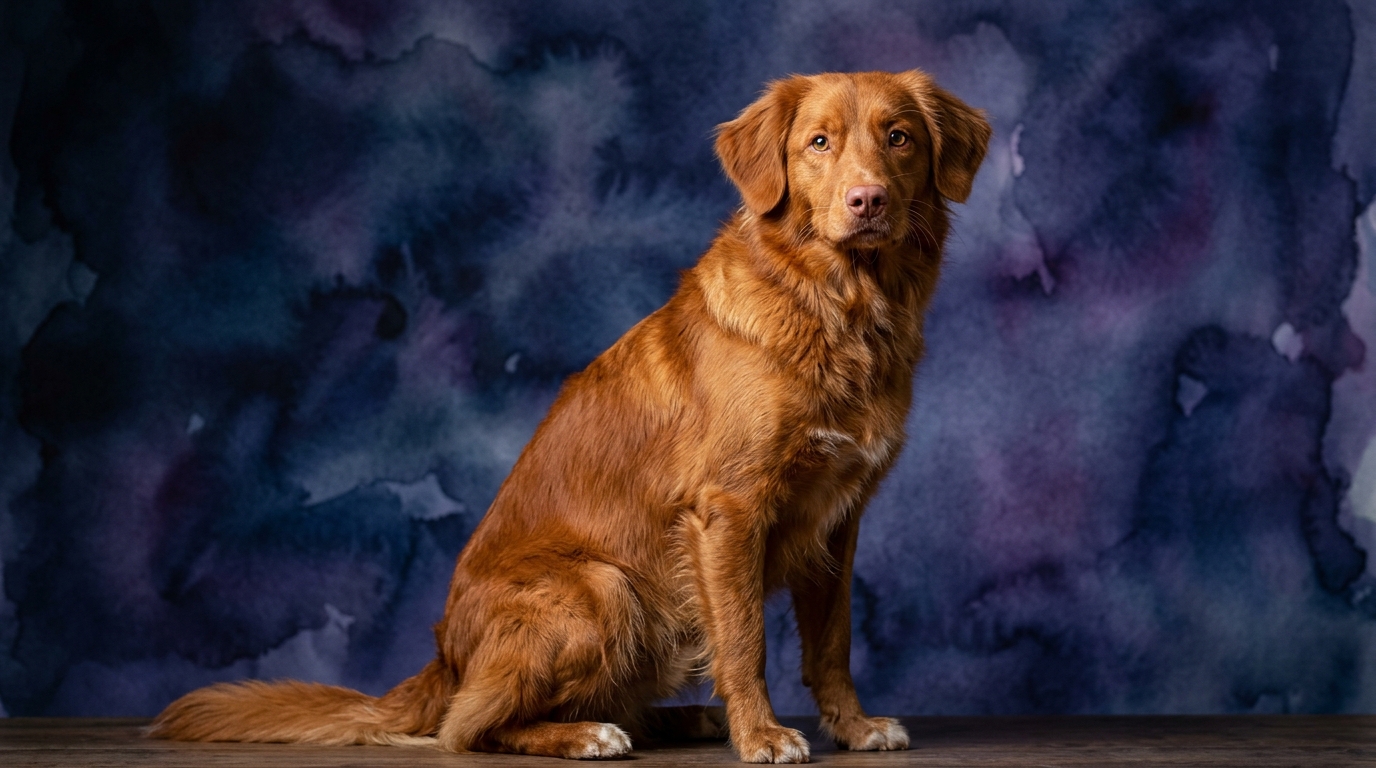
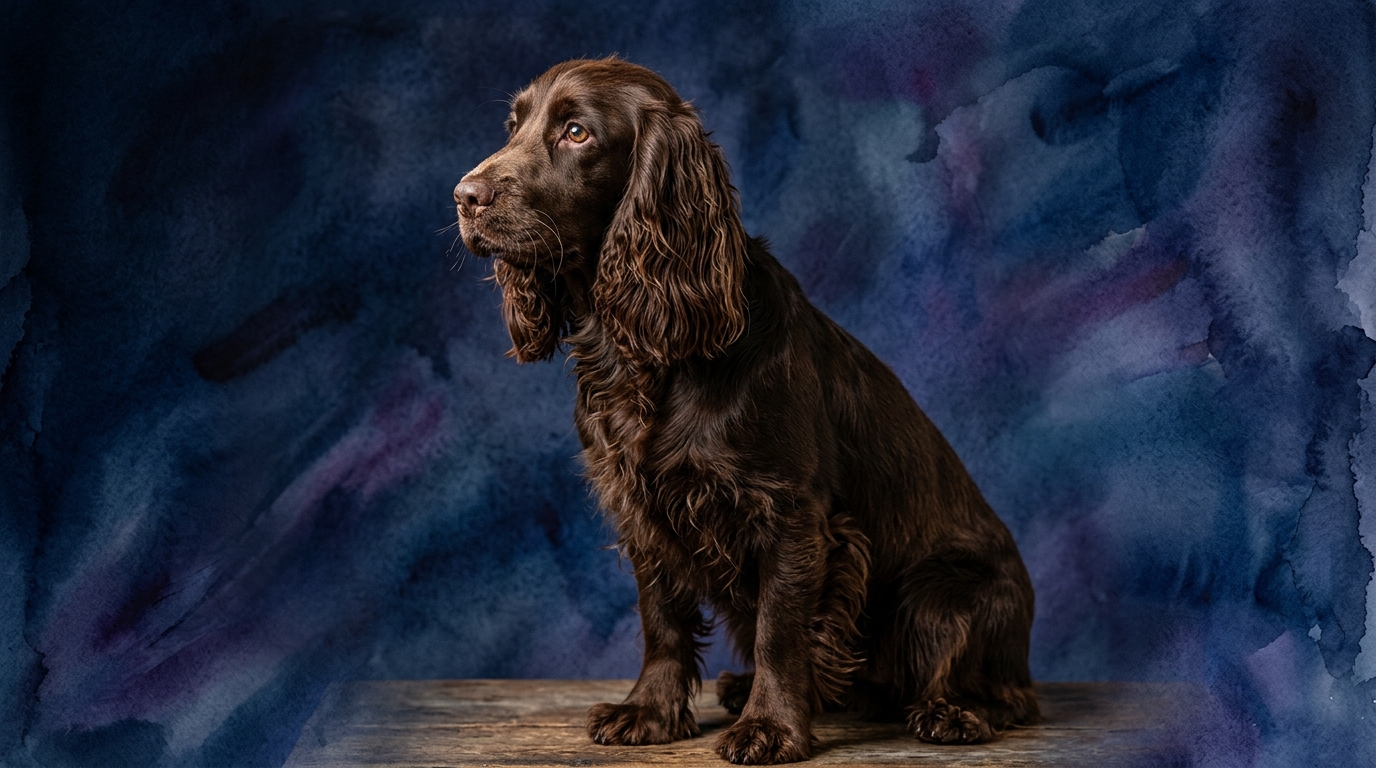
Side-by-Side IQ Profile
The Nova Scotia Duck Tolling Retriever (Toller) and the Field Spaniel, both esteemed sporting breeds, demonstrate a balanced array of cognitive strengths, each scoring 3/5 across our five key intelligence dimensions. This parity on paper invites a deeper exploration into the nuances of how these scores manifest within their distinct behavioral patterns and breed-specific roles.
For the **Nova Scotia Duck Tolling Retriever**:
**Problem Solving (3/5):** Tollers exhibit a methodical approach to challenges, particularly those involving retrieving objects from varied environments. Their problem-solving often involves assessing the most efficient path to a target or devising strategies to attract waterfowl, a unique 'tolling' behavior that requires a degree of strategic thinking and adaptation to environmental cues.
**Training Speed (3/5):** These retrievers are keen learners, capable of picking up complex command sequences and routines at a moderate pace. While they absorb lessons readily, their independent spirit means training requires consistency, positive reinforcement, and engaging methods to maintain their focus and enthusiasm.
**Social Intelligence (3/5):** Tollers are generally attuned to their handler's moods and intentions, forming strong bonds within their immediate family. They demonstrate cooperative intelligence in working partnerships, though they can be reserved or discerning with strangers, preferring to observe before engaging fully.
**Instinctive Drive (3/5):** Their instincts are strongly geared towards retrieving and luring. This manifests as a persistent drive to carry objects, a keen interest in birds, and an innate understanding of water work, all of which are essential for their traditional role in waterfowl hunting.
**Memory (3/5):** Tollers possess a reliable memory for learned commands, routines, and the locations of previously seen objects or fallen game. This allows them to execute multi-step tasks and recall past experiences to inform future actions, a crucial trait for effective retrieving.
For the **Field Spaniel**:
**Problem Solving (3/5):** Field Spaniels tackle problems with a blend of persistence and adaptability, particularly in scent-driven tasks or navigating dense cover to flush game. Their cognitive approach often involves trial-and-error combined with an intuitive understanding of their environment to achieve their objective.
**Training Speed (3/5):** These spaniels are eager to please and generally respond well to training, learning new commands at a steady rate. Their sensitive nature means they thrive with gentle, consistent methods, and can become withdrawn if faced with harshness, making patience a key component of their learning process.
**Social Intelligence (3/5):** Field Spaniels display a high degree of social awareness, often picking up on subtle human emotions and responding with empathy. They are typically affable companions, good with children and other animals, and demonstrate cooperative intelligence within a family or working unit.
**Instinctive Drive (3/5):** Their instincts are primarily focused on flushing game, tracking scents, and working closely with a handler. This translates into a strong desire to explore, a persistent nose-to-the-ground attitude, and an inherent enjoyment of retrieving small objects.
**Memory (3/5):** Field Spaniels have a good memory for established routines, scent trails, and the specific locations of objects or commands. This enables them to follow complex sequences, remember where they left off on a scent, and consistently perform learned behaviors.
Where Nova Scotia Duck Tolling Retriever Wins Cognitively
While both breeds exhibit robust cognitive abilities, the Toller's unique 'tolling' behavior hints at a particular strength in strategic problem-solving and sustained, independent focus. This involves a complex sequence of attracting waterfowl by playing and disappearing, requiring foresight, adaptability, and the ability to execute a multi-stage plan without direct, moment-to-moment handler instruction. Their retrieving prowess also demands a sophisticated spatial memory and the capacity to identify and prioritize targets in dynamic, often challenging, environments, showcasing a cognitive edge in tasks requiring independent initiative and planning within a specific objective.
Where Field Spaniel Wins Cognitively
The Field Spaniel, in contrast, often demonstrates a nuanced cognitive advantage in tasks requiring close-quarters cooperation and sensitive environmental interpretation, particularly in scent work. Their historical role as flushing spaniels means they excel at intricate scent discrimination and navigating complex terrain while maintaining constant communication with their handler. This suggests a superior ability to process detailed sensory information and integrate it with handler cues, leading to a refined form of collaborative problem-solving. Their social intelligence also allows for a deeper attunement to human emotional states, making them exceptionally responsive to subtle non-verbal communication during training or companionship.
Which Is Easier to Train and Why
Given their identical 3/5 Training Speed scores, neither breed is inherently 'easier' in a universal sense, but their learning styles differ significantly. The Nova Scotia Duck Tolling Retriever, while intelligent, possesses an independent streak that means training must be consistently engaging and mentally stimulating to prevent boredom or self-directed activities. They respond best to positive reinforcement and varied tasks that challenge their problem-solving skills, thriving when they feel like an active participant in the learning process.
Conversely, the Field Spaniel's sensitive and eager-to-please nature means they can be highly responsive to gentle, consistent training methods. They may become withdrawn or shut down if subjected to harsh corrections, making a patient, reward-based approach crucial for fostering their confidence and accelerating their learning. Therefore, ease of training depends more on the handler's approach aligning with each breed's specific temperament and less on a raw 'speed' metric.
Which Suits Active Owners vs. Relaxed Owners
Both breeds originate from sporting lineages and possess an inherent need for physical and mental activity, making them generally unsuitable for truly relaxed, sedentary owners. However, there are distinctions in the *intensity* and *type* of activity they require. The Nova Scotia Duck Tolling Retriever is typically a higher-energy dog, requiring significant daily exercise that often includes vigorous play, retrieving sessions, and opportunities to swim or engage in dog sports. Their cognitive needs also demand structured mental challenges to prevent boredom and destructive behaviors, making them ideal for active owners who enjoy outdoor adventures and can provide consistent, engaging work.
The Field Spaniel, while still an active breed, often has a more moderate energy level compared to the Toller. They thrive on regular walks, scent games, and opportunities to explore, but might be content with a slightly less intense daily routine than their retriever counterpart. They are well-suited for owners who enjoy consistent, moderate activity and appreciate a dog that can transition gracefully from an active outdoor session to a relaxed indoor companion.
The Verdict
For owners seeking a highly engaged, independent problem-solver that thrives on vigorous activity and strategic challenges, the Nova Scotia Duck Tolling Retriever is an excellent choice.
If you prefer a sensitive, cooperative companion that excels at nuanced scent work and close collaboration, adapting well to a slightly more moderate but still active lifestyle, the Field Spaniel would be a better fit.
🧠 Find Your Pet's IQ Score
Our Pet IQ Lab assessment covers 25+ tests across 5 cognitive dimensions — personalized to your breed.
Take the Full IQ Test →Frequently Asked Questions
Are Tollers good family dogs?
Nova Scotia Duck Tolling Retrievers can be wonderful family dogs, forming strong bonds with their immediate human family members. They are generally playful and affectionate with those they know, though they can be reserved with strangers and require early socialization to ensure they are comfortable in various situations.
Do Field Spaniels require a lot of grooming?
Field Spaniels do require regular grooming to maintain their medium-length coat, which is prone to matting if neglected. Weekly brushing is essential to remove loose hair and prevent tangles, along with occasional trimming, especially around their ears and feet, to keep them tidy and comfortable.
How much exercise do these breeds need?
Both breeds are active and require daily exercise, but with slight differences. Nova Scotia Duck Tolling Retrievers typically need at least an hour or more of vigorous activity, often including retrieving and swimming, while Field Spaniels thrive on 45-60 minutes of moderate exercise like brisk walks, scent games, and playtime.