
Side-by-Side Cognitive Profiles
To truly understand these exceptional sporting dogs, The Cosmic Pet Pet IQ Lab delves into five core cognitive dimensions, providing a granular view of their mental makeup. These insights move beyond general perceptions, offering a framework to appreciate their individual strengths and learning styles.
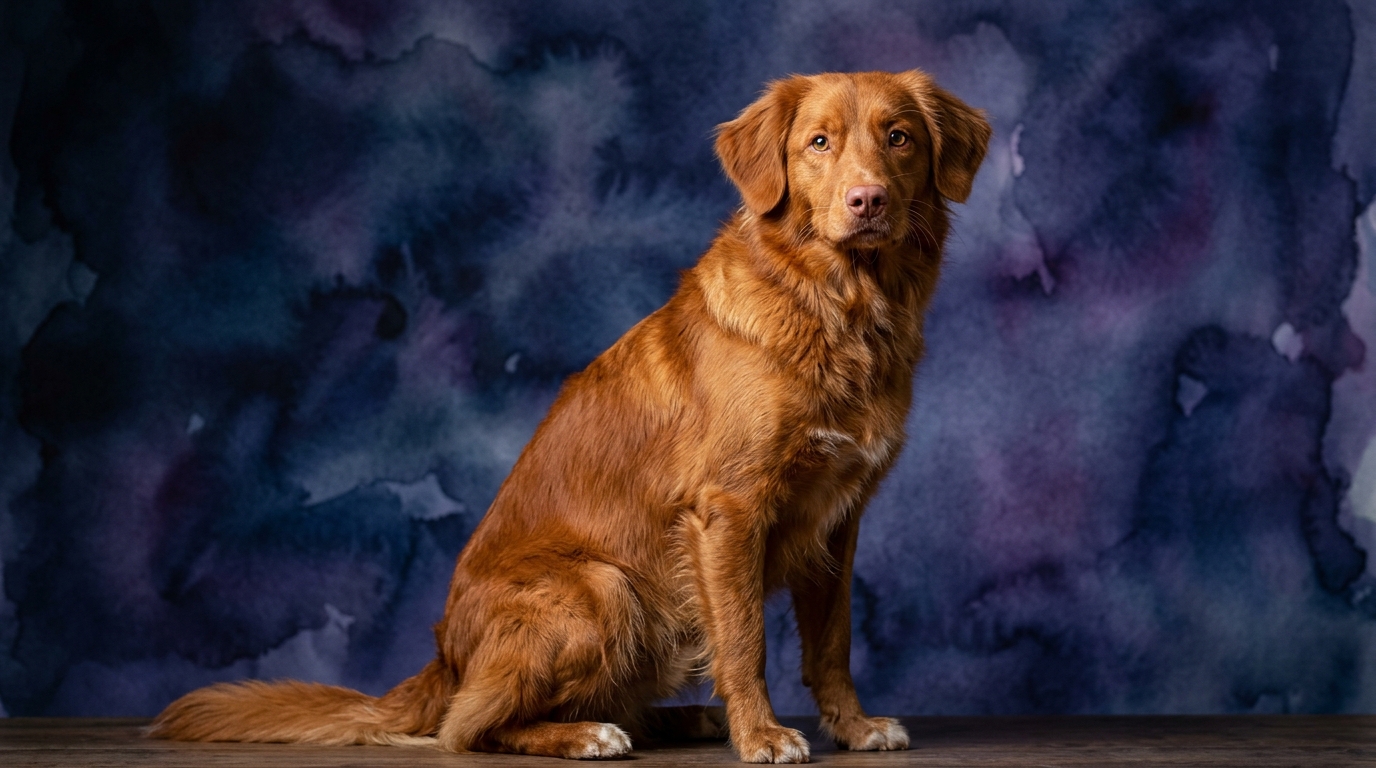
The Nova Scotia Duck Tolling Retriever, often simply called a Toller, presents a notably balanced cognitive profile. Their Problem Solving is rated at 3/5, indicating a solid capacity for navigating moderate challenges, such as figuring out how to retrieve a toy from under furniture or understanding a two-step command sequence, though they might require more direct guidance with novel, intricate puzzles. Their Training Speed also stands at 3/5, meaning they learn new commands and behaviors at a steady, consistent pace, benefiting significantly from clear, repeatable instruction. In Social Intelligence, they score 3/5, competently reading human cues and adapting their behavior to social contexts. Their Instinctive Drive is likewise 3/5, possessing a reliable working drive that translates to focused effort in retrieving tasks without being overwhelmingly intense. Finally, their Memory is 3/5, allowing them to retain learned information consistently over time, though perhaps not with the exceptional detail or breadth seen in some other breeds. This balanced distribution across all five dimensions suggests a dog that is adaptable and generally competent, without pronounced peaks or valleys in their cognitive abilities.
In contrast, the Flat-Coated Retriever (Flat-Coat) exhibits a cognitive profile marked by distinct strengths in several key areas. Their Problem Solving is rated at 4/5, indicating a pronounced ability to deconstruct and resolve more complex situations, such as manipulating latches, understanding multi-stage tasks, or devising creative solutions to reach a desired object. Their Training Speed also shines at 4/5, meaning they pick up new behaviors and commands with notable alacrity, often requiring fewer repetitions to solidify a concept. Like the Toller, their Social Intelligence is 3/5, allowing them to effectively interpret human communication and cues within various social settings. Their Instinctive Drive matches the Toller at 3/5, reflecting a robust, purposeful working drive that fuels their enthusiasm for retrieving and other active pursuits. However, where the Flat-Coat truly differentiates itself is in Memory, earning an exceptional 5/5 score. This indicates an outstanding capacity for information recall and long-term retention, allowing them to remember extensive command repertoires, complex scent trails, or the precise location of hidden objects over extended periods, making them formidable in tasks requiring sustained recall and pattern recognition. This profile points to a dog with a strong aptitude for rapid learning and enduring recall.
Where the Nova Scotia Duck Tolling Retriever Excels Cognitively
The Toller's cognitive strength lies significantly in its balanced and consistent application of moderate abilities across the board. While the Flat-Coat might demonstrate bursts of higher aptitude in specific areas, the Toller's uniform 3/5 scores mean they are less prone to the cognitive 'overthinking' or potential frustration that can sometimes accompany higher problem-solving abilities when tasks become overly intricate or repetitive. Their steady, predictable cognitive approach allows them to learn and perform reliably without becoming easily overwhelmed or bored by the nuances that might challenge a more specialized mind. This balanced profile translates to a dog that is consistently capable, adaptable to a variety of learning environments, and less likely to develop behavioral quirks stemming from unmet intellectual demands for extreme mental stimulation or, conversely, from being pushed beyond their comfort zone with overly complex tasks. Owners often find their Tollers to be resilient and amenable to a broad range of activities, finding satisfaction in consistent engagement rather than needing constant novelty or extreme challenges.
Where the Flat-Coated Retriever Excels Cognitively
The Flat-Coated Retriever's cognitive prowess is most evident in its superior Problem Solving, Training Speed, and particularly its extraordinary Memory. Their 4/5 Problem Solving means they are adept at navigating intricate scenarios, such as quickly understanding the mechanics of a new puzzle toy or figuring out a multi-step sequence to achieve a goal. This ability makes them excellent candidates for advanced obedience, agility, or scent work, where understanding complex rules and devising strategies are key. Coupled with a 4/5 Training Speed, Flat-Coats grasp new concepts with remarkable alacrity, often requiring fewer repetitions than many other breeds to master a command or trick. This accelerates the training process significantly, allowing owners to progress to more sophisticated tasks relatively quickly. However, their 5/5 Memory is perhaps their most striking cognitive advantage. This exceptional recall means they retain vast repertoires of commands, remember specific locations of hidden items, or recall complex scent trails over extended periods. This enduring memory is invaluable in competitive field trials, detection work, or even in everyday life, where they can recall past experiences and learned behaviors with impressive accuracy. This allows them to build upon previous learning more effectively, making them highly capable companions for demanding cognitive pursuits.
Ease of Training: Flat-Coat vs. Toller
When comparing the ease of training, the Flat-Coated Retriever generally holds an edge due to its higher Training Speed (4/5) and exceptional Memory (5/5). A Flat-Coat will typically grasp new commands and concepts faster, often needing fewer repetitions to achieve mastery. Their outstanding memory ensures that once a behavior is learned, it is retained with remarkable consistency over time, making refresher sessions less frequent and more effective. This combination means that Flat-Coats can progress through training levels at an accelerated pace, excelling in activities like competitive obedience, agility, and complex field work where rapid learning and precise recall are paramount. However, their higher problem-solving ability (4/5) can sometimes manifest as a tendency to 'think for themselves' or find alternative, sometimes mischievous, solutions if not consistently guided with clear boundaries and engaging tasks. Boredom can lead a Flat-Coat to apply their cognitive skills to unintended, destructive behaviors.
The Nova Scotia Duck Tolling Retriever, with its 3/5 Training Speed and 3/5 Memory, requires a more patient and consistent approach. While certainly trainable and willing to learn, Tollers benefit from more repetitions and a predictable training regimen. New concepts may take a bit longer to solidify, but their balanced temperament means they are generally cooperative and less likely to become frustrated or stubborn during the learning process. Owners must be prepared to invest steady effort and positive reinforcement to build a strong foundation. Their moderate problem-solving skills mean they are less likely to devise elaborate ways to circumvent rules, but they also won't pick up complex multi-step tasks as quickly as a Flat-Coat. For the Toller, consistency and clarity are more critical than speed, fostering a reliable working partnership over time. The Toller's training journey is often a steady climb, while the Flat-Coat's can be a swift ascent, provided their intellect is properly channeled.
Suitability for Active vs. Relaxed Owners
Both the Nova Scotia Duck Tolling Retriever and the Flat-Coated Retriever are members of the Sporting Group, implying a fundamental need for significant physical activity and mental engagement. Neither breed is genuinely suited for a 'relaxed' owner in the sense of a low-energy, sedentary lifestyle; both require daily exercise and purposeful activity to thrive. However, their cognitive profiles and inherent drives suggest nuanced differences in the *type* and *intensity* of engagement they demand.
The Flat-Coated Retriever, with its higher Problem Solving (4/5), faster Training Speed (4/5), and exceptional Memory (5/5), thrives with active owners who can provide boundless opportunities for mental stimulation and rigorous physical activity. These dogs possess an enduring 'puppy-like' exuberance and an intelligent, joyful disposition that demands constant interaction and challenging tasks. Owners who are involved in dog sports such as advanced obedience, agility, dock diving, or extensive field work will find the Flat-Coat an unparalleled partner. They need a job to do and will channel their cognitive prowess into these activities, otherwise, their intelligence and energy can lead to boredom and destructive behaviors. This breed is for the owner who genuinely enjoys dedicating substantial time to training, exploring, and engaging their dog both mentally and physically every single day.
The Nova Scotia Duck Tolling Retriever, while equally energetic, might be slightly more adaptable to a consistent, moderately active lifestyle. Their balanced cognitive profile (all 3/5) suggests they are less prone to the intense intellectual demands that a Flat-Coat might exhibit. Tollers still require substantial daily exercise, including retrieving games, long walks, or runs, but their drive, while strong, can often be satisfied with focused, purposeful activities rather than requiring constant novelty or extreme complexity. They are well-suited for active owners who enjoy regular outdoor adventures, participate in hunting or basic dog sports, and appreciate a dog that is enthusiastic but also capable of settling down once its needs are met. While not for a truly 'relaxed' owner, a Toller might fit more seamlessly into a busy family life that can provide consistent activity without needing to be an expert dog sport enthusiast.
The Verdict: When to Choose Each Breed
The Verdict
Choose the Nova Scotia Duck Tolling Retriever if you seek a well-rounded, adaptable retriever with a consistent temperament and balanced cognitive abilities, valuing steady progress in training and a companion that integrates smoothly into a moderately active, engaged lifestyle.
Opt for the Flat-Coated Retriever if you are an experienced owner who relishes the challenge of a highly perceptive and quick-learning dog, capable of excelling in demanding cognitive and physical tasks, and can provide extensive mental stimulation and rigorous, joyful activity.
🧠 Find Your Pet's IQ Score
Our Pet IQ Lab assessment covers 25+ tests across 5 cognitive dimensions — personalized to your breed.
Take the Full IQ Test →Frequently Asked Questions
Are Flat-Coated Retrievers difficult to train due to their high intelligence?
Flat-Coated Retrievers are generally eager to please and quick to learn, thanks to their 4/5 training speed and 5/5 memory. However, their 4/5 problem-solving ability means they can become bored or mischievous if not given consistent, engaging mental tasks, requiring dedicated and creative training from their owners.
How do the energy levels of Tollers compare to Flat-Coats?
Both breeds are sporting dogs with significant energy levels, requiring daily vigorous exercise and mental stimulation. Flat-Coats often exhibit a more prolonged 'puppy-like' exuberance and require slightly more intense and varied activity to satisfy their higher cognitive and physical drive, while Tollers, though energetic, can often be content with consistent, purposeful activities.
Which breed is better for a first-time dog owner?
For a first-time dog owner, the Nova Scotia Duck Tolling Retriever might be a slightly more manageable choice due to its balanced cognitive profile and consistent temperament, provided the owner is committed to regular exercise and patient, consistent training. The Flat-Coated Retriever's higher cognitive demands and boundless energy can be more challenging for an inexperienced owner, requiring a deeper understanding of canine behavior and dedicated engagement.