
Side-by-Side IQ Profile
The Cosmic Pet Pet IQ Lab employs a five-dimensional framework to assess canine intelligence, offering a nuanced understanding beyond simple ranking. For the Nova Scotia Duck Tolling Retriever, we observe a balanced profile across the board: Problem Solving (3/5), Training Speed (3/5), Social Intelligence (3/5), Instinctive Drive (3/5), and Memory (3/5). This indicates a capable, adaptable dog that learns at a steady pace and applies its intellect practically. Their cognitive strengths are geared towards their specific work, requiring a blend of independent thought and cooperative effort.
In contrast, the Miniature Poodle, a breed recognized for its mental prowess and ranked #2 by Dr. Stanley Coren, presents a profile marked by exceptional strengths in specific areas. Their Problem Solving capability is rated at an impressive 5/5, reflecting a capacity for abstract thought and innovative solutions. Similarly, their Training Speed (5/5) and Memory (5/5) scores indicate rapid acquisition of new commands and an excellent ability to retain information over time. Their Social Intelligence (3/5) and Instinctive Drive (3/5) align with the Toller's scores, suggesting a similar baseline for understanding human cues and inherent motivations, though the nature of these drives often differs culturally between the breeds.
Where Nova Scotia Duck Tolling Retriever Wins Cognitively
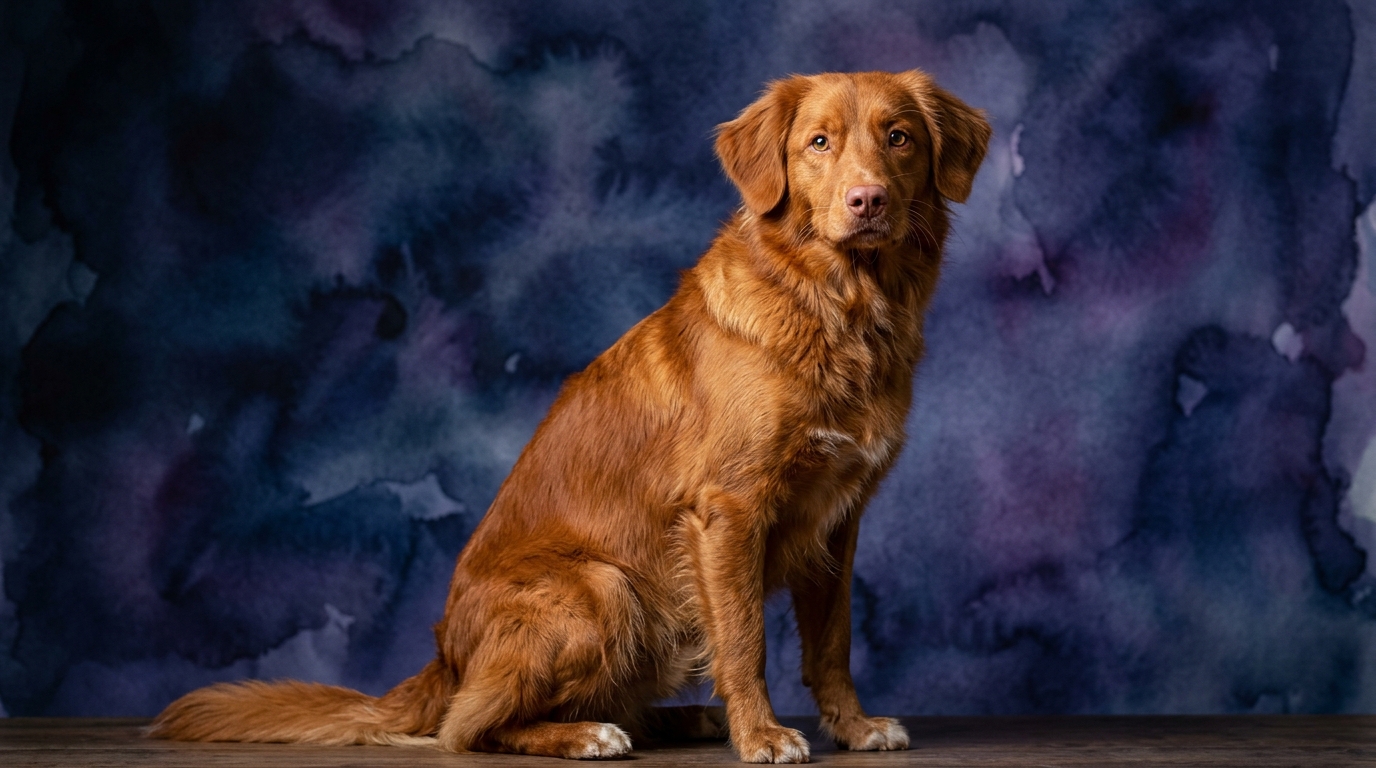
While the Miniature Poodle boasts higher scores in several cognitive dimensions, the Nova Scotia Duck Tolling Retriever’s unique blend of average-to-strong scores across all categories, particularly its instinctive drive for its namesake activity, represents a distinct cognitive "win" in specific contexts. Their 3/5 Instinctive Drive isn't just a general urge; it's a precisely calibrated predisposition for "tolling" – luring waterfowl within a hunter's range through playful antics and then retrieving downed birds.
This complex, multi-stage behavior demands a practical problem-solving approach (3/5) in a dynamic outdoor environment, where adaptability and focus on a specific, intricate task are paramount. Their balanced memory and training speed, both 3/5, are perfectly suited for learning and executing these traditional, often nuanced, hunting sequences over a lifetime, rather than excelling in abstract academic challenges. Their cognitive strength lies in their holistic application of intellect to a very specialized, ancestral purpose.
Where Miniature Poodle Wins Cognitively
The Miniature Poodle shines with exceptional Problem Solving (5/5), Training Speed (5/5), and Memory (5/5) scores, demonstrating a remarkable capacity for abstract thought and rapid learning. Their superior problem-solving ability allows them to tackle complex puzzles, strategize around obstacles, and even understand multi-step commands with ease, often finding novel solutions to challenges.
This cognitive nimbleness translates directly into their extraordinary training speed; they can pick up new cues, tricks, and routines with minimal repetition, making them adept at advanced obedience, agility, and even performing intricate routines. Furthermore, their 5/5 memory ensures that once a concept is learned, it is retained with impressive fidelity, allowing them to build upon a vast repertoire of learned behaviors and consistently recall them, even after long periods. This combination of mental acuity makes them exceptionally versatile in roles requiring high levels of learning and retention, from performance work to assistance tasks.
Which is Easier to Train and Why
Based on The Cosmic Pet Pet IQ Lab scores, the Miniature Poodle is demonstrably easier and faster to train than the Nova Scotia Duck Tolling Retriever. The Poodle's 5/5 Training Speed means they grasp new commands almost immediately, often requiring only a few repetitions before solidifying a behavior. Coupled with their 5/5 Problem Solving and Memory, they can quickly understand the 'why' behind a request, generalize commands to new situations, and retain a vast vocabulary of cues. This translates into a highly responsive dog eager to engage in learning, often making training feel like a collaborative mental sport.
In contrast, the Toller's 3/5 Training Speed suggests a more moderate pace of learning. While perfectly capable of mastering complex tasks, they typically require more consistent repetition and patience to ingrain new behaviors. Their 3/5 Problem Solving and Memory, while respectable, mean they might take longer to connect cause and effect or recall less frequently practiced commands. Tollers often possess an independent streak and a strong focus on their instinctive drives, which, while valuable in their traditional role, can sometimes make them less immediately pliable to abstract obedience training compared to the Poodle's eager-to-please, rapid-learning disposition.
Which Suits Active Owners vs. Relaxed Owners
The choice between these two breeds often hinges on an owner's lifestyle, particularly their activity level and preferred type of engagement. The Nova Scotia Duck Tolling Retriever, despite sharing a 3/5 Instinctive Drive score with the Poodle, is fundamentally a sporting breed whose drives are channeled into demanding physical and mental work. Their innate desire to "toll" and retrieve requires significant daily exercise, including vigorous play, long walks, and opportunities for swimming or retrieving games. Owners who thrive on outdoor adventures, participate in dog sports like agility or dock diving, or enjoy structured field work will find the Toller a fulfilling and energetic partner. They are not content with a relaxed, sedentary lifestyle, needing consistent outlets for their physical stamina and their clever, problem-solving minds.
The Miniature Poodle, while also possessing a 3/5 Instinctive Drive and needing regular exercise, can often adapt more readily to a broader range of owner activity levels, provided their substantial mental needs are met. While they enjoy walks and play, their physical exercise requirements are generally less intense than a Toller's. They can certainly keep up with active owners in various sports, but their primary need is for consistent mental stimulation through training, puzzle toys, and interactive games, thanks to their 5/5 Problem Solving and Memory. This means they can suit moderately active owners who are committed to daily mental engagement and enrichment, and even some more relaxed owners who prioritize brain games and consistent training over hours of strenuous physical activity. A relaxed owner who neglects the Poodle's mental needs, however, risks a bored and potentially destructive companion.
The Verdict
Choose Nova Scotia Duck Tolling Retriever if you are an active, outdoors-oriented individual or family seeking a devoted partner for demanding physical activities, field work, or dog sports, and appreciate a dog that applies its balanced intellect to practical, engaging tasks with a moderate learning curve.
Choose Miniature Poodle if you value a highly trainable, exceptionally clever companion capable of mastering complex commands and excelling in mental challenges, and you are prepared to provide consistent intellectual stimulation, with physical exercise needs that are adaptable to a range of active-to-moderately-active lifestyles.
🧠 Find Your Pet's IQ Score
Our Pet IQ Lab assessment covers 25+ tests across 5 cognitive dimensions — personalized to your breed.
Take the Full IQ Test →Frequently Asked Questions
Are Nova Scotia Duck Tolling Retrievers good family dogs?
Yes, Tollers can be wonderful family dogs, known for their affectionate nature with their own people. However, their active minds and bodies require consistent engagement, so they thrive best in homes that can provide ample exercise and mental stimulation. Early socialization is key for them to be comfortable with new people and situations.
Do Miniature Poodles shed a lot?
Miniature Poodles are often considered a good choice for individuals with allergies because they have a single coat that sheds minimally. While no dog is truly hypoallergenic, their low-shedding quality means less dander and hair around the house, but they do require regular grooming to prevent matting.
How much exercise does a Nova Scotia Duck Tolling Retriever need daily?
Tollers are energetic dogs that typically require at least 60-90 minutes of vigorous exercise daily, which can include activities like running, swimming, retrieving, or engaging in dog sports. Mental stimulation through training and puzzle games is equally important to keep their clever minds occupied and prevent boredom.