A Side-by-Side Look at Feline IQ
The Cosmic Pet Pet IQ Lab employs five core dimensions to map a cat's cognitive profile, offering a nuanced understanding beyond simple anecdotes. Let's explore how the Ocicat and Japanese Bobtail measure up in each, providing a foundation for understanding their mental capabilities and behavioral tendencies.
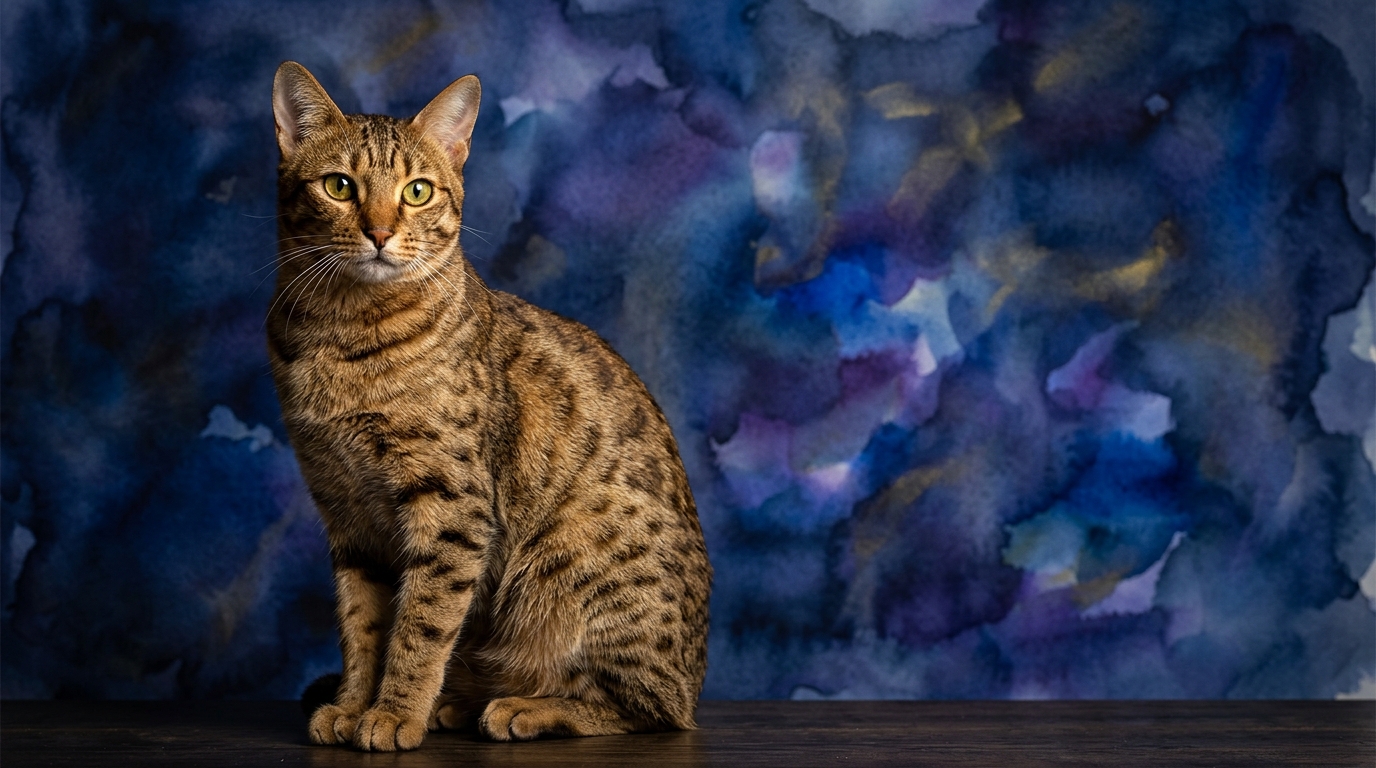
For the Ocicat, Problem Solving registers at a robust 4/5, indicating a cat that actively engages with its environment to overcome challenges, often enjoying the process of figuring things out. Its Training Speed is an exceptional 5/5, suggesting a rapid grasp of commands and a willingness to participate in structured learning. Social Intelligence stands at 4/5, reflecting a capacity for deep bonds and an attunement to human emotional cues, while Instinctive Drive, at 4/5, points to a strong, well-preserved predatory instinct. Finally, Memory, also at 4/5, denotes an excellent recall for routines, learned tasks, and significant experiences.
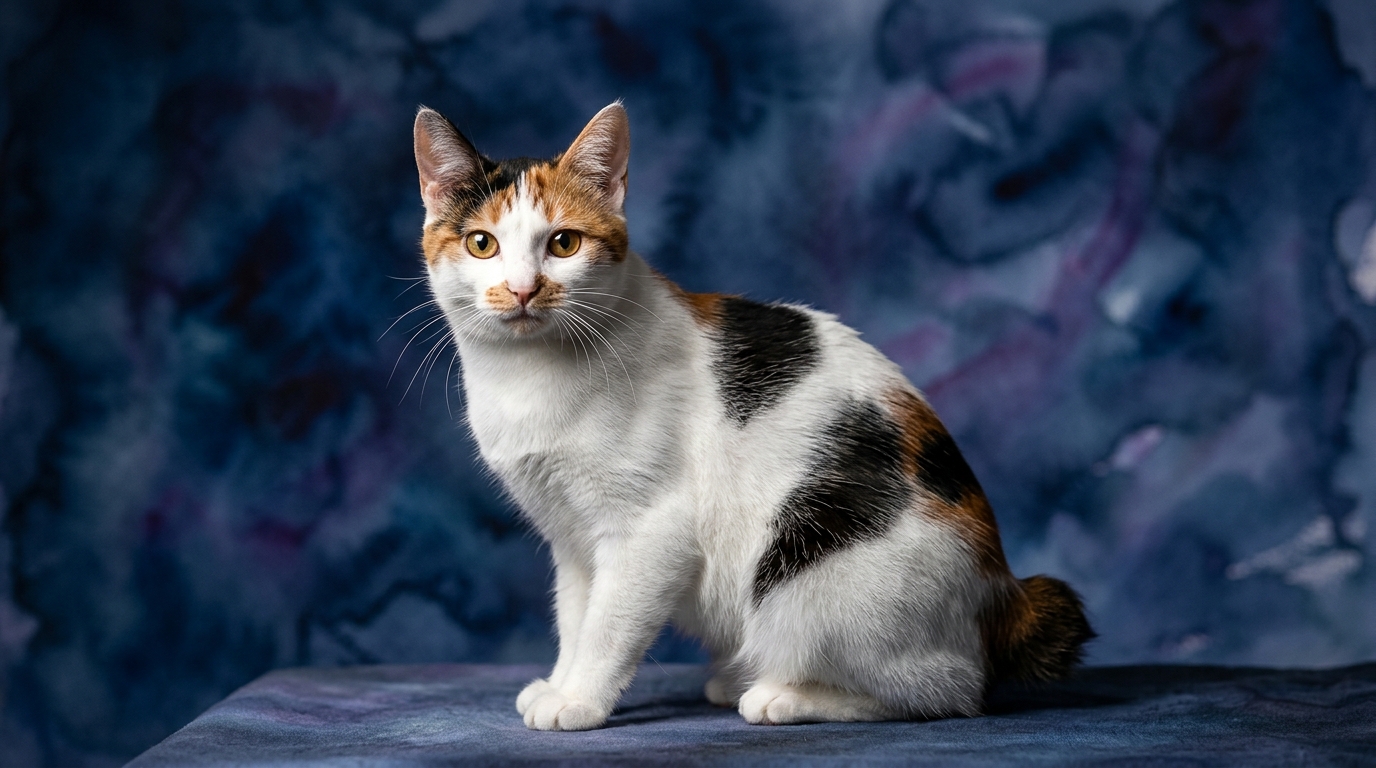
In contrast, the Japanese Bobtail presents a more balanced, moderate profile across the board. Its Problem Solving is rated at 3/5, indicating a capable but perhaps less intensely driven approach to complex cognitive tasks compared to the Ocicat. Training Speed is also 3/5, meaning it learns at a steady, moderate pace, requiring consistent but not necessarily rapid reinforcement. Social Intelligence registers at 3/5, highlighting an affectionate nature that forms bonds without necessarily demanding constant interaction or exhibiting the same depth of emotional attunement as the Ocicat. Its Instinctive Drive is 3/5, present and enjoyable for play but potentially less intense than some breeds, and Memory, at 3/5, suggests a reliable recall for daily routines and significant people, though perhaps less for intricate sequences or infrequent events.
Where the Ocicat Excels Cognitively
The Ocicat's cognitive strengths paint a picture of an extraordinarily engaged and adaptable feline. Its Problem Solving score of 4/5 means this breed isn't content with passive observation; Ocicats are often observed actively strategizing to access hidden treats, figuring out how to open child-proof latches, or manipulating puzzle toys with remarkable dexterity. This innate curiosity and drive to understand their environment can translate into a cat that thoroughly enjoys interactive challenges.
The Ocicat's unparalleled Training Speed of 5/5 is a standout feature. These cats typically pick up new commands, tricks, and routines with impressive swiftness, often eager to engage in the learning process itself. Owners frequently report Ocicats readily mastering leash walking, retrieving toys, and even performing complex agility sequences after just a few dedicated sessions. This rapid acquisition of skills is bolstered by their 4/5 Social Intelligence, making them highly responsive to human feedback, praise, and the subtleties of communication during training. Their strong Memory (4/5) ensures that once a lesson is learned, it tends to stick, allowing for the building of an extensive repertoire of behaviors and understandings. Furthermore, their Instinctive Drive (4/5) fuels a highly interactive play style, where they excel at mock hunting games, stalking, and pouncing, demonstrating both physical and mental agility in pursuit of their 'prey.'
Where the Japanese Bobtail Shines Cognitively
While the Japanese Bobtail's scores are consistently moderate compared to the Ocicat, this profile isn't a deficit; rather, it suggests a different, equally valuable set of cognitive advantages, particularly for certain lifestyles. Its Problem Solving at 3/5 indicates a cat that is perfectly capable of navigating its daily world and addressing common challenges, but perhaps without the same intense, almost relentless drive to dissect every puzzle. This can mean a less 'trouble-making' cat, one that finds contentment in simpler engagements rather than constantly seeking complex mental stimulation.
The Japanese Bobtail's 3/5 Training Speed, while not as lightning-fast as the Ocicat's, still signifies a trainable cat that can learn essential commands and house rules with consistency. Owners can successfully teach them to come when called or engage in interactive play, but the process may require more patient repetition. Their 3/5 Social Intelligence means they are wonderfully affectionate companions, forming strong bonds with their families, but often without the high-demand, 'velcro cat' intensity that some higher-scoring breeds exhibit. This makes them ideal for owners who appreciate a loving presence that also respects personal space. Similarly, their 3/5 Instinctive Drive suggests a playful nature that enjoys batting toys and chasing, but might be less prone to the obsessive hunting behaviors or constant need for intense physical outlets that can characterize breeds with higher drives. Their Memory (3/5) is reliable for remembering routines and the people they love, contributing to their adaptable and generally easygoing nature within a consistent home environment.
Which is Easier to Train and Why?
When it comes to ease of training, the Ocicat holds a clear advantage, primarily due to its exceptional Training Speed (5/5) and its robust Social Intelligence (4/5). Ocicats display a genuine enthusiasm for learning and an eagerness to engage with their human companions in structured activities. Their problem-solving acumen (4/5) helps them quickly understand the cause-and-effect relationship between commands and rewards, making them highly receptive to positive reinforcement. They often view training as a fun, collaborative game, readily picking up complex tricks, mastering clicker training, and even adapting to harness and leash walks with minimal fuss. Their strong memory (4/5) ensures that once a behavior is learned, it becomes a lasting part of their repertoire, requiring less frequent refreshers.
The Japanese Bobtail, with a Training Speed of 3/5, is certainly trainable but requires a different approach. They are capable of learning, but the process typically demands more patience, consistency, and repetition from the owner. While affectionate, their Social Intelligence (3/5) means they might not be as intensely driven by human approval or as attuned to subtle cues during training sessions as an Ocicat. Owners might find that shorter, more frequent training sessions, coupled with high-value treats, are most effective in keeping a Japanese Bobtail engaged. They will learn essential household manners and simple tricks, but might not pursue advanced agility or an extensive trick repertoire with the same zeal or rapid comprehension as an Ocicat.
Cognitive Profiles: Active vs. Relaxed Owners
The distinct cognitive profiles of these two breeds naturally align with different owner lifestyles. The Ocicat is an ideal companion for active owners who thrive on interaction and are prepared to provide consistent, stimulating engagement. Their 4/5 Problem Solving and 4/5 Instinctive Drive mean they need outlets for their mental and physical energy; without sufficient stimulation, they can become bored, potentially leading to inventive (and sometimes destructive) ways to entertain themselves. Owners who enjoy teaching tricks, using puzzle feeders, engaging in vigorous interactive play sessions, or even harness training for outdoor adventures will find the Ocicat to be an eager and fulfilling partner. Their high Social Intelligence (4/5) means they thrive on being an integrated part of family activities, often following their owners from room to room.
Conversely, the Japanese Bobtail's more moderate cognitive scores make it a superb fit for relaxed owners seeking an affectionate yet generally calmer companion. While they certainly enjoy play and interaction, their 3/5 Instinctive Drive and 3/5 Problem Solving mean they are less likely to become restless if not constantly challenged with complex mental tasks or intense physical exertion. They appreciate a comfortable home environment and consistent routines, often content to observe the household goings-on from a cozy perch or engage in playful bouts with toys at their own pace. Their 3/5 Social Intelligence ensures they are loving and present without being overwhelmingly demanding of attention, making them excellent companions for those who desire a warm, adaptable feline presence without the intensity of a highly driven breed.
The Verdict
Choose an Ocicat if you are an active, engaged owner seeking a highly interactive, quick-witted feline partner who will thrive on consistent mental challenges, complex play, and the opportunity to learn a diverse range of behaviors.
Opt for a Japanese Bobtail if you desire an affectionate, adaptable, and generally more relaxed companion who is content with moderate daily stimulation, appreciates a consistent routine, and offers a loving presence without demanding constant mental exertion.
🧠 Find Your Pet's IQ Score
Our Pet IQ Lab assessment covers 25+ tests across 5 cognitive dimensions — personalized to your breed.
Take the Full IQ Test →Frequently Asked Questions
Do Ocicats require a lot of space?
Ocicats, with their 4/5 Instinctive Drive and Problem Solving, are active and curious cats that benefit from ample space to explore and play. While they can adapt to smaller homes, they thrive with vertical climbing options and frequent interactive play sessions to satisfy their need for mental and physical engagement.
Are Japanese Bobtails vocal cats?
Japanese Bobtails are known for their distinct vocalizations, often described as chirps, trills, and soft meows, rather than loud cries. Their 3/5 Social Intelligence suggests they use these sounds to communicate affectionately with their owners, expressing their contentment or desire for interaction in a charming, moderate way.
Can either breed get along with other pets?
Both breeds can generally coexist peacefully with other pets, especially if introduced properly. The Ocicat's 4/5 Social Intelligence allows it to form bonds, but its 4/5 Instinctive Drive means it might view smaller pets as prey. The Japanese Bobtail's more moderate 3/5 scores in both areas often lead to a more adaptable and less dominant presence, making it a good fit for multi-pet households with careful introductions.