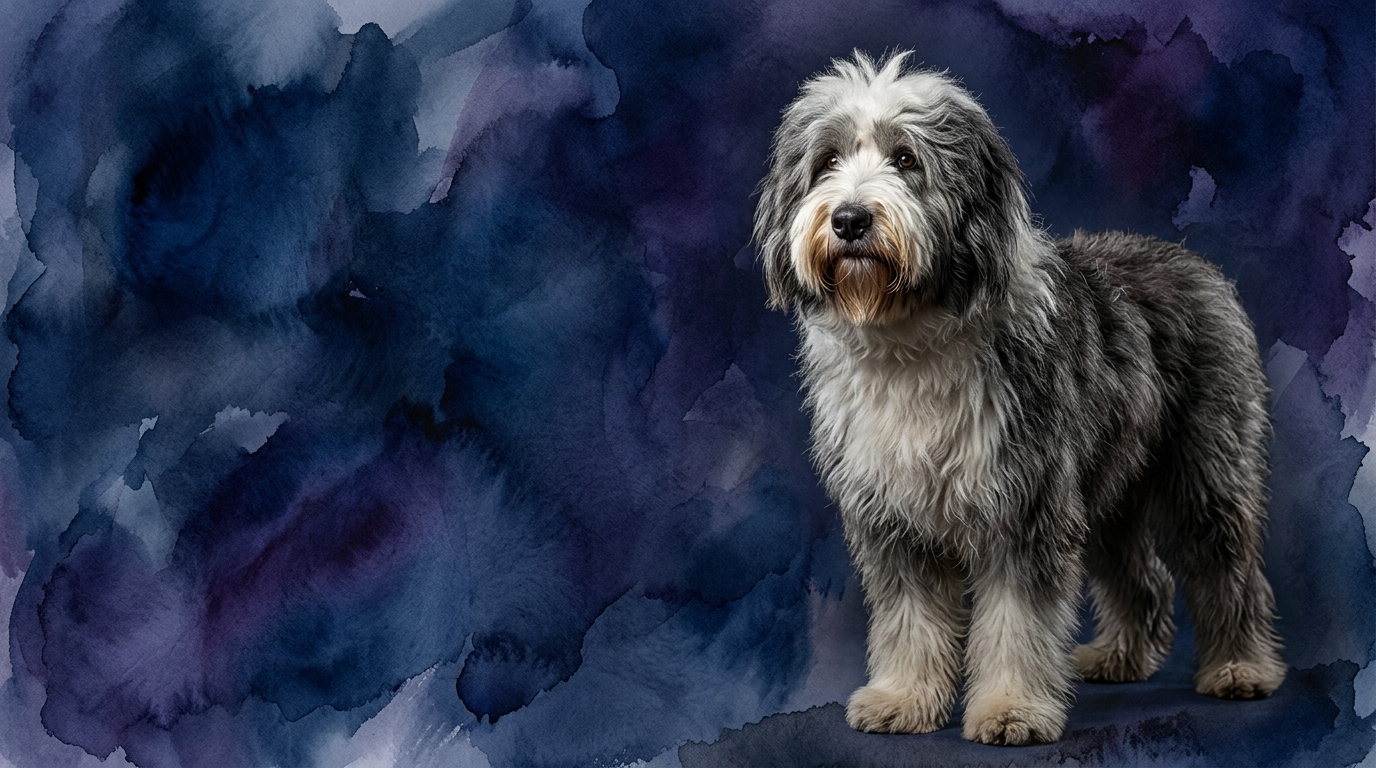
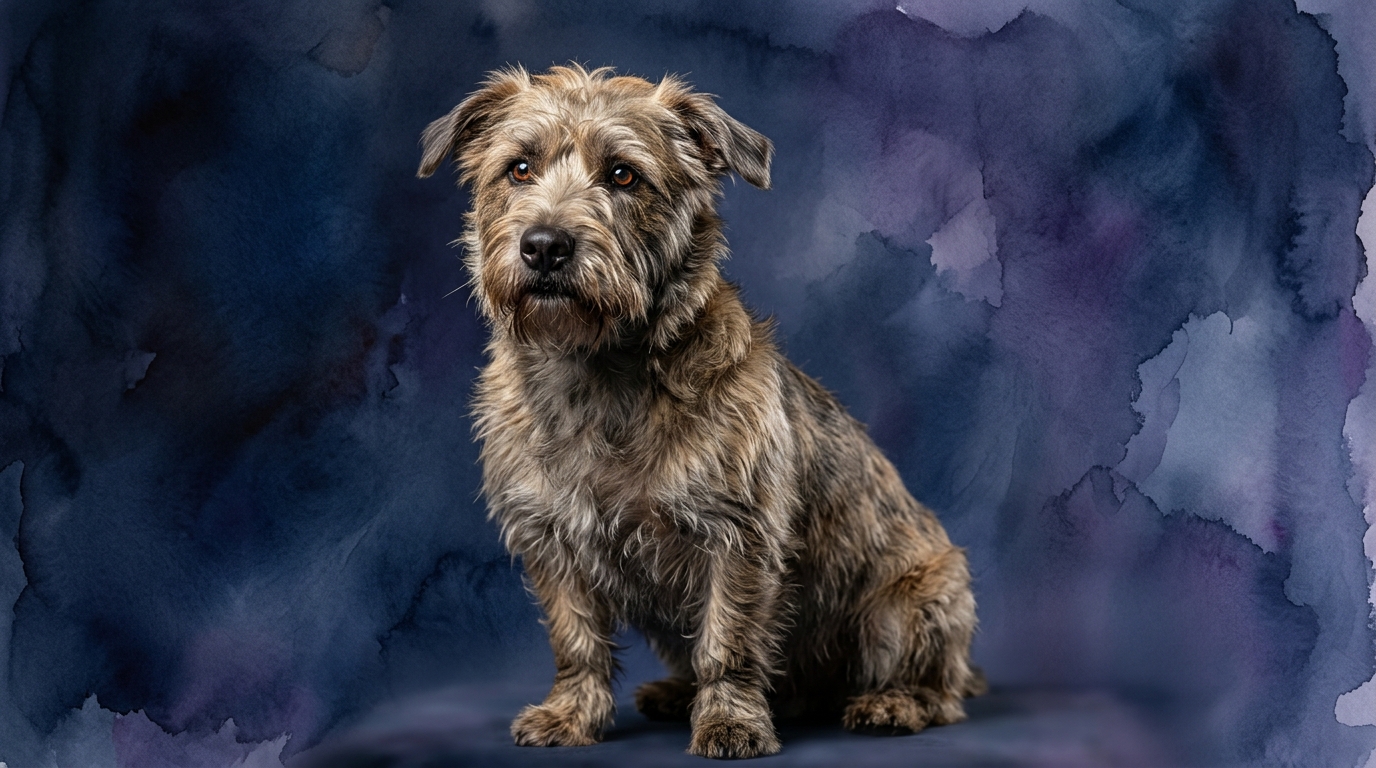
Side-by-Side Cognitive Profiles: OES vs. Glen
The Cosmic Pet Pet IQ Lab provides a structured way to assess canine cognition across five key dimensions. For the Old English Sheepdog (OES), a Herding breed ranked #44 by Stanley Coren, we observe a profile shaped by its historical duties. Their Problem Solving is rated 3/5, indicating a moderate capacity for navigating complex situations, often involving spatial reasoning or understanding group dynamics, reflecting their past in managing livestock. Training Speed is also 3/5, suggesting they acquire new commands at a moderate pace, benefiting from consistent, positive reinforcement. Social Intelligence stands at 3/5, demonstrating a balanced understanding of human social cues and family dynamics. Their Instinctive Drive is 3/5, manifesting as a moderate herding inclination to gather family members. A notable strength is their Memory at 4/5, showcasing strong retention of learned behaviors and routines.
In contrast, the Glen of Imaal Terrier, a robust Terrier breed not Coren-ranked, presents a unique cognitive blueprint. Their Problem Solving is 3/5, similar to the OES, but often geared towards practical, independent tasks like navigating tight spaces or overcoming physical barriers, fueled by their tenacity. Training Speed is also 3/5; however, their independent terrier spirit can introduce nuances, requiring creative motivation. Social Intelligence is 3/5, indicating a comparable understanding of social interactions, though their expression might be more reserved. Their Instinctive Drive is 3/5, a persistent terrier drive for digging and pursuing small prey, directly linked to their historical role. Finally, their Memory is 3/5, retaining information adequately for daily routines and learned tasks, though perhaps not with the same depth for complex sequences as the OES.
Where the Old English Sheepdog Excels Cognitively
The Old English Sheepdog holds a distinct advantage in the realm of memory, with a 4/5 rating compared to the Glen's 3/5. This enhanced recall means an OES is more likely to remember intricate sequences of commands, long-term routines, and the specific nuances of their environment or family members over extended periods. This superior memory aids in their ability to anticipate events, learn complex tricks, and maintain consistent behavior patterns once established. Their herding background also imbues them with a natural aptitude for spatial reasoning and understanding the movements of groups, a cognitive strength that translates into a keen awareness of their surroundings and family members' locations. They can often intuitively 'herd' family members or toys, demonstrating a nuanced understanding of positioning and control. This makes them adept at tasks requiring sequential learning and a broad awareness of their domestic 'flock'.
Where the Glen of Imaal Terrier Exhibits Unique Cognitive Strengths
The Glen of Imaal Terrier, while not outranking the OES in raw memory, possesses a specialized form of problem-solving that is deeply rooted in its terrier heritage. Their 3/5 problem-solving score is characterized by a tenacious, independent drive to overcome obstacles, particularly those related to confined spaces or accessing hidden objects. This manifests as resourcefulness when faced with a barrier, often involving strategic digging or persistent manipulation to achieve a goal. While an OES might assess a situation broadly, a Glen focuses with singular determination on a specific target, using its physical and mental fortitude to succeed. This concentrated drive, combined with a robust instinctive push to pursue, makes them particularly adept at tasks requiring focused persistence and ingenuity in tight spots, a testament to their badger-hunting ancestry. They are masters of the 'find and retrieve' mission, especially if it involves a challenge.
Training Dynamics: Which Breed is More Amenable?
Despite both breeds sharing a 3/5 rating for Training Speed, their behavioral differences create distinct training experiences. The Old English Sheepdog, with its herding lineage, typically exhibits a stronger desire to please its human companions. This innate people-orientation, combined with their superior memory, often makes them more compliant and eager to engage in training sessions. While they learn at a moderate pace, their willingness to cooperate means they are generally receptive to commands and respond well to positive reinforcement. They thrive on structured routines and can quickly solidify learned behaviors, making the overall training journey feel more collaborative and less like a constant negotiation.
The Glen of Imaal Terrier, however, brings its independent terrier spirit to the training arena. While capable of learning at a similar speed, their strong will and historical role as independent hunters mean they are often less inclined to blindly follow commands. They possess a 'what's in it for me?' attitude and may challenge commands, requiring more patience, consistency, and creative motivation from their owner. Their problem-solving skills might even be applied to finding ways around commands. Successful training with a Glen often involves tapping into their prey drive or love for digging as rewards, and accepting that their compliance might come with a touch of charming stubbornness. It's less about obedience and more about partnership and mutual respect for their independent streak.
Lifestyle Match: Active vs. Relaxed Owners
For owners with a more relaxed lifestyle, the Old English Sheepdog can be a suitable companion, provided their grooming needs are met. While they enjoy moderate daily exercise and mental stimulation, they are often content to be near their family, participating in quiet indoor activities or gentle strolls. Their adaptable nature means they can adjust to varying activity levels, though consistent engagement prevents boredom. Owners who enjoy a substantial grooming routine might even find this a relaxing bonding activity, as the OES coat demands significant attention. They are generally not demanding of constant high-intensity activity, making them a good fit for families who appreciate a calmer, yet engaged, domestic presence.
The Glen of Imaal Terrier, despite its compact size, is better suited for owners who lead a more active and engaged lifestyle, particularly those who appreciate and can channel terrier energy. While they don't require marathon runs, Glens need consistent daily exercise that allows them to explore, sniff, and engage their terrier instincts. Owners who enjoy activities like structured walks, earthdog trials, or puzzle toys that challenge their problem-solving and digging drives will find a fulfilling partnership. They are not content to be solely lap dogs and thrive when given outlets for their natural curiosity and determination. Their robustness and independence mean they need an owner who is prepared for consistent mental and physical engagement, rather than a purely sedentary companion.
The Verdict
Choose the Old English Sheepdog if you seek a devoted companion with a remarkable memory, eager to be a central, shaggy part of family life, and are prepared for regular grooming and moderate daily engagement.
Opt for the Glen of Imaal Terrier if you appreciate an independent, resourceful spirit in a compact package, are prepared for consistent, creative training, and can offer outlets for their tenacious terrier instincts and curiosity.
🧠 Find Your Pet's IQ Score
Our Pet IQ Lab assessment covers 25+ tests across 5 cognitive dimensions — personalized to your breed.
Take the Full IQ Test →Frequently Asked Questions
Are Old English Sheepdogs good with children?
Yes, Old English Sheepdogs are generally known for being patient and gentle with children, often displaying a protective but playful nature. Their social intelligence helps them integrate well into family dynamics, making them suitable companions for a household with kids.
Do Glen of Imaal Terriers shed a lot?
Glen of Imaal Terriers have a double coat that sheds minimally, especially when regularly hand-stripped or brushed. This low-shedding quality can be a benefit for owners sensitive to dog hair, though their coat still requires consistent grooming to maintain health and appearance.
How much exercise does a Glen of Imaal Terrier need?
While compact, Glen of Imaal Terriers require moderate daily exercise to satisfy their energetic and curious nature. This typically includes a good walk or two, along with opportunities for mental stimulation through play or training, to keep them content and prevent boredom.