
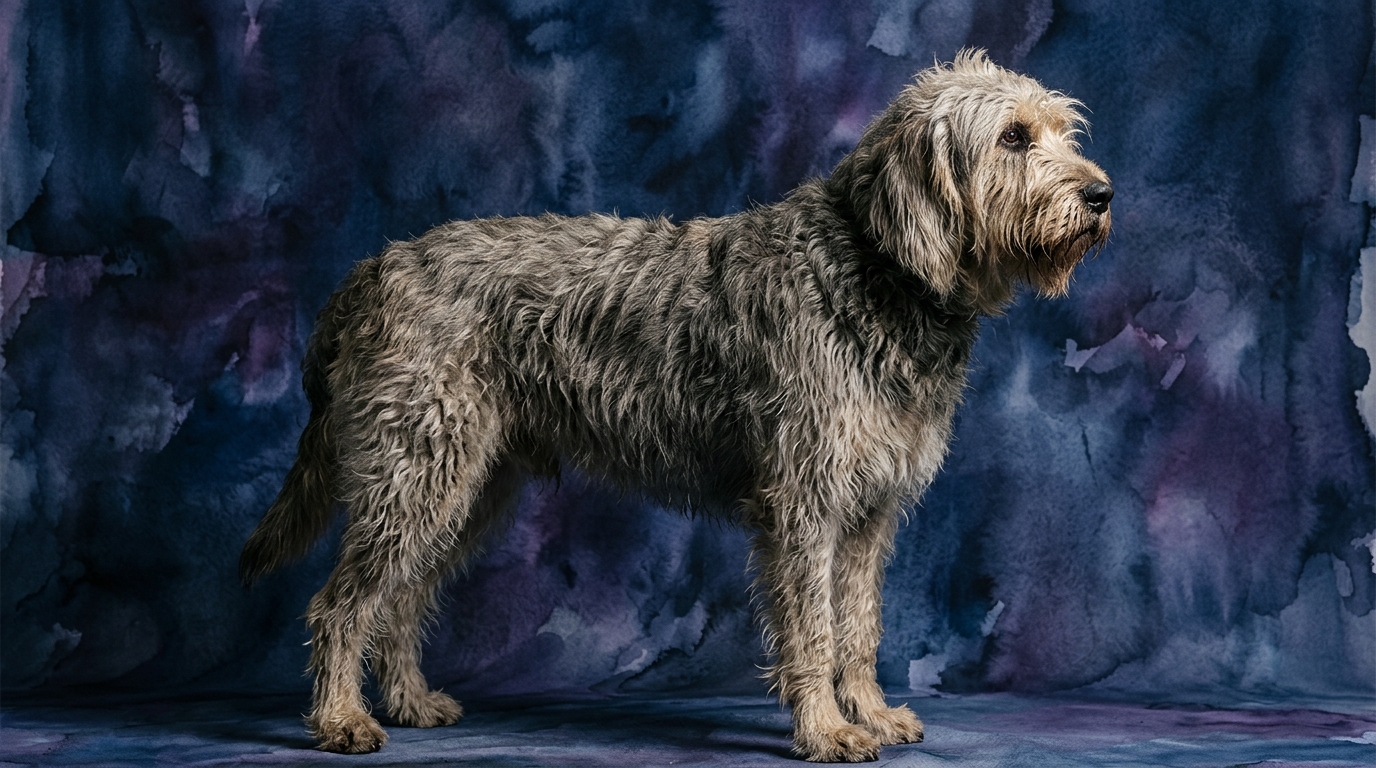
Side-by-Side Pet IQ Lab Profile
The Old English Sheepdog (OES), a Herding group member with a Coren rank of #44, exhibits a balanced cognitive profile with a notable strength in memory. Their Problem Solving is rated at 3/5, indicating a solid capacity for navigating environmental challenges and adapting strategies, common for a breed managing livestock. Training Speed also sits at 3/5, suggesting a willingness to learn and retain commands at a moderate pace, reflective of their partnership with handlers. Social Intelligence is 3/5, pointing to a balanced understanding of human cues and interactions within a social group. Their Instinctive Drive, rated 3/5, highlights their inherent herding instincts, directing their actions towards managing and moving animals. Crucially, their Memory is a standout at 4/5, enabling them to recall complex sequences, routines, and territory layouts vital for effective flock management over extended periods.
In contrast, the Otterhound, a robust Hound breed currently unranked by Coren, shares several numerical scores but applies them through a different cognitive lens. Their Problem Solving is also 3/5, demonstrating an ability to overcome obstacles, particularly when tracking, but often with a self-directed approach. Training Speed is 3/5, indicating they learn at a similar pace to the OES, though their primary motivations might differ significantly. Social Intelligence also registers 3/5, reflecting their pack orientation and ability to interact with both humans and other dogs, albeit sometimes with a boisterous independence. Their Instinctive Drive, 3/5, is primarily centered around their powerful scenting ability and relentless pursuit of a trail. Their Memory, at 3/5, is one point lower than the OES, suggesting they might not retain complex multi-step commands or abstract routines with the same facility, often prioritizing immediate sensory input over rote recall.
Where the Old English Sheepdog Excels Cognitively
The Old English Sheepdog's cognitive strengths truly shine in areas demanding consistent recall and structured task execution, a direct reflection of their herding heritage. Their superior Memory score of 4/5 is a significant advantage, allowing them to internalize and consistently apply intricate command sequences and environmental details over time, a crucial trait for managing a dynamic flock across varying terrain. This enhanced memory aids not just in remembering commands but also in recalling specific livestock behaviors, handler expectations, and the layout of their working environment with precision. Furthermore, their Herding group classification and Coren rank of #44 underscore a cognitive architecture predisposed to understanding and responding to human directives with a higher degree of consistency and eagerness compared to many independent hounds. This translates into a dog that often anticipates handler needs and executes learned tasks reliably, even under distractions, reflecting a strong working partnership mindset and a desire to collaborate.
Where the Otterhound Shows Unique Cognitive Strengths
While sharing identical scores with the OES in Problem Solving, Training Speed, Social Intelligence, and Instinctive Drive, the Otterhound's cognitive strengths are distinctly geared towards independent, persistent work driven by olfaction. Their 3/5 Problem Solving score, though numerically identical to the OES, manifests differently; for the Otterhound, it's about navigating complex natural environments, overcoming physical barriers, and deciphering intricate scent trails with unwavering focus. Their unique strengths lie in the domain of sensory intelligence and relentless pursuit. An Otterhound's ability to process and follow a scent trail for hours, ignoring other stimuli, showcases an unparalleled cognitive tenacity and specialized data processing. This profound instinctive drive (3/5), coupled with their problem-solving capacity, allows them to independently strategize and adapt to the nuances of a disappearing trail, making them exceptional in tasks requiring sustained, self-directed investigation rather than human-directed compliance.
Training Dynamics: OES vs. Otterhound
When it comes to formal training, the Old English Sheepdog generally presents an easier path for the average owner, largely due to their enhanced memory and their inherent disposition as a cooperative herding dog. Their 4/5 Memory score means they are more apt to retain new commands and routines with fewer repetitions and recall them more consistently over time. Herding breeds are historically bred to work in close partnership with humans, requiring them to be attentive, responsive, and eager to please their handler. This foundational desire to collaborate translates into a higher degree of biddability in obedience training, making them generally more responsive to traditional command-based learning. They tend to find satisfaction in pleasing their owner and completing tasks as instructed.
In contrast, the Otterhound, while possessing a 3/5 Training Speed score, often approaches training with a more independent mindset. As a scenthound, their primary drive is to follow interesting odors, and once on a compelling trail, their focus can become singularly devoted to that scent, making consistent recall and attention a significant challenge. Their independent nature means training requires exceptional patience, high-value rewards, and a deep understanding of their scent-driven motivations to keep them engaged and compliant. Owners must be prepared for a dog whose nose often dictates their agenda, requiring creative training methods that acknowledge and channel their powerful instincts rather than attempting to suppress them entirely.
Matching Breeds to Lifestyles: Active vs. Relaxed Owners
For active owners, both breeds offer engagement, but with distinctly different demands. The Old English Sheepdog, while adaptable, thrives with consistent mental engagement and regular physical activity. Their herding background means they appreciate structured walks, opportunities for 'herding' games, and consistent training to keep their minds sharp. They are suitable for active owners who enjoy incorporating their dog into daily routines and can provide varied mental stimulation beyond just physical exercise, ensuring their cognitive needs are met. For truly relaxed owners who prefer minimal activity, the OES might still prove too demanding without sufficient mental outlets, potentially leading to boredom or destructive behaviors as they seek their own stimulation.
The Otterhound, however, unequivocally suits very active owners. Their history as a robust hunting hound means they possess incredible stamina, requiring extensive daily exercise that often involves long walks, hikes, or opportunities to engage their powerful nose in scent work. A relaxed owner will quickly find an Otterhound's unfulfilled energy and drive translates into nuisance behaviors like incessant vocalization, digging, or destructive chewing. Their need for continuous physical and mental stimulation, especially scent-based activities that allow them to fulfill their instinctive drive, makes them a significant commitment for an owner dedicated to high-energy canine companions who appreciate an independent spirit.
The Verdict
Choose the Old English Sheepdog if you seek a highly trainable, cooperative companion who excels at retaining complex commands and thrives on a structured partnership, ideal for owners who enjoy consistent mental engagement and a balanced activity level.
Opt for the Otterhound if you are a very active, patient owner prepared to embrace a dog driven by an independent scenting instinct, requiring extensive physical exercise and opportunities to engage their powerful nose in exploration.
🧠 Find Your Pet's IQ Score
Our Pet IQ Lab assessment covers 25+ tests across 5 cognitive dimensions — personalized to your breed.
Take the Full IQ Test →Frequently Asked Questions
Do Old English Sheepdogs shed a lot?
Yes, Old English Sheepdogs are known for their profuse double coats which shed moderately year-round and more heavily seasonally. Regular grooming, including daily brushing, is essential to manage shedding and prevent matting in their long fur.
Are Otterhounds good with children?
Otterhounds can be wonderful family dogs, often displaying a playful and tolerant nature with children. Their large size and boisterous energy mean supervision is crucial to prevent accidental bumps during play, especially with very young kids.
What are the main health concerns for Old English Sheepdogs?
Common health concerns for Old English Sheepdogs include hip and elbow dysplasia, progressive retinal atrophy, hypothyroidism, and certain sensitivities to medication. Responsible breeding practices and regular vet check-ups are important for their well-being.