
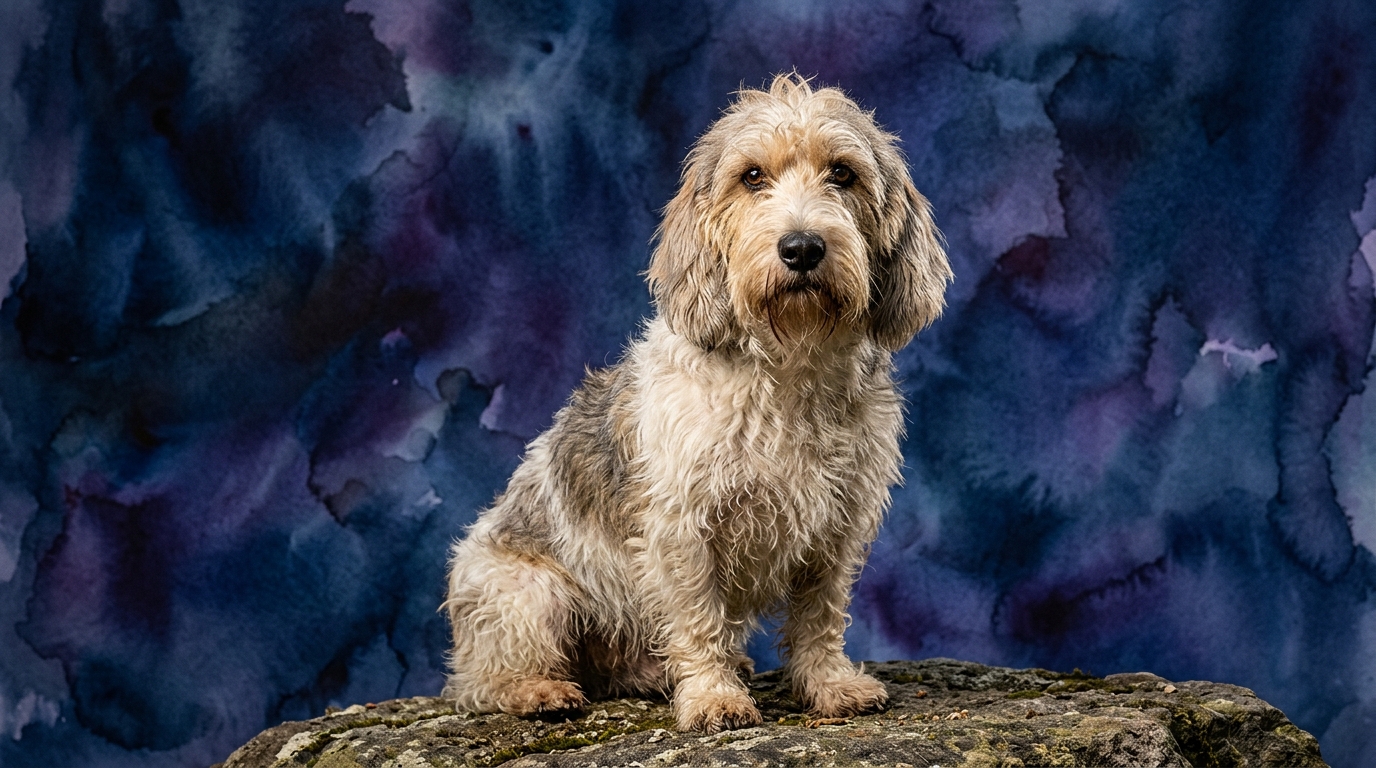
Side-by-Side IQ Profile: OES vs. PBGV
To understand the unique cognitive strengths and challenges of each breed, The Cosmic Pet Pet IQ Lab assesses five key dimensions of intelligence. Let's explore how the Old English Sheepdog and the Petit Basset Griffon Vendéen measure up.
Old English Sheepdog (OES):
Problem Solving (3/5): The OES exhibits a moderate capacity for methodical problem-solving, learning to navigate challenges effectively with consistent guidance rather than spontaneous innovation.
Training Speed (3/5): New commands are processed at a moderate pace. This breed thrives with patient, positive reinforcement and structured learning, which solidifies new behaviors.
Social Intelligence (3/5): OES show moderate understanding of human emotional states and social cues, generally amiable and responsive to family moods, seeking involvement.
Instinctive Drive (3/5): Their herding heritage imparts a moderate drive to gather and manage, often manifesting as an inclination to keep family members together or gently nudge.
Memory (4/5): A standout trait, OES possess excellent memory for commands, routines, and past experiences, enabling robust retention of complex learned behaviors.
Petit Basset Griffon Vendéen (PBGV):
Problem Solving (3/5): PBGVs show moderate ability to tackle problems, frequently employing keen senses and persistence, with solutions often driven by immediate sensory information, especially scent.
Training Speed (3/5): Learning happens at a moderate rate, but their independent spirit and susceptibility to olfactory distractions demand engaging, reward-based training to maintain focus.
Social Intelligence (3/5): These dogs possess moderate social perceptiveness, typically outgoing, enjoying interaction, though their focus may shift to environmental exploration over subtle human cues.
Instinctive Drive (3/5): The PBGV's hound lineage endows them with a robust drive for scenting and tracking, a powerful urge to follow trails that fundamentally influences their behavior.
Memory (3/5): PBGVs have moderate memory capacity, recalling commands and routines, but retention can be less precise or easily overridden by compelling scent stimuli.
Where the Old English Sheepdog Wins Cognitively
The Old English Sheepdog's cognitive profile showcases a clear advantage in memory, scoring 4/5 compared to the PBGV's 3/5. This superior retention underpins their capacity for intricate, multi-step tasks and reliable application of learned information. Their herding background requires impressive spatial memory, recalling field layouts and flock movements, which translates into remembering household rules or complex routines with greater consistency. For owners, this means a more dependable execution of previously learned commands, even in varied environments. The OES's robust long-term information storage contributes to their reputation as a consistent and reliable learner in structured scenarios.
Where the Petit Basset Griffon Vendéen Wins Cognitively
While the OES excels in memory, the Petit Basset Griffon Vendéen demonstrates distinct cognitive strength in the persistent, independent problem-solving driven by scent. Despite a 3/5 general problem-solving rating, their unique ability lies in unwavering focus on a scent trail, navigating complex terrain and making autonomous decisions based purely on olfactory cues. This involves a specialized cognitive filtering, allowing them to 'tune out' other stimuli when a compelling scent is present. This tenacious dedication to a sensory task highlights a cognitive resilience and self-directedness inherent to their hound heritage, enabling them to work autonomously and persistently towards a goal identified through their powerful senses, excelling in activities like tracking.
Which is Easier to Train and Why
Comparing training ease, the Old English Sheepdog, with its 3/5 training speed and superior 4/5 memory, generally offers a more straightforward experience. Their herding lineage fosters a collaborative spirit, making them often eager to please and responsive to direction. While learning at a moderate pace, their excellent memory ensures commands stick, and they are less prone to overwhelming environmental distractions, allowing for focused sessions. The OES's cognitive framework supports reliable retention and execution. In contrast, the PBGV, also 3/5 for training speed but with 3/5 memory, presents a different challenge. Their powerful scenting drive frequently overrides other considerations; a compelling trail can make a PBGV 'deaf' to commands. Their independent nature demands exceptionally engaging, short, positive training, often incorporating scent work. Their memory may be less robust when instinct takes hold, requiring more frequent reinforcement. Thus, the OES is generally perceived as easier to train due to stronger memory and a more collaborative disposition.
Matching Breeds to Lifestyles: Active vs. Relaxed Owners
Neither the Old English Sheepdog nor the Petit Basset Griffon Vendéen are suited for truly sedentary owners, both requiring significant energy outlets. However, their ideal activity types differ. The OES, a herding breed, thrives on consistent physical and mental engagement through structured activities like advanced obedience or agility. An owner enjoying daily vigorous walks, secure off-leash play, and regular brain games would find the OES rewarding; their needs are substantial but often predictable. The PBGV, built for endurance and exploration, demands extensive opportunities to use its nose, ideally in safe, fenced environments for tracking. They are companions for very active owners who enjoy long hikes, trail running, or scent work sports. Their energy is often boundless, less contained by indoor play. Owners preferring structured, collaborative activities might lean OES, while those reveling in vigorous, exploratory outdoor adventures will find a kindred spirit in the PBGV.
The Verdict
Opt for an Old English Sheepdog if you value a companion with an exceptional memory, a strong desire for collaboration in training, and a calm but purposeful demeanor once their exercise and cognitive needs are met. They excel in structured learning environments and offer consistent recall of learned behaviors.
Select a Petit Basset Griffon Vendéen if you are an energetic owner who embraces a dog's independent, scent-driven spirit and can provide ample opportunities for robust outdoor exploration and engaging scent work. Their tenacity and unique problem-solving in the field offer a distinct companionship experience.
🧠 Find Your Pet's IQ Score
Our Pet IQ Lab assessment covers 25+ tests across 5 cognitive dimensions — personalized to your breed.
Take the Full IQ Test →Frequently Asked Questions
Are Old English Sheepdogs hard to train?
No, Old English Sheepdogs are moderately easy to train due to their good memory and desire to collaborate. Consistency and positive reinforcement are key to harnessing their herding-bred intelligence effectively.
How much exercise does a Petit Basset Griffon Vendéen need?
Petit Basset Griffon Vendéens require significant daily exercise, often needing long walks or runs combined with opportunities for off-leash exploration in secure areas. Their strong scent drive means mental stimulation through tracking activities is also crucial.
Which breed is better for a family with children?
Both breeds can be good family dogs, but their suitability depends on the family's lifestyle. The Old English Sheepdog's patient and protective nature can make them wonderful with children, while the Petit Basset Griffon Vendéen's playful and robust energy suits active families who can manage their independent spirit.