
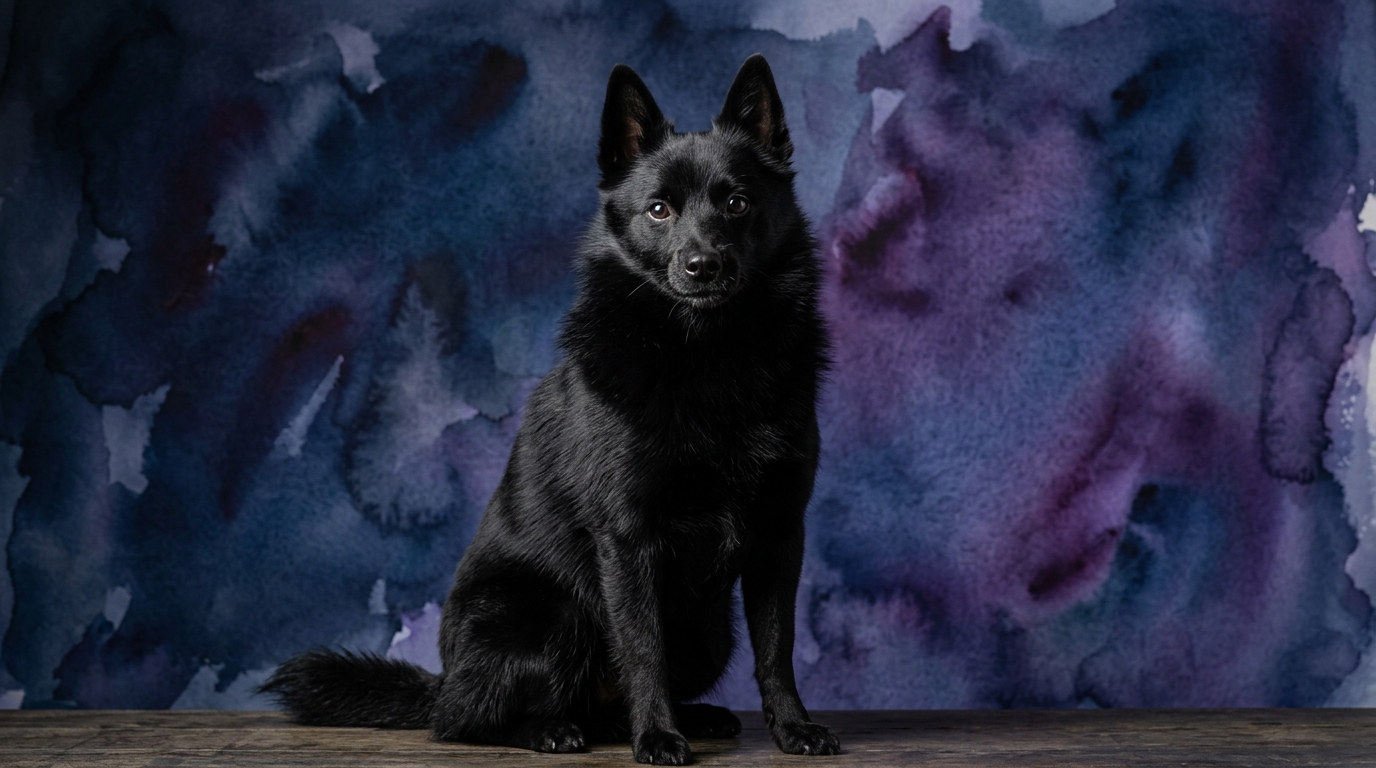
Side-by-Side Cognitive Profiles: The Cosmic Pet IQ Lab Assessment
The Cosmic Pet IQ Lab evaluates canine intelligence across five critical dimensions, providing a granular view of each breed's cognitive architecture. The Old English Sheepdog, with a Coren ranking of #44, demonstrates a balanced, moderate intellectual aptitude: their problem-solving ability scores 3/5, training speed is 3/5, social intelligence sits at 3/5, and instinctive drive is 3/5. A notable strength for the OES is their memory, rated at 4/5, suggesting a solid capacity for retaining routines and learned information over time. In contrast, the Schipperke, securing a much higher Coren ranking of #15, presents a profile marked by exceptional mental agility. This breed excels in problem-solving at a perfect 5/5, boasts a training speed of 5/5, and mirrors the OES in social intelligence (3/5) and instinctive drive (3/5). The Schipperke further distinguishes itself with a superior memory rating of 5/5, indicating an outstanding ability to recall experiences and training. These scores highlight the Schipperke's overall quicker mental processing and adaptability, while the Old English Sheepdog offers a more measured, consistent cognitive approach.
Where the Old English Sheepdog Excels Cognitively
While the Schipperke outscores the Old English Sheepdog in several raw cognitive metrics, the OES possesses distinct intellectual qualities that appeal to specific owner preferences. Their robust memory, rated 4/5, allows them to establish and adhere to routines with remarkable consistency, making them reliable companions once familiar patterns are set. This memory strength translates into a dog that remembers commands and household rules effectively, even if the initial learning phase is more gradual. Furthermore, the OES's balanced 3/5 scores in problem-solving, training speed, social intelligence, and instinctive drive suggest a less intensely independent or 'scheming' disposition compared to breeds with higher problem-solving aptitude. Owners often find their cognitive approach less inclined towards constantly testing boundaries or devising complex plans to achieve their desires. Instead, the OES applies its cognitive abilities in a more straightforward, dutiful manner, particularly in situations that echo their ancestral herding role, such as 'managing' family members or keeping track of their surroundings. Their cognitive profile suggests a steadfast, reliable partner rather than a perpetual intellectual challenger.
Where the Schipperke Demonstrates Superior Cognition
The Schipperke's cognitive profile showcases several areas of superior intellectual performance, positioning them as a truly sharp and adaptable breed. Their perfect 5/5 rating in problem-solving means they are adept at navigating complex situations, figuring out puzzles, and often finding creative solutions to obstacles, whether it's opening a cabinet or outsmarting a gate latch. This high problem-solving ability, combined with a 5/5 training speed, allows them to grasp new commands and concepts with remarkable quickness, often requiring fewer repetitions than many other breeds. Owners report that Schipperkes learn intricate sequences and advanced tricks with ease, thriving on mental challenges. Adding to this prowess is their exceptional 5/5 memory, which ensures that once something is learned, it is retained with impressive fidelity. This combination of rapid learning, superior problem-solving, and robust memory makes the Schipperke highly capable in obedience, agility, and other dog sports, readily absorbing and applying complex instructions. Their keen intellect makes them highly engaging, albeit sometimes challenging, partners for those who enjoy a dog that consistently thinks and reacts with precision.
Comparing Trainability: Patience vs. Precision
The marked differences in training speed between these two breeds lead to distinct training experiences. The Schipperke, with a training speed of 5/5, is an incredibly quick study. They absorb new commands and routines with minimal repetition, often picking up complex behaviors after just a few sessions. Their high problem-solving ability also means they can analyze situations and adjust their responses rapidly, making them excellent candidates for advanced obedience, trick training, and dog sports where precision and speed are valued. However, this sharp intellect also means they can become bored easily if not consistently challenged, potentially using their problem-solving skills to find mischief or assert independence. Conversely, the Old English Sheepdog, with a training speed of 3/5, requires a more patient and consistent approach. They will learn, but it takes more repetition and a steady hand. Their moderate problem-solving (3/5) means they are less likely to innovate solutions to bypass rules, but they also won't grasp abstract concepts as quickly. Training an OES is about building a strong, repetitive foundation, leveraging their good memory (4/5) for reinforcement, ensuring that once a behavior is learned through consistent practice, it sticks. For the OES, training is a partnership built on trust and routine; for the Schipperke, it's a dynamic intellectual engagement.
Matching Breeds to Owner Lifestyles
The distinct cognitive profiles of the Old English Sheepdog and the Schipperke lend themselves to different owner lifestyles. Owners seeking a dog that thrives on constant mental engagement, complex training, and problem-solving activities will find a superb match in the Schipperke. Their high scores in problem-solving, training speed, and memory mean they excel in environments where they are consistently challenged with new tasks, puzzles, and interactive play. They are ideal for active owners who enjoy dog sports like agility, rally, or advanced obedience, and who can dedicate time to structured training and mental stimulation to prevent boredom and potential mischief. For those with a more relaxed lifestyle, the Old English Sheepdog often proves to be a more suitable companion. While they are still herding dogs and require regular exercise and purpose, their cognitive demands are less intense. Their moderate problem-solving and training speed mean they are generally content with a steady routine and familiar activities rather than a constant stream of novel intellectual challenges. They are well-suited for owners who appreciate a steadfast, affectionate presence and are prepared for consistent, patient training, but who don't necessarily seek a canine partner for competitive dog sports or intricate problem-solving tasks. The OES offers a robust, predictable companionship, while the Schipperke offers dynamic, sharp engagement.
The Verdict
For owners who prioritize a steadfast, predictable companion that thrives on routine and consistent, patient training, the Old English Sheepdog is an excellent choice.
If you seek a sharp, quick-witted partner eager for complex mental challenges, advanced training, and active problem-solving, the Schipperke will prove to be an engaging and rewarding companion.
🧠 Find Your Pet's IQ Score
Our Pet IQ Lab assessment covers 25+ tests across 5 cognitive dimensions — personalized to your breed.
Take the Full IQ Test →Frequently Asked Questions
Are Schipperkes good for first-time owners?
Schipperkes possess a keen intellect and independent nature that can be challenging for first-time owners. Their high problem-solving and rapid learning require consistent, engaging training and mental stimulation to prevent them from outsmarting their owners or developing undesirable habits. While rewarding, they thrive best with experienced handlers who understand their intelligent, sometimes mischievous, disposition.
How much grooming does an Old English Sheepdog typically require?
Old English Sheepdogs are renowned for their voluminous double coat, which necessitates significant grooming to prevent matting and maintain skin health. Weekly brushing for several hours, along with regular professional grooming every 6-8 weeks, is typically required. Their grooming needs are substantial and a key consideration for prospective owners.
How do the instinctive drives of these breeds manifest differently?
Both breeds share a 3/5 instinctive drive, but its manifestation differs due to their heritage. The Old English Sheepdog's drive typically expresses as herding behaviors, such as 'gathering' family members or patrolling boundaries, often in a gentle, protective manner. The Schipperke's drive, stemming from their history as ratters and barge dogs, often translates into strong watchdog tendencies, a desire to hunt small prey, and a general vigilance, making them alert and sometimes vocal guardians.