
Side-by-Side IQ Profile
**Old English Sheepdog (OES):**
**Problem Solving (3/5):** The OES exhibits moderate problem-solving abilities, navigating complex herding scenarios and adapting to environmental changes, though they may not consistently devise novel solutions. Their solutions often lean on established patterns rather than spontaneous innovation.
**Training Speed (3/5):** These dogs possess a moderate training speed, absorbing new commands and routines effectively with consistent, positive reinforcement. While not instant learners, their desire to cooperate makes them receptive students over time; repetition and clear communication are key.
**Social Intelligence (3/5):** OES demonstrate moderate social intelligence, forming strong bonds with families and understanding social cues. Generally amiable with familiar individuals, they interpret human intentions, but may reserve immediate trust for their inner circle.
**Instinctive Drive (3/5):** Their instinctive drive is moderately pronounced, primarily manifesting as a strong herding impulse to gather and control. This drive can translate into attempts to "herd" family members, requiring appropriate outlets and redirection.
**Memory (4/5):** The OES stands out with robust memory, retaining commands, routines, and experiences over long periods. This excellent recall aids in herding duties, allowing them to remember flock patterns and tasks, making them reliable once learned.
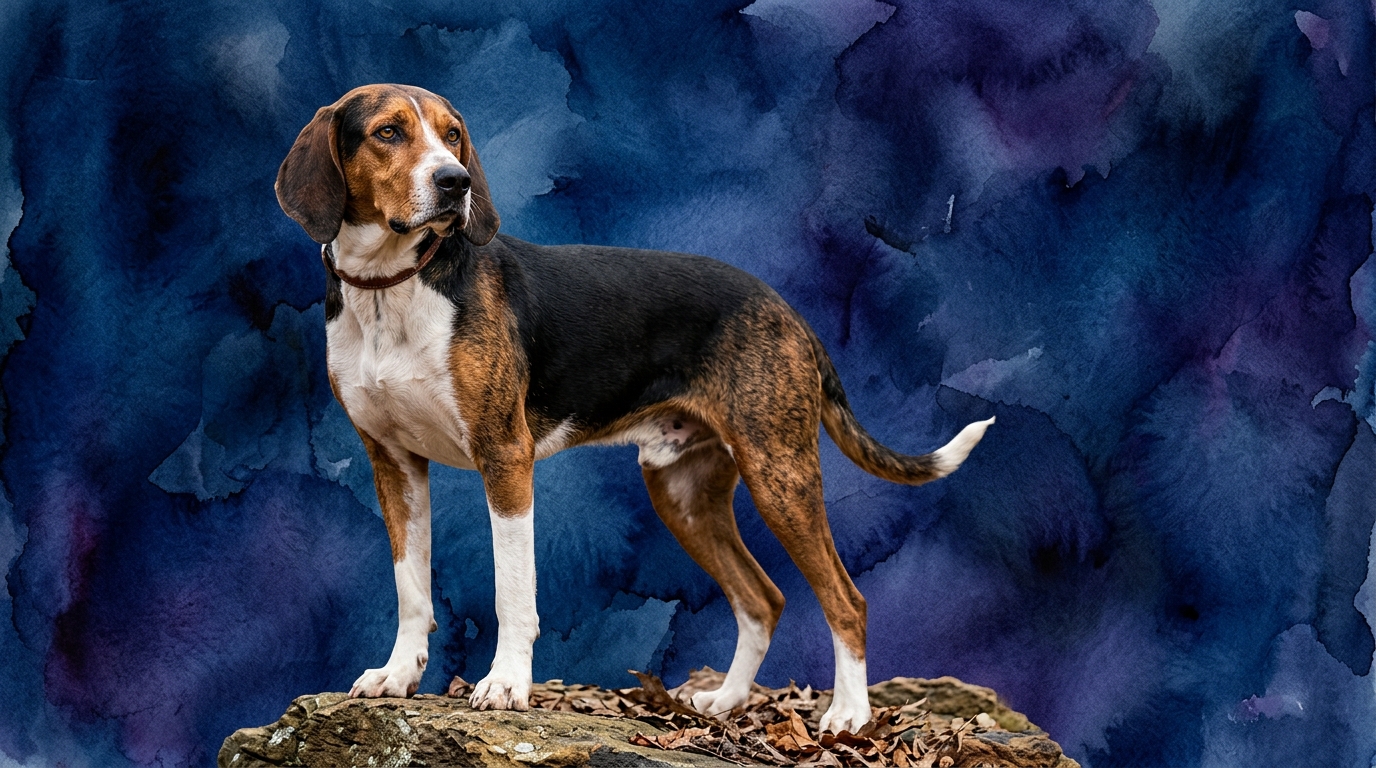
**Treeing Walker Coonhound (TWC):**
**Problem Solving (3/5):** The TWC also shows moderate problem-solving skills, particularly adept at navigating intricate scent trails and overcoming obstacles in pursuit of quarry. Their solutions are often driven by instinctual hunting strategies rather than abstract reasoning, focusing on practical outcomes.
**Training Speed (3/5):** Possessing a moderate training speed, TWCs learn commands with consistency, though their independent nature and scent focus can make them appear less eager to please. Patience and high-value rewards are essential for engagement.
**Social Intelligence (3/5):** TWCs exhibit moderate social intelligence, bonding deeply with families and generally being sociable with other dogs. They understand pack dynamics, though an intriguing scent might temporarily override social cues.
**Instinctive Drive (3/5):** Their instinctive drive is quite strong, centered around their powerful prey drive and scenting abilities. This manifests as an unwavering desire to track and "tree" animals, making them highly motivated in scent activities but prone to independent exploration.
**Memory (3/5):** The TWC has a moderate memory, capable of recalling scent patterns, hunting routes, and learned commands. While effective for specific working tasks, their recall might be less consistent than breeds with a higher memory score, especially when distracted by scent.
Where Old English Sheepdog Wins Cognitively
The Old English Sheepdog demonstrates a distinct cognitive advantage in its superior memory (4/5 compared to the TWC's 3/5). This enhanced recall means an OES is more likely to retain complex command sequences, elaborate household routines, and the intricate boundaries of their perceived "flock." For an owner, this translates into a dog that, once thoroughly trained, remains reliably consistent in its learned behaviors over extended periods, requiring less frequent refreshers. Their ability to remember specific tasks and environmental nuances makes them adept at navigating familiar situations with precision, whether remembering toy storage or a regular walk path. This strong memory also supports their herding role, where recalling livestock patterns is paramount.
Where Treeing Walker Coonhound Wins Cognitively
While their formal IQ scores appear similar, the Treeing Walker Coonhound possesses a nuanced cognitive strength rooted deeply in its instinctive drive (3/5, but manifested very differently than OES). Their problem-solving (3/5) and instinctive drive, though numerically equal to the OES, are uniquely specialized for independent, persistent pursuit. The TWC excels in sustained focus on a single sensory input – scent – to the exclusion of almost everything else. This isn't about broad cognitive superiority, but rather a specialized excellence. Their unwavering dedication to a scent trail, tirelessly navigating complex terrain, represents a distinct form of practical intelligence. This singular focus allows them to solve specific, real-world tracking challenges with remarkable tenacity and self-direction, often for hours on end, a task where the OES's herding-oriented cognition would be less effective.
Which is Easier to Train and Why
Comparing training ease, the Old English Sheepdog generally presents a more straightforward experience, primarily due to its slightly higher memory score (OES 4/5 vs. TWC 3/5) and a more inherent desire to cooperate with its human "flock." While both breeds share a moderate training speed (3/5), the OES's stronger memory allows new commands to solidify more quickly and be retained longer. Their herding instinct often translates into a willingness to work alongside and respond to their handler. In contrast, the Treeing Walker Coonhound’s powerful, independent scent drive (3/5 instinctive drive) means they are often more internally motivated by their nose than by human directives. Training a TWC requires exceptional patience, high-value rewards, and understanding their breed-specific motivations, as a compelling scent can easily override a learned command. Their singular focus on a track makes recall particularly challenging in distracting environments. Thus, the OES typically offers a more receptive and consistent learning partner.
Which Suits Active Owners vs. Relaxed Owners
For **active owners** seeking a dedicated partner in outdoor pursuits, the Treeing Walker Coonhound often aligns better, provided those activities cater to their powerful instincts. Their stamina, endurance, and profound love for exploring scent trails make them ideal companions for long hikes, scent work, or competitive tracking. These dogs thrive on consistent mental and physical challenges that engage their nose and body for extended periods, suitable for individuals enjoying wilderness adventures or rural properties.
For owners with a more **relaxed, yet still engaged, lifestyle**, the Old English Sheepdog often proves a better fit. While they possess moderate energy and enjoy regular walks and playtime, their exercise needs are generally less intense and more adaptable than the TWC's. Their herding instinct translates into a desire for purpose and companionship, making them content with structured activities like obedience or agility. They appreciate consistent routines and thrive on close interaction, suitable for individuals preferring a thoughtful walk over a strenuous chase, and valuing a dog that integrates seamlessly into a home environment.
The Verdict
If you seek a companion with excellent memory, a cooperative nature, and a moderate energy level that thrives on being part of the family "flock," the Old English Sheepdog is an excellent choice. They are well-suited for owners who appreciate consistency in learned behaviors and enjoy engaging in structured activities or simply having a devoted, shaggy presence.
Opt for the Treeing Walker Coonhound if you are an adventurous owner who can provide extensive opportunities for scent-driven activities, long explorations, and consistent training to channel their tenacious independent spirit. They are perfect for those who admire a dog's unwavering focus on a task and can accommodate their powerful drive to follow a trail.
🧠 Find Your Pet's IQ Score
Our Pet IQ Lab assessment covers 25+ tests across 5 cognitive dimensions — personalized to your breed.
Take the Full IQ Test →Frequently Asked Questions
Are Old English Sheepdogs prone to herding children?
Yes, their instinctive drive (3/5) to gather and control can sometimes manifest as attempting to "herd" children or other pets by nudging or circling. This behavior is usually playful but requires consistent training and redirection to ensure it remains appropriate and safe.
How does the Treeing Walker Coonhound's scent drive impact daily life?
The TWC's powerful instinctive drive (3/5) for scent tracking means they require secure containment, like a fenced yard, as their nose can lead them far astray. Walks should always be on a leash, and ample opportunities for scent work or brain games are crucial to satisfy this inherent need.
Which breed is better for apartment living?
Neither breed is ideally suited for small apartment living without significant commitment to exercise and mental stimulation, but the Old English Sheepdog might adapt slightly better given their less intense wandering instinct. The Treeing Walker Coonhound's need to explore and follow scents makes apartment life particularly challenging for them.