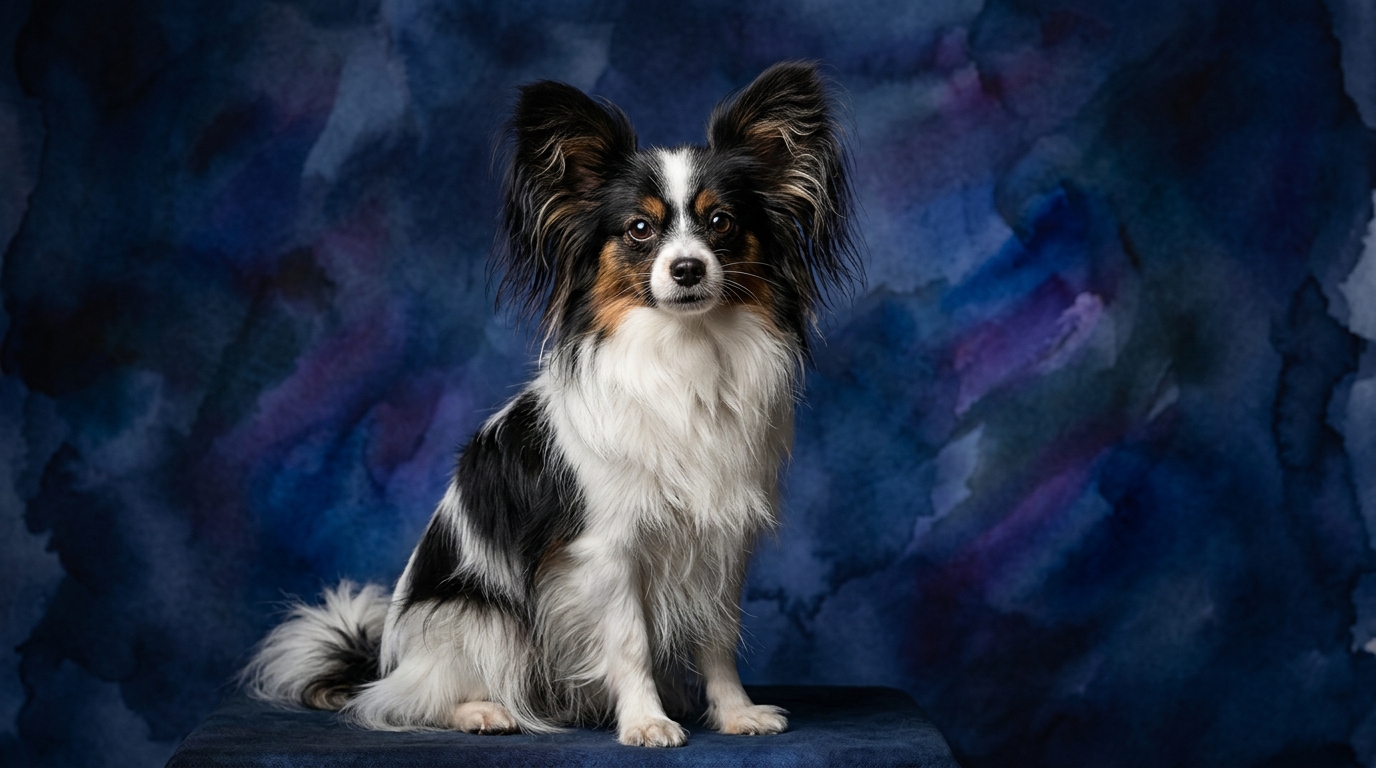
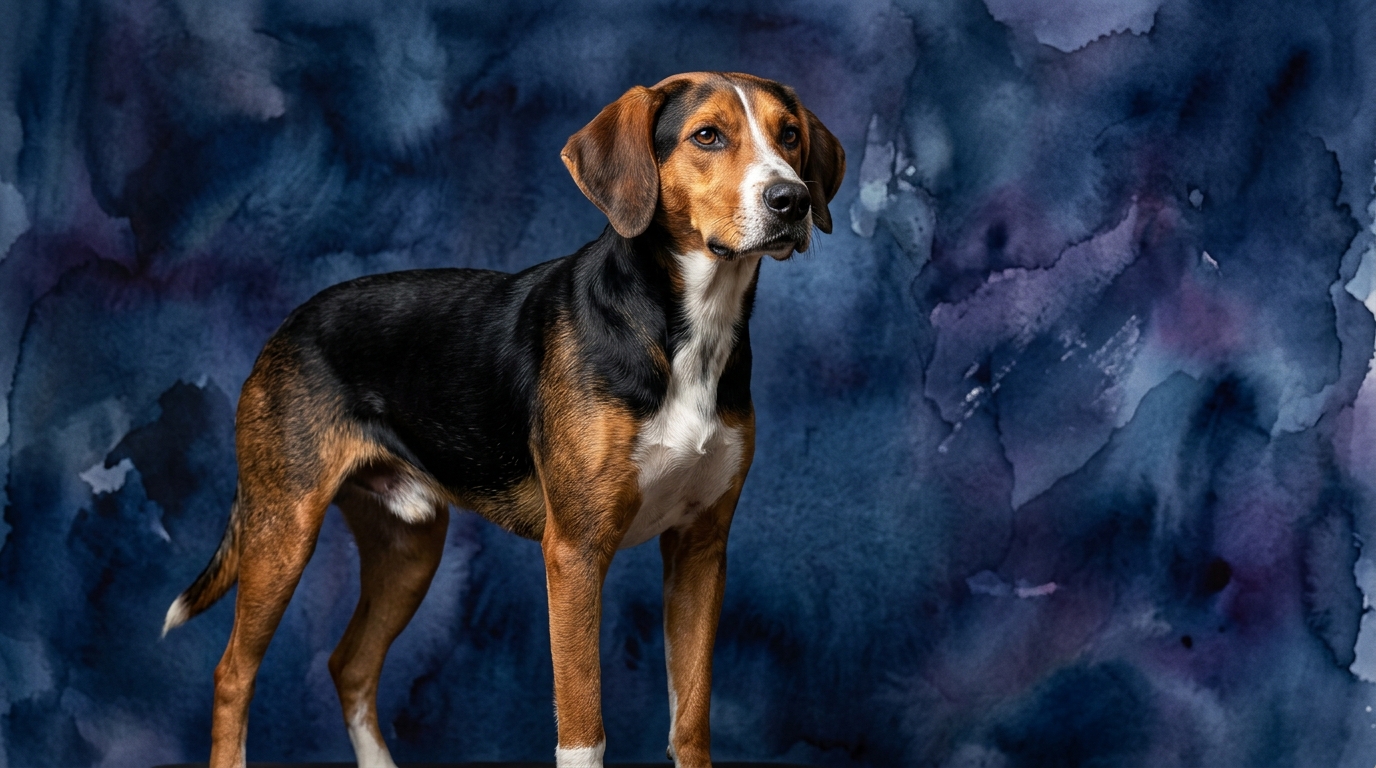
Side-by-Side Cognitive Profiles
The Cosmic Pet Pet IQ Lab employs five key dimensions to evaluate canine intelligence, offering a nuanced view beyond simple 'smart' labels. For the Papillon, a Toy breed ranked #8 by Coren, its profile shows exceptional strengths: Problem Solving is rated 5/5, indicating an outstanding capacity to navigate novel situations and figure out solutions independently. Training Speed also scores 5/5, meaning these dogs absorb new commands and behaviors with remarkable quickness. Their Social Intelligence is a robust 4/5, suggesting a keen awareness of human cues and emotions, while Instinctive Drive is a balanced 3/5, preventing overwhelming primal urges. Finally, Memory stands at an impressive 5/5, allowing them to retain learned information and experiences over long periods, contributing to their reputation for complex task mastery.
In contrast, the American Foxhound, a purebred Hound breed without a specific Coren ranking, presents a profile geared more towards its specialized heritage. Across all five dimensions – Problem Solving, Training Speed, Social Intelligence, Instinctive Drive, and Memory – the American Foxhound consistently scores 3/5. This does not imply a lack of ability, but rather a different prioritization of cognitive resources. Their problem-solving is often applied to deciphering scent trails, their training speed requires consistent, patient methods, and their social intelligence is typically strong within a familiar pack or family unit. Their instinctive drive, while rated 3/5, is powerfully directed towards scenting and tracking, and their memory is robust for recalling specific trails and locations rather than abstract commands.
Where the Papillon's Mind Shines
The Papillon's cognitive architecture is built for rapid assimilation and intricate interaction. With a perfect 5/5 in Problem Solving and Training Speed, a Papillon can quickly learn multi-step commands, excel in dog sports like agility and obedience, and even master complex tricks that involve sequential actions. Owners often observe their Papillons independently figuring out how to open latches, retrieve specific toys on command, or navigate obstacle courses with minimal guidance after initial training. This high problem-solving capacity, combined with a 5/5 memory, means they not only learn fast but also retain that knowledge, making them highly adaptable companions in various living situations.
Their 4/5 Social Intelligence further amplifies their cognitive appeal, allowing them to pick up on subtle human body language and vocal inflections. This sensitivity means a Papillon can often anticipate an owner's desires or react appropriately to emotional states, fostering a deep, communicative bond. Unlike breeds with exceptionally high instinctive drives, the Papillon's 3/5 rating ensures their focus can be readily redirected towards human-centric activities and learning, rather than being constantly pulled by primal urges, making them exceptionally responsive partners in training and daily life.
The American Foxhound's Unique Cognitive Strengths
While the American Foxhound’s 3/5 scores across the board might seem modest compared to the Papillon, these ratings reflect a specialized, purpose-driven intelligence honed over centuries for scent work. Their Problem Solving, though 3/5, is acutely focused on the intricate challenge of tracking a scent over varied terrain, deciphering faint traces, and overcoming environmental obstacles to reach a goal. This isn't about solving abstract puzzles, but about persistent, methodical deduction in a sensory-rich environment. A Foxhound's mind excels at filtering out irrelevant stimuli to concentrate on a specific odor, a complex cognitive feat in itself.
The American Foxhound's Memory (3/5) is particularly strong when it comes to recalling specific scent patterns and the routes associated with them, crucial for effective hunting or search and rescue operations. Their Instinctive Drive (3/5) is heavily weighted towards olfaction, providing an unwavering motivation to follow a trail. This single-minded dedication, while sometimes challenging for owners seeking quick obedience, is a testament to their profound cognitive specialization. Their Social Intelligence (3/5) allows them to function effectively within a pack, whether canine or human, understanding their role and communicating through established social structures, which is essential for coordinated hunting efforts.
Training: A Tale of Two Approaches
Training ease dramatically favors the Papillon, primarily due to its 5/5 Training Speed and Memory, coupled with its 4/5 Social Intelligence. Papillons are eager to please and quickly grasp what is expected of them, often requiring only a few repetitions to solidify a new command. Their strong memory ensures that once a behavior is learned, it is not easily forgotten. They respond well to positive reinforcement methods and thrive on interactive training sessions that engage their quick minds. Their relatively lower instinctive drive (3/5) means they are less likely to be distracted by external stimuli and will maintain focus on their handler.
The American Foxhound, with its 3/5 scores in Training Speed and Memory, presents a different training journey. These hounds require significant patience, consistency, and an understanding of their deep-seated independent nature. Their powerful scent drive (3/5 instinctive drive) means that a compelling scent can easily override any command, making off-leash reliability a long-term goal that demands dedicated effort. Training must be highly motivating, often incorporating their love for sniffing and exploring. While they are capable of learning, their pace is slower, and retention may require more frequent reinforcement. Owners must recognize that a Foxhound's primary motivation is often its nose, not necessarily human approval, necessitating a different motivational strategy.
Matching Canine Minds to Lifestyles
For owners seeking a highly interactive, mentally stimulating companion, the Papillon is an ideal match. Their high problem-solving and training speed make them perfect for individuals who enjoy teaching tricks, participating in dog sports like agility, or simply engaging in complex puzzle toys. They thrive in environments where their quick minds are regularly challenged, and their social intelligence allows them to integrate seamlessly into family life, often enjoying quiet cuddle time as much as a brisk walk. A Papillon can adapt well to apartment living if provided with sufficient mental exercise and regular, albeit moderate, physical activity. Their compact size and adaptable nature make them suitable for owners who prefer a more relaxed approach to outdoor excursions but are committed to indoor mental engagement.
The American Foxhound, conversely, is best suited for active owners who relish outdoor adventures and possess a deep appreciation for hound characteristics. Their instinctive drive for scenting requires extensive opportunities for exploration in secure, fenced areas or on long, leashed hikes where they can follow intriguing trails. These dogs need significant physical exercise to be content, thriving with daily long runs or brisk walks. They are not content to be couch potatoes and can develop undesirable behaviors if their needs for physical and mental stimulation through scent work are not met. Owners must be prepared for their independent nature and the vocalizations (baying) that often accompany their breed's heritage, making them less suited for very relaxed or noise-sensitive living situations.
The Verdict
Choose the Papillon if you desire a quick-witted, highly trainable companion eager for mental challenges and close interaction, thriving in a home that values consistent engagement and intellectual play.
Opt for the American Foxhound if you are an active, patient owner who can provide ample outdoor space, consistent training for their independent, scent-driven nature, and appreciate a dog with a profound connection to its primal instincts.
🧠 Find Your Pet's IQ Score
Our Pet IQ Lab assessment covers 25+ tests across 5 cognitive dimensions — personalized to your breed.
Take the Full IQ Test →Frequently Asked Questions
Is a Papillon easy to house train?
Yes, Papillons are generally very easy to house train due to their high training speed (5/5) and strong memory (5/5). Their desire to please their owners and ability to quickly understand routines contributes significantly to their success in this area, often grasping concepts in just a few repetitions.
Do American Foxhounds make good family pets?
American Foxhounds can make good family pets, especially for active families who understand their needs for exercise and scent work. Their social intelligence (3/5) means they generally get along well with children and other pets, but their independent nature and strong drive require consistent training and supervision.
Which breed is better for apartment living?
The Papillon is generally better suited for apartment living due to its smaller size and lower requirement for vast outdoor space, provided its mental and moderate physical exercise needs are met. The American Foxhound's need for extensive exercise and opportunities to use its nose makes apartment living challenging, as it requires large, secure outdoor areas.