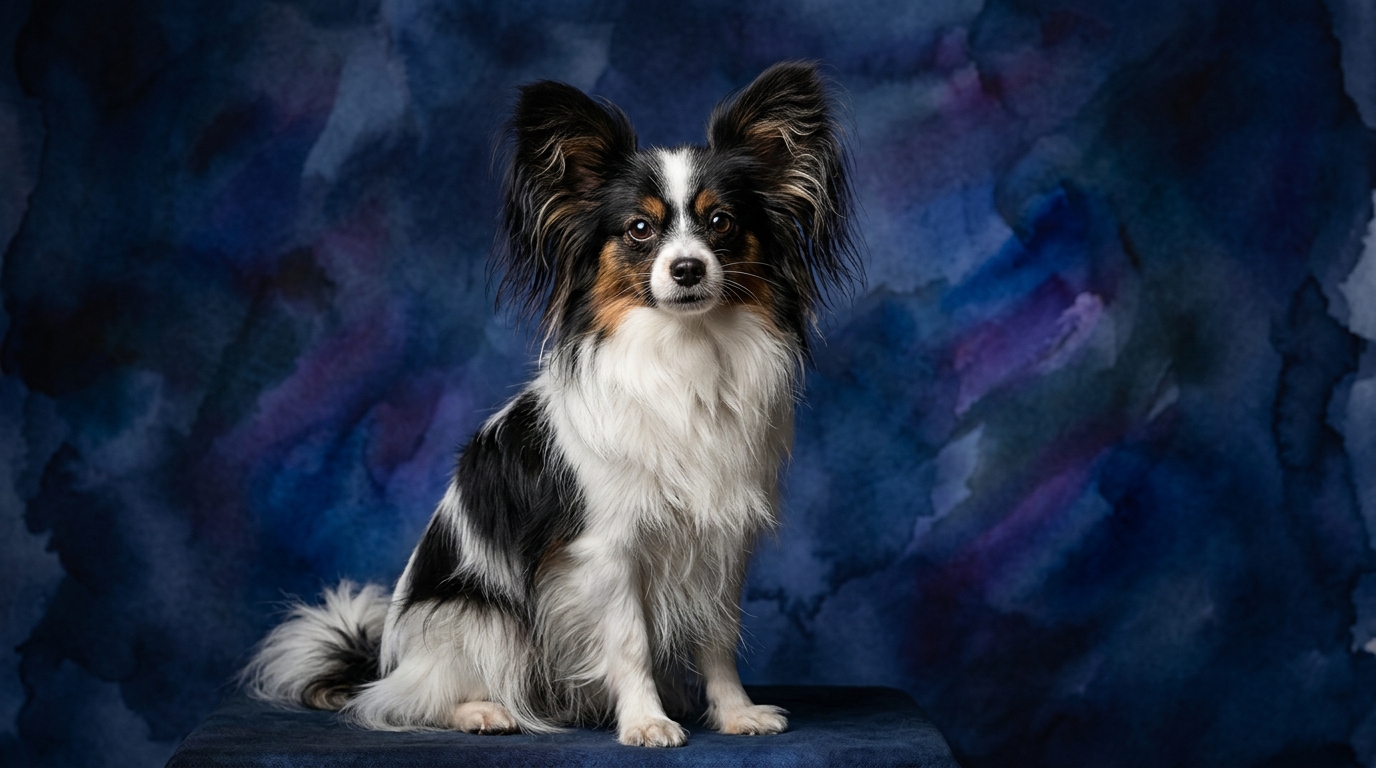
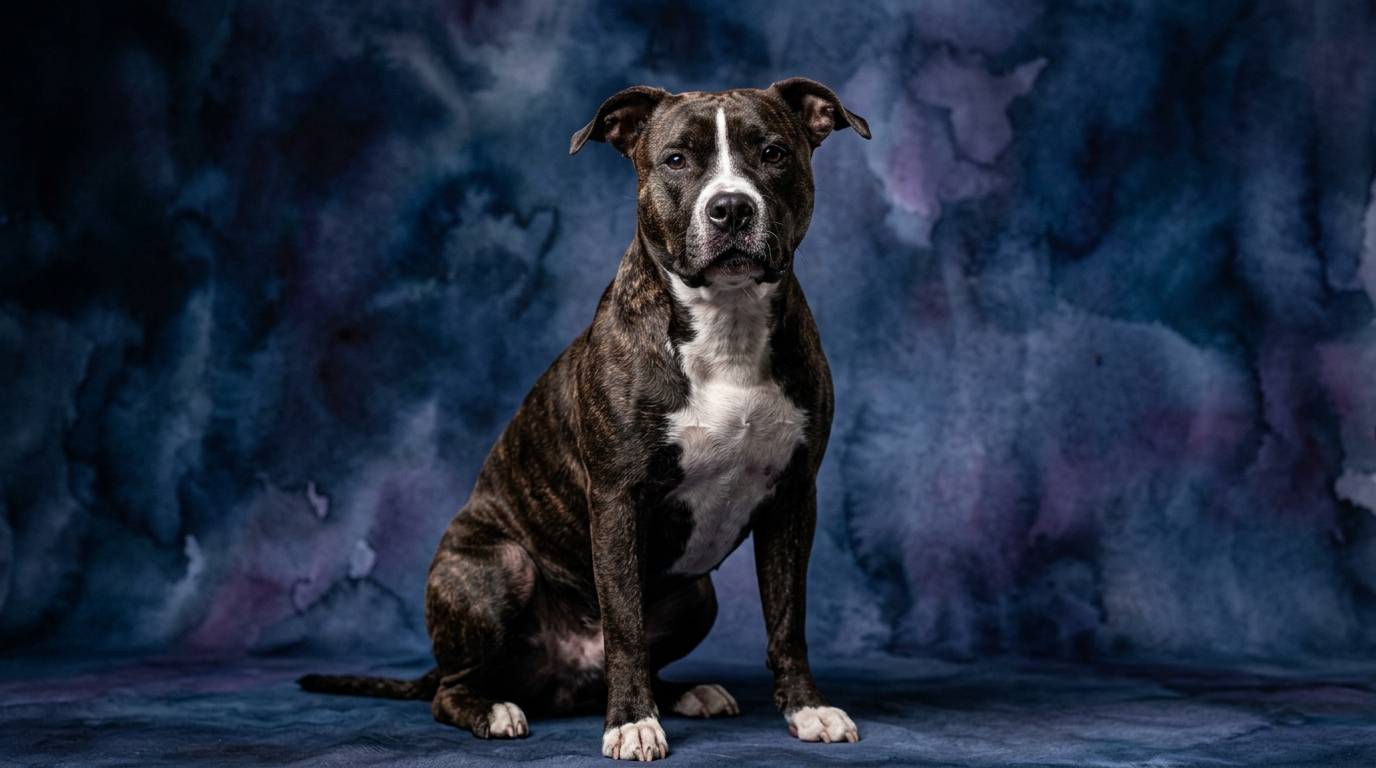
Side-by-Side IQ Profile: Papillon vs. American Staffordshire Terrier
The Cosmic Pet Pet IQ Lab employs a five-dimensional framework to assess canine intelligence, offering a granular view of each breed's cognitive strengths. For the Papillon, ranked #8 by Coren, its profile paints a picture of exceptional mental agility across the board. Its Problem Solving score is a perfect 5/5, indicating a remarkable ability to swiftly analyze and devise novel solutions to complex environmental puzzles. Training Speed also earns a 5/5, meaning these dogs grasp new commands and routines with astonishing efficiency, often requiring minimal repetitions. Social Intelligence stands at a strong 4/5, reflecting a keen understanding of human emotions and social cues, allowing them to navigate varied interactions with grace. Instictive Drive is rated 3/5, suggesting a moderate inclination for activities like chasing or agility, which is typically channeled into playful pursuits. Finally, Memory scores an impressive 5/5, underpinning their rapid learning and retention of vast repertoires of commands and experiences over long periods.
In contrast, the American Staffordshire Terrier, holding a Coren rank of #48, presents a cognitive profile emphasizing steadfastness and practical application. Its Problem Solving ability is rated 3/5, indicating a solid capacity to tackle practical challenges and learn effective strategies, though perhaps not with the spontaneous inventiveness of higher-scoring breeds. Training Speed also sits at 3/5; AmStaffs learn new commands at a steady, consistent pace, responding well to clear instructions and positive reinforcement, requiring more repetition but showing persistence. Social Intelligence is 3/5, meaning they form deep, loyal bonds with their families and reliably interpret human intentions, often requiring more deliberate socialization for unfamiliar people or situations. Instictive Drive matches at 3/5, reflecting a moderate terrier heritage for activities like digging or energetic play, which needs appropriate outlets. A robust Memory score of 4/5 means American Staffordshire Terriers retain learned commands, routines, and experiences for extended durations, contributing significantly to their reliability in familiar environments and with established training.
Where the Papillon Wins Cognitively
The Papillon clearly shines in areas demanding rapid cognitive processing and intricate learning. Their 5/5 problem-solving score means they aren't just following commands; they are actively analyzing environmental challenges and formulating novel solutions. For instance, a Papillon might independently figure out how to manipulate a latch to open a cabinet or creatively stack objects to reach a treat, showcasing an innate ingenuity that sets them apart. This contrasts with the AmStaff's more practical, learned problem-solving approaches, which rely more on established patterns. Furthermore, their 5/5 training speed means they absorb new information with astonishing efficiency, making them adept at mastering complex multi-step routines, competitive obedience, or even advanced trick training in a fraction of the time it would take many other breeds. This quick uptake minimizes frustration for both dog and trainer, fostering a dynamic and progressive learning environment. The Papillon’s 5/5 memory underpins these strengths, allowing them to retain vast repertoires of commands and experiences, ensuring that once a lesson is learned, it is rarely forgotten, contributing to their consistent performance across various cognitive tasks and their overall adaptability to new learning.
Where the American Staffordshire Terrier Wins Cognitively
While the Papillon often exhibits faster learning and problem-solving, the American Staffordshire Terrier brings distinct cognitive strengths to the table, particularly in areas demanding focused application and physical engagement. Their 4/5 memory, while slightly lower than the Papillon's, is still highly effective, allowing them to reliably remember extensive training cues and routines, especially those associated with their daily lives and family interactions. This strong recall contributes significantly to their dependability and consistency once a behavior is thoroughly learned, making them reliable companions in established patterns. Their 3/5 social intelligence, combined with their inherent loyalty, means they excel at forming deep, intuitive bonds with their primary caregivers, often demonstrating a nuanced understanding of their family's emotional states and routines. This social attunement, though perhaps less broadly applied than the Papillon's, is intensely focused, making them exceptionally devoted and responsive companions within their trusted circle. Their moderate instinctive drive (3/5) also means they possess the cognitive engagement for sustained physical activities or working tasks where their determination and physical capabilities are an asset, such as scent work or certain dog sports, provided the motivation is strong and consistent.
Which is Easier to Train and Why
Based on The Cosmic Pet Pet IQ Lab's metrics, the Papillon is unequivocally easier to train, primarily due to its superior training speed and problem-solving abilities. A Papillon's 5/5 training speed means they often pick up new commands within five repetitions or less, quickly associating actions with verbal cues or hand signals. This rapid acquisition means less time spent on foundational exercises and more time available for advanced concepts. For example, teaching a Papillon a 'stay' command across varying distances and distractions might take only a few focused sessions, whereas an American Staffordshire Terrier, with its 3/5 training speed, would likely require more consistent, prolonged repetition across diverse environments to achieve the same level of reliability. The Papillon’s 5/5 problem-solving also means they are more likely to 'figure out' what you want them to do, even with subtle cues, rather than solely relying on rote memorization. An AmStaff, while capable of learning, benefits more from structured, consistent training methods that break down tasks into smaller, manageable steps, relying on their 4/5 memory for retention rather than spontaneous insight. This difference manifests in behavioral contexts, where a Papillon might independently generalize a learned behavior to a new context, while an AmStaff might need specific training for each new scenario for optimal performance.
Which Suits Active Owners vs. Relaxed Owners
When considering owner lifestyle, both breeds can fit active households, but their cognitive and physical energy profiles lean differently. The Papillon, with its high cognitive drive (5/5 problem-solving, 5/5 training speed) and moderate instinctive drive (3/5), thrives with owners who enjoy mental stimulation and engage in dog sports like agility, obedience, or rally. They are excellent companions for active owners who want a dog that can keep pace mentally during long walks, hikes, or even competitive events, but their smaller size means their physical exertion needs are met relatively easily. For relaxed owners, a Papillon can adapt, but their sharp minds still require consistent engagement to prevent boredom, which might manifest as mischievous problem-solving, making them perhaps less suitable for purely sedentary lifestyles. The American Staffordshire Terrier, possessing a 3/5 instinctive drive and a robust physical build, often suits owners who enjoy more physically demanding activities like long runs, vigorous play sessions, or structured working tasks. While they also benefit from mental stimulation (3/5 problem-solving), their cognitive engagement often pairs well with physical exertion. For relaxed owners, an AmStaff might present challenges if their significant physical energy and moderate drive are not adequately channeled, potentially leading to destructive behaviors or restlessness. Therefore, an owner seeking a highly biddable, mentally agile companion for varied activities might lean Papillon, while an owner prioritizing a physically robust, loyal companion for consistent, structured activity might prefer an AmStaff.
The Verdict
Choose the Papillon if you seek a highly trainable, mentally agile companion eager to master complex commands, excel in dog sports, and offer nuanced social interactions, thriving on intellectual challenges.
Choose the American Staffordshire Terrier if you desire a loyal, physically capable companion with a robust memory, who thrives on consistent training, structured physical activity, and deep family bonds.
🧠 Find Your Pet's IQ Score
Our Pet IQ Lab assessment covers 25+ tests across 5 cognitive dimensions — personalized to your breed.
Take the Full IQ Test →Frequently Asked Questions
Is the Papillon easily frustrated if not mentally stimulated?
Yes, a Papillon's exceptional cognitive capacity, particularly their 5/5 problem-solving and memory, means they require consistent mental engagement. Without adequate stimulation, they can become bored and may invent their own 'puzzles,' which might include undesirable behaviors like excessive barking or finding ways to access forbidden items.
How does the American Staffordshire Terrier's social intelligence impact its family life?
The AmStaff's 3/5 social intelligence, coupled with their inherent loyalty, allows them to form very strong, intuitive bonds with their immediate family. They are often highly attuned to their owners' routines and emotions, making them affectionate and responsive companions within their trusted circle, though they may be more reserved with strangers.
Can an American Staffordshire Terrier participate in dog sports despite its lower training speed score?
Absolutely. While their 3/5 training speed means they may take longer to learn new skills than a Papillon, their 4/5 memory ensures excellent retention once learned. With patient, consistent training and positive reinforcement, AmStaffs can excel in various dog sports like obedience, rally, and even agility, leveraging their physical capabilities and determination.