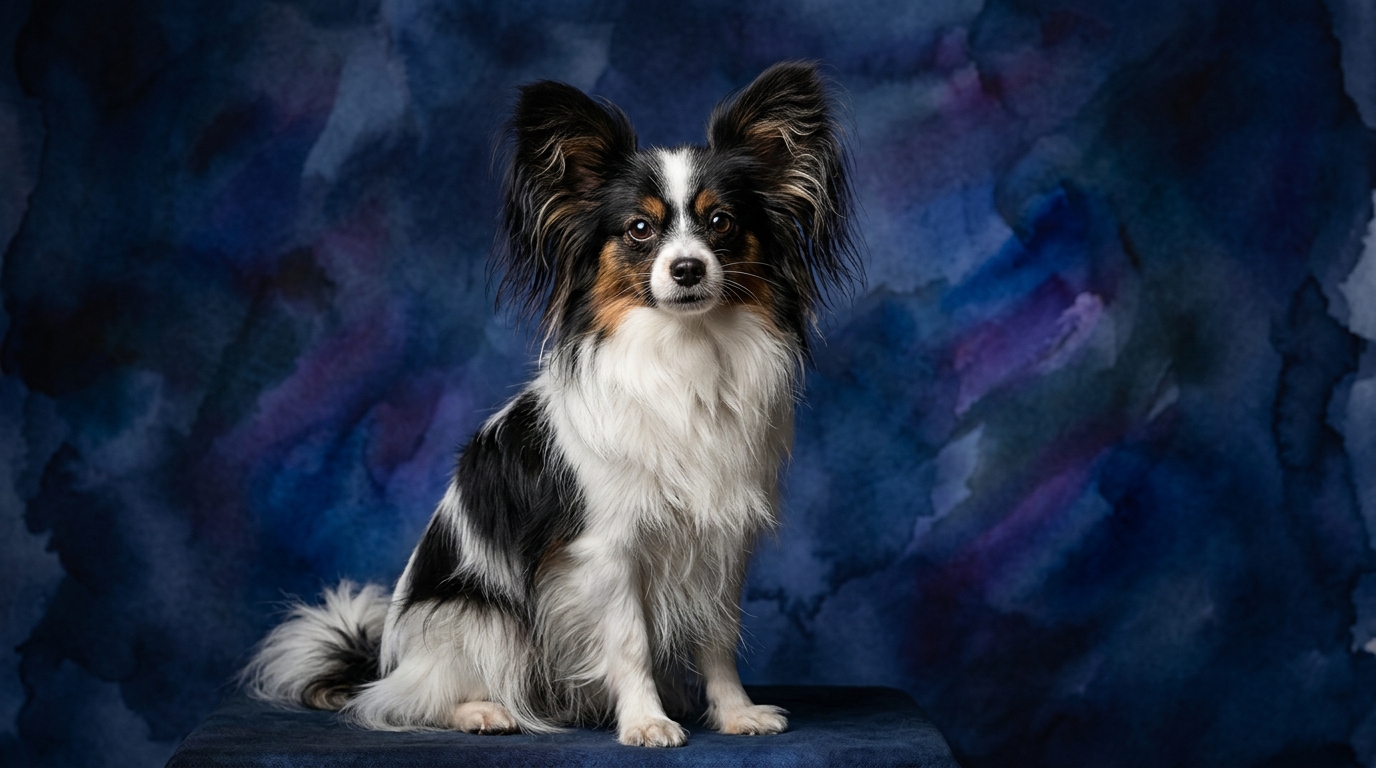
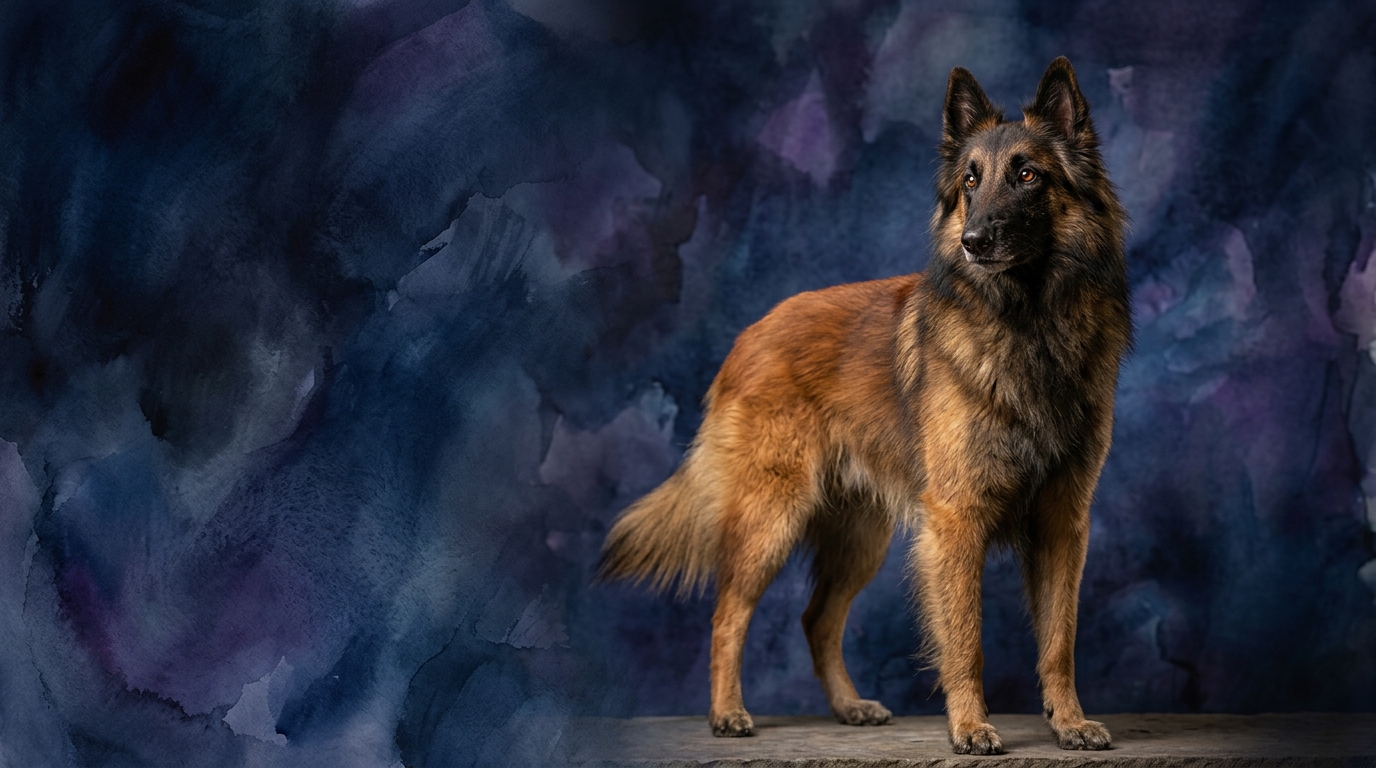
Side-by-Side IQ Profile: Papillon vs. Belgian Tervuren
At The Cosmic Pet Pet IQ Lab, we evaluate canine intelligence across five key dimensions, providing a granular view of each breed's cognitive strengths. Here’s how the Papillon and Belgian Tervuren compare:
**Papillon (Toy, Coren rank #8)**: This charming companion demonstrates an exceptional capacity for independent thought, earning a **Problem Solving score of 5/5**. Their agility and quick wit translate into creative solutions for novel challenges. When it comes to learning new commands and routines, the Papillon achieves a perfect **Training Speed of 5/5**, grasping concepts rapidly, often with just a few repetitions. Their **Social Intelligence is rated at 4/5**, indicating a keen awareness of human emotions and social cues, allowing them to adapt behavior to various social contexts. With an **Instinctive Drive of 3/5**, their primary motivations are channeled towards companionship and engaging with their human families, though they retain some natural hunting instincts for small prey. Finally, their **Memory stands at 5/5**, showcasing an outstanding ability to recall learned behaviors, routines, and specific people and places over extended periods.
**Belgian Tervuren (Herding, Coren rank #14)**: The Tervuren possesses a powerful intellect for dissecting complex situations, also scoring a **Problem Solving 5/5**. This often manifests in tasks requiring strategic thinking and resilience. Like the Papillon, the Tervuren absorbs new information with impressive speed, earning a **Training Speed of 5/5**; they are quick studies capable of mastering intricate commands. Their **Social Intelligence is rated 3/5**, meaning while they form strong bonds, their social acumen is primarily focused on their immediate family, often taking a more reserved approach in new social settings. An **Instinctive Drive of 3/5** reflects their heritage as purpose-driven herding and protection dogs, inclining them towards work, structure, and mental challenges. Their **Memory is also 5/5**, demonstrating exceptional long-term recall for complex training sequences and environmental information, crucial for their working roles.
Where the Papillon Wins Cognitively
The Papillon distinguishes itself primarily through its superior Social Intelligence (4/5 compared to the Tervuren's 3/5). This means they are often more attuned to the subtle emotional shifts and social dynamics within a human household. A Papillon might more quickly pick up on a handler's frustration or joy, adjusting their own behavior accordingly, perhaps offering comfort or initiating play at just the right moment.
This higher social acumen makes Papillons exceptional at forming deep, nuanced emotional connections and navigating complex social interactions with people and other animals, often displaying a charming adaptability in varied social environments. Their ability to read and respond to human intent can make them feel remarkably intuitive and empathetic companions, creating a bond that feels particularly responsive and understanding.
Where the Belgian Tervuren Wins Cognitively
While both breeds share top marks in Problem Solving and Training Speed, the Tervuren's cognitive strengths often manifest in a different, more robust application, particularly owing to its Herding group background. Its 5/5 problem-solving capacity is frequently geared towards intricate, multi-step tasks requiring sustained focus and strategic planning, such as navigating complex obstacle courses or managing a livestock scenario.
This breed excels in environments demanding resilience and a high degree of independent judgment, applying its intellect to challenges that require both physical endurance and mental fortitude. The Tervuren's cognitive edge lies in its capacity for intense, prolonged engagement with demanding work, often displaying a singular purposefulness in achieving a task-oriented goal that a smaller companion breed might not sustain.
Which is Easier to Train and Why
Both breeds boast a perfect 5/5 Training Speed, indicating rapid learning. However, the *experience* of training can differ significantly for owners. The Papillon, with its higher Social Intelligence (4/5), often presents as easier to train for the average owner. They are typically eager to please and highly responsive to human feedback, making them naturally inclined to cooperative learning.
Papillons frequently view training as a fun, bonding activity, readily engaging with new cues and tasks due to their desire for interaction. In contrast, while the Belgian Tervuren also learns quickly (5/5), its intense nature and deep working drives (3/5 Instinctive Drive directed towards purpose) mean training often requires a more structured, consistent, and mentally stimulating approach. Tervurens thrive on challenge and precision; they might question repetitive drills without a clear purpose or become bored if not adequately challenged. Their training demands a handler who can provide clear direction, consistent rules, and engage their powerful intellect with meaningful, progressive tasks, rather than just simple obedience repetition.
Which Suits Active Owners vs. Relaxed Owners
The Belgian Tervuren is unequivocally suited for active owners. Its Herding background dictates a significant need for both rigorous physical exertion and profound mental engagement. Owners should be prepared for daily, structured activities that go beyond simple walks, such as advanced obedience, agility, tracking, or even herding sports. A Tervuren thrives when given a job to do and will become restless and potentially destructive without sufficient outlets for its powerful drives and intellect.
For relaxed owners, the Papillon presents a more adaptable option. While they are energetic and enjoy play, their exercise requirements are generally met with regular walks, interactive games, and indoor mental stimulation. They are content to curl up with their owners after a good play session, making them suitable for lifestyles that might not involve intense daily outdoor adventures, provided their minds are still kept active with puzzles and learning opportunities.
The Verdict
Choose the Papillon if you seek a highly socially intuitive companion who thrives on close interaction, learns quickly with a joyful eagerness, and fits into a moderately active household that values mental engagement without extreme physical demands.
Opt for the Belgian Tervuren if you are an experienced, active owner prepared to channel a powerful intellect and robust working drive into structured training, demanding sports, and a life rich with purpose-driven activity.
🧠 Find Your Pet's IQ Score
Our Pet IQ Lab assessment covers 25+ tests across 5 cognitive dimensions — personalized to your breed.
Take the Full IQ Test →Frequently Asked Questions
Do Papillons require as much mental stimulation as Belgian Tervurens?
While Papillons are highly intelligent and do require regular mental engagement through training and puzzles, their needs are generally less intense and prolonged than those of a Belgian Tervuren. A Tervuren's working background means it thrives on continuous, complex mental challenges, whereas a Papillon's mental stimulation can often be integrated into daily interactive play and learning sessions.
Are Papillons and Belgian Tervurens good with children?
Both breeds can be good with children, but their approaches differ. Papillons, with their higher social intelligence, often adapt well to family dynamics and can be playful companions, though their delicate size requires gentle handling. Belgian Tervurens form strong bonds with family members, including children, but their herding instincts might lead to nipping at heels if not properly managed, so supervision and training are essential.
Which breed is more prone to separation anxiety?
Both breeds can develop separation anxiety if not properly socialized and trained for alone time, but for different reasons. Papillons, being highly social and attuned to their owners, can become overly dependent if not taught independence. Belgian Tervurens, with their intense focus and desire for purpose, can become stressed if left without mental or physical outlets for extended periods, leading to anxious behaviors.