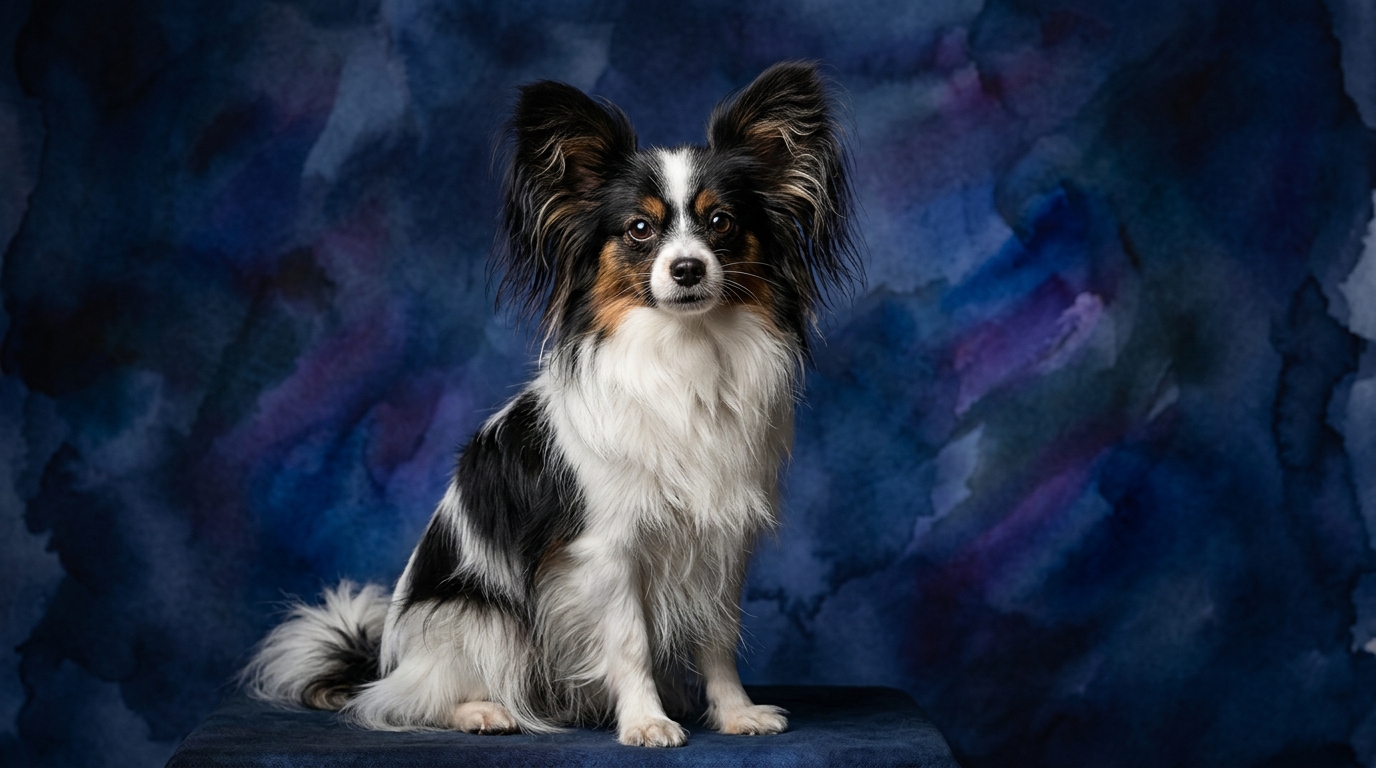
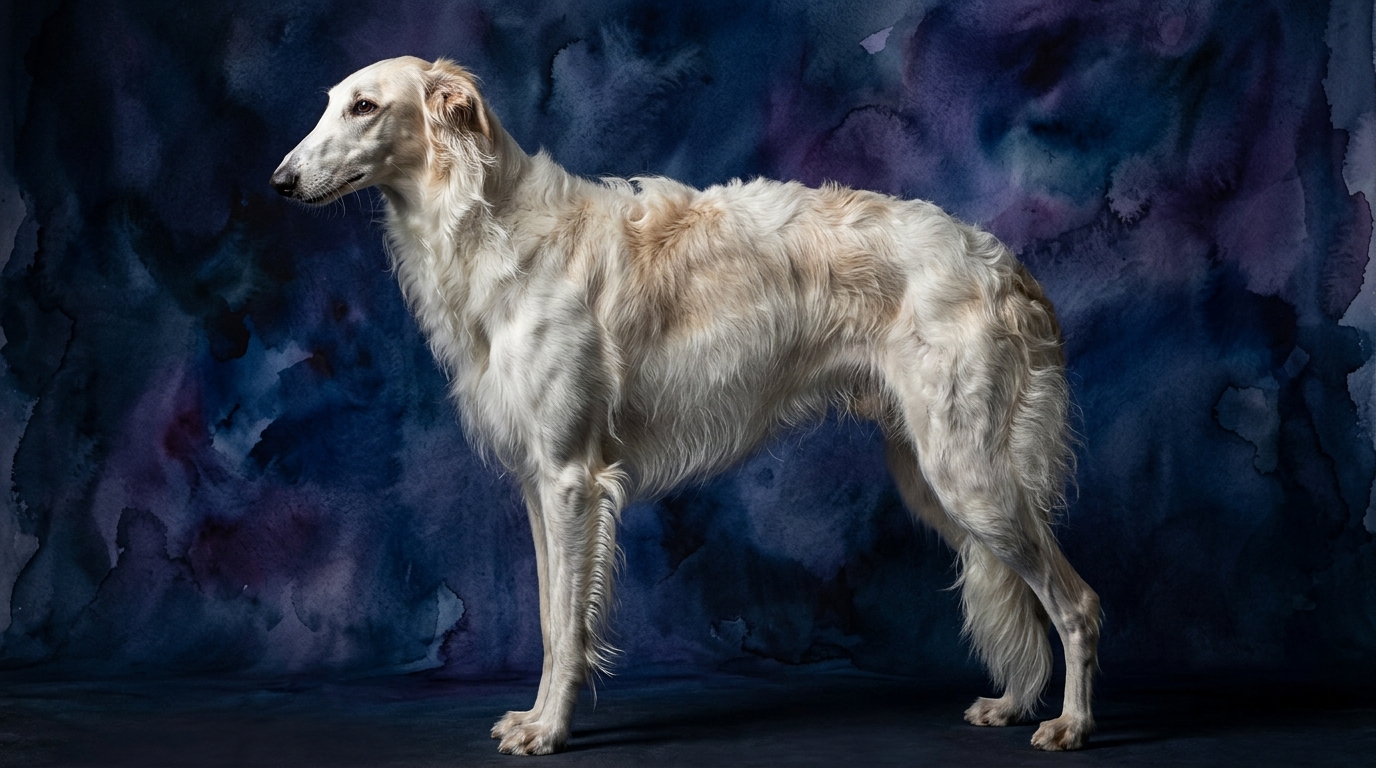
Side-by-Side IQ Profile: Papillon vs. Borzoi
The Cosmic Pet Pet IQ Lab employs a comprehensive five-dimensional framework to assess canine intelligence, moving beyond simple obedience to encompass a fuller picture of a dog's cognitive strengths. Let's examine how the Papillon and Borzoi measure up across these crucial dimensions.
The Papillon, celebrated for its spirited demeanor, holds an impressive Coren Rank of 8, signifying exceptional learning speed. Their Problem Solving ability rates a perfect 5/5, indicating an innate capacity to analyze situations and devise strategies, whether it's puzzle toys or complex environments. Training Speed also scores a flawless 5/5; these diminutive dogs absorb new commands and routines with remarkable alacrity, often requiring minimal repetitions. In Social Intelligence, the Papillon achieves a solid 4/5, demonstrating a keen awareness of human emotional states and cues, allowing them to adapt their behavior and form strong, nuanced bonds. Their Instinctive Drive is rated at 3/5, suggesting a moderate level of inherent drives like curiosity. Finally, their Memory is outstanding at 5/5, enabling them to recall a vast repertoire of commands and routines over extended periods, making them incredibly consistent.
In contrast, the magnificent Borzoi, a breed of immense elegance, occupies a Coren Rank of 75, placing them in a category of breeds that learn at a more deliberate pace, often due to their independent nature. Their Problem Solving ability is rated 3/5; while capable, they may approach challenges with a more direct methodology, relying on instinct. Training Speed also registers at 3/5; the Borzoi requires consistent, patient training to engage their interest and solidify new behaviors. Social Intelligence stands at 3/5; Borzoi are typically polite and observant but may not display overt eagerness or complex social engagement, often preferring a calm, reserved presence. Their Instinctive Drive, also 3/5, is powerfully expressed in their sighthound heritage, manifesting as a strong, visually triggered prey drive. Their Memory, at 3/5, allows them to retain routines and commands, but perhaps with less immediate recall for infrequently used cues.
Where the Papillon Wins Cognitively
The Papillon's cognitive strengths shine brightly in scenarios demanding rapid learning, intricate problem-solving, and close cooperative work. Their perfect 5/5 scores in Problem Solving, Training Speed, and Memory converge to make them exceptionally adept at activities like competitive obedience, agility, and freestyle heelwork. A Papillon quickly learns complex command sequences, navigates elaborate obstacle courses with precision, and remembers every cue. This cognitive agility allows them to adapt swiftly to new environments, master novel tricks, and even anticipate their owner's next move, making them highly responsive partners. Their keen social intelligence further enhances this, as they read subtle human body language and vocal inflections, fine-tuning their responses.
Where the Borzoi Wins Cognitively
While the Papillon excels in cooperative cognitive tasks, the Borzoi demonstrates a different, equally valuable intelligence, rooted in their sighthound heritage. Their cognitive strengths lie in independent decision-making, particularly in situations requiring swift, autonomous action based on visual cues. A Borzoi's instinctive drive, a highly specialized operational intelligence, enables them to spot distant movement, assess trajectory, and execute a high-speed pursuit with remarkable precision and endurance, all without direct human command. This is a self-reliant form of problem-solving—identifying and capturing prey. Furthermore, their reserved social intelligence allows for calm, discerning observation of their surroundings, often processing information subtly and reacting with measured responses. They possess excellent spatial reasoning, necessary for navigating open fields at speed.
Which is Easier to Train and Why
Without a doubt, the Papillon is significantly easier to train in traditional obedience and trick work, primarily due to their stellar 5/5 Training Speed, 5/5 Memory, and 4/5 Social Intelligence. These dogs possess an inherent eagerness to engage with their human companions, soaking up new information and retaining it reliably. They are highly motivated by positive reinforcement and the opportunity to interact and please their owners, making training sessions a joyful and productive collaborative effort. Their sharp minds mean they grasp concepts quickly, often requiring just a few repetitions before a behavior is learned and reliably performed, leading to rapid progress and a wide repertoire of learned skills.
The Borzoi, with its 3/5 Training Speed and 3/5 Social Intelligence, presents a different training challenge. Their sighthound independence means they are less inherently inclined to blindly follow commands, especially if a more compelling instinctual drive presents itself. Training a Borzoi requires immense patience, consistency, and a deep understanding of their motivations. They are not 'stubborn,' but rather self-directed thinkers who need to understand the 'why' behind a command or find value in the interaction. Forceful methods are counterproductive; instead, positive reinforcement, short and engaging sessions, and making training feel like a collaborative game are crucial. While they can learn, the process is typically slower and requires more dedication from the handler to maintain interest and ensure reliable recall.
Owner Suitability: Active Minds vs. Relaxed Spirits
For owners active in a cognitive sense, seeking a dog for regular training, dog sports, or complex mental stimulation, the Papillon is an exceptional match. Their quick wits and insatiable curiosity mean they thrive on challenges, whether mastering advanced obedience, excelling in agility, or learning myriad tricks. While they enjoy walks, their 'activity' often leans heavily towards mental engagement and cooperative tasks. An owner who enjoys teaching and interacting on an intellectual level will find the Papillon an incredibly rewarding and responsive partner, always ready for the next learning opportunity.
Conversely, the Borzoi often suits owners who appreciate a more relaxed, independent companion, particularly those who can provide specific types of physical outlets. Despite their origins, Borzoi are famously calm and quiet indoors, content to lounge gracefully for long periods. Their exercise needs, while significant, are typically met through intense, short bursts of running in a securely fenced area, allowing them to stretch their long legs and satisfy sighthound instincts. They do not demand constant mental puzzles in the same way a Papillon might. An owner valuing a dignified, self-possessed presence, enjoying leisurely walks, and facilitating safe, exhilarating sprints will find the Borzoi a perfectly balanced and serene companion.
The Verdict
Choose the Papillon if you desire a highly interactive, quick-witted companion eager for constant mental challenges, excelling in cooperative training, and thriving on mastering new skills alongside you.
Choose the Borzoi if you appreciate a calm, elegant, and independent companion who values quiet companionship, requires specific bursts of physical activity in a secure space, and learns at its own deliberate pace, offering a different kind of loyal presence.
🧠 Find Your Pet's IQ Score
Our Pet IQ Lab assessment covers 25+ tests across 5 cognitive dimensions — personalized to your breed.
Take the Full IQ Test →Frequently Asked Questions
Are Papillons good for first-time dog owners?
Yes, Papillons can be excellent for first-time dog owners due to their eagerness to learn, high trainability, and adaptability. Their small size and desire for interaction make them relatively easy to manage, provided their mental stimulation needs are met.
Do Borzoi require a lot of exercise?
Borzoi need a specific type of exercise: opportunities for short, intense sprints in a large, securely fenced area to satisfy their sighthound instincts. While they enjoy walks, they are generally calm indoors and do not require constant, high-impact activity.
Can Borzoi live with other pets?
Borzoi can often live harmoniously with other pets, especially if raised with them from a young age. However, their strong prey drive means careful introductions and supervision are essential, particularly with very small, fast-moving animals like cats or rodents.