
Side-by-Side IQ Profile: Papillon vs. Briard
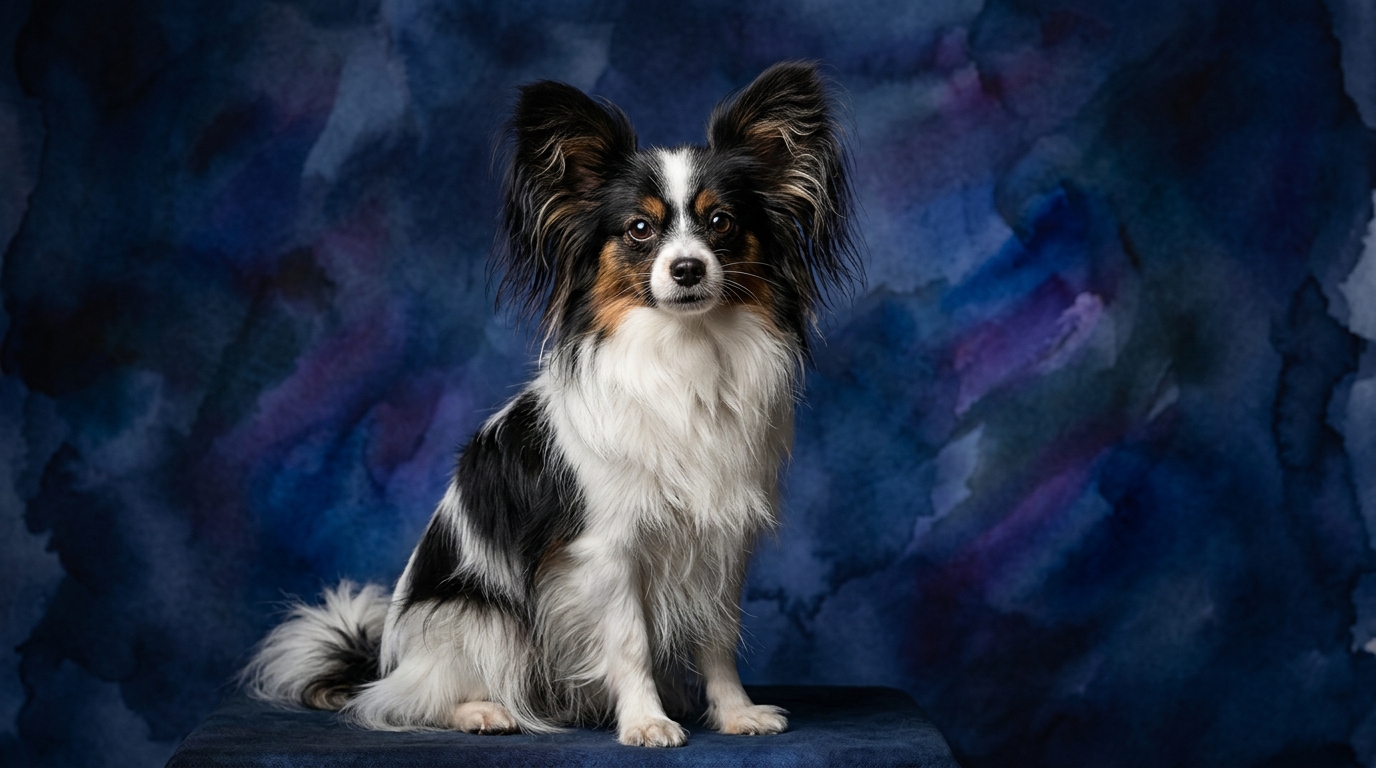
The Cosmic Pet Pet IQ Lab assesses canine intelligence across five dimensions, revealing how each breed's history shapes its mental aptitudes. For the Papillon, a spirited toy breed, its profile signals exceptional mental agility. A Problem Solving score of 5/5 means these dogs excel at figuring out novel situations and devising creative solutions, from complex puzzle toys to manipulating their environment. Its Training Speed, also 5/5, indicates a rapid grasp of new commands and routines, often with minimal repetitions. Social Intelligence, at 4/5, highlights a keen awareness of human emotions and social cues, fostering deep bonds and appropriate responses. Instinctive Drive, rated 3/5, suggests moderate innate behaviors, present in play but less dominant than in working breeds. Finally, its Memory score of 5/5 underpins its capacity to retain learned information and experiences long-term, ensuring reliability in recalling commands.
In contrast, the Briard, a majestic French herding breed, possesses a cognitive blueprint tailored for demanding pastoral duties. Its Problem Solving score of 4/5 reflects a solid capability to assess and resolve challenges, particularly those involving livestock management or complex terrain. This problem-solving is often characterized by thoughtful consideration and independent decision-making, rather than lightning-fast processing. Its Training Speed, at 4/5, indicates a commendable ability to learn, though it may require a more consistent and patient approach than the Papillon. Social Intelligence, scoring 3/5, points to a functional understanding of its human companions and flock, sufficient for its protective and herding roles, perhaps less focused on subtle emotional nuances. The Briard's Instinctive Drive also stands at 3/5, aligning with its inherent herding and guarding behaviors. Its Memory score of 4/5 signifies a robust capacity to recall learned tasks, routes, and individuals, crucial for its responsibilities in dynamic settings.
Where the Papillon's Cognitive Strengths Shine
The Papillon's cognitive prowess is most evident in its unparalleled speed and adaptability across various learning domains. Its perfect 5/5 in Problem Solving means these dogs often anticipate consequences or discover shortcuts with striking efficiency, quickly mastering new games or navigating complex environments. This isn't just about figuring out a treat dispenser; it’s about observing human routines and drawing conclusions, like understanding that a specific sound precedes a walk. Coupled with a 5/5 Training Speed, the Papillon exhibits an almost instantaneous absorption of new commands, often understanding a cue after just a few repetitions. This quick cognitive processing allows for a broader and more diverse repertoire of learned behaviors. Furthermore, its 5/5 Memory ensures that these rapidly acquired skills and insights are retained long-term, making the Papillon a remarkably consistent performer in learned tasks and a keen observer of patterns. This combination of rapid acquisition, deep understanding, and lasting retention positions the Papillon as a swift cognitive performer.
Where the Briard's Cognitive Prowess Excels
While the Papillon excels in cognitive speed, the Briard's strengths lie in a different dimension of intelligence: robust, independent application within a demanding working context. The Briard's 4/5 Problem Solving, though numerically lower, manifests as a resilient and strategic approach to real-world challenges, particularly those requiring perseverance and sound judgment over extended periods, such as guiding a flock or guarding property. This isn't about quick tricks but about sustained, purposeful decision-making. Its 3/5 Social Intelligence, combined with its inherent protective instincts, translates into a profound, unwavering loyalty and a nuanced understanding of its family's safety needs, making it an astute guardian. The Briard processes information with a depth that supports its role as a watchful protector, often assessing situations for potential threats rather than seeking immediate human approval. Its 4/5 Memory is particularly effective for recalling complex territorial boundaries, livestock movements, or the specific behaviors of its charges, enabling it to perform intricate, multi-stage tasks reliably over vast areas. The Briard's cognitive profile is geared towards steadfast, practical intelligence, where endurance and independent reasoning are paramount.
Training Dynamics: Papillon vs. Briard
When considering ease of training, the Papillon holds a distinct advantage, primarily due to its exceptional Training Speed (5/5) and Problem Solving (5/5). These dogs typically pick up new commands with remarkable rapidity, often grasping the intent after only a handful of repetitions. Their eagerness to engage and their high motivation to please, combined with their sharp cognitive processing, make training sessions efficient and often enjoyable for both dog and owner. A Papillon is more likely to offer behaviors proactively, attempting to “figure out” what you want. In contrast, the Briard, with a Training Speed of 4/5, is certainly capable and willing to learn, but might require a more patient and consistent approach. Briards are independent thinkers, a trait vital for their herding lineage, meaning they might question commands or require clear justification for a task before fully committing. Their learning style often benefits from structured, positive reinforcement that appeals to their desire for purpose, rather than just quick rewards. While both breeds are trainable, the Papillon generally offers a smoother, faster learning curve, making it potentially less challenging for novice owners, whereas the Briard thrives with an owner who understands and respects its thoughtful, sometimes deliberate, nature.
Lifestyle Match: Active vs. Relaxed Owners
The choice between a Papillon and a Briard also hinges significantly on an owner's lifestyle. The Papillon, despite its small stature, possesses a vibrant cognitive engine that requires regular stimulation. While it can adapt to apartment living, its 5/5 Problem Solving and 5/5 Memory mean it needs consistent mental engagement through puzzle toys, trick training, or dog sports to prevent boredom. A relaxed owner who only offers minimal mental exercise might find their Papillon inventing its own, potentially mischievous, forms of entertainment. However, its physical exercise needs are moderate, making it suitable for owners who enjoy regular walks and indoor play but aren't necessarily seeking a running partner.
The Briard, on the other hand, is unequivocally suited for active owners. As a herding breed, its Instinctive Drive (3/5) combined with its robust physique demands substantial physical exertion and purposeful mental work. A Briard needs daily opportunities to run, explore, and engage in activities that challenge its problem-solving (4/5) and memory (4/5) capabilities, such as advanced obedience, agility, or even simulated herding tasks. A relaxed owner who cannot provide hours of outdoor activity and mental challenges would likely find a Briard becoming restless, potentially exhibiting undesirable behaviors stemming from unfulfilled needs. Its independent nature and protective instincts also necessitate consistent training and socialization from an active owner who can guide its powerful intellect and physique.
The Verdict
Choose the Papillon if you desire a highly adaptable, quick-witted companion that thrives on mental games, learns new tasks with astonishing speed, and forms deep, emotionally resonant bonds, all within a compact package requiring moderate physical exercise.
Choose the Briard if you are an active, experienced owner seeking a steadfast, protective, and independently thoughtful companion capable of robust problem-solving in real-world scenarios, willing to dedicate substantial time to its physical exercise and consistent, purposeful training.
🧠 Find Your Pet's IQ Score
Our Pet IQ Lab assessment covers 25+ tests across 5 cognitive dimensions — personalized to your breed.
Take the Full IQ Test →Frequently Asked Questions
Do Papillons make good service dogs due to their high IQ?
Papillons possess exceptional cognitive abilities, particularly in training speed and memory, which are valuable traits for service work. While their small size limits some physical tasks, their intelligence makes them adept at alerting, emotional support, and retrieving light objects, making them excellent candidates for specific service roles where physical strength isn't paramount.
How does the Briard's herding background influence its social intelligence?
The Briard's 3/5 social intelligence is shaped by its herding history, where independent decision-making and a watchful nature were crucial for managing flocks. This manifests as a deep loyalty and protectiveness towards its family, often being reserved with strangers and relying on its own judgment in social situations rather than seeking constant external validation, which can be mistaken for aloofness.
Is a Papillon always 'smarter' than a Briard because of its higher scores?
Not necessarily; 'smarter' depends on the context and type of intelligence valued. While the Papillon excels in cognitive speed and learning new commands rapidly, the Briard demonstrates a robust, practical intelligence suited for sustained, independent problem-solving in complex real-world scenarios. Both breeds possess distinct and valuable forms of intelligence, tailored to their historical roles and different owner expectations.