
Side-by-Side Cognitive Profiles
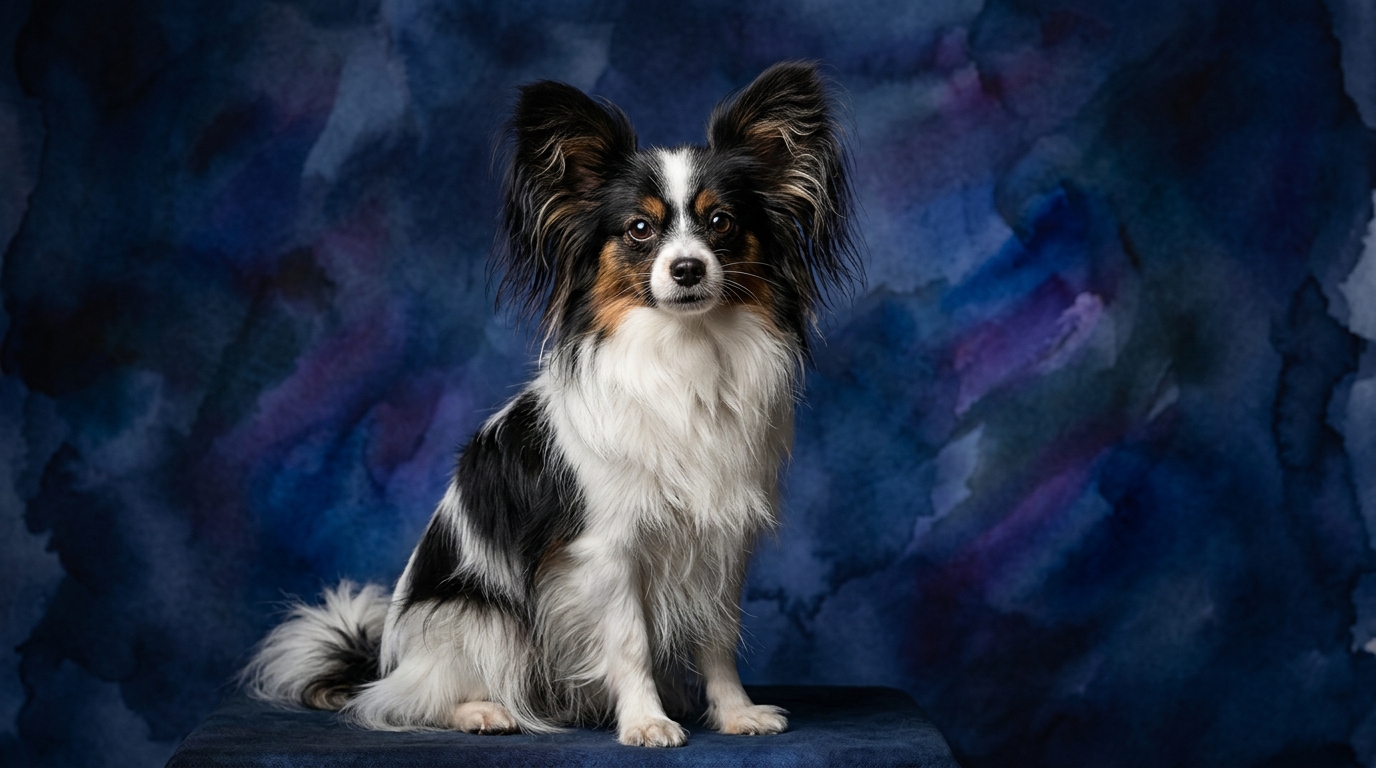
The Cosmic Pet Pet IQ Lab provides a comprehensive framework for understanding canine cognition across five key dimensions. For the Papillon, a Toy breed with a Coren ranking of #8, these dimensions paint a picture of mental agility: Problem Solving (5/5), Training Speed (5/5), Social Intelligence (4/5), Instinctive Drive (3/5), and Memory (5/5). Papillons exhibit exceptional aptitude for navigating complex tasks, quickly figuring out how to open latches or retrieve hidden treats, their minds constantly seeking solutions. They pick up new commands and routines with remarkable swiftness, often requiring only a few repetitions to master a new behavior. Papillons are attuned to human emotions and social cues, often anticipating their owner's moods and responding with appropriate affection or playful encouragement. While not primarily bred for intense working roles, they retain a moderate drive, often manifesting as a keen interest in chasing small moving objects or learning agility courses. Their recall for learned commands, routines, and even specific people or places is outstanding, remembering skills learned long ago.
In contrast, the English Bulldog, a Non-Sporting breed ranked #77 by Coren, presents a different cognitive landscape: Problem Solving (2/5), Training Speed (2/5), Social Intelligence (4/5), Instinctive Drive (3/5), and Memory (2/5). English Bulldogs approach problem-solving with a more deliberate, sometimes less inventive, style, often requiring more guidance to navigate novel challenges. While capable of learning, they typically require more patience and repetition during training, with a slower learning process often due to their independent nature and preference for comfort over constant engagement. Bulldogs display a strong, albeit calm, social awareness, forming deep bonds with their families and often showing a gentle understanding of human emotional states. Similar to Papillons, they possess a moderate instinctive drive, but it often manifests as a desire for comfort, companionship, and perhaps a short burst of playful energy. While they remember their loved ones and core routines, English Bulldogs may not retain complex sequences or less frequently practiced commands with the same precision, making consistency in training crucial.
Where the Papillon Excels Cognitively
The Papillon's cognitive strengths are particularly evident in areas requiring quick processing and adaptive thinking. Their Problem Solving score of 5/5 means they are adept at navigating novel situations, whether it's figuring out how to retrieve a toy stuck under furniture or mastering intricate tricks. This mental agility allows them to quickly interpret and respond to changes in their environment or training tasks, making them highly adaptable companions.
Furthermore, their 5/5 Training Speed and 5/5 Memory scores combine to create a formidable learner. A Papillon can grasp complex multi-step commands in fewer repetitions than many other breeds, and once learned, those behaviors stick. This makes them exceptional candidates for advanced obedience, agility, or even canine freestyle, where precise recall and rapid execution of sequences are paramount. Their ability to retain information over long periods means less 're-training' and more building upon existing knowledge, fostering continuous skill development.
Where the English Bulldog Excels Cognitively
While the English Bulldog's cognitive profile might suggest a less 'active' mind, their strengths lie in a different dimension of intelligence, particularly their social and emotional resilience. With a 4/5 Social Intelligence score, the English Bulldog is remarkably attuned to the emotional atmosphere of their home, offering a comforting and steadfast presence. They excel at understanding the subtle non-verbal cues from their family, often providing quiet companionship exactly when it's needed without demanding constant interaction.
Their moderate Instinctive Drive (3/5) complements their calm demeanor, meaning they are less prone to anxiety born from under-stimulation. Instead of needing constant mental challenges, their contentedness often stems from security and companionship. This emotional stability and strong social bond, while not always expressed through flashy tricks, represents a profound form of cognitive strength that contributes significantly to their role as beloved family members. Their deliberate approach to learning also means they are less likely to be impulsive, often preferring to observe before acting.
Which is Easier to Train and Why
The Papillon clearly holds the advantage in terms of ease of training, a direct result of their superior scores in Problem Solving, Training Speed, and Memory. Their eagerness to learn and retain information means new commands are acquired rapidly, often with just a few repetitions. Papillons thrive on mental stimulation and enjoy the process of learning, making them highly responsive to positive reinforcement methods. For instance, teaching a Papillon a new trick like "spin" or "weave" might take mere minutes across a few short sessions, as they quickly understand the desired action and remember the sequence. Their mental agility allows them to generalize commands, applying a learned behavior in different contexts.
Conversely, training an English Bulldog requires a different approach, characterized by patience and consistency. Their lower scores in Problem Solving, Training Speed, and Memory mean they will take longer to grasp new concepts and may require more frequent reinforcement to solidify learned behaviors. An English Bulldog might need dozens of repetitions over several days to master a simple command like "stay," and distractions can easily reset their progress. Their independent nature often means they need to be convinced that performing a task is worthwhile, often through high-value treats or engaging play, rather than an inherent desire to please. The key is making training fun and short, preventing boredom which they are prone to.
Which Suits Active Owners vs Relaxed Owners
For active owners seeking a canine companion to match their energetic lifestyle, the Papillon is an undeniable fit. Their high scores in Problem Solving, Training Speed, and Memory, coupled with their moderate Instinctive Drive, mean they excel in activities that demand both physical and mental engagement. Papillons thrive on agility courses, advanced obedience, rally, and even canine freestyle, where their quick thinking and ability to recall complex sequences are invaluable. They are also excellent companions for long walks, hikes, or even urban explorations, always ready for the next adventure and eager to learn new things along the way. Their need for regular mental and physical exercise means they are happiest with owners who can provide consistent opportunities for engagement.
In contrast, the English Bulldog is ideally suited for owners with a more relaxed pace of life. Their lower scores in Problem Solving, Training Speed, and Memory, combined with their generally calm demeanor and moderate instinctive drive, mean they do not require intense mental or physical exertion to be content. A leisurely stroll around the block, a comfortable spot on the sofa, and consistent companionship are often enough to satisfy an English Bulldog. While they enjoy short bursts of play, their physical build and brachycephalic nature make them less suited for prolonged strenuous activity. Owners who appreciate a steadfast, affectionate, and relatively low-maintenance companion will find the English Bulldog an ideal match, as their contentment comes from a peaceful home environment and close family bonds rather than constant activity.
The Verdict
Choose a Papillon if you seek a highly trainable, mentally agile companion eager for new challenges and capable of mastering complex tasks. They thrive with owners who can provide consistent mental stimulation and enjoy an active, engaging lifestyle.
Opt for an English Bulldog if your lifestyle is more relaxed and you desire a calm, affectionate companion content with moderate activity and a consistent, loving home environment. They are best for owners who appreciate a steadfast presence and are patient with training.
🧠 Find Your Pet's IQ Score
Our Pet IQ Lab assessment covers 25+ tests across 5 cognitive dimensions — personalized to your breed.
Take the Full IQ Test →Frequently Asked Questions
Are Papillons good for first-time dog owners?
Yes, Papillons can be excellent for first-time owners due to their eagerness to learn and trainability. Their quick grasp of commands and desire to please make the training process rewarding, though their need for mental stimulation means owners should be prepared for engagement.
Do English Bulldogs require a lot of exercise?
No, English Bulldogs do not require extensive exercise; short, leisurely walks are usually sufficient. Due to their physical build and respiratory considerations, prolonged strenuous activity should be avoided, making them suitable for less active lifestyles.
Can a Papillon and an English Bulldog live together peacefully?
Yes, with proper introductions and socialization, a Papillon and an English Bulldog can coexist peacefully. Their temperaments, though different in energy, are generally amenable to other dogs, with the calm Bulldog often tolerating the more energetic Papillon.