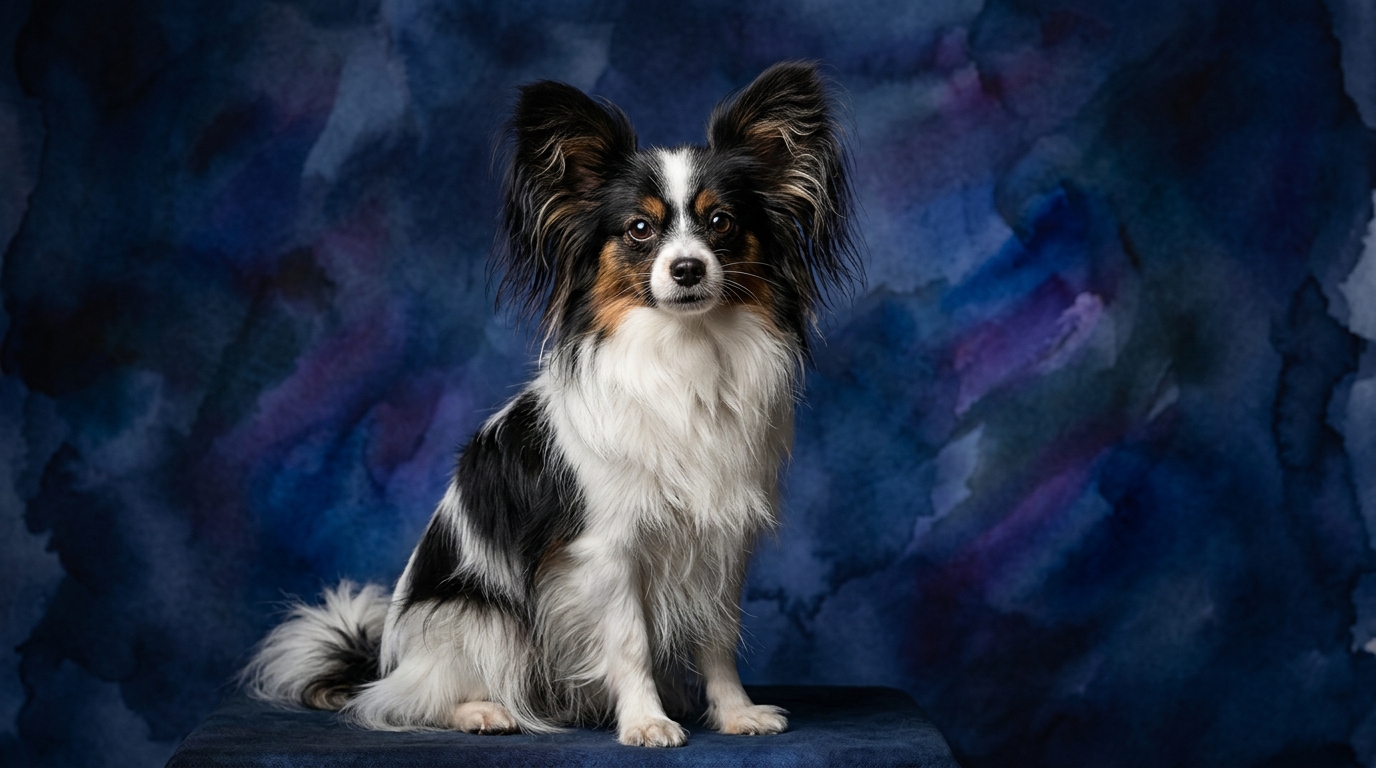

Side-by-Side Cognitive Profile: Papillon vs. Chinese Crested
To understand the nuanced differences in their cognitive abilities, we've broken down each breed's IQ across five crucial dimensions. The Papillon, a breed often recognized for its sharp intellect, boasts a Coren rank of #8, placing it among the most operationally effective breeds. The Chinese Crested, while not featured on the Coren ranking, presents a distinct, albeit different, set of cognitive traits.
For the Papillon, problem-solving is a major strength, rated at an impressive 5/5. This suggests an innate capacity to quickly analyze novel situations, figure out complex puzzles, and adapt strategies to overcome obstacles. Their training speed also mirrors this aptitude at 5/5, indicating an exceptional ability to grasp new commands and routines with minimal repetition. Social intelligence for the Papillon stands at 4/5, meaning they are generally adept at interpreting human cues and navigating social dynamics, often forming strong, perceptive bonds. Their instinctive drive is a moderate 3/5, demonstrating a balanced level of natural urges like chasing or exploring, which can be channeled effectively. Finally, their memory is outstanding at 5/5, allowing them to retain learned behaviors, recognize individuals, and recall experiences over long periods.
In contrast, the Chinese Crested exhibits a more moderate cognitive profile. Their problem-solving ability is rated at 3/5, suggesting they can learn to navigate challenges but may require more guidance or trial-and-error to reach solutions. Training speed is also 3/5, indicating they can learn commands and tricks, but typically at a pace that requires more patience and consistent reinforcement compared to their Papillon counterparts. Social intelligence for the Chinese Crested is also 3/5, implying they are capable of forming affectionate bonds and understanding basic human interactions, though they might be less subtly attuned to complex emotional signals. Their instinctive drive matches the Papillon's at 3/5, reflecting a similar moderate level of innate urges. Memory for the Chinese Crested is rated at 3/5, meaning they possess an adequate capacity to remember routines and learned behaviors, though perhaps with less long-term recall or precision than a breed scoring higher in this dimension.
Where the Papillon's Mind Truly Shines
The Papillon's cognitive superiority is evident in several key areas, making them particularly adept at tasks requiring rapid processing and adaptability. Their 5/5 rating in problem-solving means a Papillon can quickly assess a new environment, discern how to open a tricky gate, or figure out the mechanics of a complex toy puzzle. This isn't just about raw processing power; it's about applying learned principles to novel situations effectively, a hallmark of operational intelligence.
Furthermore, their 5/5 training speed is a testament to their capacity for swift learning and generalization. A Papillon can pick up a new obedience command or an agility course sequence with fewer repetitions than many other breeds. This rapid acquisition allows them to master a wide repertoire of behaviors, from intricate tricks to advanced competitive dog sports. Coupled with their 5/5 memory, they not only learn quickly but also retain that knowledge, making them remarkably consistent performers in various roles, from therapy work to competitive events. Their social intelligence, at 4/5, allows them to accurately read human body language and vocal tones, often anticipating their owner's wishes or emotional state, leading to a highly responsive and harmonized partnership.
Unique Cognitive Advantages of the Chinese Crested
While the Papillon’s cognitive scores are impressive across the board, the Chinese Crested’s profile isn't without its own distinct advantages, particularly for certain lifestyles. Their more moderate problem-solving (3/5) and instinctive drive (3/5) can translate into a dog less prone to independently seeking out trouble or exploring boundaries in ways that might challenge a less experienced owner. A Chinese Crested is less likely to systematically dismantle household items out of boredom or devise complex escape routes from a secure yard, simply because their drive to engage in such high-level cognitive exploration is lower.
Their 3/5 social intelligence, while not as acutely perceptive as the Papillon’s, often manifests as a more straightforward, less demanding form of companionship. They are typically devoted and affectionate without requiring constant mental stimulation or complex social games. This can be a benefit for owners seeking a loyal companion whose primary joy comes from proximity and comfort rather than intricate interaction. The Chinese Crested's average memory (3/5) means they still remember their routines and loved ones, but perhaps with less intensity or expectation for constant novelty, contributing to their generally calm and adaptable nature in a stable home environment.
Training Dynamics: A Tale of Two Breeds
When it comes to training, the differences between the Papillon and the Chinese Crested are quite pronounced, stemming directly from their respective IQ profiles. The Papillon, with its 5/5 training speed and 5/5 problem-solving, is often a dream to train. They grasp new concepts almost immediately, respond well to positive reinforcement, and actively enjoy the mental engagement of learning. This breed excels in obedience, agility, rally, and even complex trick training because they find the process itself rewarding. Owners will notice a Papillon generalizing a command quickly, applying it in various contexts with minimal prompting, and often seeking out new opportunities to learn.
The Chinese Crested, with 3/5 in both training speed and problem-solving, requires a more patient, consistent, and often more simplified training approach. They can certainly learn, but owners should be prepared for more repetitions and a slower progression through training stages. Breaking down commands into smaller, achievable steps is crucial, as is maintaining a positive and encouraging environment. While they may not pick up a new trick in minutes like a Papillon, their devotion means they are eager to please their owners, even if the learning curve is gentler. Behavioral differences include the Papillon's tendency to anticipate cues and offer behaviors proactively, whereas a Chinese Crested might wait for a clearer, more consistent signal before responding. Owners of a Papillon might find themselves teaching complex sequences, while Chinese Crested owners will focus on solidifying foundational manners and basic commands with consistent reinforcement.
Matching Minds to Lifestyles: Active vs. Relaxed Owners
The cognitive disparities between these two Toy breeds significantly influence which might be a better fit for active versus relaxed owners. The Papillon, with its energetic brain and body, thrives with active owners who can provide consistent mental challenges and physical exercise. They are excellent candidates for dog sports like agility, flyball, or competitive obedience, where their problem-solving, training speed, and memory can be fully utilized. An owner who enjoys teaching new tricks, engaging in daily training sessions, and providing ample opportunities for exploration and mental stimulation will find a Papillon to be an incredibly rewarding and engaged companion. Without sufficient outlets for their sharp minds, Papillons can become bored, potentially leading to undesirable behaviors born out of frustration or a need to self-entertain.
Conversely, the Chinese Crested's more moderate cognitive profile and generally lower energy levels make them an ideal companion for relaxed owners. While they certainly benefit from regular walks and basic training, they do not require the same intensity of mental or physical engagement as a Papillon. Their social intelligence at 3/5 means they appreciate companionship but are less demanding of constant interactive play or complex social scenarios. An owner who prefers cozy evenings, gentle strolls, and a devoted, affectionate presence without the need for constant 'brain games' will find the Chinese Crested to be a perfect match. They are often content to simply be near their human, offering quiet companionship and a comforting presence, making them well-suited for apartment living or less active households.
The Verdict: When to Choose Each Intelligent Companion
The Verdict
Choose a Papillon if you are an owner who thrives on intellectual engagement, enjoys dog sports, and is prepared to channel a brilliant, quick-witted mind into constructive activities. This breed will flourish with consistent training, complex tasks, and an active lifestyle that matches their vibrant cognitive energy.
Opt for a Chinese Crested if you seek a devoted, affectionate companion who offers a calmer presence and requires a more moderate level of mental and physical stimulation. They are ideal for owners who appreciate a loyal friend without the intense demands of a high-drive, highly operationally effective intellect.
🧠 Find Your Pet's IQ Score
Our Pet IQ Lab assessment covers 25+ tests across 5 cognitive dimensions — personalized to your breed.
Take the Full IQ Test →Frequently Asked Questions
Are Papillons difficult to manage due to their intelligence?
Papillons are not difficult to manage because of their intelligence; rather, their sharp minds require appropriate outlets. Owners who fail to provide mental stimulation may find their Papillon inventing their own, which might not always align with household rules. Consistent training and engagement are key to a well-adjusted Papillon.
Do Chinese Cresteds struggle with learning new commands?
Chinese Cresteds do not struggle with learning, but they typically learn at a slower pace than some other breeds. They require more patience, consistency, and positive reinforcement during training sessions. Breaking down commands into smaller steps and celebrating small successes will help them master new behaviors effectively.
Which breed is better for first-time dog owners?
For first-time dog owners, the choice depends on their lifestyle and expectations. A Chinese Crested might be easier due to their more moderate demands for mental stimulation and generally calmer demeanor. A Papillon, while highly trainable, requires an owner committed to engaging their keen intellect, which can be a significant learning curve for a novice.