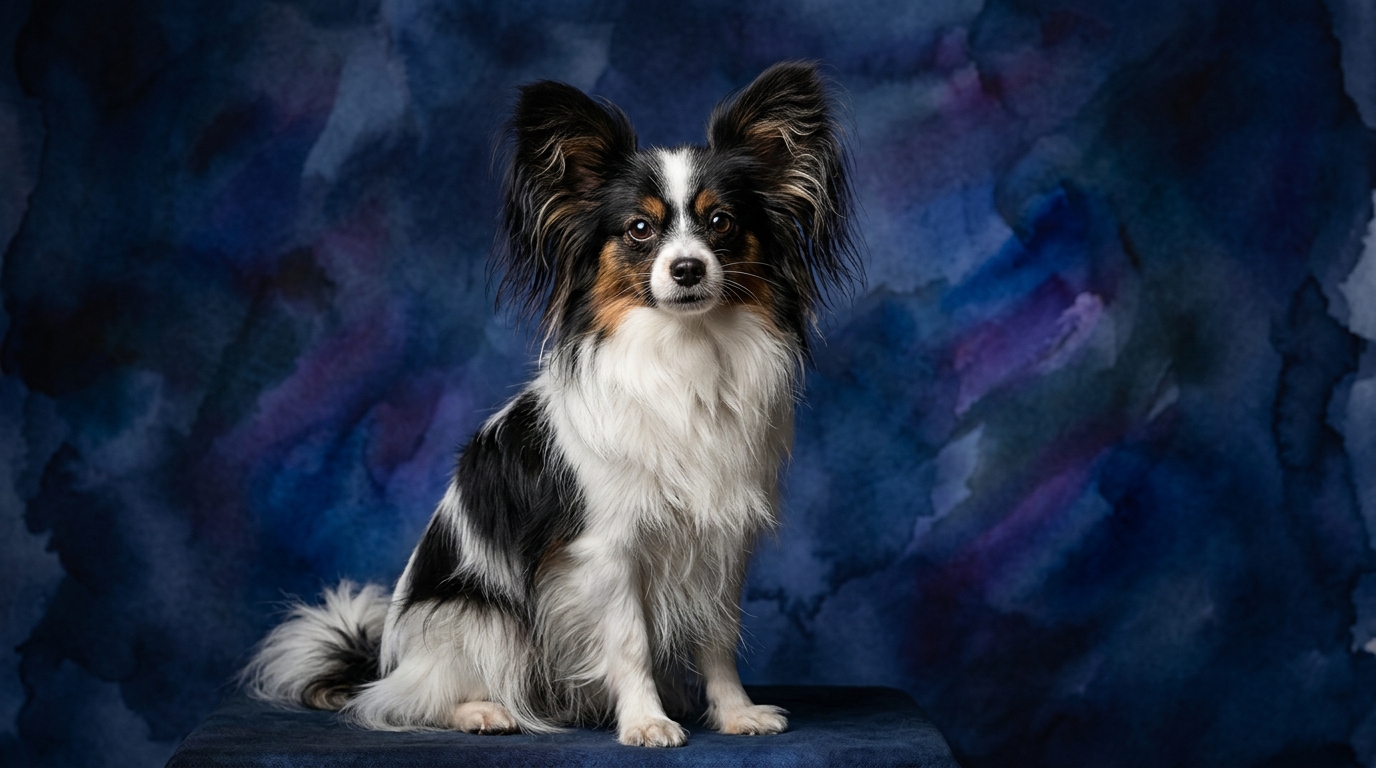
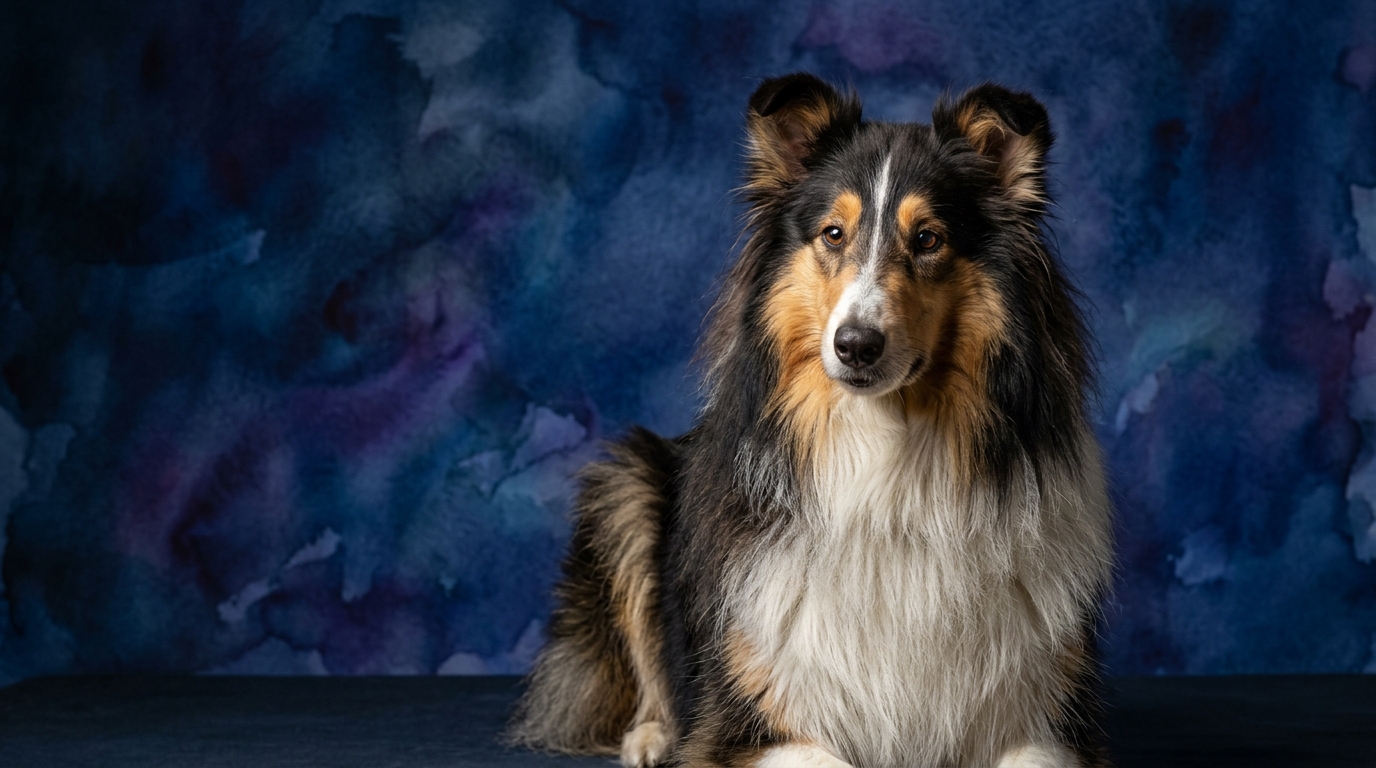
Side-by-Side IQ Profile: Papillon vs. Rough Collie
The Cosmic Pet Pet IQ Lab employs five critical dimensions to assess canine cognitive function: Problem Solving, Training Speed, Social Intelligence, Instinctive Drive, and Memory. These metrics offer a granular view beyond general rankings, illuminating the specific ways a breed's mind operates and interacts with its environment, allowing for a detailed comparison of breeds like the Papillon and Rough Collie.
The Papillon, often perceived as a delicate lapdog, reveals a formidable cognitive profile with a Coren rank of #8. It achieves a perfect 5/5 in Problem Solving, Training Speed, and Memory, signifying exceptional mental agility and retention. Its Social Intelligence scores a robust 4/5, indicating a keen awareness of human cues, while its Instinctive Drive is a moderate 3/5, suggesting a balanced inner motivation not overtly dominated by primal urges, but still present enough for engagement.
In contrast, the Rough Collie, a breed renowned for its pastoral heritage, sits at Coren rank #16. This breed demonstrates strong cognitive abilities, scoring 4/5 in both Problem Solving and Training Speed, reflecting competent learning and adaptive capacity. Its Social Intelligence is rated 3/5, suggesting a functional understanding of human interaction, while its Instinctive Drive matches the Papillon at 3/5. Crucially, the Rough Collie also achieves a perfect 5/5 in Memory, highlighting its capacity for long-term retention of learned behaviors and routines, a hallmark of its reliable nature.
Where the Papillon Wins Cognitively
The Papillon's cognitive advantage becomes apparent across several critical dimensions, particularly in its superior Problem Solving, Training Speed, and Social Intelligence. With a perfect 5/5 in Problem Solving compared to the Collie's 4/5, the Papillon exhibits a more pronounced capacity for navigating novel situations and independently figuring out solutions to complex challenges. This manifests in their ability to quickly understand intricate puzzle toys, master multi-step tasks, or even devise creative ways to achieve desired outcomes, such as opening cabinets. This inherent mental flexibility allows them to adapt rapidly to new environments or training scenarios without extensive guidance, making them nimble thinkers.
Furthermore, the Papillon's 5/5 in Training Speed eclipses the Rough Collie's 4/5, indicating a remarkably swift uptake of new commands and behaviors. This breed typically requires fewer repetitions to solidify learning, making them exceptionally responsive to positive reinforcement methods and capable of mastering an extensive repertoire of tricks and obedience routines with relative ease. Their heightened Social Intelligence (4/5 vs. 3/5) also contributes to this, allowing them to more acutely perceive and interpret human body language, vocal inflections, and emotional states, fostering a deeper, more nuanced communicative bond during training and daily interactions. This perceptive quality means they often anticipate owner intentions, making them exceptionally engaging and intuitive companions.
Where the Rough Collie Wins Cognitively
While the Papillon demonstrates higher scores in several cognitive areas, the Rough Collie distinguishes itself through its exceptional Memory and its characteristic manifestation of Instinctive Drive, where it holds its own or matches the Papillon. Both breeds achieve a perfect 5/5 in Memory, but for the Rough Collie, this translates into an unwavering retention of complex routines, commands, and the identities of people and places, which is foundational to its historical role as a herding and family guardian. This steadfast memory ensures that once a behavior is learned, it is deeply ingrained, leading to reliable performance over extended periods and in varied contexts, making them dependable companions in established environments.
The Rough Collie's Instinctive Drive, rated 3/5, mirrors that of the Papillon, yet it expresses itself through the breed's herding lineage. This drive isn't about high-energy chasing but rather a deep-seated inclination towards order, protection, and maintaining a cohesive group, often extending to their human family. This moderate drive contributes to their attentive nature and their ability to follow structured commands, even if their problem-solving or training speed isn't as immediate as the Papillon's. Their cognitive strength lies in their consistency and their ability to apply learned behaviors reliably, often demonstrating a patient, methodical approach to tasks rather than a quick, spontaneous one. This makes them particularly well-suited for roles requiring steady application of learned skills, such as therapy work or routine-based assistance.
Which is Easier to Train and Why
When considering ease of training, the Papillon holds a clear advantage, primarily due to its superior Training Speed (5/5) and Problem Solving (5/5). A Papillon typically grasps new commands with remarkable rapidity, often requiring only a handful of repetitions before demonstrating proficiency. This quick uptake is further enhanced by their sharp problem-solving abilities, which enable them to independently work through the steps of a new task, anticipating what is expected of them rather than solely relying on rote memorization. For instance, when taught a complex sequence of actions, a Papillon is more likely to connect the dots and infer the desired outcome, making the training process feel collaborative and engaging.
The Rough Collie, with a Training Speed of 4/5, is certainly capable of learning and is by no means difficult to train; however, it may require a slightly more patient and consistent approach. While they possess an excellent Memory (5/5), ensuring that once a command is learned, it is retained, their learning acquisition rate is somewhat slower than the Papillon's. Their herding background means they respond well to clear, consistent direction and thrive on understanding their role within a structured system. A Rough Collie might need more repetitions to fully internalize a new command, but once it's established, its retention is superb. Their Social Intelligence (3/5) also plays a role; while they understand human cues, the Papillon's higher score suggests a more nuanced understanding that can facilitate quicker communication during training. Ultimately, both breeds are trainable, but the Papillon offers a swifter, often more intuitive training experience.
Which Suits Active vs. Relaxed Owners
The choice between a Papillon and a Rough Collie based on an owner's activity level hinges on understanding how their cognitive profiles translate into daily needs and energy expenditure. The Papillon, despite its small stature, is a spirited companion whose 5/5 Problem Solving and 4/5 Social Intelligence mean they thrive on mental engagement and interactive play. They are not content to be mere lap warmers; an active owner who enjoys teaching tricks, participating in dog sports like agility or obedience, or even just engaging in complex puzzle games will find the Papillon an eager and capable partner. Their moderate Instinctive Drive (3/5) ensures they have enough motivation for activity without being overwhelming, making them suitable for owners who enjoy consistent, stimulating interaction.
Conversely, the Rough Collie, while a herding breed, often exhibits a more composed and routine-oriented disposition. Their 5/5 Memory and 3/5 Instinctive Drive suggest a preference for structured activities and predictable schedules. They appreciate regular walks, opportunities for supervised outdoor exploration, and tasks that engage their natural inclination to observe and 'manage' their environment. While they benefit from activity, they are less likely to demand constant, high-intensity mental or physical stimulation in the same spontaneous way a Papillon might. A relaxed owner who enjoys consistent, moderate daily walks, a predictable home routine, and a loyal, watchful companion that thrives on established patterns will find the Rough Collie an excellent fit. They are content with a steady pace, finding comfort in familiarity rather than constant novelty.
The Verdict
If you are an owner who thrives on dynamic interaction, enjoys teaching complex tasks, and desires a companion who is quick to learn and keenly attuned to your social cues, the Papillon's superior problem-solving, training speed, and social intelligence make it an exceptional match.
For individuals who appreciate a steadfast, loyal companion with an outstanding memory, thriving on routine and structured, consistent engagement, the Rough Collie offers a calm yet capable presence, excelling in reliability and a predictable bond.
🧠 Find Your Pet's IQ Score
Our Pet IQ Lab assessment covers 25+ tests across 5 cognitive dimensions — personalized to your breed.
Take the Full IQ Test →Frequently Asked Questions
Are Papillons truly more cognitively agile than Rough Collies according to Coren's ranking and IQ scores?
According to Coren's ranking, the Papillon is placed higher at #8 compared to the Rough Collie at #16. The Cosmic Pet IQ Lab scores also show the Papillon leading in problem-solving, training speed, and social intelligence, suggesting a broader cognitive agility in these specific areas.
How does a Papillon's problem-solving ability specifically differ from a Rough Collie's?
The Papillon's 5/5 problem-solving score indicates a higher aptitude for independent thought and creative solutions to novel challenges, like figuring out complex latches or devising new play strategies. The Rough Collie's 4/5 means it's still capable but might rely more on learned patterns and require more guidance in entirely new, unstructured situations.
What kind of mental stimulation do these breeds require to stay content?
Papillons thrive on frequent mental challenges, such as learning new tricks, puzzle toys, and interactive games that tap into their high problem-solving and social intelligence. Rough Collies benefit from consistent routines, obedience training, and activities that allow them to utilize their excellent memory and moderate instinctive drive, like structured walks, scent work, or 'herding' family members during daily activities.