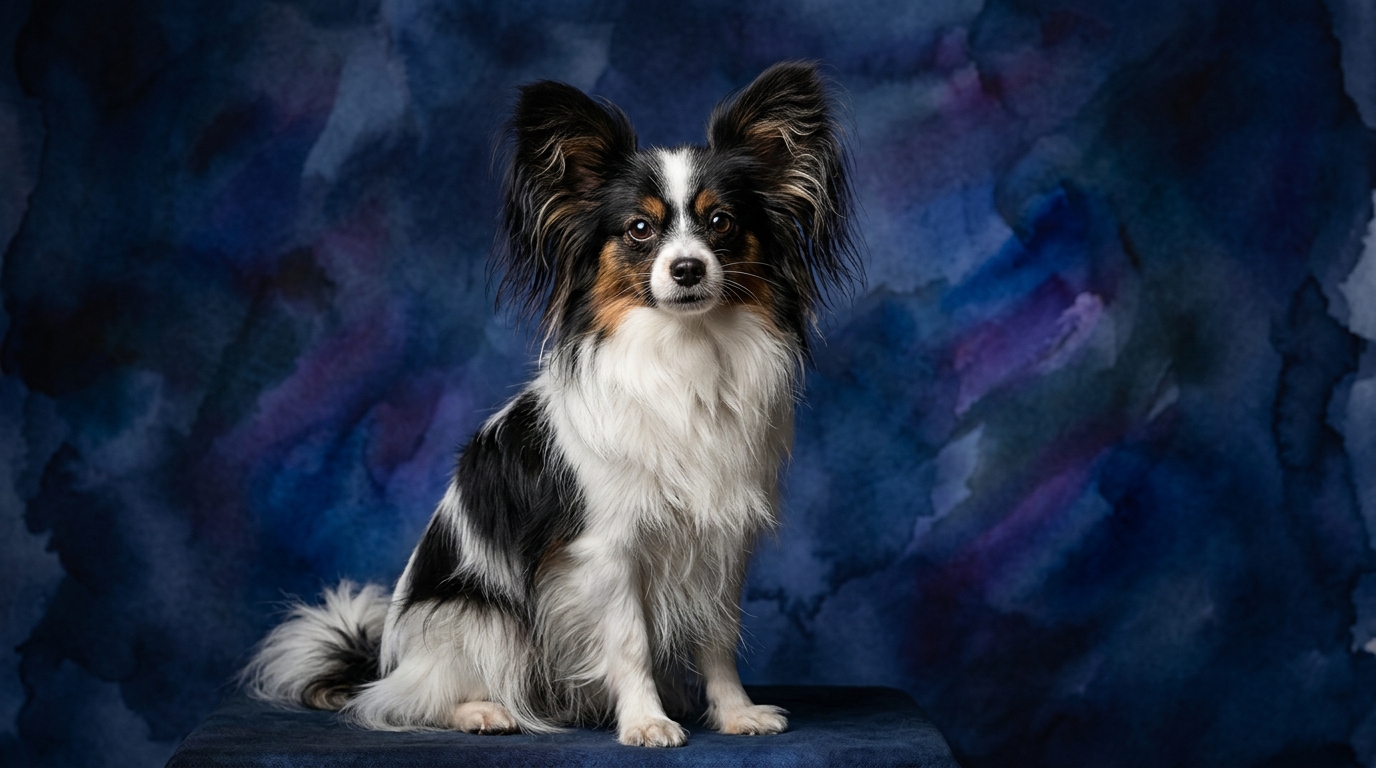
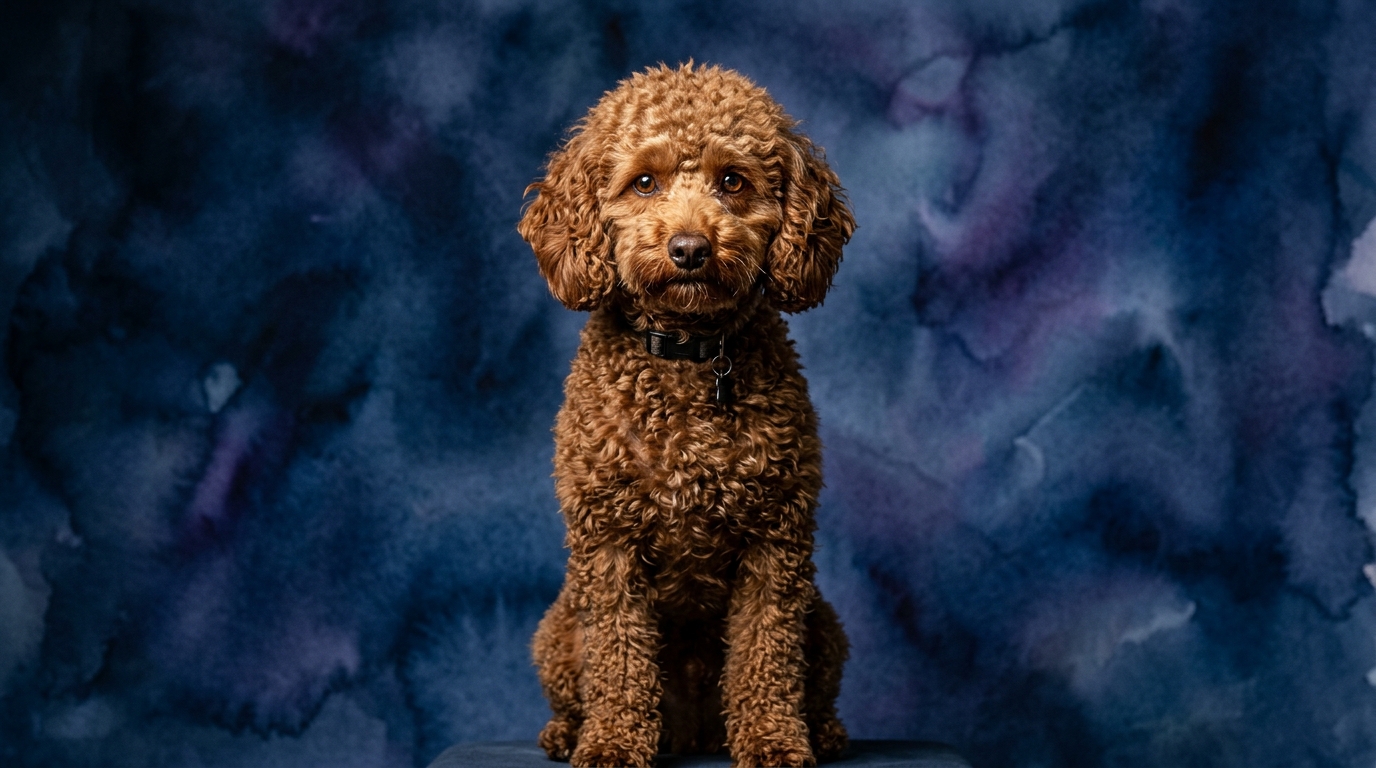
Side-by-Side Cognitive Profile: Papillon vs. Miniature Poodle
The Cosmic Pet Pet IQ Lab employs a five-dimensional framework to assess canine intelligence, moving beyond simple obedience measures to capture a comprehensive picture of a breed's cognitive strengths. For the Papillon, ranked #8 on Coren's broader assessment of working and obedience intelligence, its specific IQ profile paints a vivid picture of a perceptive companion. It achieves a perfect 5/5 in Problem Solving, indicating an exceptional ability to navigate novel situations and figure out solutions independently. Its Training Speed is also rated 5/5, suggesting it grasps new commands and concepts with remarkable rapidity. The Papillon's Social Intelligence stands at 4/5, signifying a strong attunement to human emotional states and subtle cues, making it a highly communicative partner. Its Instinctive Drive is moderate at 3/5, meaning it possesses some natural urges but is not overly dominated by them, and its Memory is a stellar 5/5, ensuring it retains learned information and experiences effectively.
The Miniature Poodle, holding an impressive #2 rank on Coren's scale, presents a slightly different yet equally compelling cognitive signature. Like the Papillon, it excels with a 5/5 in Problem Solving, demonstrating an outstanding capacity for logical thought and overcoming mental hurdles. Its Training Speed matches the Papillon's at 5/5, underscoring its proficiency in acquiring new skills and behaviors quickly. Where the Poodle differs slightly is in Social Intelligence, scoring 3/5; while still responsive to human interaction, it might be less intuitively perceptive of subtle emotional nuances compared to the Papillon. Its Instinctive Drive is also 3/5, indicating a balanced level of innate urges, and its Memory is a perfect 5/5, ensuring excellent recall and retention of complex sequences or prior experiences. These detailed profiles highlight both shared strengths and subtle divergences between these two cognitively capable breeds.
Where the Papillon Excels Cognitively
The Papillon's primary cognitive advantage lies in its superior Social Intelligence, scoring 4/5 compared to the Miniature Poodle's 3/5. This higher rating signifies a profound capacity for understanding and responding to human communication, extending beyond simple commands to include subtle body language, vocal inflections, and emotional states. A Papillon is often described as feeling deeply connected to its owner, frequently anticipating needs or reacting to moods with an almost intuitive grace. This perceptive quality can make them particularly rewarding partners in activities that rely on nuanced communication, such as freestyle obedience or trick training where the dog interprets and responds to the handler's expressive movements. Their ability to 'read the room' allows them to adapt their behavior to various social contexts, making them charming and engaging companions. This social attunement also contributes to their excellent problem-solving skills in human-centric situations, as they often use their understanding of people to navigate challenges or gain rewards.
Where the Miniature Poodle Excels Cognitively
While both breeds exhibit perfect scores in Problem Solving, Training Speed, and Memory, the Miniature Poodle's significant advantage is reflected in its Coren rank of #2, placing it substantially higher than the Papillon's #8. This distinction highlights the Poodle's exceptional overall working and obedience intelligence. The Coren ranking encompasses a broader spectrum of cognitive abilities, including the capacity for sustained focus, generalization of learned tasks, and consistent performance across diverse environments. Even with similar scores in specific IQ dimensions, the Poodle's higher rank suggests a greater aptitude for intricate, multi-step commands and a more robust ability to apply learned behaviors in novel contexts without constant handler guidance. This breed possesses an innate drive for structured learning and task completion, often thriving in environments where they are given complex jobs to do. Their cognitive framework supports not just rapid learning but also a profound understanding of sequences and abstract concepts, making them particularly adept at advanced obedience, competitive dog sports, and even service work where precision and reliability are paramount.
Which is Easier to Train and Why
Both the Papillon and the Miniature Poodle boast a perfect 5/5 in Training Speed, indicating that both breeds grasp new commands with impressive rapidity. However, the 'ease' of training can feel different due to their distinct social intelligence profiles. The Papillon's 4/5 Social Intelligence often translates into an eagerness to please and a strong desire for cooperative interaction, making them highly responsive to positive reinforcement and subtle handler cues. They are often forgiving of minor handler inconsistencies because they are so attuned to their human partner, fostering a fluid, collaborative training experience. This makes them particularly suitable for owners who enjoy a highly interactive and emotionally connected training dynamic, where the dog feels like a true partner in the learning process.
Conversely, the Miniature Poodle, with its 3/5 Social Intelligence and higher Coren rank, excels in structured, methodical training. While equally quick to learn, Poodles often thrive on clear, consistent instructions and a systematic approach. Their focus is often on the task itself, executing commands with precision and consistency once they understand the objective. They may be less inclined to 'guess' what the handler wants based on subtle emotional shifts, preferring explicit direction. This makes the Poodle an exceptional candidate for advanced obedience, rally, or agility, where complex sequences and flawless execution are prized. Owners who enjoy the process of meticulously teaching and refining behaviors, and who appreciate a dog that performs with unwavering dedication to the task, will find the Miniature Poodle immensely satisfying to train.
Cognitive Profiles for Active vs. Relaxed Owners
Neither the Papillon nor the Miniature Poodle could accurately be described as a 'relaxed' dog in terms of their mental needs; both require consistent cognitive engagement to thrive. For active owners seeking a highly interactive and emotionally responsive partner, the Papillon's 4/5 Social Intelligence makes it an exceptional choice. These dogs flourish in environments where they can engage in interactive games, learn new tricks alongside their owner, or participate in dog sports like agility or rally where the partnership between dog and handler is paramount. Their perceptive nature means they enjoy being involved in daily family activities and can become bored or anxious if left without sufficient social and mental interaction. An active owner for a Papillon is one who values companionship and mental stimulation through shared experiences and consistent communication.
The Miniature Poodle, with its #2 Coren rank and excellent problem-solving ability, suits active owners who enjoy structured activities and challenging their dog's capacity for complex learning. These owners often find immense satisfaction in teaching advanced obedience, engaging in competitive dog sports that demand precision and strategic thinking, or even exploring scent work or retrieve games. While they are also affectionate companions, the Poodle's cognitive makeup suggests a deeper fulfillment from mastering intricate tasks and receiving consistent, clear direction. For more relaxed owners, both breeds might pose a challenge if their mental stimulation needs are neglected. However, a Papillon might adapt slightly better to a less structured home, provided it receives ample social interaction, whereas a Poodle's considerable mental capacity, if not adequately engaged, could lead to boredom-driven behaviors.
The Verdict
Choose the Papillon if you seek a highly communicative and emotionally responsive companion, adept at reading subtle cues and thriving on close, interactive partnership.
Opt for the Miniature Poodle if you value a dog with exceptional capacity for complex structured learning and consistent execution, excelling in advanced obedience and task-oriented activities.
🧠 Find Your Pet's IQ Score
Our Pet IQ Lab assessment covers 25+ tests across 5 cognitive dimensions — personalized to your breed.
Take the Full IQ Test →Frequently Asked Questions
Are Papillons good for first-time dog owners?
Yes, their high social intelligence and training speed often make them responsive and eager to please, though their active minds require consistent mental engagement. They thrive with patient, consistent guidance, making them a rewarding choice for new owners.
Do Miniature Poodles need a lot of grooming?
Yes, Miniature Poodles have a non-shedding, curly coat that requires diligent grooming. Regular brushing and professional grooming every 4-6 weeks are essential to prevent matting and maintain their skin health, representing a significant commitment.
Which breed is better for apartment living?
Both breeds can adapt well to apartment living due to their size, provided their exercise and mental stimulation needs are consistently met. The Papillon's social nature might make it more content in a bustling household, while the Poodle's need for structured activity can be met with indoor training games and consistent outdoor engagement.